
Jingwansaggyegok Valley (진관사 계곡)
18.5Km 2024-02-20
73 Jingwan-gil, Eunpyeong-gu, Seoul
Jingwansaggyegok Valley is a 1km-long stream located within the Bukhansan National Park, with clear water always flowing. Surrounded by deep forests, it offers refreshing shade and clean air. The valley features various shaped rocks and waterfalls, creating a beautiful scenery. In particular, it's a great spot for water activities with the cool shade and refreshing stream during the summer, and the autumn leaves make it stunning in the fall. Its accessibility from downtown Seoul adds to its appeal.
![Jingwansa Temple (Seoul) [진관사(서울)]](http://tong.visitkorea.or.kr/cms/resource/33/3429433_image2_1.JPG)
Jingwansa Temple (Seoul) [진관사(서울)]
18.5Km 2025-06-30
73 Jingwan-gil, Eunpyeong-gu, Seoul
Jingwansa Temple is one of the four Buddhist temples that surround Seoul. It was known as the center of Buddhism and academics. Jingwansa Temple is home to a variety of buildings, such as Daeungjeon Hall, Myeongbujeon Hall, and Nahanjeon Hall, all surrounded by the beautiful nature of Bukhansan Mountain. In fact, the temple complex is a popular fall destination for its fall colors. Visitors can also visit the nearby Eunpyeong Hanok Village.
Korea University Ansan Hospital (고려대학교 의과대학 부속 안산병원)
18.5Km 2025-10-23
123 Jeokgeum-ro, Danwon-gu, Ansan-si, Gyeonggi-do
We provide the highest quality medical services with world-class medical staff and state-of-the-art equipment, always putting ourselves in the patients’ shoes as a patient-centered hospital.
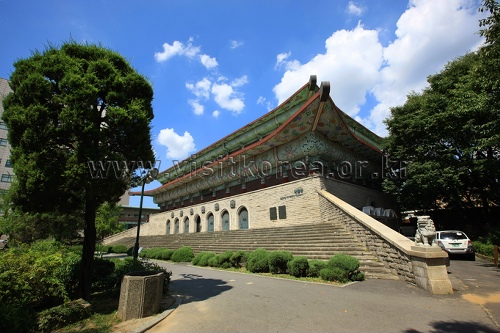
Sejong University Museum (세종대학교 박물관)
18.5Km 2022-09-16
209, Neungdong-ro, Gwangjin-gu, Seoul
+82-2-3408-3876
Sejong University Museum exhibits folk art, wooden crafts, clothing, accessories, pottery, paintings and calligraphy collected for over 40 years by the couple who founded the present day Sejong University, Dr. Ju Young-ha and Dr. Choi Ok-ja. This museum has its origins in the Soodo Gallery, which was built in Chungmuro, the campus’ original location, in 1959. Needing more space to house additional artifacts, the museum moved to its current location, which first opened on May 5, 1973 in a four-story concrete building inspired by traditonal tower design from the Baekje era. This building was later expanded on May 20, 1977.
After the university’s name was changed to Sejong University in 1979, the museum was also renamed the Sejong University Museum. The museum showcases unique artifacts to both scholars and students from home and abroad in contribution to the research of Korea’s culture, arts, and archeology.
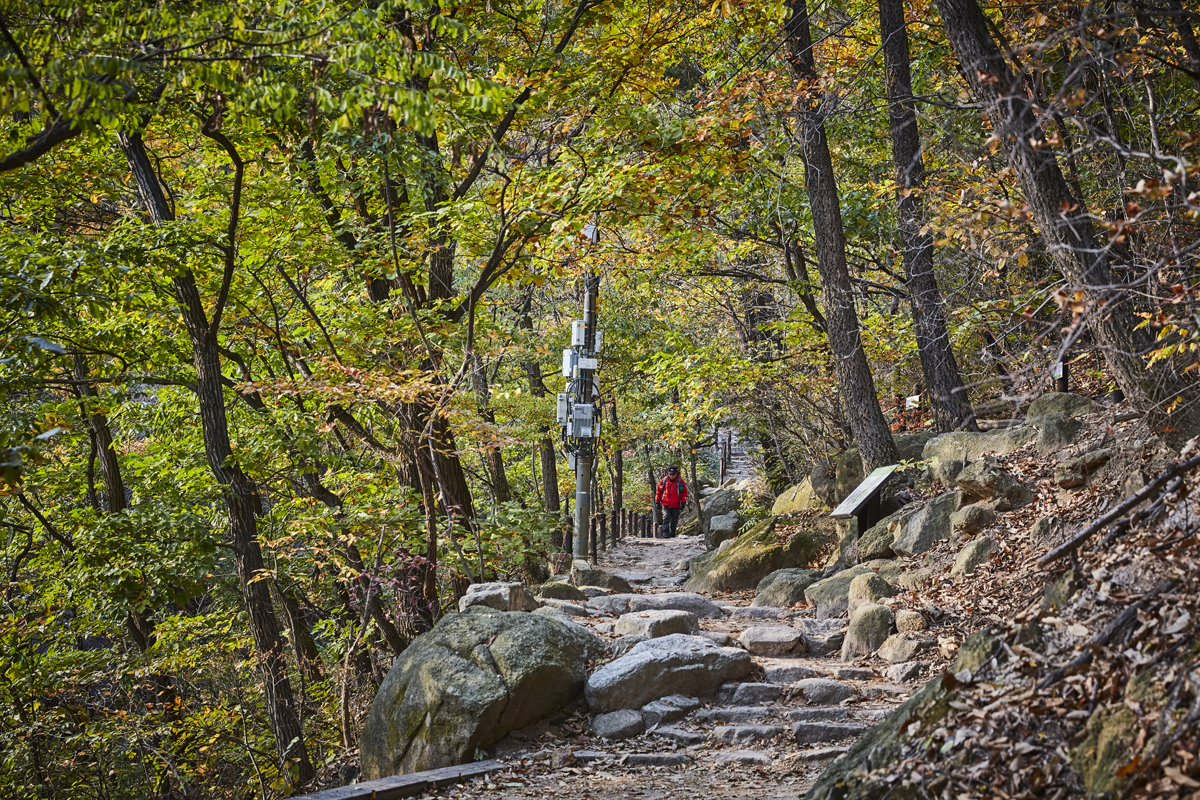
Bukhansan National Park (Seoul District) (북한산국립공원(서울))
18.5Km 2024-11-27
262 Bogungmun-ro, Seongbuk-gu, Seoul
+82-2-909-0497
Bukhansan Mountain was officially designated as a national park in 1983. Bukhansan National Park covers both Bukhansan and Dobongsan Mountains, and spans a total area of 80.699 ㎢. At the top of Bukhansan Mountain are Baegundae Terrace (835.6 m), Insubong Peak (810.5 m) and Mangyeongdae Terrace (799.5 m), which gave the mountain the nickname "Samgaksan" or the "three-horned mountain." The mountain had other names: Sambongsan (mountain with three peaks), Hwasan (flower mountain), and Buaak (mountain shaped like a person giving a baby a piggyback ride). The current name, Bukhansan, was given after the Bukhansanseong Fortress was built under King Sukjong of the Joseon dynasty.
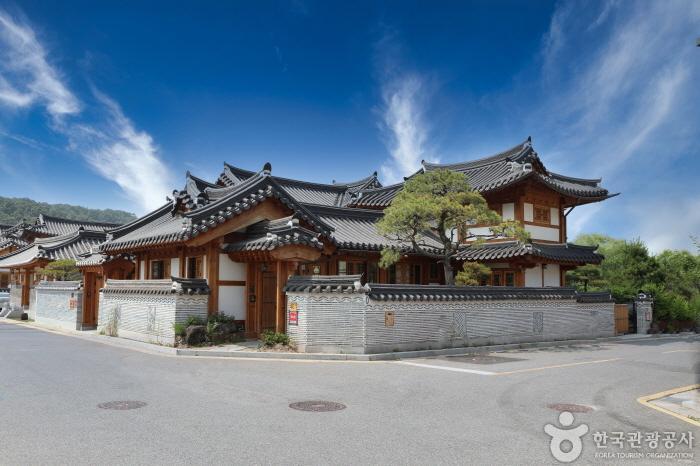
Eungjung Hanok (응정헌)
18.6Km 2024-12-13
19 , Yeonseo-ro 50-gil, Eunpyeong-gu, Seoul
+82-10-5751-3270
Eungjeongheon is a private hanok accomodation located in Eunpyeong Hanok Village in Seoul, where the calm ambience and sensuous interior of the hanok create a harmonious balance. Upon entering the building, you will find a dining room where breakfast is served and a daecheong maru (wooden-floored hall). On the second floor, you will find a numaru (balcony-like raised veranda), a bedroom, and a terrace from which you can enjoy a panoramic view of Bukhansan Mountain and Hanok Village. A hearty breakfast is provided, as well as a variety of activities, including outdoor picnics in the backyard, illustrated gifts, yoga and meditation sessions, and foot baths. Bukhansan Dulle-gil Course 9 and Jingwansa Temple are within a 10-minute walk.
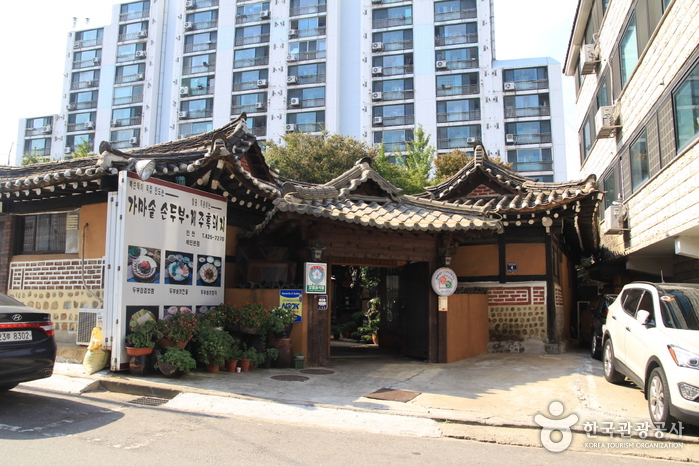
Gamasot Sondubu (가마솥손두부)
18.6Km 2024-10-15
4 Soseong-ro 326beon-gil, Michuhol-gu, Incheon
Gamasot Sondubu, located in Munhak-dong, Incheon, is a restaurant that focuses on naturalistic wellness through its specialization in bean curd dishes. Emphasizing the use of pure, domestic soybeans and deep sea water sourced from the East Sea at dawn each day, this establishment is committed to providing high-quality, nutritious meals. The signature offering, dubujip jeongsik (bean curd set menu), presents a health-conscious dining experience with a selection of light, handmade bean curd dishes, catering to those seeking a wholesome and satisfying meal.
Ansan Arts Center (안산문화예술의전당)
18.6Km 2021-07-08
312, Hwarang-ro, Danwon-gu, Ansan-si, Gyeonggi-do
+82-80-481-4000
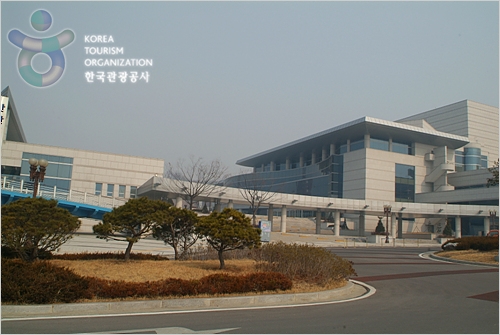
The Ansan Arts Center officially opened on October 2, 2004, following its success at the Ansan Yeormio Festival and Harmony Festival. The center boasts state-of-the-art stage facilities capable of holding any type of production orchestrated by Korean and international theater directors.
King Sejong The Great Museum (세종대왕박물관)
18.7Km 2024-03-08
56, Hoegi-ro, Dongdaemun-gu, Seoul
+82-2-969-8851
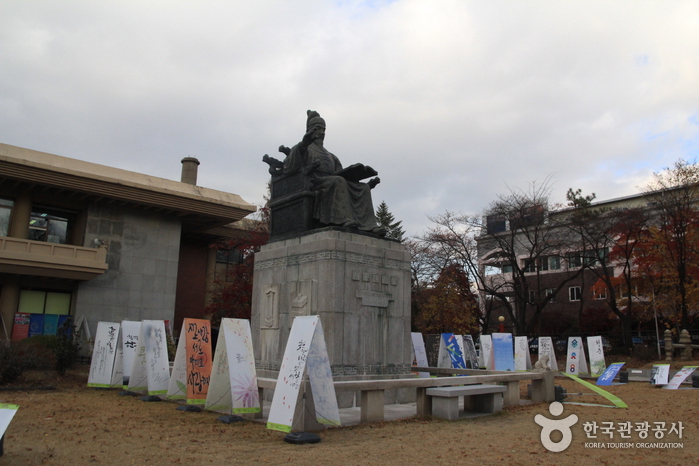
King Sejong The Great Museum is a cultural complex located in the heart of Seoul, near Gwanghwamun Plaza.The Hangeul Room exhibits documents published during the reign of King Sejong, the Science Room displays Cheugugi and celestial planisphere, and the Korean Traditional Music Room showcases various traditional Korean musical instruments. The Biography Room features Portrait of King Sejong and paintings depicting scenes from his life. Outdoors, there are statues of King Sejong, the scahe sundial, the clepsydra, and Cheugugi.
Gwangnaru Safety Experience Center (광나루안전체험관)
18.8Km 2025-03-29
238, Neungdong-ro, Gwangjin-gu, Seoul
+82-2-2049-4061
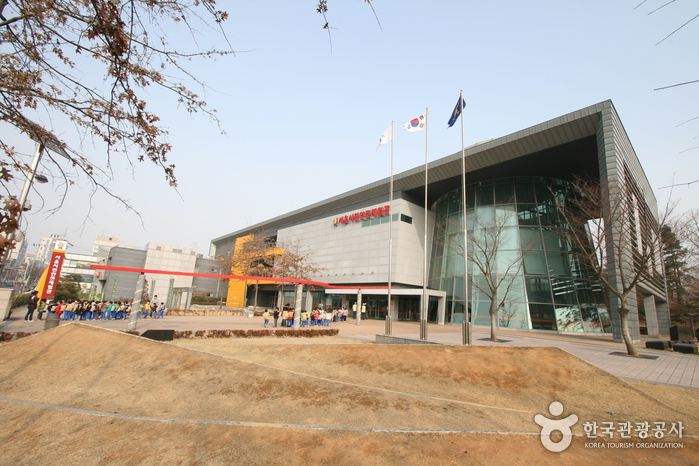
Gwangnaru Safety Experience Center was founded in 1999 after two fire accidents in which many children lost their lives. These tragedies emphasized the necessity of establishing a disaster training center for common citizens.
Gwangnaru Safety Experience Center is a three-story building with one basement floor, covering an area of more than 5,000 m². The basement floor includes a small theater. The first floor is set up for natural disaster training and consists of an orientation hall, storm simulation training room, earthquake simulation room, computer tests on fire safety knowledge and others. The second floor is a place for artificial catastrophe training. It consists of a smoke escape training room, fire extinguisher training room, first-aid (CPR) training room and practice place for calling 119. The third floor is used for rescue training and consists of a rescue training room, screening room, training for professionals and video examples of the five biggest disasters that have occurred in Seoul. Overall there are about 20 training areas established, so citizens can experience the imitation of a disaster by themselves and learn easily and in an interesting way how to cope with a disaster.
 English
 한국어
한국어 日本語
日本語 中文(简体)
 Deutsch
 Français
 Español
 Русский


