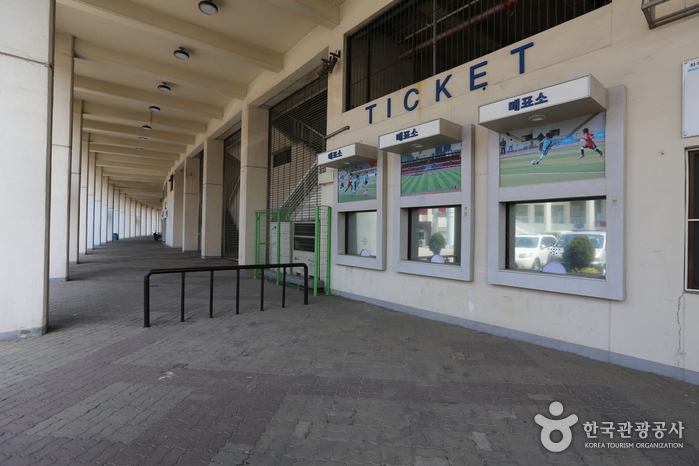
Mokdong Stadium (목동운동장(목동아이스링크,사격장)
5.7Km 2022-09-14
939, Anyangcheon-ro, Yangcheon-gu, Seoul
Mokdong Stadium was opened in 1989 with a stadium, a baseball field and an indoor ice rink and added footsal field in 2008 to improve Korea’s sports culture. The soccer field was used as the home field for K-league teams in the past. The ice rink hosts hockey matches and figure skating competitions as well as ice ballet performances. Other facilities include a main square, an indoor shooting range and a gym for residents to enjoy.

Youth Clinic (유스의원)
5.8Km 2025-10-23
(4th Floor, Islex), 108 Uisadang-daero, Yeongdeungpo-gu, Seoul
Youth Clinic is a single-room dermatology practice that sees only 20 patients per day. We offer dermatology care, obesity care, and petit plastic surgery. We operate at two locations in Cheongdam and Yeouido. Our staff consist of family medicine and dermatology specialists providing high-quality medical services, and our flagship procedures include 5G Lifting, which is a non-surgical anti-wrinkle and lifting procedure, Youth Double Skinny lipolysis, which treats partial obesity without surgery, Youth Fill collagen filler, which increases skin elasticity and volume at the same time, and Atos laser treatment, which improves pores and skin elasticity. Our signature procedures have won the 2014 and 2016 Medical Korea Awards, No. 1 in 2015 and 2016 Consumer Satisfaction Index, and the 2014 Beauty Industry Award. We have trademarks registered for all procedures.
Chung-Ang University Gwangmyeong Hospital (중앙대학교광명병원)
6.0Km 2025-11-06
110 Deokan-ro (Iljik-dong), Gwangmyeong-si, Gyeonggi-do
Chung-Ang University Gwangmyeong Hospital is a general medical institution with approximately 700 beds. Opened in March 2022, the hospital has a total floor area of 97,000㎡ and consists of 14 floors above ground and 8 floors underground.
The hospital operates around six specialized clusters for critical care: Cancer Hospital, Cardiovascular & Cerebrovascular Hospital, Respiratory & Allergy Center, Digestive Disease Center, Spine Center, and Joint Center. With leading specialists in each field and state-of-the-art medical equipment, it provides advanced treatments and multidisciplinary care.
Recognized as a “hospital specializing in surgery,” Chung-Ang University Gwangmyeong Hospital plays a central role in the metropolitan critical care system. It leads the digital transformation of healthcare by harmonizing digital healthcare with public health services, strengthening its position as a highly competitive medical institution. Moving forward, the hospital will continue to pursue patient-centered medical innovation and strive to become a next-generation hospital that represents not only the Seoul metropolitan area but also the Republic of Korea.
Yeouido Park (여의도공원)
6.0Km 2024-04-08
68, Yeouigongwon-ro, Yeongdeungpo-gu, Seoul
Yeouido Park is a large recreational area located on Yeouido Island in the central part of Seoul. It was once originally covered with black asphalt, and people frequented the place for bicycling and roller-skating. The construction began in 1997 and opened officially in February 1999. It is now the place where many people in the city come to rest and enjoy strolling around, playing sports, and cultural events.
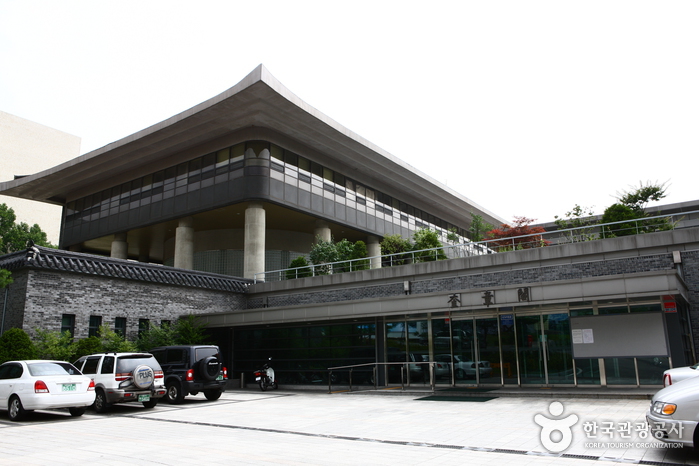
Gyujanggak Library of Seoul National University (서울대학교 규장각)
6.1Km 2022-07-27
1, Gwanak-ro, Gwanak-gu, Seoul
Gyujanggak Library was founded in 1776 during the reign of King Jeongjo, the 22nd ruler of the Joseon dynasty, at which time it was located within the Changdeokgung Palace grounds. It functioned as the royal library, which housed writings of the previous kings, their relics and books from home and abroad.
Today Seoul National University maintains the items of Gyujanggak in a traditional Korean building which is equipped with state-of-the-art facilities necessary for the preservation of cultural heritages. Moreover, Gyujanggak Library of Seoul National University collects and publishes books from a variety of sectors such as politics, economy and society.
Gyujanggak now houses more than 270,000 items including 7 national treasures, 8 treasures, 180,000-plus old books, about 50,000 documents and 18,000 printing blocks. Among them, Joseon Wangjo Sillok (the Annals of the Joseon Dynasty, a National Treasure), Seungjeongwon Ilgi (the Diaries of the Royal Secretariat, a National Treasure) and Uigwe (the Royal Protocols of the Joseon Dynasty) have been designated as UNESCO World Cultural Heritages.
Seoul National University (서울대학교)
6.1Km 2023-07-07
1, Gwanak-ro, Gwanak-gu, Seoul
Founded in 1946, Seoul National University is the most reputable university in Korea based on its long academic history and tradition. It was the first national university in Korea established by merging several institutions of higher education around the Seoul area, including Kyongsong University
Korea Medical Institute KMI Yeouido Clinic ((재)한국의학연구소 케이엠아이여의도의원)
6.1Km 2025-10-23
13F-15F & 17F-18F, 24 Gukjegeumyung-ro 2-gil, Yeongdeungpo-gu, Seoul
Korea Medical Institute (KMI), a leader in 'K-health checkups,' operates health checkup centers across eight locations nationwide, from Seoul to Jeju. KMI has been striving to prevent and detect diseases early. It has led the popularization of comprehensive medical examinations in Korea. Based on 39 years of accumulated data and expertise, KMI has enhanced its capabilities in health checkups, services, and brand value.
By utilizing its diagnostic data accumulated over the years, KMI provides accurate test results and follow-up care promptly.
KMI will stay committed to becoming a lifetime health management partner and 'K-health checkup' leader by leveraging its excellence in Korean medicine, beyond health checkups for foreign patients.
Conrad Seoul (콘래드 서울)
6.2Km 2025-01-07
10, Gukjegeumyung-ro, Yeongdeungpo-gu, Seoul
The five-star Conrad Seoul, selected as one of the ‘Best New Hotels’ by Conde Nast Traveler, a world-renowned travel magazine, offers the top-class service and
for the best customer experience. Strategically located in a core business district of Yeouido, Conrad Seoul is one of the four pillar buildings of
the IFC (International Finance Center) Seoul. The building is directly accessible underground from Yeouido Subway Station.
Conrad Seoul has 434 guest rooms with an open, refreshing atmosphere, picturesque views, and
are equipped with Apple digital devices. The hotel also houses a Grand Ballroom, restaurants which offer diverse gourmet cuisines and
a top-notch wellness center.
The Catholic University of Korea, Yeouido St. Mary's Hospital (가톨릭대학교 여의도성모병원)
6.2Km 2025-10-23
(Yeouido-dong), 10 63-ro, Yeongdeungpo-gu, Seoul
The Catholic University of Korea, Yeouido St. Mary's Hospital, established in 1936, is a hospital affiliated with a medical school and has a rich history of advancing the country's medical field through exceptional medical staff and pioneering research.
The hospital offers a convenient fast-track service for swift diagnosis and treatment, ranging from complex cancer care to minor conditions. As the first in Korea to open a dedicated lymphoma center, we have specialized expertise in treating various cancers, including lymphoma.
Our use of da Vinci robotic surgery allows for precise, minimally invasive procedures for complex conditions such as uterine fibroids, rectal cancer, prostate cancer, and thyroid cancer, promoting faster recovery. The hospital's one-stop service for breast and thyroid nodules ensures rapid diagnosis and treatment planning, completing biopsies within a single day.
At the Catholic University of Korea, Yeouido St. Mary's Hospital, we remain committed to providing top-tier medical services and advancing medical research while upholding the highest standards of bioethics.
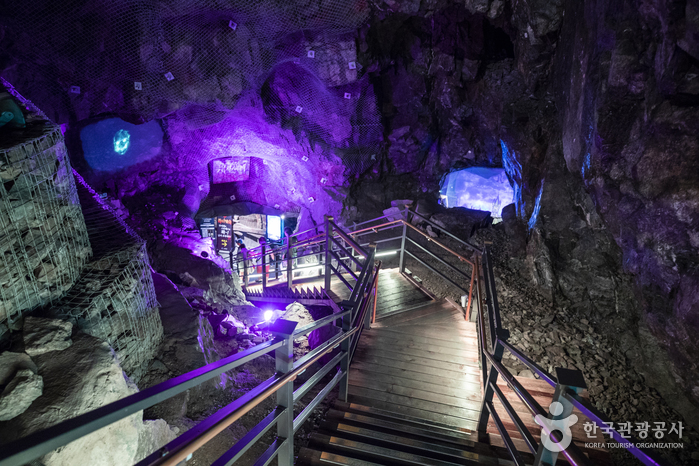
Gwangmyeong Cave (광명 동굴)
6.3Km 2025-10-27
142 Gahak-ro 85beon-gil, Gwangmyeong-si, Gyeonggi-do
Gwangmyeong Cave was developed in 1912 during the Japanese colonial period to exploit resources, including gold mines, and continued to be developed for industrial purposes after liberation. After the mine was closed in 1972, it was used as a salted seafood warehouse for about 40 years. Gwangmyeong City purchased the site, reorganized it, and made it available to the public. It is currently recognized as a modern industrial heritage site with high historical value, and is well known as a cave theme park in the metropolitan area. Along with the cave, colorful lights and sculptures create a spectacular sight. Aside from tasting and purchasing Korean wine at the Gwangmyeong Wine Cave, visitors can also see the largest media art piece in Korea at the Lascaux Exhibition Hall, enjoying a more diverse travel experience.
 English
 한국어
한국어 日本語
日本語 中文(简体)
 Deutsch
 Français
 Español
 Русский


