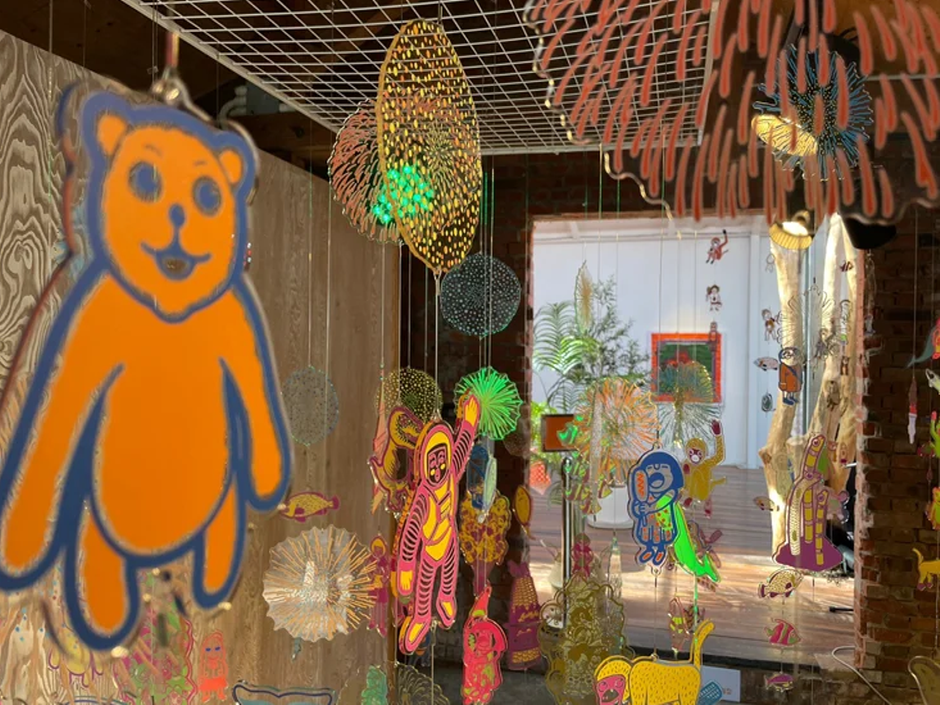
Art Polygon Horanggassinamu (호랑가시나무 아트폴리곤)
5.5Km 2025-02-04
22 Jejung-ro 47beon-gil, Nam-gu, Gwangju
Located in Yangnim-dong, Art Polygon Horanggasinamu is a multi-purpose cultural space that hosts various programs such as exhibitions, lectures, and performances. In 2021, it was used as one of the venues for the Gwangju Biennale. The space was created by preserving and expanding the original structure of a missionary's garage. Yangnim-dong is home to many modern historical cultural heritage sites and art galleries that connects the past and the present.
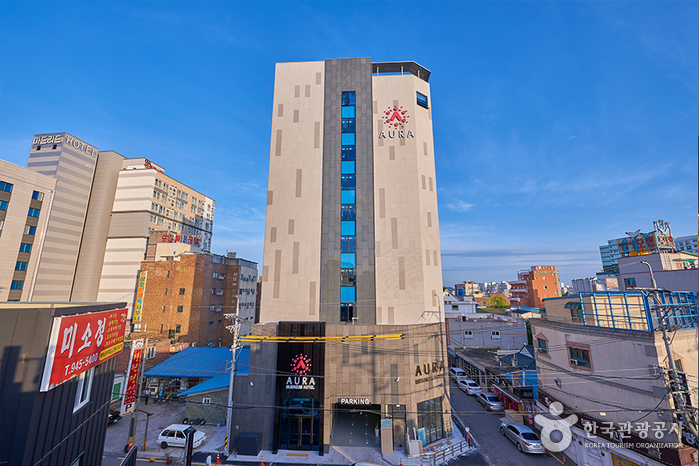
Gwangju Aura Hotel (광주 아우라 비즈니스 호텔)
5.5Km 2024-12-22
28 , Songjeong-ro 1beon-gil, Gwangsan-gu, Gwangju
The Aura Hotel in Gwangju, Jeollanam-do, is a business hotel directly opposite KTX Songjeong Station, which offers clean and comfortable rooms with spacious bathrooms and an elegant atmosphere. Transport connections are good, with Gwangju Airport and Gwangju 2nd Ring Road just 10 minutes away, Must-visit Gwangju sights Songjeong Tteokgalbi Street, 1913 Songjeong Old Market, and Songjeong 5-Day Market are also nearby.
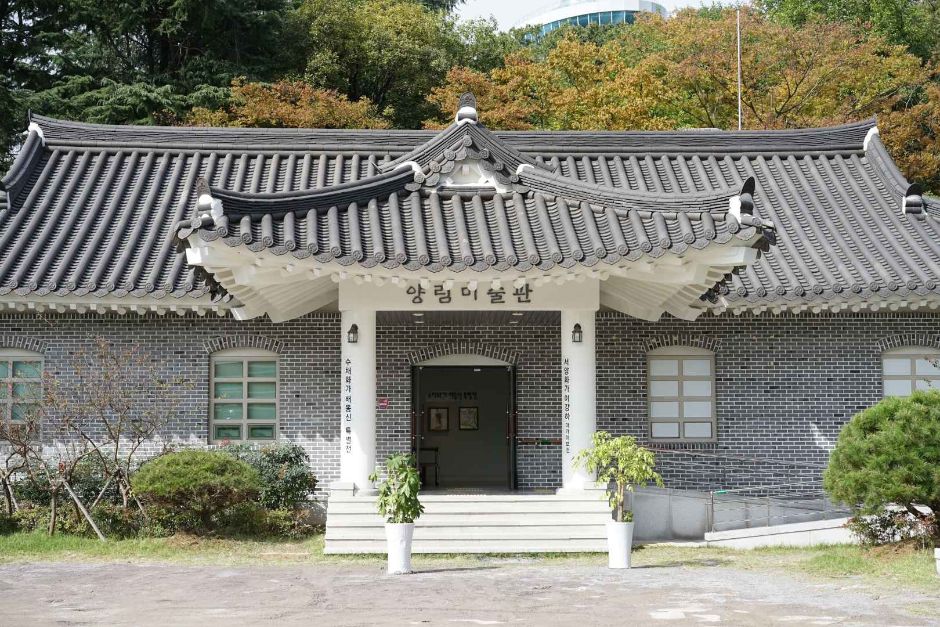
Yangnim Art Center (양림미술관)
5.5Km 2024-11-20
70 Jejung-ro, Nam-gu, Gwangju
Yangnim Art Center takes its name from its location in Yangnim-dong, the center of modern history and culture. Designed in hanok style, the building features exhibition rooms on each floor, offering both artists and visitors a creative space to connect and immerse themselves in the art.
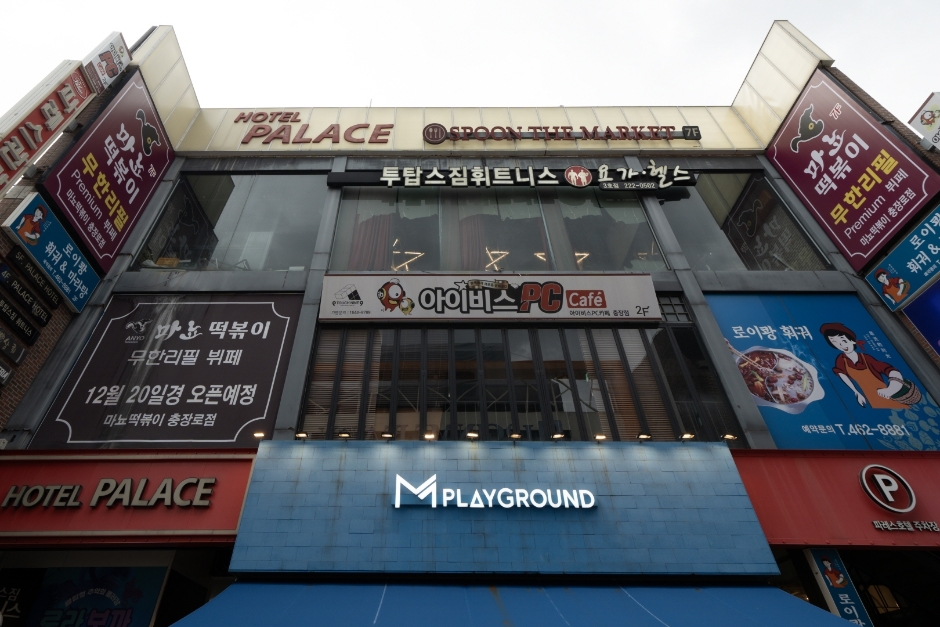
Palace Tourist Hotel (파레스 관광호텔)
5.6Km 2025-08-18
13, Jungang-ro 160beon-gil, Dong-gu, Gwangju
Palace Tourist Hotel is located only a six-minute walk from Geumnamro 4(sa)-ga Station on Gwangju Subway Line 1. Nearby attractions within walking distance include Gwangju Art Street and Yangdong Market.
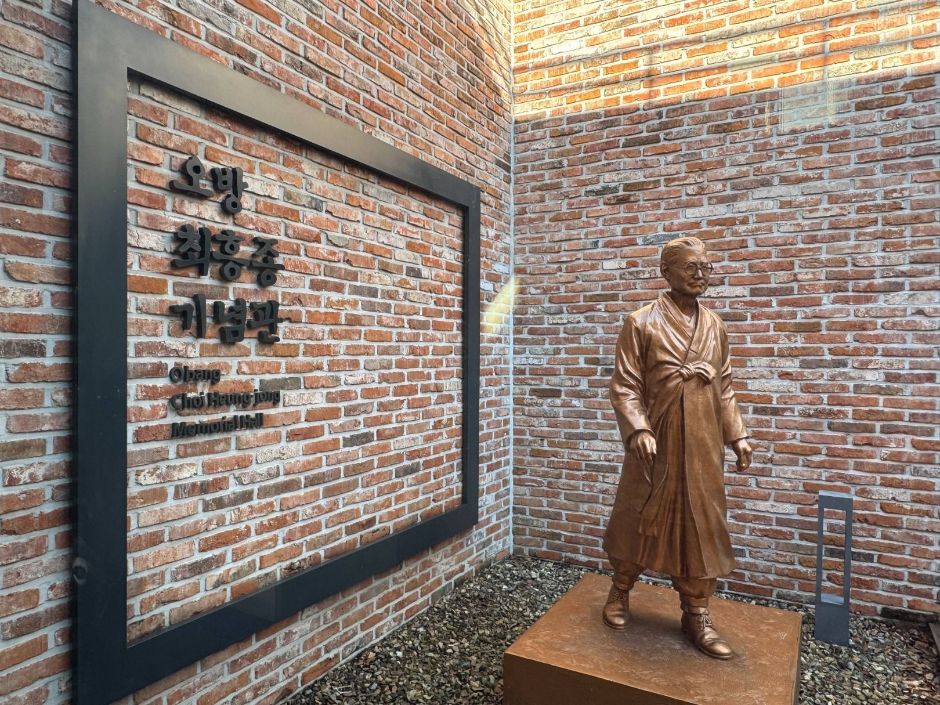
Obang Choi Heung-jong Memorial Hall (오방 최흥종 기념관)
5.6Km 2024-12-17
64 Jejung-ro, Nam-gu, Gwangju
Obang Choi Heung-jong Memorial Hall is dedicated to Rev. Obang Choi Heung-jong who was also a Korean independence fighter and a social activist. His lifetime of sacrificing for others while improving the Gwangju neighborhood made him a true hero. Visitors to the memorial hall can deeply understand the life that Obang Choi Hueng-jong lead.
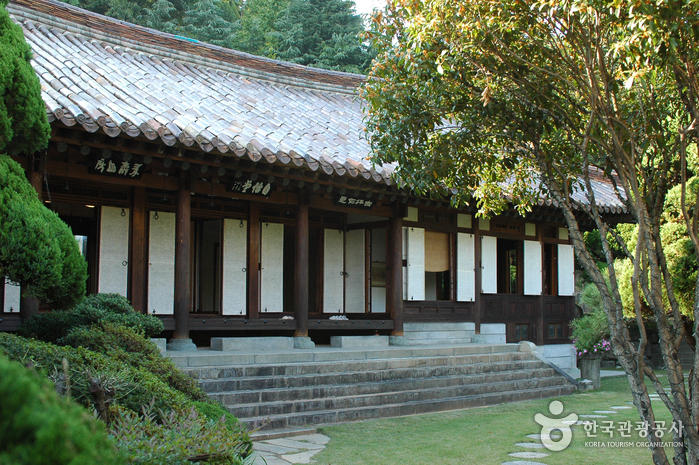
House of Choi Seung-hyo (최승효가옥)
5.6Km 2023-03-08
29-4, Yangchon-gil, Nam-gu, Gwangju
The House of Choi Seung-hyo is a traditional residential building located on the southeastern slopes of Yangnimsan Mountain. The rectangular building is open to the east, has 8 kan (the space between two pillars) in the front and 4 kan to the sides, and is graced by a traditional hipped and gabled roof. Since the building was constructed in the 1920s, it offers a valuable glimpse into the architectural style of Korean houses at the end of the Japanese colonial period. Choi Sang-hyeon was an activist who offered his attic as a place of refuge for other activists.

Han Hee-won Art Museum (한희원미술관)
5.6Km 2023-01-25
27-6, Yangchon-gil, Nam-gu, Gwangju
Han Hee-won Art Museum is a small hanok art museum in the back alley of Yangnim-dong.
Painter Han Hee-won grew up in Yangnim-dong, where he was influenced as a painter. In July 2015, he purchased a small hanok between the House of Yi Jang-u and the House of Choe Seunghyo and transformed it into an art museum to preserve and show the spirit of love, comfort, and art in his hometown, Yangnim-dong. An art museum with a low threshold approaching citizens with a humble mind, Han Hee-won Art Museum is open to anyone. Feel free to visit, appreciate the paintings, and be comforted through art.
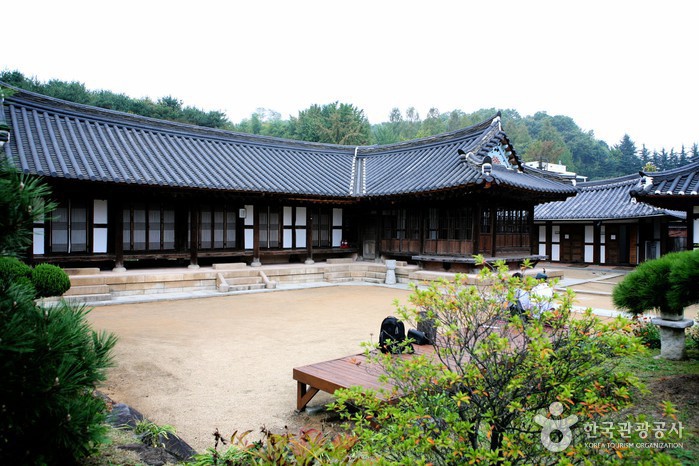
Lee Jang-woo's House (이장우 가옥)
5.6Km 2025-10-23
21 Yangchon-gil, Nam-gu, Gwangju
Designated the first Gwangju Folk Material on March 20, 1989, Lee Jang-woo's House is an upper-class, tile-roofed house with a gate, storeroom, servants’ quarters, detached building, and main building. The building is estimated to have been constructed in 1899 and is overall a sturdy example of Korean architecture, well-preserved in its original state. The L-shaped main hall of the historic building is rather large and consists of (left to right) a wooden verandah, a small room, a hall, the main room, a kitchen, and another small room. The room doors are double doors with a sliding door on the inside and a hinged door on the outside. The hall also has partitions that can be hung up as necessary.
◎ Travel information to meet Hallyu’s charm - movie "Meet the In-Laws"
This hanok served as Hyeon-joon’s (played by Song Sae-byeok) family home in Jeolla-do in the movie "Meet the In-Laws." With its well-preserved architecture and traditional Korean garden, it captures the elegance and charm of early modern Korea.
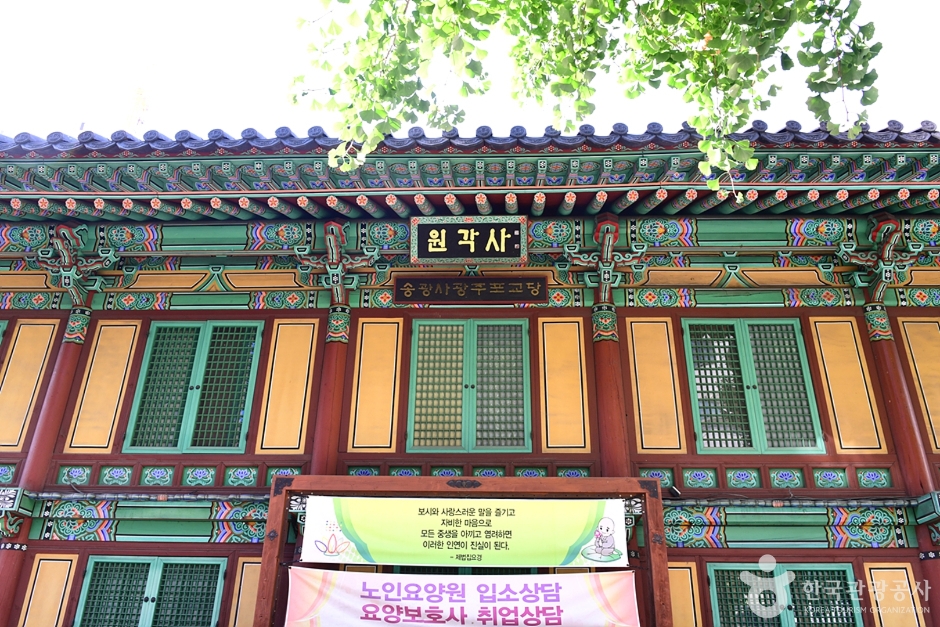
Gwangju Wongaksa Temple (원각사(광주))
5.6Km 2025-08-06
197 Jungang-ro, Dong-gu, Gwangju
Gwangju Wongaksa Temple, a branch temple of Suncheon Seonggwangsa Temple, is part of the Jogye order of Korean Buddhism in Gwangju. Bustling with visitors, the temple offers various events, cultural activities, and Buddhist ceremonies for visitors.
Geumnam Butterfly Garden (금남로공원 금남나비정원)
5.7Km 2024-11-14
20-2 Geumnam-ro, Dong-gu, Gwangju
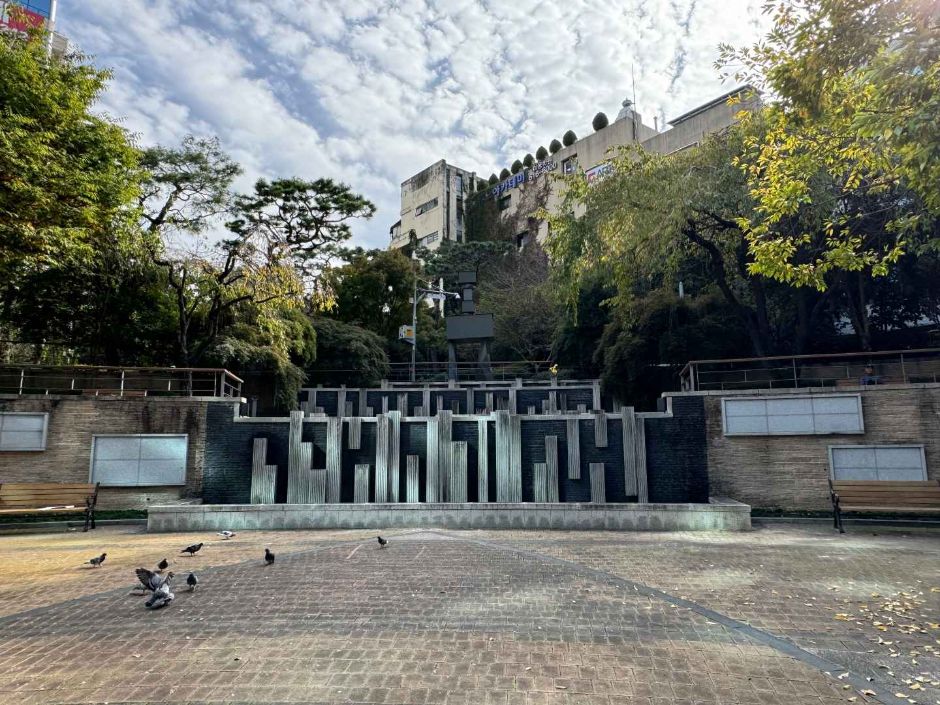
Geumnamro Neighborhood Park, once the site of the Bank of Korea’s Gwangju branch, now hosts the enchanting Geumnam Butterfly Garden. Inspired by the glowing butterflies, the garden is a stunning curation by Gwangju, a UNESCO Creative City of Media Arts. It offers a magical setting for a night tour, transporting visitors into a fantasy world of vibrant colors and purple hues.
 English
 한국어
한국어 日本語
日本語 中文(简体)
 Deutsch
 Français
 Español
 Русский


