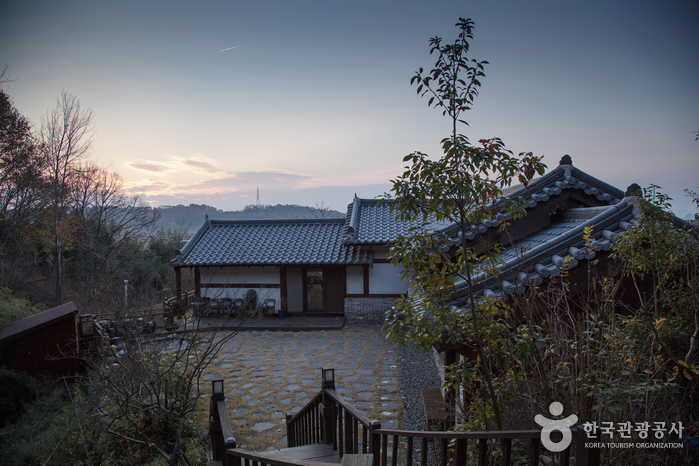
Doraemi House (도래미)
15.8Km 2024-08-05
18-26 , Dongnyeok-gil, Naju-si, Jeollanam-do
+82-61-336-3646, +82-10-6604-6621
Doraemi House in Dorae Village, Naju, Jeollanam-do, is a hanok stay with a bonchae (‘main house’), a sarangchae (men’s house) and a byeolchae (‘reception room’). The bonchae has two bedrooms with a hidden attic space. The sarangchae has a living room with bedrooms on either side; while the byeolchae, atop a low hilll, has a single cozy room. A walk along a forest road takes you to a pavilion by a pond. Next to the bonchae is a quiet and tranquil reading room.

Chungjangsa Shrine (충장사)
16.5Km 2023-01-25
13, Songgang-ro, Buk-gu, Gwangju
+82-62-613-5407
When you reach Baejae along the tourist road leading up to Wonhyosa Temple, you can see the well-maintained tomb and the magnificent building of Chungjangsa Shrine on the left. It was built in 1975 as a memorial to General Kim Deok-ryeong, born in Mudeungsan Mountain. In the precincts, there are the shrine, where Kim Deok-ryeong's portrait and command paper are enshrined; the east room and west room; Eullyun Monument and Commentary Monument, the relics hall; Chungyongmun Gate; and Ikomun Gate. In the relics hall, the clothes of 'General Kim Deok-ryeong,' designated as Important Folk Material, and the coffin excavated from the general's tomb, as well as his handwriting, are on display. On the hill behind the shrine is Kim Deok-ryeong's tomb and tombstone, as well as his family's tomb.
May 18th National Cemetery (국립 5·18 민주묘지)
16.7Km 2024-07-11
200 Minju-ro, Buk-gu, Gwangju
+82-62-268-0518
The May 18th National Cemetery in Gwangju is a symbol of freedom and democracy. The cemetery holds the graves of 764 victims of the May 18th Democratic Uprising in 1980, seven structures, and many monuments.
![Stay Hwangryong[Korea Quality] / 스테이황룡 [한국관광 품질인증]](http://tong.visitkorea.or.kr/cms/resource/48/2810848_image2_1.jpg)
Stay Hwangryong[Korea Quality] / 스테이황룡 [한국관광 품질인증]
17.5Km 2024-10-30
5-3, Haengbok 1-gil, Hwangnyong-myeon, Jangseong-gun, Jeollanam-do
+82-10-7142-5646
Stay Hwangryong is a tranquil hanok accommodation where the Hwangryonggang River flows in front. The hanok surrounded by a low stone wall is divided into two sections: Sarangchae and Anchae. The broad yard with flowering trees add more beauty to the landscape. The guest rooms of Stay Hwangryong include Hwangryong, good for six guests, Sarangchae 1 and 2 that are both good for two travelers, and a Maru that is the equivalent of a living room. The modern hanok retains the traditional beauty, while having added the convenience of modern facilities. Bright lightings on the ceiling and glass windows dressed in white curtains that replaced hanji give a more trendy look. Individual heating system per room, WiFi, and air conditioning are provided. The kitchen is equipped with a rice cooker, induction cooktop, and other kitchenware for those who wish to cook during the stay. Each room has a barbecue grill for guests to enjoy. The yard with plentiful sunlight is good for small gatherings, such as family gatherings and birthday parties.
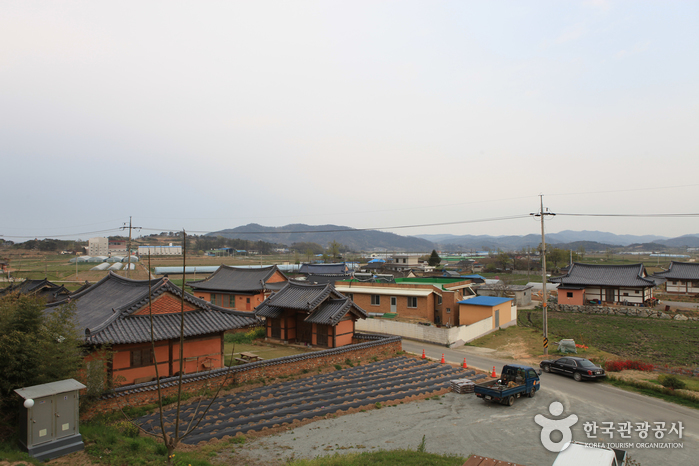
Mopyeong Village (모평마을)
18.1Km 2022-11-11
80, Sangmo-gil, Hampyeong-gun, Jeollanam-do
+82-61-320-1783
Located in Hampyeong-gun, Jeollanamdo, Mopyeong Village is a scenic farming village that is rich in tradition and history. From the moment you start walking down the stonewall-lined path into town, this small village will capture your heart. The village’s important history (including its title as the origin of Hampyeong-gun of Jeollanam-do Province) is evident in everything you see: from the traditional houses to the 500-year old forest. The area is home to 27 historical and cultural sites and the beautiful Haebochoen Stream, which is shaded by over 40 different types of trees including zelkova trees, nettle trees, and willow trees. Some of the town’s traditional houses, which are about 80 years old, offer guesthouse accommodations to tourists. They include Mopyeongheon, Sopungga and Hisomun (a house made of yellow sod).
In addition to the beautiful country scenery, there is a great selection of available programs that highlight the area’s specialties, including: mulberry-picking, silkworm-feeding and Korean traditional sauce-making. You can also visit a traditional watermill, which has been restored, and swim and splash around in the forest stream. Visitors are encouraged to try their hand at making green tea cakes at the traditional teahouse nearby.
The area of Mopyeong is full of things to entertain visitors, including a number of attractions and special events. Some of the area’s most praiseworthy attractions are the Hampyeong Butterfly Festival, the Cluster Amaryllis Festival in Yongcheonsa Temple, the Chrysanthemum Festival, and the Hampyeong Eco Park and Folk Museum.
Other towns well worth a visit in the Mopyeong area are Hamo Maeul, Ungok Maeul and Wonsan Maeul. A stay at Wonsan Maeul gives visitors a chance to experience firsthand the reality of an agricultural lifestyle by doing some activities like mulberry-picking. For a more low-key trip, make your way over to Ungok Maeul, where you can enjoy the fantastic scenery at the lake or take a relaxing walk along the hiking trails of Mt. Wolyangsan.
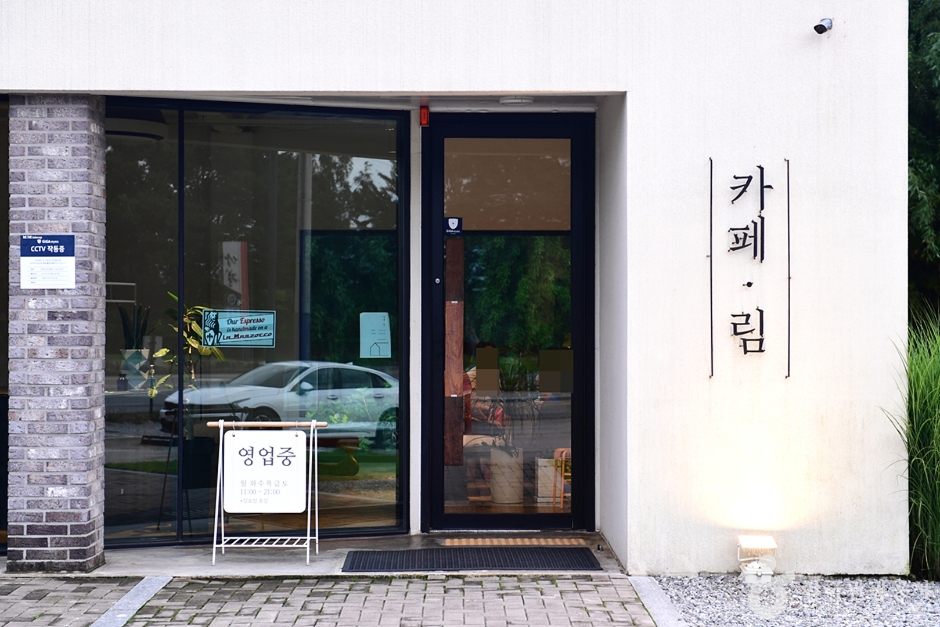
Café Limm (카페 림)
18.8Km 2024-11-12
192 Songgangjeong-ro, Bongsan-myeon, Damyang-gun, Jeollanam-do
Café Limm is a beautiful café nestled in the backdrop of lush bamboo forests in Damyang. With bamboo trees both inside and outside the café, it feels like stepping into a bamboo forest. Their signature menu item is the shakecoco (coconut milk espresso shake), made with shaken espresso and coconut milk. Visitors can also capture picturesque moments in this café that resembles a scene from an oriental painting.
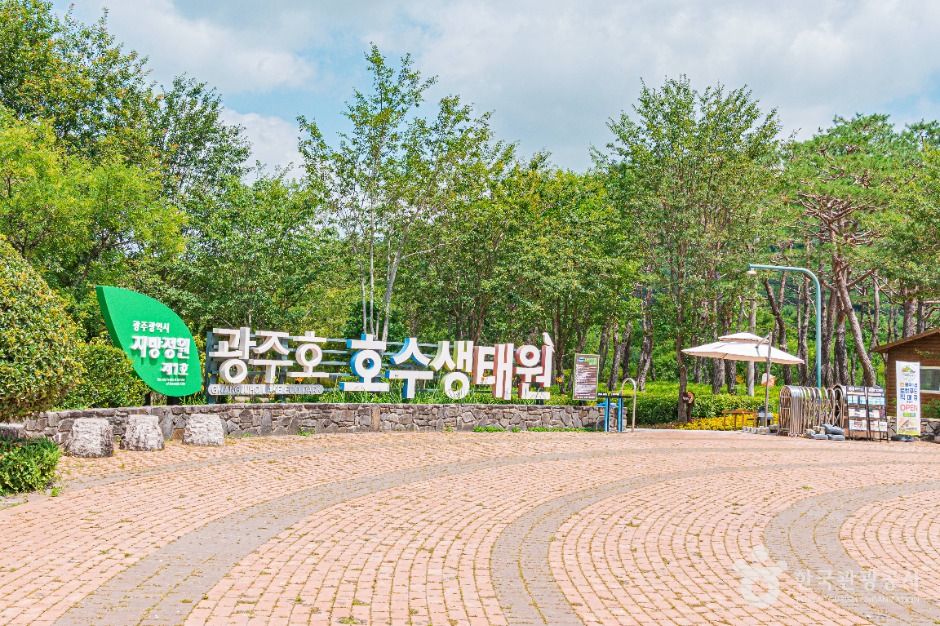
Gwangjuho Lake Eco Park (광주호 호수생태원)
18.8Km 2025-08-12
Chunghyo-dong, Buk-gu, Gwangju
+82-62-613-7891
Gwangjuho Lake Eco Park is an ecological park located near the banks of Gwangjuho Lake, featuring a Nature Observation Center, Nature Learning Center, Lawn Area, and Waterside Wetland. The park is home to around 170,000 wildflowers and over 3,000 trees, offering opportunities to observe various flora and fauna up close. Visitors can witness diverse birds thriving in the wetlands.
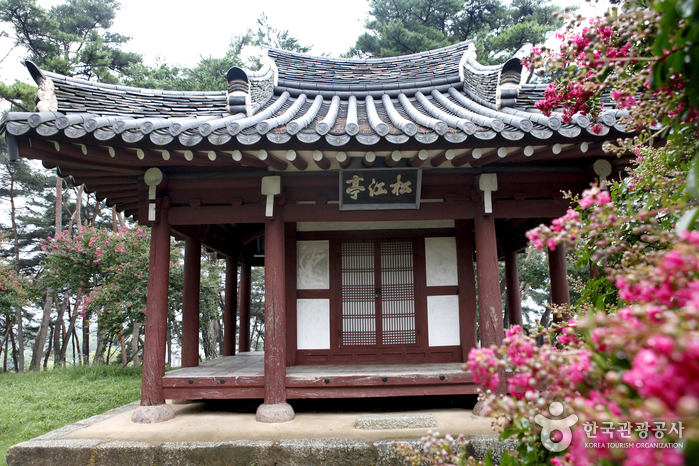
Damyang Songgangjeong Pavilion (담양 송강정)
18.9Km 2021-05-14
232, Songgangjeong-ro, Damyang-gun, Jeollanam-do
+82-61-380-2811
Songgangjeong pavilion is located in Wongang-ri, Damyang-gun, Jeollanam-do. It was registered as Jeollanam-do Provincial Monument No. 1 on January 29, 1972.
Joseon dynasty poet Jeong Cheol (pen name, Songgang) composed his famed poem “Samiingok” from this pavilion. Next to it presently stands the Samingok memorial stone. The two structures at this site, Hwanbyeonkdang and Sigyeongjeong, are collectively referred to as
the “Relics of Jeong Songgang.”
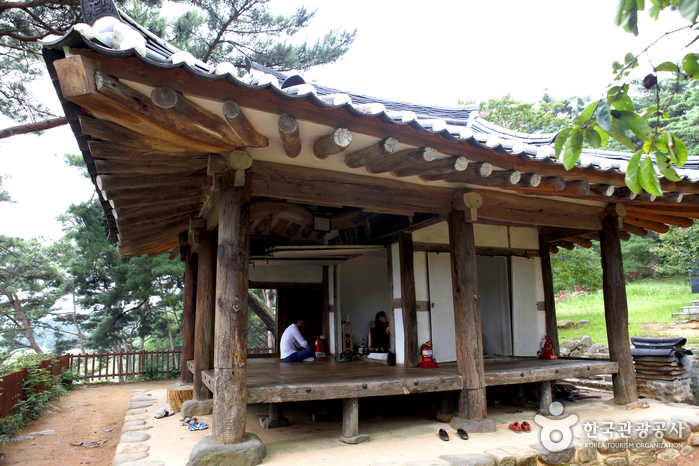
Sigyeongjeong Pavilion (담양 식영정)
19.1Km 2025-01-08
Jigok-ri, Damyang-gun, Jeollanam-do
+82-61-380-2811
Designated as the top monument of Jeollanam-do, Sigyeongjeong Pavilion means a place where even the shadow of the moon can find a place to rest. As its name suggests, this pavilion is set in a lush and remote forested area. Countless number of scholars and writers have been attracted to this pavilion as a place of profound inspiration. The pavilion gained more fame from the legendary lyrics of Seongsanbyeolgok written by the poet Jeong Cheol. The elegant words of Kim Seongwon, a literary scholar, depict the scenic beauty of Seongsan Mountain as the seasons change.
Of all the pavilions situated at the basin of the Yeongsangang River the Sigyeongjeong Pavilion is said to be blessed with a breathtaking view from the side. The current building was restored in the early 1900s. At the Sigyeongjeong Pavilion there is the Buyongdang, a monument with the lyrics to the Seongsanbyeolgok Poem, and next to it an old library building called Jangseogak built to preserve the wooden blocks of Songgangjib, a book of poetry written by Jeong Cheol.
Hwanbyeokdang Pavilion (환벽당)
19.2Km 2023-01-25
10, Hwanbyeokdang-gil, Buk-gu, Gwangju
+82-62-510-1500
Hwanbyeokdang Pavilion was built by Yeongcheonja Sinjam and was also called Byeokgandang, which is recorded in Go Gyeong-myeong's Yuseoseongnok. The building has a hipped-and-gabled roof with three bays in the front space and two bays in the inside space. It is a modified form in which the two rooms in the middle are used as rooms, and the front and right sides are floors. Originally, it was a traditional pavilion, but it seems to have changed to its current form as it was expanded later. A tablet written by Uam Song Si-yeol hangs here, and the poems of Seokcheon Im Eok-ryeong and Jo Ja-i are on a signboard. There are two poems written by Jeong Cheol about Hwanbyeokdang Pavilion, which are published in Songgangsokjip and Gwangjumokji. Jeong Cheol's 4th-generation descendant Jeong Su-hwan bought it from Kim Yun-je's descendants, and Yeon Il-jeong's family is currently managing it.
 English
 한국어
한국어 日本語
日本語 中文(简体)
 Deutsch
 Français
 Español
 Русский


