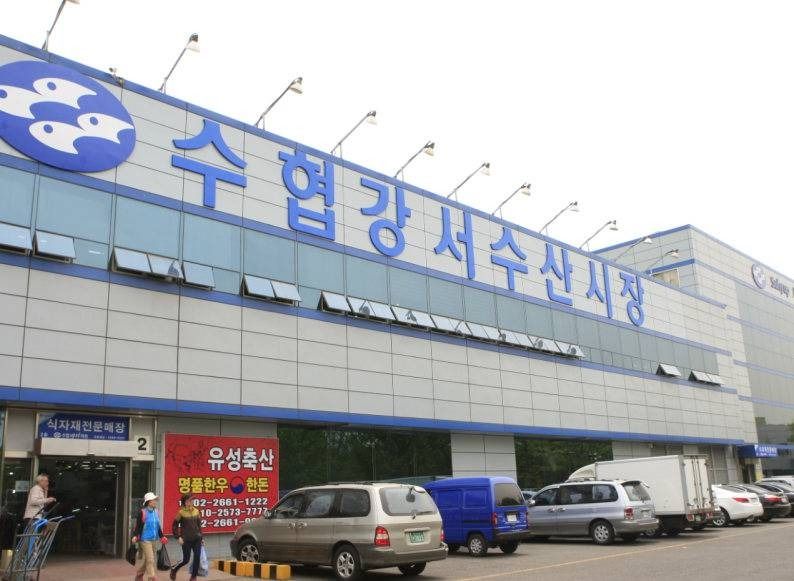
Suhyup Gangseo Seafood Wholesale Market (수협 강서수산시장)
10.9Km 2025-09-15
130 Gangseodomaesijang-ro, Gangseo-gu, Seoul
As Seoul's largest seafood market in the southwestern region, Suhyup Gangseo Seafood Wholesale Market supplies seafood from all over the country at stable prices through auctions every morning. It sells a variety of seafood, including live fish, fish, shellfish, crustaceans, dried fish, and fermented fish products in fresh condition. Consumers can enjoy the seafood they purchase directly from the market at the specialized restaurant area on the second floor, which offers a wide range of seafood dishes and a diverse menu. The spacious and comfortable area is also suitable for family gatherings or company dinners.

Neulsolgil Park (늘솔길공원)
11.0Km 2024-11-08
771 Aenggogae-ro, Namdong-gu, Incheon
Neulsolgil Park, nestled in Nonhyeon-dong, Incheon, is a park designed with nature in mind. The creation of the park focused on preserving the existing forest as much as possible, resulting in a diverse array of forest trails that lead visitors through cypress, metasequoia, ginkgo, and katsura forests. Additionally, the park offers a variety of amenities and playgrounds. Features include a sheep farm, a rose garden, and a forest playground, making it a versatile destination that caters to visitors of all ages.
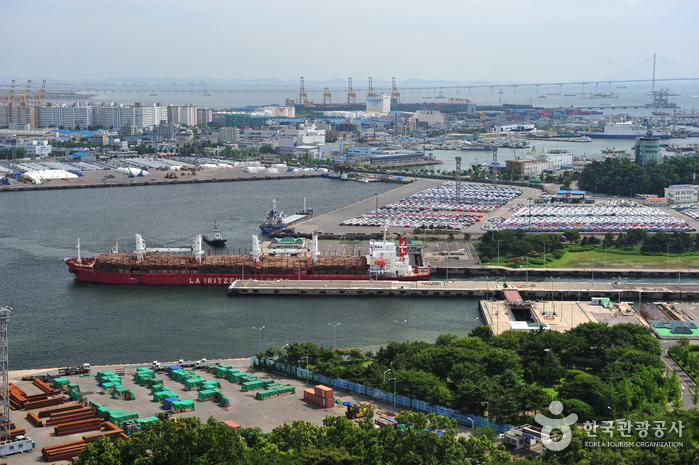
Incheon Port Floodgate (인천항 갑문)
11.0Km 2021-06-01
376, Wolmi-ro, Jung-gu, Incheon
+82-32-890-8000
Incheon Port Floodgate is located between the beautiful Wolmisan Mountain and Sowolmido Island. Surrounding the floodgate is a large 66,000 square meter garden covered with grass, pine trees, ginko trees, and cherry blossom trees, creating a beautiful scene. Especially in the spring, azaleas, royal azaleas, cherry blossoms, and magnolia blossoms are blooming, adding to the beauty of the garden.
If you visit when the floodgate opens, you will witness giant cargo ships and cruise ships passing through the gate to enter and leave the port. Also, at the situation room of the floodgate management office, an introductory video of Incheon Port is played to offer more information on the facility.
There are two floodgates at Incheon Port. One floodgate is 36 meters wide by 363 meters long. The other is 22.5 meters wide by 202 meters long. The larger one can accommodate vessels up to 50,000DWT and the smaller one can dock ships up to 10,000DWT. Per day, up to 20 vessels can enter and leave the port.
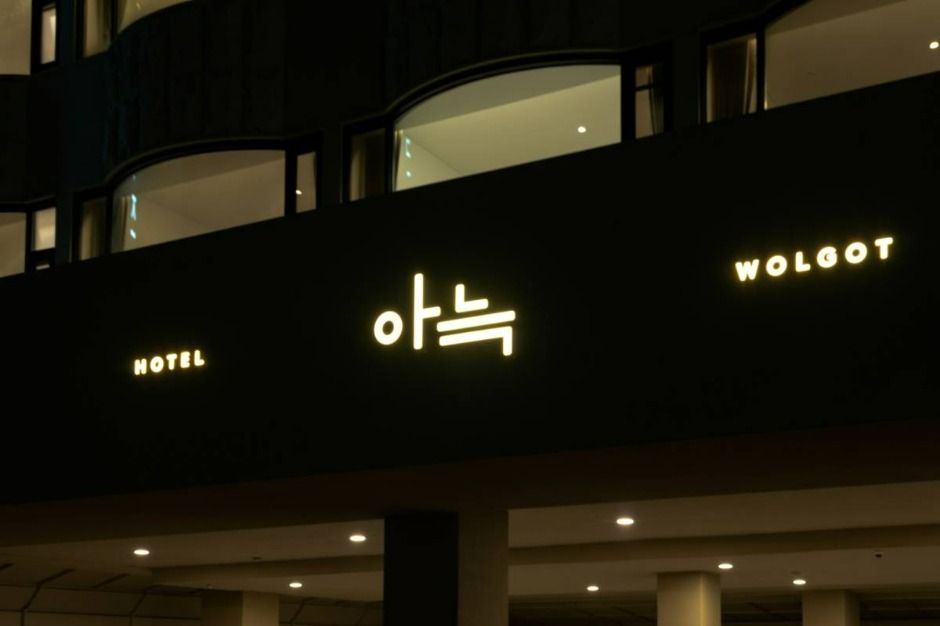
The Hyoosik Aank Hotel Wolgot (더휴식 아늑호텔 월곶점)
11.2Km 2025-04-08
1003-6 Wolgot-dong, Siheung-si, Gyeonggi-do
Located in Siheung, Gyeonggi-do, Aank Hotel Wolgot offers both relaxation and entertainment with theme-focused room types such as a music room with a turntable, wellness room equipped with a premium massage chair, movie room with a beam projector, gaming room equipped 2 desktop PCs, twin bedroom, and spa room with a spacious tub and sauna facility. The hotel also has a parking lot and a guest lounge.
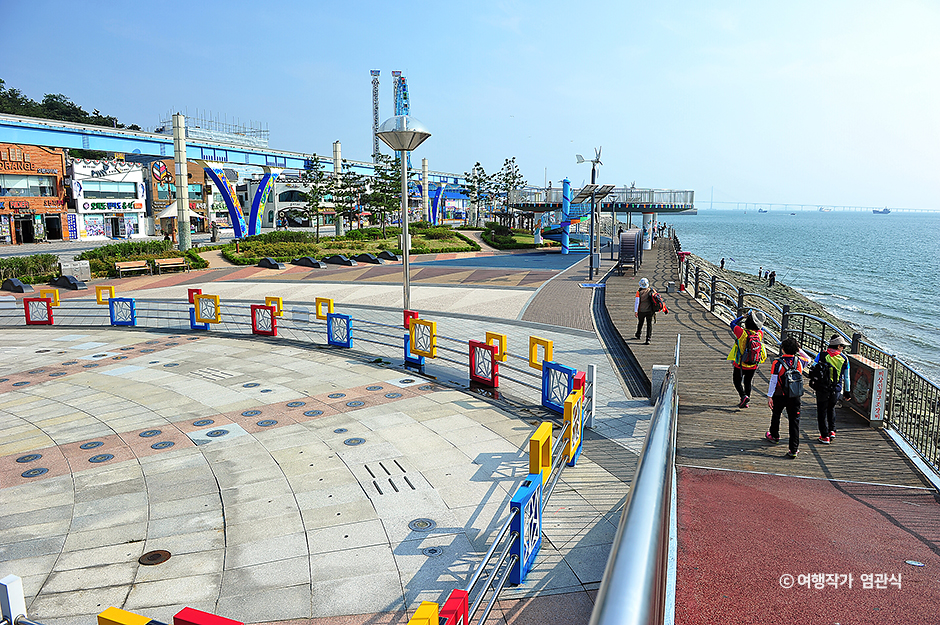
Wolmi Culture Street & Moonlight Music Fountain (월미문화의거리 & 달빛음악분수)
11.3Km 2025-10-23
252 Wolmi-ro, Jung-gu, Incheon
Wolmi Culture Street is a pedestrian-only street located in Wolmido, one of Incheon's major attractions. The street is lined with benches for people to rest, and one can usually find artists here drawing portraits. The street passes Wolmi Park and Wolmi Observatory, providing outstanding views of Incheon Port and the Wolmido area. Family visitors and couples enjoy stopping by Wolmi Theme Park to enjoy the amusement rides. The Moonlight Music Fountain is rather small in size, but is a beloved attraction of Wolmi Culture Street.
My Land (마이랜드)
11.3Km 2025-10-28
252 Wolmi-ro, Jung-gu, Incheon
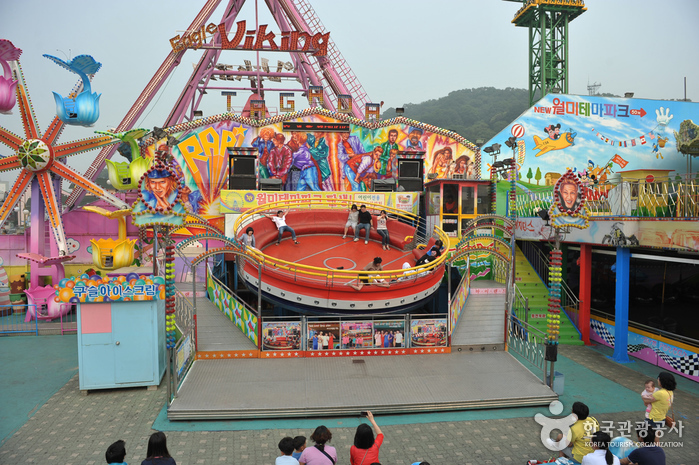
◎ Travel information to meet Hallyu’s charm
Sung-kyu from the web show “Tour Fairy” and foreign tourists enjoyed Disco Tagada in My Land, a representative theme park in Wolmido Island. After enjoying the ocean views and thrilling rides, you can take a stroll to the nearby Wolmi Observatory and Songwol-dong Fairy Tale Village.
Wolmido Island (월미도)
11.3Km 2023-11-08
36 Wolmimunhwa-ro, Jung-gu, Incheon
+82-32-765-4169
Wolmido Island has very few historical records, despite being the location of a temporary palace, built in 1653 during the reign of King Hyojong. The palace was built on the eastern side of the island, but it is impossible to find traces of it now. From the late 1920s until the '30s, the island was transformed into a resort, a very popular destination at the time. Wolmi Culture Street opened in July 1989 and helped improve the area's fame.
On weekends and holidays, people flock to Wolmido Island to enjoy coffee and fresh seafood at the cafes and restaurants overlooking the sea. Despite being 1 kilometer off the coast, Wolmido is no longer an island, being connected to the mainland through modern construction techniques. It is now an easily accessible retreat for locals and tourists alike.
Yejeon (예전)
11.3Km 2025-01-20
43-2, Wolmimunhwa-ro, Jung-gu, Incheon
+82-32-772-2256
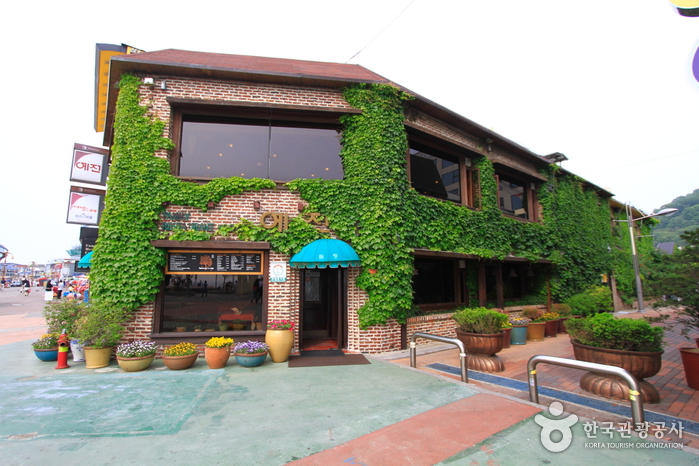
Yejeon is a western food restaurant and is considered one of the establishments that first created Wolmido Island’s café culture. Located in the middle of Wolmido's Munhwa Street (Culture Street), this Western-style redbrick building resembles that of a European atmosphere in Korea.
Sudokwon Landfill Site Wildflower Complex Dream Park (수도권 매립지 야생화단지 드림파크)
11.4Km 2024-03-07
61 Geowol-ro, Seo-gu, Incheon
+82-32-560-9300
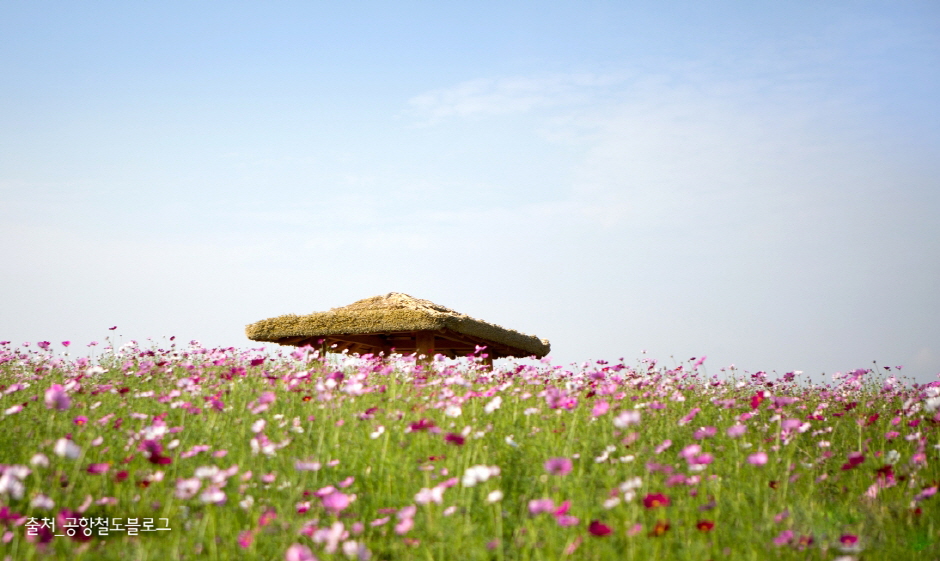
Sudokwon Landfill Site Wildflower Complex Dream Park is an eco-project park that maintains the function of a landfill site while restoring natural habitats and providing citizens with recreational spaces. It features Green Bio Complex, Wildflower Garden, Nature Observation District, and Wetland Observation District. A leisurely stroll takes about 40 minutes, while exploring every nook and cranny may take around 1 hour and 30 minutes. There's also a dog playground, making it suitable for visits with pets.
Incheon Baendaengi Street (연안부두 밴댕이회무침거리)
11.4Km 2021-07-22
24-1, Yeonanbudu-ro, Jung-gu, Incheon
+82-32-765-4169
The Gwanghwado and Incheon areas are known for their plentiful catches of baendaengi (large-eyed herring). After a little street started specializing in serving baendaengi some 30 years ago, the fish has continued to grow in popularity.
Located in Guwol-dong, across from the Incheon Culture & Arts Center, Baendaengi Street has expanded, and so has the variety of dishes served. Visitors can try baendaengi prepared sashimi-style, roasted, or in a spicy soup. For this particular species of herring, locals believe the flavor is best in March and April when they grow to their largest size. Salted Baendaengi also makes an excellent side-dish for Korean meals.
* Baendaengi is one of many types of small prey fish referred to as ‘Soeo’ for their fierce struggle in fishing nets. Soeo have internal organs that are proportionally smaller than other species of fish and are known for their feisty nature. These attributes are thought to signify a stress-filled life, which is why many Koreans refer to narrow-minded or hot-tempered people as ‘baendaengi.’
 English
 한국어
한국어 日本語
日本語 中文(简体)
 Deutsch
 Français
 Español
 Русский


