Gimje Seongmoam Hermitage (성모암(김제))
14.2Km 2024-04-07
54-9, Hwapo3-gil, Gimje-si, Jeonbuk-do
+82-63-544-0416
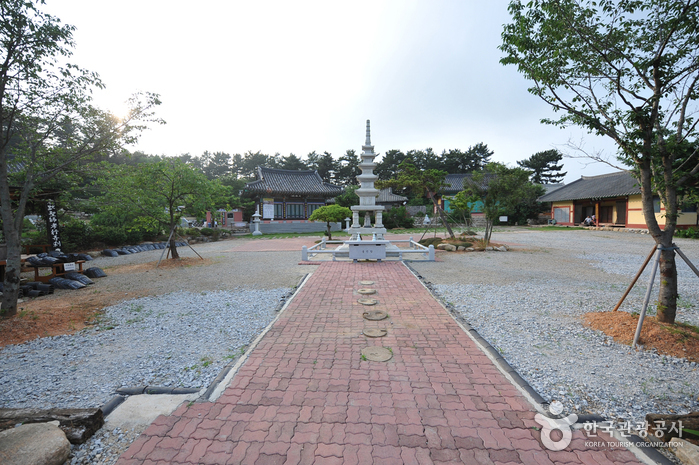
Seongmoam Hermitage, a temple of the Jogye Order, is located on Yuangsan Mountain in Mangyeong-myeon, Gimje-si. The temple is the final resting place of the mother of Jinmuk Daesa, a great Buddhist monk from the Jeonbuk region. Jinmuk believed that a person’s love and respect for Buddha is not that much different from the love and respect one has for his or her parents. As an expression of this philosophy, Jinmuk had his mother’s remains enshrined at the temple after she died at Mujasoncheonnyeonhyanghwajiji.
A neat little line of stone lamps leads visitors up from the parking lot to the temple grounds, revealing the well-attended grave of Jinmuk Daesa’s mother to the left. The temple is very unique in that it is the only one to house a caretaker’s office (Gosiraejoen Hall) that is responsible for maintaining the grave site.
It is said that prayers made to Seongmo (the holy mother) while visiting the temple will come true. Throughout the year, throngs of people journey to the temple to pay their respects and earnestly ask the holy mother to grant them their deepest desires.
Manghaesa Temple (망해사)
14.6Km 2024-04-07
94, Simpo 10-gil, Gimje-si, Jeonbuk-do
+82-63-540-3324
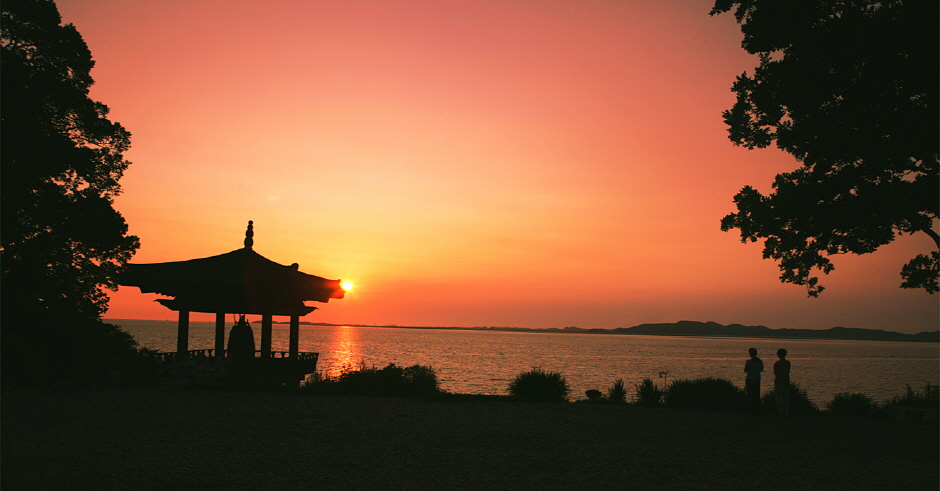
Manghaesa Temple is located at the edge of the Gimje Plains before the sea. The temple stands at the summit of Jinbongsan Mountain. The temple was named for the view of the ocean and the fields of rice. The temple was established by the great monk Buseol Geosa during the 2nd year of King Uija of Baekje (AD 642). Years later, Dobeopsa (a Chinese monk from the Tang dynasty) renovated the temple. The temple was altered again during the reign of King Injo of the Joseon dynasty when the great monk Jinmuk Daesa built Nakseojeon Hall in 1589. Bogwangjeon Hall and Chilseonggak Pavilion were built much later in 1933. Manghaesa Temple is unique in that it is the only temple where the distant horizon is visible over both land and sea. Nearby attractions include a walking path through a field of reeds by Mangyeonggang River and views of the sunset over the sea.
Iksan Ipjeomni Ancient Tombs (익산 입점리 고분)
15.3Km 2024-04-07
80, Ipjeomgobun-gil, Iksan-si, Jeonbuk-do
+82-63-859-5875
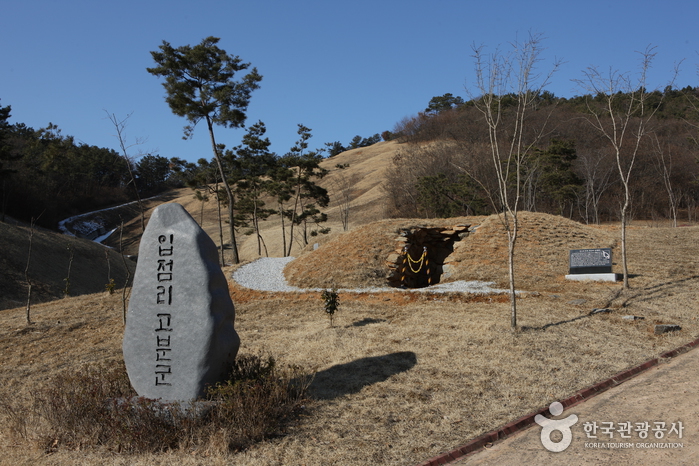
The Iksan Ipjeomni Ancient Tombs are a group of ancient Baekje-era tumuli located 100 meters above sea level on the northeast brow of Chilmokjae Hill in Ipjeom-ri, Iksan-si, Jeollabuk-do. The burial ground covers an area of more than 18,520 square meters and is officially listed as Historical Site No. 347. To date, a total of eight tumuli have been excavated, all of which are chamber tombs.
Surprisingly enough, the tombs were first discovered in 1986 by a high school student. While digging for arrowroot, a young man from a local high school found some pieces of gold that resembled a hat. He quickly notified the authorities and it was soon discovered that the pieces of gold were in fact valuable ancient artifacts. An emergency excavation was conducted and the eight tumuli were uncovered, but unfortunately all of the tumuli except Tomb No. 1 had been severely damaged. Tomb No. 1, which is still in relatively good condition, boasts an entrance measuring an impressive 16 meters in x_height and 2 meters in x_width.
Inside the tombs archaeologists found valuable relics from the Baekje dynasty including earthenware, jewelry (a gilt-bronze hat, gold earrings, glass beads, etc.), harnesses and ironware. Given the shapes and the types of the pieces found, historians estimate that the tumuli were built in the 5th century. Since the gilt-bronze hat is similar in shape to those found in Japan, experts believe that there was an active exchange between the Baekje people and the people of Japan.

Bieung Mapaji Trail (비응 마파지길)
16.2Km 2024-04-06
1331 Oehang-ro, Gunsan-si, Jeonbuk-do
Bieung Mapaji Trail is a deck walkway along the coast of Biungdo Island. "Mapaji" means a place where the maparam (south wind) blows in Korean, and visitors can enjoy a refreshing walk while feeling the cool breeze from the sea. While strolling along the coastal scenery, visitors come across observation decks. From these decks, they can enjoy panoramic views of Bieung Port and the expansive scenery of the Seohae Sea.
Bieung Port (비응항)
17.1Km 2024-04-07
74-11 , Bieungnam-ro, Gunsan-si, Jeonbuk-do
+82-63-454-4000
Bieung Port is the starting point of Saemangeum Embankment which is at the entrance of the Saemangeum tourist area. Bieung Port was once closed due to the excess of soil sedimentation after the construction of Geumgang Estuary seawall. In addition, when the shores were closed off with the Saemangeum Embankment reconstruction project, a new port was in need and thus Bieung Port was repaired and reopened along with two other ports. Bieung Port in particular was constructed as a multi-functioning fisheries port so that it may be incorporated with the nearby attractions in the tourism business.
Seodongyo Theme Park (서동요 테마파크)
19.8Km 2025-10-23
616 Chungsin-ro, Buyeo-gun, Chungcheongnam-do
+82-41-832-9913
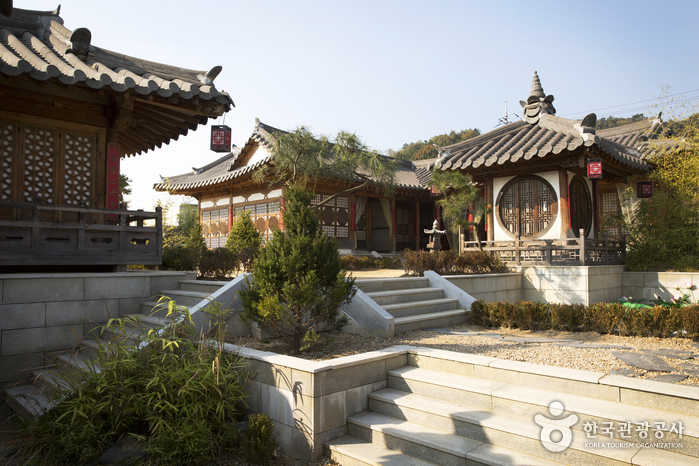
Seodongyo Theme Park is an open film set studio in a huge 33,000 square meter plot of land. The theme park offers various sets from Goryeo to Joseon dynasty as well as royal residences of Baekje dynasty, the commoners’ village, the village of the nobles and more. The set was the backdrop of various dramas including “Ballad of Seodong (2005), “The Great Sheer (2012)” and more. Visitors can also engage in various experience programs.
◎ Travel information to meet Hallyu’s charm - TV series "Moon Lovers: Scarlet Heart Ryeo"
Seodongyo Theme Park is a Baekje-themed set. The buildings that preserve the traditional architectural style and quaint scenery will make you feel like you’ve traveled back in time along with Hae-soo.
 English
 한국어
한국어 日本語
日本語 中文(简体)
 Deutsch
 Français
 Español
 Русский


