![[Ganghwa Nadeul-gil Course 7] Setting Sun Trail ([강화 나들길 제7코스] 낙조보러 가는 길)](http://tong.visitkorea.or.kr/cms/resource/22/1895222_image2_1.jpg)
[Ganghwa Nadeul-gil Course 7] Setting Sun Trail ([강화 나들길 제7코스] 낙조보러 가는 길)
19.9Km 2022-12-29
24, Cheonghadong-gil, Ganghwa-gun, Incheon
The Ganghwa Nadeul-gil Trails are a collection of walking paths along the coast of Ganghwa Island that connect the watchtowers and and walls of Ganghwasanseong Fortress, as well as royal tombs and other historically significant sites from the Goryeo dynasty that dot the island.
[Ganghwa Nadeul-gil Course 7] Setting Sun Trail
Course 7 stretches over a 20.8-kilometer-long loop from Hwado Parking Lot to Mud Flat Research Center and back. The trail leads through a tunnel of green leaves before opening out onto the mud flat. The mud flat is one of the world's top five mud flats and presents a beautiful view of the ocean and mountains. Bird-watchers will love the chance to see migratory birds fly through each winter.
![[Ganghwa Nadeul-gil Course 6] Birthplace of Hwanam Trail ([강화 나들길 제6코스] 화남생가 가는 길)](http://tong.visitkorea.or.kr/cms/resource/27/1895227_image2_1.jpg)
[Ganghwa Nadeul-gil Course 6] Birthplace of Hwanam Trail ([강화 나들길 제6코스] 화남생가 가는 길)
19.9Km 2022-08-18
24, Cheonghadong-gil, Ganghwa-gun, Incheon
The Ganghwa Nadeul-gil Trails are a collection of walking paths along the coast of Ganghwa Island that connect the watchtowers and and walls of Ganghwasanseong Fortress, as well as royal tombs and other historically significant sites from the Goryeo dynasty that dot the island.
[Ganghwa Nadeul-gil Course 6] Birthplace of Hwanam Trail
Course 6 stretches over an 18.8 kilometer area between Ganghwa Bus Terminal and Gwangseongbo Reservoir. The trail passes through fields and forests. Hwanam's hometown is so beautiful, people often say all the flowers that grow in the world can be found here.
![[Ganghwa Nadeul-gil Course 1] Simdo History & Culture Trail ([강화 나들길 제1코스] 심도역사문화길)](http://tong.visitkorea.or.kr/cms/resource/97/1895197_image2_1.jpg)
[Ganghwa Nadeul-gil Course 1] Simdo History & Culture Trail ([강화 나들길 제1코스] 심도역사문화길)
19.9Km 2022-09-27
24, Cheonghadong-gil, Ganghwa-gun, Incheon
The Ganghwa Nadeul-gil Trails are a collection of walking paths along the coast of Ganghwa Island that connect the watchtowers and and walls of Ganghwasanseong Fortress, as well as royal tombs and other historically significant sites from the Goryeo dynasty that dot the island.
[Ganghwa Nadeul-gil Course 1] Simdo History & Culture Trail
Course 1 stretches over an 18-kilometer area between Ganghwa Bus Terminal and Gapgot Fortification. The trail includes sites such as Yongheunggung Palace, Ganghwahyanggyo Local Confucian School and an Anglican church. The course is an easy walk, with plenty of areas to stop and explore, as well as restaurants and convenience facilities for an enjoyable stroll.
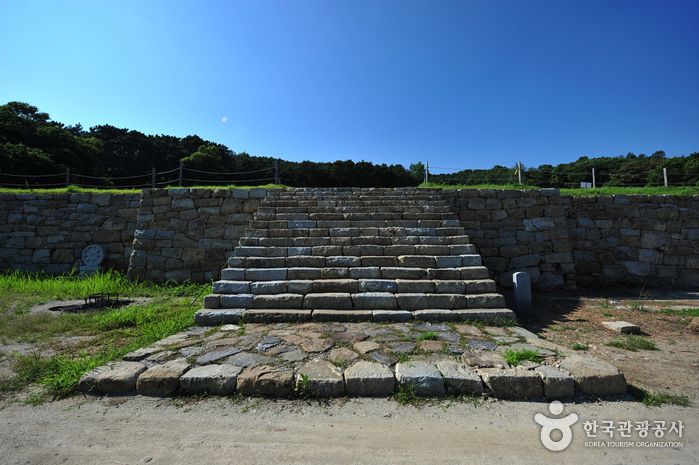
Ganghwa Seonwonsa Temple Site (강화 선원사지)
19.9Km 2022-09-19
222, Seonwonsaji-ro, Ganghwa-gun, Incheon
Ganghwa Seonwonsa Temple Site was first discovered in 1976 during a surface examination around Ganghwado Island undertaken by the Ganghwado Island Academic Research Team of Dongguk University. The site was designated as Historic Site No. 259 in 1977. Seonwonsa Temple was built by General Choi Wu in 1245 (the 32nd year of King Gojong’s reign during the Goryeo dynasty), which was right after the transfer of the capital to Ganghwado during resistance against the Mongolian invasion.
The temple was meant to be a spiritual mainstay in fighting against Mongolia. It used to be one of the two largest temples in Korea along with Songgwangsa Temple. However, the temple was completely destroyed during the early Joseon era, leaving only the site itself. The famous wood blocks of Palman Daejanggyeong (the Tripitaka Koreana), currently housed in Haeinsa Temple at Hapcheon, are said to have been originally stored in Seonwonsa Temple. It is believed that the carved wood blocks were taken from Seonwonsa to Heungcheonsa Temple during the Joseon era and again moved to Haeinsa Temple during the reign of Sejo.
Located on a mountain slope, the presumed location of the building site extends 250 meters from south to north and 170 meters from east to west.

Myongji Hospital (명지병원)
19.9Km 2025-10-23
55 Hwasu-ro 14beon-gil, Deogyang-gu, Goyang-si, Gyeonggi-do
Myongji Hospital is a general hospital located in Goyang-si with various departments and specialized treatment centers.
We operate Breast Thyroid Center, Prostate Cancer and Kidney Cancer Center, Ovarian Cancer and Gynecological Cancer Center, and Robotic Surgery Center for specialized treatment, and have introduced the latest medical device, da Vinci Xi to conduct surgeries for various types of cancer as well as robotic surgeries for a wide range of benign diseases. In addition, we provide more specialized and prompt medical services to patients through advanced facilities such as the Radiology Center, Rehabilitation Center, Intervention Center, and Comprehensive Health Checkup Center. Specifically, we are prominent in the field of organ transplantation and operate the Organ Transplant Center performing liver, kidney, lung, and heart transplants. We offer interpretation services for foreign patients by professional coordinators who speak English, Russian, Mongolian, and Chinese to eliminate language barriers by opening the International Medical Center in 2009 and provide guesthouses, airport pick-up and send-off services for foreign patients as well to maximize their convenience.
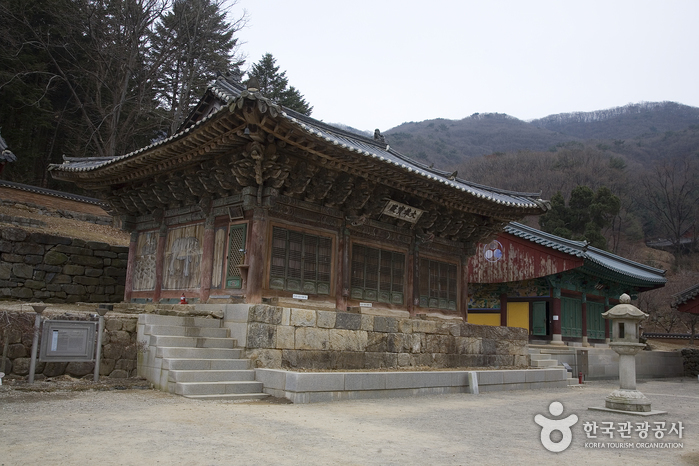
Paju Bogwangsa Temple (보광사(파주))
20.0Km 2021-09-10
87, Bogwang-ro 474beon-gil, Paju-si, Gyeonggi-do
Bogwangsa Temple is a traditional temple located on the foothills of Goryeongsan Mountain in Paju. It was built by Great Monk Doseonguksa during the Silla Kindom period under the order of Queen Jinseong in AD 894. At the time, it was considered a hidden national treasure and one of the six grand temples located on the northern side of the Hangang River. In was once ruined during the Imjin War, and reconstructed in 1622 by Monk Seolmi and Monk Deogin. In 1667, Monk Jigan and Monk Seok Ryeon reconstructed Daeungbojeon Hall and Gwaneumjeon Hall.
 English
 한국어
한국어 日本語
日本語 中文(简体)
 Deutsch
 Français
 Español
 Русский


