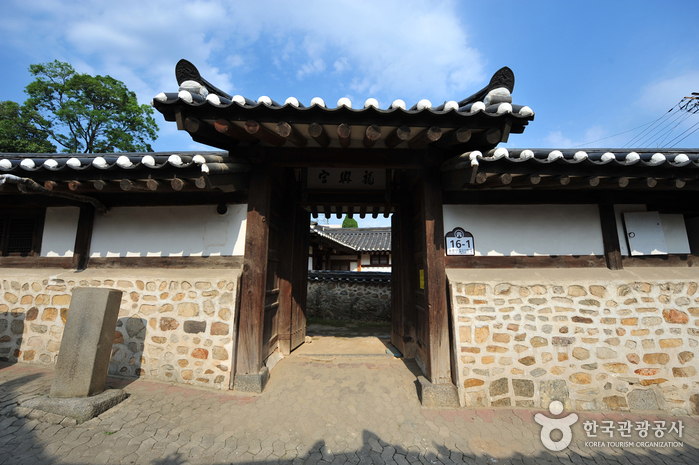
Yongheunggung Palace (용흥궁)
17.2Km 2022-07-27
16-1, Dongmunan-gil 21beon-gil, Ganghwa-gun, Incheon
Yongheunggung Palace is where King Cheoljong (r. 1849-1863) used to live before his ascension to throne. The chief of Ganghwa County, Jeong Gi-se, enlarged the original residence and named it Yongheunggung (meaning palace of the rising dragon) in the 4th year of King Cheoljong’s reign. Its architectural features include a paljak (traditional Korean half-hipped roof) and supporting columns rendered in Jusimpo style, the column brackets placed only on top of the columns. The palace was built in the tradition of dwelling houses such as the Yeongyeongdang and Nakseonjae houses in Changdeokgung Palace, so the palace buildings give off a simple and plain atmosphere. Within the precincts of the palace are a memorial stone and a monument house indicating that the palace used to be the old home of King Cheoljong.
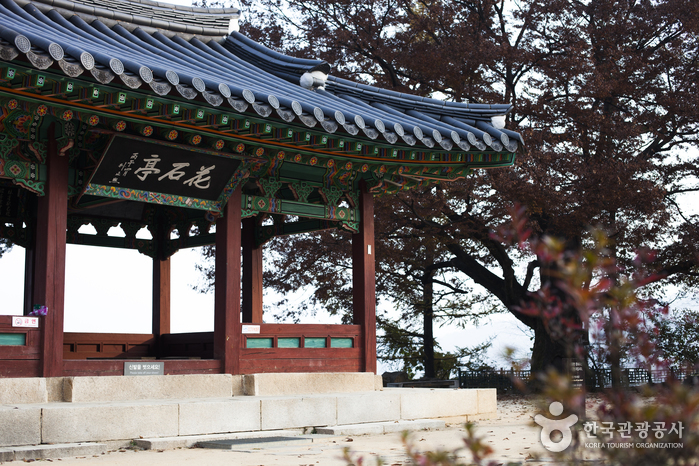
Hwaseokjeong Pavilion (화석정)
17.3Km 2021-12-14
152-72, Hwaseokjeong-ro, Paju-si, Gyeonggi-do
Hwaseokjeong Pavilion was built in honor of Gil Jae, a Goryeo dynasty Confucian scholar who had resigned from his government post to train young scholars. Overlooking the Imjingang River, the pavilion provides a good resting area dotted with zelkova trees.

NHIS Ilsan Hospital (국민건강보험 일산병원)
17.3Km 2025-10-23
100 Ilsan-ro, Ilsandong-gu, Goyang-si, Gyeonggi-do
NHIS Ilsan Hospital, opened in March 2000, is the nation's only insurer-run hospital and one of the most trusted and frequently visited hospitals in Korea. The International Healthcare Center, established in August 2012, is currently headed by a professor of neurosurgery and operated by a staff of three. In particular, the center is dedicated to providing the best hospital services for Russian-speaking patients. Through partnerships with more than 50 organizations both in Korea and abroad, the hospital actively engages in monitoring local healthcare trends, promoting Korean medical services, and enhancing international patient care. It also conducts annual medical training programs for healthcare professionals from target countries (e.g., Kazakhstan, Mongolia) while providing charitable medical services to financially disadvantaged international patients.
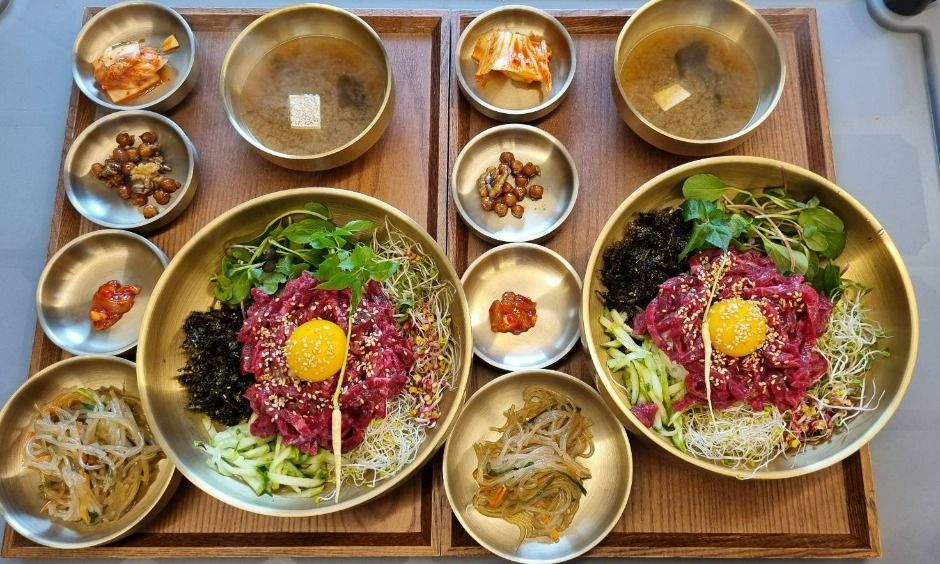
Maeheon 1935 (매헌1935)
17.4Km 2025-10-23
25 Sinmun-gil, Ganghwa-eup, Ganghwa-gun, Incheon
Maeheon 1935 is a restaurant in Gangwha-gun, Incheon that serves Korean dishes. The restaurant uses a renovated hanok built in 1935, and has a garden that blooms with plum blossoms. It is also located to many representative attractions of Ganghwa. The restaurant is characterized by serving a neat Korean food table for each person. Its representative menu items consist of bibimbap, hanu yukjeon (beef pancake), beef bulgogi, and more, made with fresh local ingredients that are produced in Ganghwa.
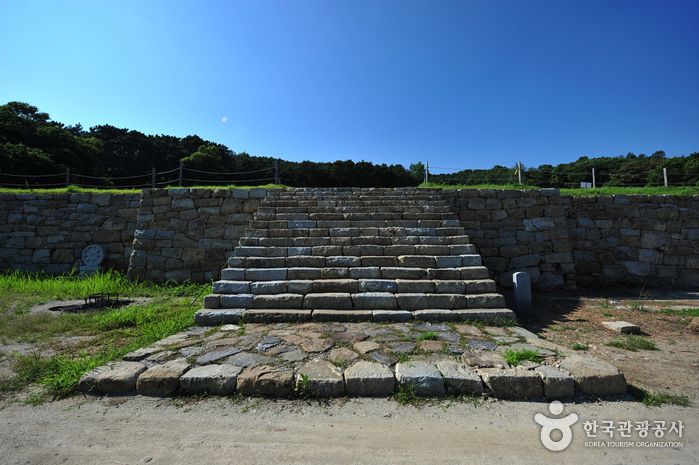
Ganghwa Seonwonsa Temple Site (강화 선원사지)
17.4Km 2022-09-19
222, Seonwonsaji-ro, Ganghwa-gun, Incheon
Ganghwa Seonwonsa Temple Site was first discovered in 1976 during a surface examination around Ganghwado Island undertaken by the Ganghwado Island Academic Research Team of Dongguk University. The site was designated as Historic Site No. 259 in 1977. Seonwonsa Temple was built by General Choi Wu in 1245 (the 32nd year of King Gojong’s reign during the Goryeo dynasty), which was right after the transfer of the capital to Ganghwado during resistance against the Mongolian invasion.
The temple was meant to be a spiritual mainstay in fighting against Mongolia. It used to be one of the two largest temples in Korea along with Songgwangsa Temple. However, the temple was completely destroyed during the early Joseon era, leaving only the site itself. The famous wood blocks of Palman Daejanggyeong (the Tripitaka Koreana), currently housed in Haeinsa Temple at Hapcheon, are said to have been originally stored in Seonwonsa Temple. It is believed that the carved wood blocks were taken from Seonwonsa to Heungcheonsa Temple during the Joseon era and again moved to Haeinsa Temple during the reign of Sejo.
Located on a mountain slope, the presumed location of the building site extends 250 meters from south to north and 170 meters from east to west.
![[Ganghwa Nadeul-gil Course 8] Bird Watching Trail ([강화 나들길 제8코스] 철새 보러 가는 길)](http://tong.visitkorea.or.kr/cms/resource/32/1895232_image2_1.jpg)
[Ganghwa Nadeul-gil Course 8] Bird Watching Trail ([강화 나들길 제8코스] 철새 보러 가는 길)
17.5Km 2022-11-11
24, Cheonghadong-gil, Ganghwa-gun, Incheon
The Ganghwa Nadeul-gil Trails are a collection of walking paths along the coast of Ganghwa Island that connect the watchtowers and and walls of Ganghwasanseong Fortress, as well as royal tombs and other historically significant sites from the Goryeo dynasty that dot the island.
[Ganghwa Nadeul-gil Course 8] Bird Watching Trail
Course 8 stretches over a 17.2 kilometer area between Chojijin Fort and Bunoridondae Fortification. Set along the southern coast of Ganghwado Island, this trail showcases the island's natural beauty and history. It is especially popular in summer when the cool ocean breeze blows and in winter when the migratory birds settle in the mud flats.
![[Ganghwa Nadeul-gil Course 7] Setting Sun Trail ([강화 나들길 제7코스] 낙조보러 가는 길)](http://tong.visitkorea.or.kr/cms/resource/22/1895222_image2_1.jpg)
[Ganghwa Nadeul-gil Course 7] Setting Sun Trail ([강화 나들길 제7코스] 낙조보러 가는 길)
17.5Km 2022-12-29
24, Cheonghadong-gil, Ganghwa-gun, Incheon
The Ganghwa Nadeul-gil Trails are a collection of walking paths along the coast of Ganghwa Island that connect the watchtowers and and walls of Ganghwasanseong Fortress, as well as royal tombs and other historically significant sites from the Goryeo dynasty that dot the island.
[Ganghwa Nadeul-gil Course 7] Setting Sun Trail
Course 7 stretches over a 20.8-kilometer-long loop from Hwado Parking Lot to Mud Flat Research Center and back. The trail leads through a tunnel of green leaves before opening out onto the mud flat. The mud flat is one of the world's top five mud flats and presents a beautiful view of the ocean and mountains. Bird-watchers will love the chance to see migratory birds fly through each winter.
![[Ganghwa Nadeul-gil Course 6] Birthplace of Hwanam Trail ([강화 나들길 제6코스] 화남생가 가는 길)](http://tong.visitkorea.or.kr/cms/resource/27/1895227_image2_1.jpg)
[Ganghwa Nadeul-gil Course 6] Birthplace of Hwanam Trail ([강화 나들길 제6코스] 화남생가 가는 길)
17.5Km 2022-08-18
24, Cheonghadong-gil, Ganghwa-gun, Incheon
The Ganghwa Nadeul-gil Trails are a collection of walking paths along the coast of Ganghwa Island that connect the watchtowers and and walls of Ganghwasanseong Fortress, as well as royal tombs and other historically significant sites from the Goryeo dynasty that dot the island.
[Ganghwa Nadeul-gil Course 6] Birthplace of Hwanam Trail
Course 6 stretches over an 18.8 kilometer area between Ganghwa Bus Terminal and Gwangseongbo Reservoir. The trail passes through fields and forests. Hwanam's hometown is so beautiful, people often say all the flowers that grow in the world can be found here.
![[Ganghwa Nadeul-gil Course 1] Simdo History & Culture Trail ([강화 나들길 제1코스] 심도역사문화길)](http://tong.visitkorea.or.kr/cms/resource/97/1895197_image2_1.jpg)
[Ganghwa Nadeul-gil Course 1] Simdo History & Culture Trail ([강화 나들길 제1코스] 심도역사문화길)
17.5Km 2022-09-27
24, Cheonghadong-gil, Ganghwa-gun, Incheon
The Ganghwa Nadeul-gil Trails are a collection of walking paths along the coast of Ganghwa Island that connect the watchtowers and and walls of Ganghwasanseong Fortress, as well as royal tombs and other historically significant sites from the Goryeo dynasty that dot the island.
[Ganghwa Nadeul-gil Course 1] Simdo History & Culture Trail
Course 1 stretches over an 18-kilometer area between Ganghwa Bus Terminal and Gapgot Fortification. The trail includes sites such as Yongheunggung Palace, Ganghwahyanggyo Local Confucian School and an Anglican church. The course is an easy walk, with plenty of areas to stop and explore, as well as restaurants and convenience facilities for an enjoyable stroll.
Gwangseongbo Fortress (광성보)
17.6Km 2022-07-25
27, Haeandong-ro 466beon-gil, Ganghwa-gun, Incheon
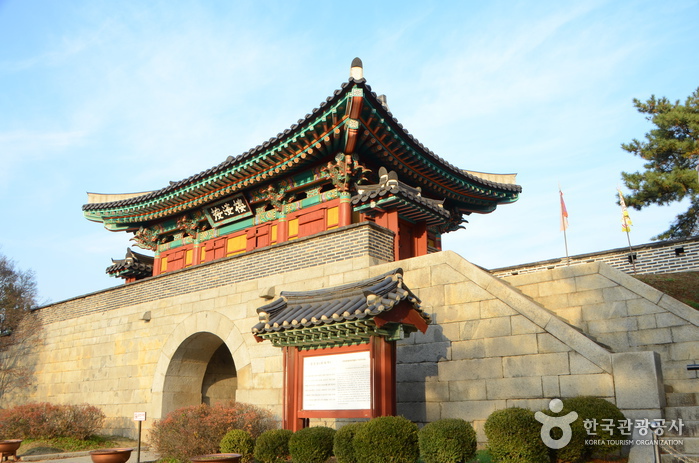
Gwangseongbo Fortress’s outer wall from the Goryeo era was mended in 1618. The fortress was built in 1656 and the outpost was constructed in 1679. It was completely remodeled into
a masonry castle with gates in 1745. During Sinmiyangyo (the American invasion in 1871), Gwangseongbo was the fiercest battle ground in Ganghwa. On April 24, 1871, a
fleet with 1,230 American naval forces led by Rear Admiral John Rodgers landed on Ganghwado Island to demand the
opening of Korea's ports and commerce. The armed forces attacked Chojijin Fortress
and Deokjinjin Camp, then marched to Gwangseongbo Fortress, where they engaged in close combat with the warriors of Joseon. Although General Eo Jae-yeon and the other warriors were poorly equipped with far inferior weapons, they bravely fought to the
death against the invading forces.
The battlefield ruins of the fortress and the gate towers such as Anhaeru, Gwangseongdon, Sondolmokdon, and Yongdudon were repaired
in 1977. The twin tombs of General Eo Jae-Yeon and his brother Eo Jae-seon, along with the anonymous tombs of warriors who died on the battlefield were
also honorably arranged at the same time. Furthermore, a stone monument commemorating the restoration of Ganghwa Battlefield was erected on Yongdudondae Post.
In 1988, an extensive rest area was created toward the shore for visitors’ convenience. Gwangseongbo Fortress is presently designated as Historical Relic No. 227. A religious service known as Gwangseongje is held annually to commemorate the patriotic spirits of General Eo Jae-yeon and other unnamed warriors. This service takes place at 11 a.m. on every April 24th of the lunar calendar.
 English
 한국어
한국어 日本語
日本語 中文(简体)
 Deutsch
 Français
 Español
 Русский


