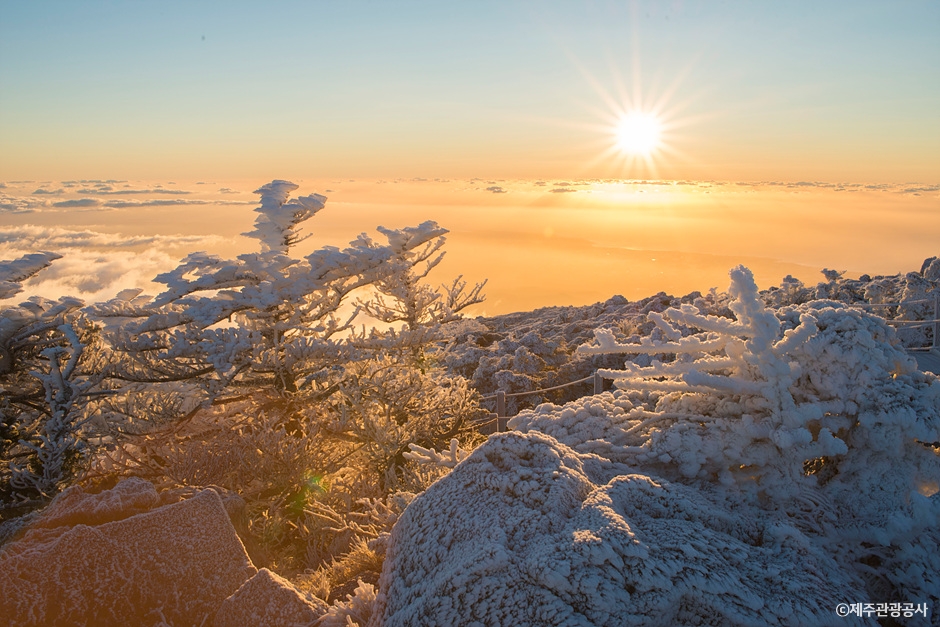
Hallasan Mountain (한라산)
5.7Km 2025-10-31
San 15-1 Topyeong-dong, Seogwipo-si, Jeju-do
Hallasan Mountain stands proudly at the center of Jeju Island and is perhaps the island’s most memorable landmark. Also called Yeongjusan Mountain, meaning "mountain high enough to pull the galaxy," Hallasan Mountain is widely known by scientists for its geological value. Designated as a national park in 1970, there are 368 parasitic cones called "oreum" (Jeju dialect meaning peak) around the main mountain.
Hallasan Mountain is famous for its vertical ecosystem of plants that results from the varying temperatures along the mountainside. Over 1,800 kinds of plants and 4,000 species of animals (3,300 species of insects) have been identified; to explore the mountain's treasures, simply follow one of the well-developed hiking trails.
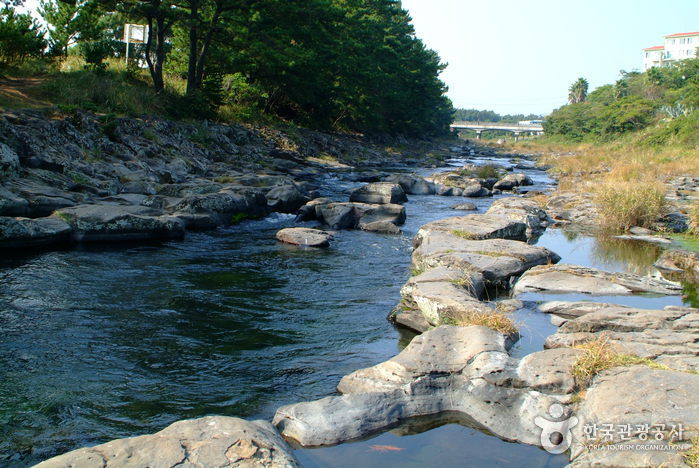
Gangjeongcheon Stream (강정천)
6.5Km 2022-08-18
Gangjeong-dong, Seogwipo-si, Jeju-do
Unlike most streams on Jeju Island that can easily run dry, Gangjeongcheon Stream, located to the east of Gangjeong Village in Seogwipo-si, flows with clear water all year round. The stream stretches 16 kilometers in length and has 7 small ponds, 6 bridges and 13 waterfalls. The old pine trees and uniquely formed rocks and stones on either side of the stream make for great natural sightseeing.
The stream is home to sweetfish and groups of mandarin ducks, which are Natural Monument. During summer, the stream is crowded with vacationers thanks to the clean water and relaxing environment.

Citrus Museum (감귤박물관)
6.6Km 2024-03-26
441 Hyodonsunhwan-ro, Seogwipo-si, Jeju-do
Citrus Museum is a themed museum dedicated to tangerines, a specialty of Jeju Island. It showcases the history of tangerines, their varieties, cultivation methods, and tangerine cultivation worldwide. Visitors can also purchase tangerine-related products at the Citrus Experience Center and Museum Shop. From November to February of the following year, visitors can experience tangerine harvesting. The café on the second floor offers various beverages made from tangerines.
Soesokkak Estuary (쇠소깍)
7.1Km 2024-03-26
104 Soesokkak-ro, Seogwipo-si, Jeju-do
Soesokkak Estuary is a valley formed where fresh water meets seawater, creating deep pools. The harmony of deep blue water, volcanic rock formations, and dense pine forests creates a mystical atmosphere. Visitors can explore deep into Soesokkak Estuary by riding a tewoo or kayak. Following the walking trail leads to Hahyo Soesokkakhaebyeon Beach, famous for its black sand.
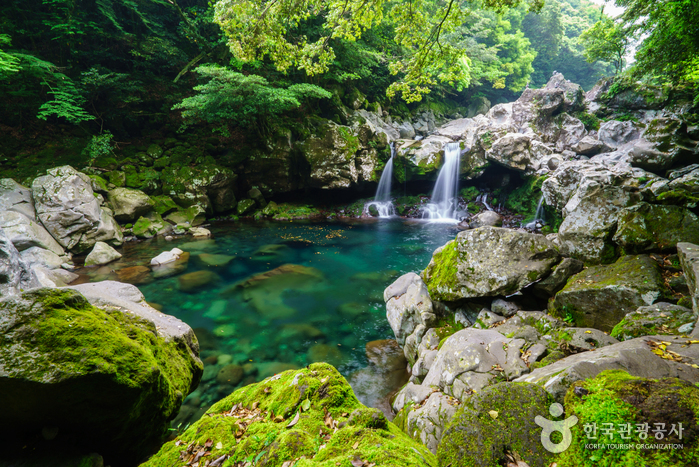
Donnaeko Resort (Wonangpokpo Falls) (돈내코(원앙폭포))
7.6Km 2025-01-14
137, Donnaeko-ro, Seogwipo-si, Jeju-do
With a valley creek hidden by lush green forest leading to a 5-meter-high waterfall falling into a small pool of water, Donnaeko Resort is like a small paradise hidden in nature. The waters, flowing down from Hallasan Mountain, are clear and icy cold even during the hot summer season. The resort's magnificent views and natural pool make the area a popular vacation destination.
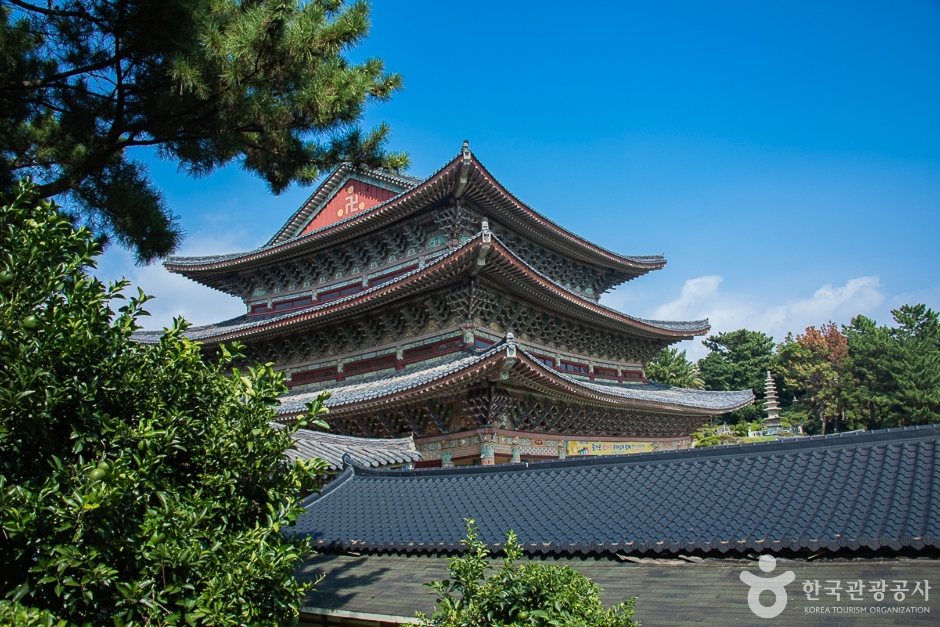
Jeju Yakcheonsa Temple (약천사(제주))
8.5Km 2024-12-02
293-28 Ieodo-ro, Seogwipo-si, Jeju-do
Jeju Yakcheonsa Temple is the largest temple in Asia. Originally a small hermitage named Yaksuam, it was named Yakcheonsa because of a famous mineral spring ('Yaksu') nearby. It enshrines tombstones of two royal couples from the Joseon Dynasty: King Munjong and his consort, and King Yeongchin and his consort. The temple also offers temple stays for both Koreans and foreigners.
Jungmun Equestrian Park (중문승마공원)
8.9Km 2024-01-09
244 Ieodo-ro, Seogwipo-si, Jeju-do
Jungmun Equestrian Park is where visitors can experience horseback riding while looking at the sea, and even beginners can enjoy horseback riding without any concerns. Visitors can choose between a walking course that takes 10–15 minutes and a Beach Olle course that takes 20–25 minutes. The Beach Olle course has a beautiful ocean view and reaches its peak in spring when canola flowers are in full bloom. It is operated under a reservation system in principle, but walk-in is also accepted on a first-come,first-served basis. Visitors are advised to call in advance as programs are subject to cancellation in case of adverse weather.
Joanne Bear Museum (조안베어뮤지엄)
9.9Km 2022-10-13
113, Daepo-ro, Seogwipo-si, Jeju-do
Joanne Bear Museum located in Jungmun Resort Complex in Seogwipo-si, on Jeju-do Island is a gallery exhibition hall for Joanne Oh, a world-famous teddy bear artist. The museum, which boasts the motto “nature and environmentalism", showcases teddy bears that are made of all-natural materials. The eco-friendly pieces mimic the natural beauty of Jeju Island and give visitors a feeling of comfort and refreshment.
We Hospital (WE병원)
10.4Km 2025-10-23
453-95 1100-ro, Seogwipo-si, Jeju-do
As a premium health resort, THE WE is located halfway up Hallasan Mountain, a UNESCO-recognized World Natural Heritage. In this Korea's first health resort, you can enjoy comfortable 5-star hotel services and healthcare services of Halla Medical Foundation with natural volcanic bedrock water of Jeju and the clean forest of Halla Mountain.
WE Hospital of Halla Medical Foundation operates Korea's only health resort to maximize health management effects utilizing natural environments and various health programs. It provides various one-stop programs of its Health Promotion Center, Plastic Surgery Centers, Wellness Center and Medical Spa Center with the concept of "Medi-Well" that combines "Medical" and "Wellness."
Experience customized healthcare services differentiated from other hospitals at THE WE, a premium health resort.
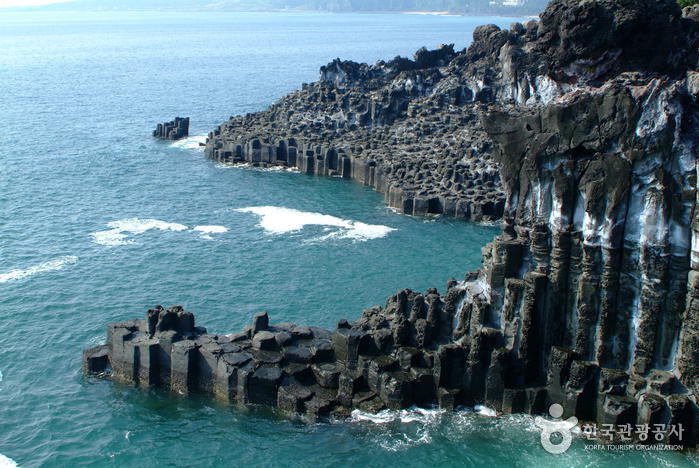
Daepo Jusangjeolli Cliff (주상절리대(대포동지삿개))
10.6Km 2024-03-11
36-30, Ieodo-ro, Seogwipo-si, Jeju-do
Daepo Jusangjeolli Cliff is a stone pillar formed by lava that flowed out of the crater and contracted as it cooled rapidly. It is characterized by its polygonal staircase-like form. The stones are 30 to 40 meters high, hexagonal in shape, and line the coast for about 1 kilometer. The constant crashing of the waves is a highlight not to be missed.
 English
 한국어
한국어 日本語
日本語 中文(简体)
 Deutsch
 Français
 Español
 Русский


