![Jeju Eco Suites [Korea Quality] / 제주에코스위츠 [한국관광 품질인증]](http://tong.visitkorea.or.kr/cms/resource/48/2637548_image2_1.JPG)
Jeju Eco Suites [Korea Quality] / 제주에코스위츠 [한국관광 품질인증]
15.4Km 2024-07-30
207-13 , Jungmunsang-ro, Seogwipo-si, Jeju-do
+82-64-738-9975
Jeju Eco Suites is an eco-friendly pension located in Seogwipo, Jeju-do. Guestrooms include deluxe suites, jacuzzi suites and private spa villas, and each room has a wide terrace and a kitchen. Dogs are allowed, and there are toys for children in the lobby. A barbecue grill, laundry service and breakfast (for 2 nights or more) are provided free of charge. During the winter season, you can experience tangerine picking in the garden. Jungmun Tourism Complex and Jungmun Saekdal Beach are 10 minutes away by car.

Podo Hotel (포도호텔)
15.6Km 2024-06-05
863 Sallongnam-ro, Andeok-myeon, Seogwipo-si, Jeju-do
+82-64-792-5200
Podo Hotel is designed with the motif of Jeju's oreum (parasitic cone) and thatched-roof houses. The hotel aims to create a healing environment, where guests can unwind while looking out at Jeju's pristine nature. Each guest room features natural hot spring water.
Jungmun Equestrian Park (중문승마공원)
16.0Km 2024-01-09
244 Ieodo-ro, Seogwipo-si, Jeju-do
Jungmun Equestrian Park is where visitors can experience horseback riding while looking at the sea, and even beginners can enjoy horseback riding without any concerns. Visitors can choose between a walking course that takes 10–15 minutes and a Beach Olle course that takes 20–25 minutes. The Beach Olle course has a beautiful ocean view and reaches its peak in spring when canola flowers are in full bloom. It is operated under a reservation system in principle, but walk-in is also accepted on a first-come,first-served basis. Visitors are advised to call in advance as programs are subject to cancellation in case of adverse weather.
Podo Museum (포도뮤지엄)
16.4Km 2024-01-31
788 Sallngnam-ro, Andeok-myeon, Seogwipo-si, Jeju-do
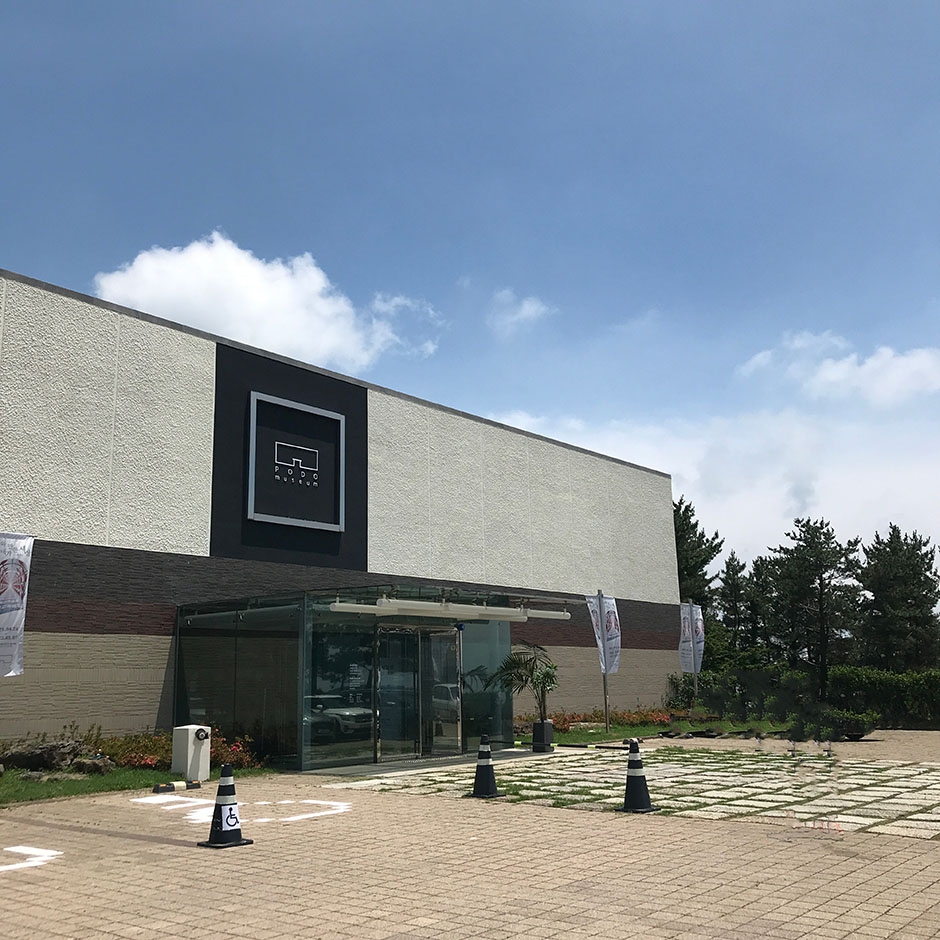
Opened in April 2021, Podo Museum aims to be a space that promotes the symbiosis of the Earth's ecological environment and humankind and listens to the voices of the socially underprivileged. It operates mainly around exhibitions without any separate experience programs. Exhibitions are held following the museum's goals and themes. As the content changes depending on the period, checking the website before visiting is recommended. The museum also has a café and souvenir shop on its first floor, making it great to look around on rainy days when outdoor sightseeing is not a preferred option. There are Camellia Hill, Bangju Church, and Bonte Museum nearby, so visitors are recommended to look around.
Da Vinci Museum (다빈치 뮤지엄)
16.4Km 2025-01-10
788 Sallongnam-ro, Andeok-myeon, Seogwipo-si, Jeju-do
+82-64-794-5114~5
Da Vinci Museum, located in Seogwipo-si on Jeju Island is the only museum that has the Da Vinci License in Korea. The museum offers visitors a chance to experience a wide variety of activities and hands-on programs. When you think of Leonardo Da Vinci, a few things that come to mind are the Mona Lisa and The Last Supper. However, one of the greatest masterpieces in his life is the Codex, a collection of his writings. Over 7,000 pages of the Codex, A.K.A. a notebook of secrets, survives today, and the museum displays over 200 works created and inspired based on the writings in the Codex. The museum houses information about the life and times of Leonardo Davinci, a superb scientist, anatomist, and inventor.
Jeju Yakcheonsa Temple (약천사(제주))
16.4Km 2024-12-02
293-28 Ieodo-ro, Seogwipo-si, Jeju-do
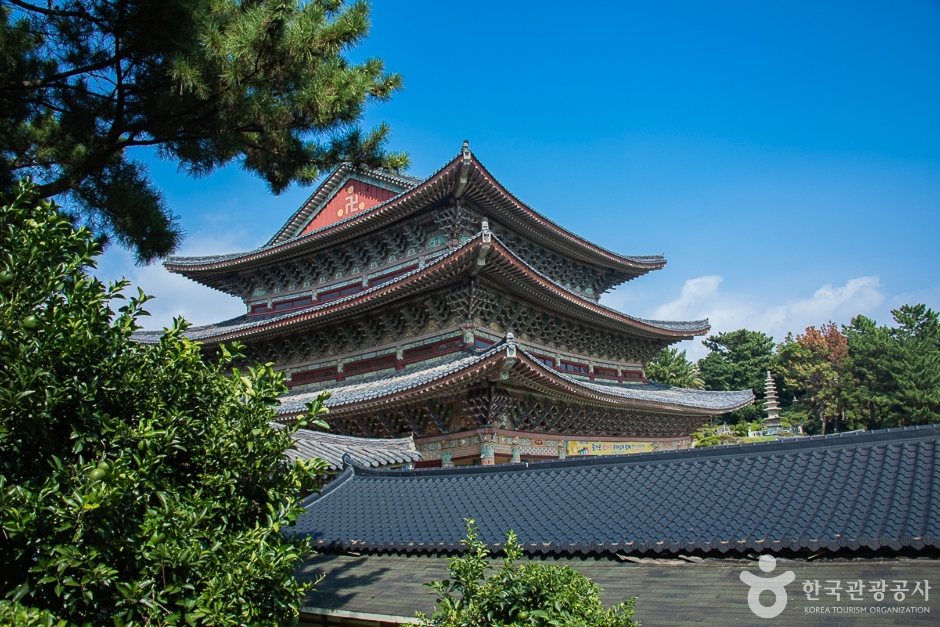
Jeju Yakcheonsa Temple is the largest temple in Asia. Originally a small hermitage named Yaksuam, it was named Yakcheonsa because of a famous mineral spring ('Yaksu') nearby. It enshrines tombstones of two royal couples from the Joseon Dynasty: King Munjong and his consort, and King Yeongchin and his consort. The temple also offers temple stays for both Koreans and foreigners.
Yongsu Port (용수항)
16.9Km 2025-04-07
Yongsu-ri, Hangyeong-myeon, Jeju-si, Jeju-do
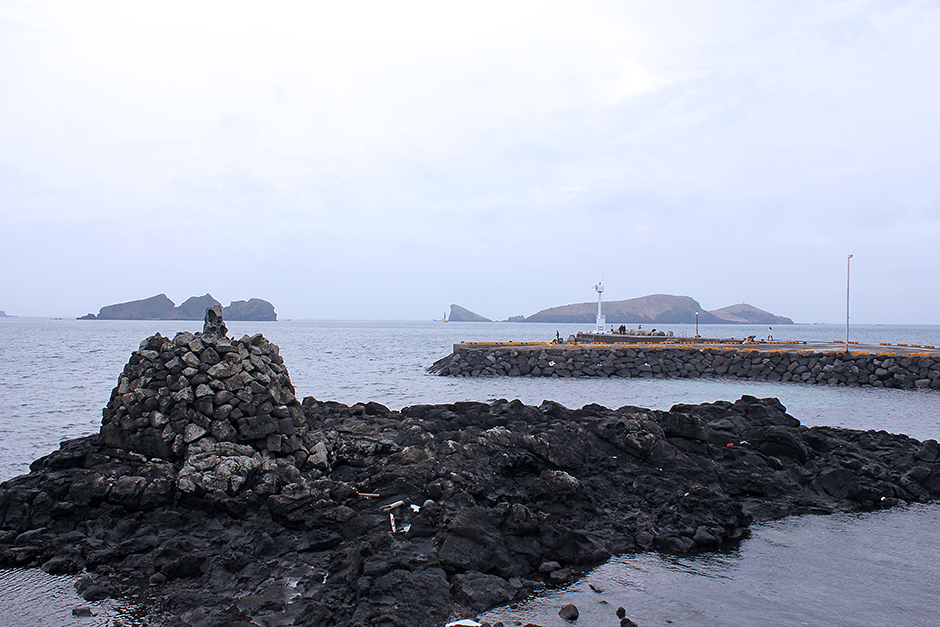
Yongsu Port is a small fisihing port located in the Yongsu-ri area of Jeju. It marks the end point of the Jeju Olle Trail Route 12 and the starting point of Jeju Olle Trail Route 13. The port offers a beautiful blue silhouette view of Chagwido Island, the biggest uninhabited island in Jeju. On both sides of the village, visitors can find Bangsatap towers, which are believed to protect the village.
Yeolliji Garden (연리지가든)
16.9Km 2025-01-22
190-20 Dujo-ro, Hangyeong-myeon, Jeju-si, Jeju-do
It is the only restaurant in Jeju that sells native heukdwaeji (Black Pork). The restaurant raises the pigs themselves and adheres to a policy of selling only about 30 portions per day.
St. Isidore Farm (성이시돌목장)
17.0Km 2023-02-16
53, Sallongnam-ro, Jeju-si, Jeju-do
+82-64-740-6000
St. Isidore Farm was born when an Irish priest named McGlinchey (Korean name: Im Pi-je) was appointed in Jeju's Hallim region in 1954 and opened a livestock bank to help the impoverished locals. In 1961, it officially opened a central practice farm to not only educate on the livestock industry but also carry out hog farming, sheep breeding, beef cattle raising and dairy businesses. Today, the farm primarily raises cows and racehorses and produces high-quality organic milk and horses for racing to utilize the profits in various welfare projects. The farmland also presents an exotic scenery as the vast grasslands blend in with modern structures such as Ctesiphon, which symbolizes the history of the farm. The farm also has a cafe that uses milk produced at the farm in addition to a trail and park with religious themes.
Geum Parasitic Cone (금오름)
17.2Km 2025-10-23
Geumakbuk-ro, Hallim-eup, Jeju-si, Jeju-do
+82-64-740-6000
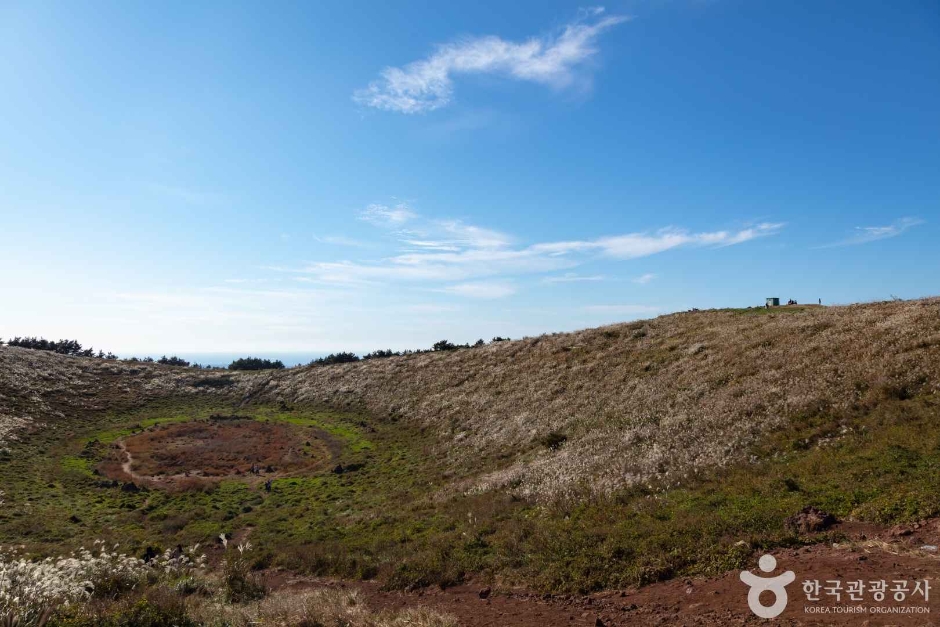
Geum Parasitic Cone is one of the most famous parasitic cones in the western mountainous region of Jeju. It is a satellite volcanic edifice that has a large circular crater (52 meters deep) and a crater at the summit, and the two peaks in the south and the north are connected by a low slope from east to west. The crater at the summit once held an abundant volume of water but it is now empty. The name Geum Parasitic Cone is speculated to have derived from an archaic word "Gom," which means "god." Therefore, it can be interpreted that this parasitic cone has been deified since the ancient times. Pines, cedars, briers, bo trees and Oriental photinia can be found near the circular crater and the lake area.
 English
 한국어
한국어 日本語
日本語 中文(简体)
 Deutsch
 Français
 Español
 Русский


