16.2Km 2025-08-12
297-10, Toegye-ro, Andong-si, Gyeongsangbuk-do
+82-54-858-4411, +82-10-3530-4413
Chiam Old House in Anmak-dong, Andong, Gyeongsangbuk-do is an old traditional Korean house once owned by Lee Man-hyeon(pen name Chiam) who was the 11th-generation descendant of “Toegye” Yi Hwang, one of the most prominent Korean Confucian scholars of the Joseon Dynasty and a high-ranking government official during the reign of King Gojong. This house was originally located in Wonchon-ri, Dosan-myeon but was relocated to its current location in 1976 after a flood caused by the collapse of Andong Dam. Chiam Old House consists of 22 rooms, 5 gates, and 1 detached building. The main building is taller than the detached building. One of the unique features of this detached building is that it has both gable roof and gambrel roof on either side. Listed as Gyeongsangbuk-do Folklore Material No. 11, Chiam Old House now serves as a guesthouse for those wishing to experience an old traditional Korean house. The rooms that are open to guests are “Seongmyeongjae,” “Gyeongeopjae,” and “Nakseongdang.” The large room called “Bakkatchae,” or outer building, is the most comfortable one to stay in for a night, since it's furnished with kitchen, TV, air conditioner, and bathroom. “Seongmyeongjae” means “honesty and integrity” in Korean. It’s an “ondol (Korean floor heating system)” room typical of any traditional Korean house, where you have to sleep on the floor. "Gyeongeopjae" is the most popular one among the guests, and its name means “unselfish and reverent.” The rooms next to the gate called “Ilgeonjae,” “Seokcheonjae,” and “Hakgujae” located along the wall are great places to stay if you want to see the surroundings and the old house at the same time. “Jamnyongdang” on the east side of the main building is named after the small pond in the yard, and it means “to strive to be a man of virtue like the dragon flying in the sky.” There are lots of beautiful flowers in the small garden in complete harmony with the old house and surrounding mountains, making it a great place to take a leisurely walk as you experience the history.
16.4Km 2023-07-10
273, Yuksa-ro, Andong-si, Gyeongsangbuk-do
Le parc Grasswon se situe sur les bords du fleuve Nakdonggang dans la ville de Andong. Le site, réputé pour son pont Yeonggadaegyo, propose des sentiers de promenade dans une belle nature. Le site est particulièrement réputé en automne. Il est possible de rejoindre le parc Baekjo depuis les lieux faisant de l'endroit un endroit recommandé pour découvrir le fleuve Nakdonggang.
16.4Km 2025-09-23
239, Yuksa-ro, Andong-si, Gyeongsangbuk-do
- Centre d'appels 1330 : +82-54-1330 (coréen, anglais, japonais, chinois)
- Pour obtenir plus d'info : +82-54-841-6397~8 / +82-54-840-6398 (coréen)
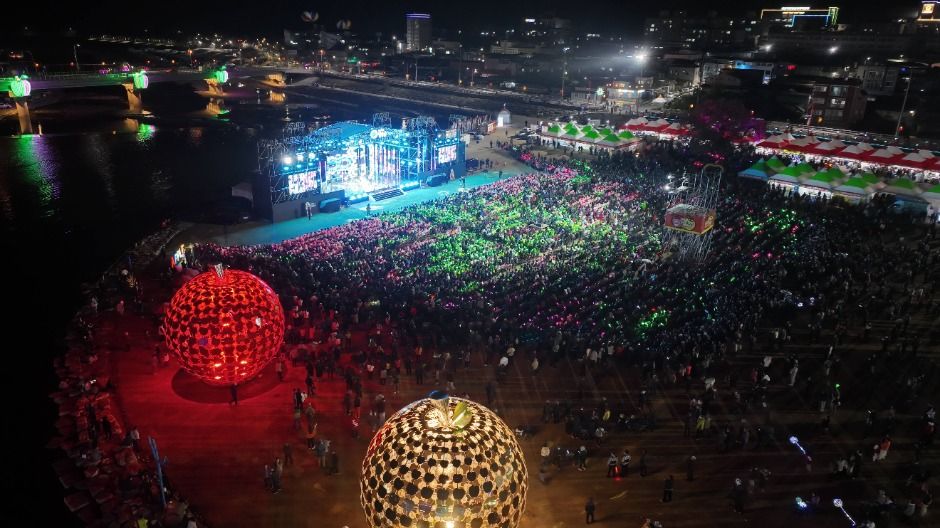
Le Festival international de danse des masques d’Andong est un événement dédié au masque et à la danse masquée, éléments universels de la culture mondiale, visant à transmettre leur valeur universelle et à en partager l’attrait. Outre les danses masquées coréennes inscrites au patrimoine culturel immatériel de l’humanité de l’UNESCO, le festival rassemble les représentations de 34 troupes issues de 25 pays, offrant ainsi l’occasion unique de découvrir la diversité des danses masquées à travers le monde. Au programme figurent des spectacles sur scène, des parades urbaines, ainsi qu’un concours international de danses masquées. Les visiteurs pourront y apprécier la richesse des expressions et des récits que chaque culture transmet à travers ses masques et ses danses.
16.5Km 2023-01-18
42, Mukgyehari-gil, Giran-myeon, Andong-si, Gyeongsangbuk-do
Manhyujeong désigne un pavillon construit en 1500 (6e année du règne du roi Yeonsan-gun) ayant appartenu à Bobaekdang Kim Gye-haeng.
L'aspect actuel du bâtiment, qui a été modifié suite à diverses rénovations, illustre en partie le style architectural de la fin de la dynastie Joseon. Kim Gye-haeng, qui est à l'origine de ce pavillon, était un fonctionnaire qui a occupé divers postes gouvernementaux au début de la dynastie Joseon. Cependant, sous le règne tyrannique du roi Yeonsan-gun, il a abandonné le poste gouvernemental pour revenir dans sa ville natale. Cette figure historique avait d’abord bâti un petit pavillon près de l’étang Seolmot (actuellement Sosan 2-ri), mais comme celui-ci se trouvait à côté de la route, il a cherché un endroit plus calme pour construire le présent pavillon.
En entrant dans la vallée de l’autre côté du ruisseau de l’école confucianiste Mukgyeseowon à Giran-myeonm, vous pourrez trouver ce pavillon dans un magnifique endroit où l’eau du ruisseau de la montagne coule avec une cascade sur un rocher dans une vallée grandiose.
16.6Km 2024-10-25
30, Beonyeong-gil, Andong-si, Gyeongsangbuk-do
Cette rue a été formée les années 1970 depuis l'apparition d'une « allée du poulet » où l'on vendait du poulet cru ou rôti dans le marché d'Andong. Avec la popularité du poulet frit assaisonné sur le marché global du poulet, les marchands de poulets devaient trouver un moyen de préserver leurs ventes, c'est dans ce cadre qu'a été créé l'Andong Jjimdak (poulet braisé).
Les plats sur place sont réputés pour leur goût sucré et piquant, le prix bas et la quantité généreuse de nourriture proposé par les marchands.C'est ainsi que le lieu est devenu célèbre comme l'« allée du jjimdak ».
Actuellement, l'allée abrite une trentaine de restaurants servant du jjimdak attirant une moyenne de 20 000 clients les week-end.
Si l'Andong Jjimdak n'est pas considéré comme un plat traditionnel transmis depuis les temps anciens, une recette similaire a néanmoins été trouvée dans Suunjapbang et Eumsikdimibang, les livres de recettes les plus anciens de Corée. L'Andong Jjimdak est un plat réputé sur le plan nutritionnel, riche en protéines mais aussi en vitamines.
16.8Km 2025-08-11
23-8, Songsogotaek-gil Pacheon-myeon, Cheongsong-gun, Gyeongsangbuk-do
+82-54-873-6502, +82-10-9502-7611
The Chalbanggong Head House is a resting place in nature that is open to everyone. The house was built in 1933 as the head house of Chalbanggong Shim Dang, a 9th-generation descendant of Akeungong from Cheongsong Shim’s Family. The place was also used as a village school and is designated as local cultural heritage no. 13. The structure of the house is shaped like the Korean alphabet "ㄷ". The fact that the gate of the house is facing north is very unusual. The house is positioned next to the Songso Old House, which has 99 rooms, and is composed of Ondol rooms heated by firewood as well as a wide yard and a vegetable garden. The place provides a comfortable resting space for those who want to enjoy the atmosphere of a traditional Korean-style house that they cannot easily see in urban areas. The rooms are papered with traditional Korean paper and equipped with beddings. The house is located in a region that is so quiet you can barely hear a thing except the sound of birds and wind. There is an ancestral shrine in the head house that looks just like a warm grandma’s house.
16.9Km 2021-12-22
15-2, Songsogotaek-gil, Pacheon-myeon, Cheongsong-gun, Gyeongsangbuk-do
+82-54-874-6556
Il s'agit de la maison traditionnelle, dit “Hanok”, construite dans les années 1880 par Sim Ho-taek, 7ème génération de Sim Cheo-dae, le multi millionaire de l'époque du règne du roi Yeongjo (1694-1776). Cette maison est aussi connue sous le nom de “Sim Bujatjip” (maison du riche Sil).
Entourée par une forêt, la maison d'intègre harmonieusement à la nature environnante. Elle est immense, elle se compose de sept édifices et de 99 chambres. Le jardin est la première chose que vous verrez en entrant. La maison est de forme rectangulaire, c'est un bon exemple des maisons de noble de la dynastie Joseon.
C'est aujourd'hui un hébergement idéal pour les touristes qui désirent découvrir la Corée traditionnelle. Si vous y passez la nuit vous aurez l'occasion d'apprendre quelques jeux folkloriques traditionnels, comme le jegichagi, le lance-pierre, le tuho (lancer de flèches) et plus. De nombreuses familles dont les ancêtres occupaient des postes importants au cours de la dynastie Joseon vivent dans les alentours de Deokcheon .
16.9Km 2025-08-12
15-1, Songsogotaek-gil Pacheon-myeon, Cheongsong-gun, Gyeongsangbuk-do
+82-10-8746-6690
Cheongsong-gun in Gyeongsangbuk-do is a small village blessed with a spring flowing with natural mineral water, a beautiful valley with a majestic waterfall, and a mountain densely covered with pine trees. Thanks to this superb natural environment, Cheongsong-gun was designated as a 'Slow City' in 2011. Songjeong gotaek (The Old House of Songjeong) is located in the village of Deokcheon in Cheongsong-gun, which is one of the three richest and most prestigious families in the region.
These three wealthy families are said to have produced millionaires for nine generations - from Sim Cheon-dae during the reign of King Yeongjo of Joseon (r. 17224-1776) to the 1960s. In particular, it was a seventh-generation grandson, Sim Ho-taek (pen-name: Songso), famous as one of the richest men in Joseon, who built Songso gotaek (Old House of Songso) along with three houses for his three sons, including Songjeong gotaek for his second son Sim Sang-gwang (pen-name: Songjeong) around 1880. As the Cheongsong Sim Clan has lived in the area for many generations, Cheongsong is known as the village of the Cheongsong Sim family.
Covering a total area of about 10,000m2, Songjeong gotaek has a tall and grand front gate that symbolizes the wealth of the family. Upon entering by the gate, the large outer courtyard comes into view, followed by a gate connecting to the Old House of Songso on the right, and a walking path connecting to a well and a pine grove on the left. The square-shaped structure consists of a sarangchae (detached building), chaekbang (library), and daecheongmaru (main floored room). Passing through the entrance, there are the main building and the inner courtyard. Notably, the chaekbang has retained its original appearance from the time when it was used by Sim Sang-gwang.
Although the house is very large, its interior is simply and modestly designed according to the virtues favored by classical scholars. The rooms are floor-heated in the traditional way (by ondol) using wood, decorated with traditional hanji (Korean paper), and equipped with traditional bedding.
Songjeong gotaek offers visitors a variety of experience programs designed to promote the form of Korean classical music known as Gukak. It holds three major musical events each year including a pansori folksong program and a fusion gukak concert, attracting an audience of anywhere from 200 to 800 people to the courtyard of the house. Sometimes, families hold parties to celebrate their parents’ 60th, 70th, and 80th birthdays.
The low hill situated behind the house has a quiet walking path.
16.9Km 2023-04-07
434, Gamae-ri, Waryong-myeon, Andong-si, Gyeongsangbuk-do
+82-54-841-0511
L'Ecole des Bonnes Manières de Andong, située dans la ville de Andong, est un haut lieu de la culture confucianiste en Corée. Elle permet de découvrir les bonnes manières du passé en Corée.
Vous pourrez aussi y apprendre l'étiquette lors de la cérémonie du thé et découvrir les mélodies traditionnelles à travers des instruments tels que le Janggu (tambour à double face) et le Gayageum (harpe coréenne à douze cordes) ainsi que découvrir les jeux folkloriques comme le Yut-nori et le cerf-volant. L'école propose un grand nombre de programmes: danse du masque, fabrication d'objets en papier traditionnel, cuisine traditionnelle, mariage traditionnel et rafting sur la rivière Nakdonggang.
Plusieurs sites touristiques se trouvent non loin de là comme l'école confucianiste Dosan Seowon, le musée des sciences sur la forêt et le centre littéraire Yi Yuk-sa.
18.1Km 2024-07-08
14, Seonseong-gil, Dosan-myeon, Andong-si, Gyeongsangbuk-do
Le chemin maritime Sunseong Susang-gil désigne un chemin d'1km qui relie le complexe culturel Sunseonghyeon avec le parc du lac d'Andong. Ce chemin, qui flotte sur l'eau, donne l'impression de pouvoir marcher sur l'eau.