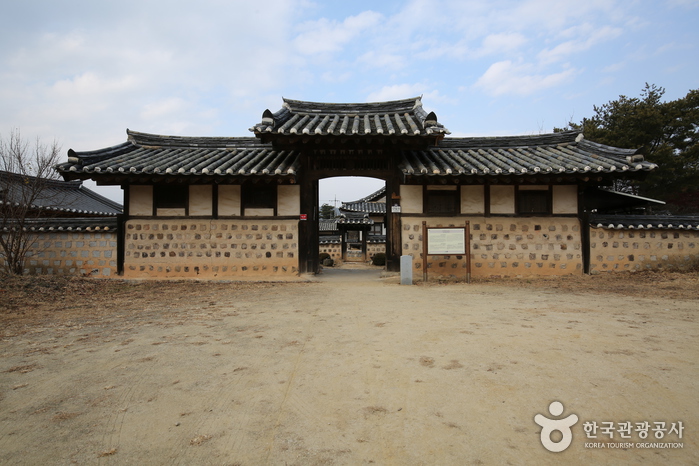
Suaedang / 안동 수애당
14.2Km 2025-08-12
1714-11, Sugogyonggye-ro Imdong-myeon, Andong-si, Gyeongsangbuk-do
'Suaedang Traditional House was built by Ryu Jin-geol, also known by his pen-name of Suae, in 1939. This hanok-style house consists of three buildings that measure 29-kan (a traditional measurement that corresponds to the space between two columns) in total.
The main room, or jeongchim (7-kan at front and 2-kan at sides), has a half-hipped roof, and forms a‘ㄱ’-shape with the storeroom (10-kan at front), which also has a half-hipped roof. Originally located at 612 Sugok-dong, Andong-si, the house was relocated from a slight slope to a flat piece of land due to the construction of Imha Dam in 1987. Consequently, the Jeongchim was rebuilt at a lower level than before.
The Suaedang was renovated by modernizing the old-style facilities including the kitchen, toilets, and washroom without changing their external features, while the rooms and daecheongmaru (main floored room) were decorated with red clay and natural paint. Suaedang, with its beautiful panoramic view of the lake, was designated as Gyeongsangbuk-do Cultural Property No. 56.
![Temple Bongjeongsa [Patrimoie de l'UNESCO] (봉정사[유네스코 세계유산])](http://tong.visitkorea.or.kr/cms/resource/16/2654216_image2_1.jpg)
Temple Bongjeongsa [Patrimoie de l'UNESCO] (봉정사[유네스코 세계유산])
14.8Km 2023-05-23
222, Bongjeongsa-gil, Andong-si, Gyeongsangbuk-do
Le temple Bongjeongsa a été construit par le moine Uisang durant la 12ème année de règne du roi Munmu (règne de 661~681) de la dynastie Silla. Le temple Bongjeongsa est le plus grand temple à Andong, il possède le bâtiment le plus ancien en Corée, le pavillon Geungnakjeon. Certains documents anciens affirment que Neungin Daedeuk, un disciple du moine Uisang, est à l'origine de la création du temple.
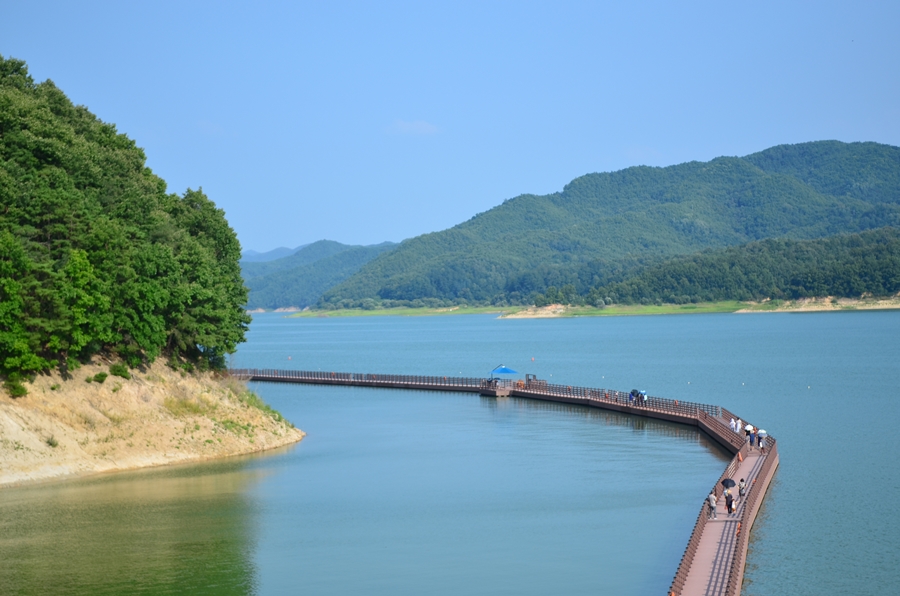
Chemin maritime Sunseong Susang-gil (선성수상길)
17.0Km 2024-07-08
14, Seonseong-gil, Dosan-myeon, Andong-si, Gyeongsangbuk-do
Le chemin maritime Sunseong Susang-gil désigne un chemin d'1km qui relie le complexe culturel Sunseonghyeon avec le parc du lac d'Andong. Ce chemin, qui flotte sur l'eau, donne l'impression de pouvoir marcher sur l'eau.

Yekki Maeul (예끼마을)
17.0Km 2024-07-08
14, Seonseong-gil, Dosan-myeon, Andong-si, Gyeongsangbuk-do
Le village Yekki est un village artistique à Andong. Les alllées du villages sont décorées avec des peintures murales réalisées par des artistes locaux. Le principal charme du village est le chemin de l'eau Sunseong Susang-gil, un chemin de promenade sur l'eau.
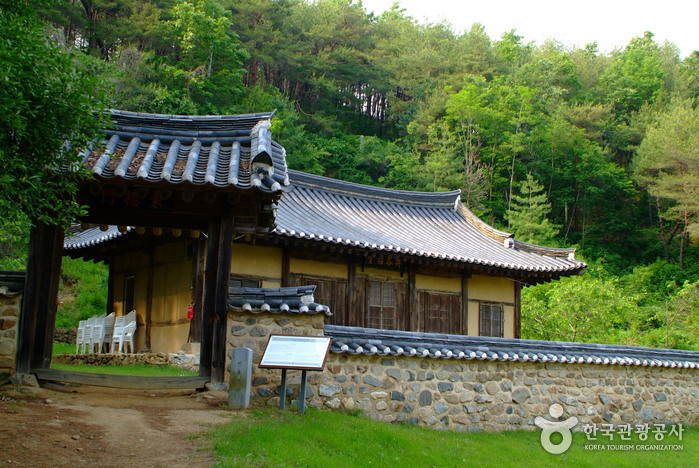
Le Village d’Art de Jirye (지례예술촌)
17.3Km 2024-07-08
769, Bakgok-ri, Imdong-myeon, Andong-si, Gyeongsangbuk-do
Le village d’art de Jirye à Andong est le l’endroit par excellence où vous pourrez vivre une experience de la culture coréenne traditionnelle. Le site a été désigné comme village artistique en 1990. Le site propose de nombreuses activités liées aux traditions en Corée et à l'artisanat.
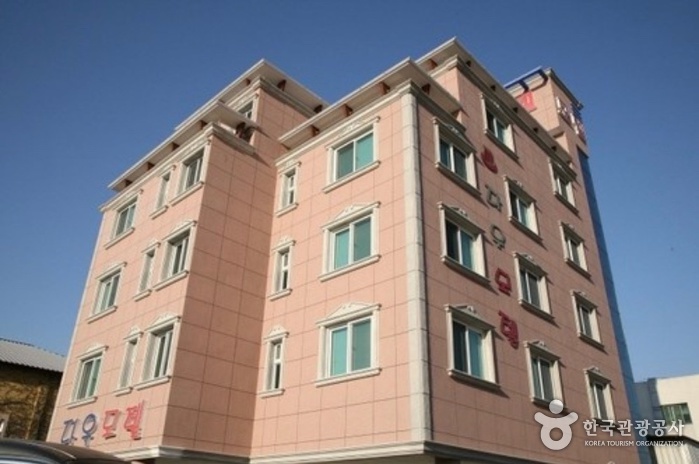
Dawoo Motel / 다우모텔
17.5Km 2025-08-12
66, Jangteojungang-gil, Andong-si, Gyeongsangbuk-do
Dawoo Motel is located in a lively street located in Pungsan-eup, Andong-si, and serves as a popular accommodation for visitors to Hahoe Village thanks to its affordable rates.
The five-story building houses 25 rooms, with the maximum occupancy of 50. The rooms are available in both Korean and bedroom styles. Bedrooms, which have beds and sofas, have a standard occupancy of 2 and a maximum of 3, while the twin room has a maximum occupancy of 4. Korean rooms have a standard occupancy of 2, but various ondol (under-the-floor heating system) rooms can house up to 5, 6, and 7 guests. Dawoo Motel thoughtfully requires no additional surcharge for additional guests in ondol rooms.
Not all rooms have bathtubs, so guests are advised to contact the front desk for their reservation. Guests are offered complimentary bottled water, beverages, and coffee. All rooms are furnished with TV, refrigerator, air conditioning, towels, basic toiletries, and hair dryer. Pets are allowed in the room, and services are also offered in English. Hahoe Village and Byeongsanseowon Confucian Academy, which were inscribed as UNESCO World Heritage, can be reached by car in 20 min.
Ecole confucianiste de Byeongsanseowon [Patrimoine Mondial de l'UNESCO] (병산서원)
18.8Km 2022-12-30
30, Byeongsan-ri, Pungcheon-myeon, Andong-si, Gyeongsangbuk-do
Byeongsan Seowon est une école fondée par des savants confucianistes coréens en hommage à Yu Seong-Ryong (1542-1607), célèbre érudit qui jouissait d’une très haute réputation pour sa vertu et ses savoirs. Actuellement, cet établissement abrite sa plaque commémorative.
En 1863, le roi de la dynastie Joseon a doté cet établissement d’une autorité en tant que Saek Seowon, école exempte de toute taxe et de tout labeur en lui fournissant une plaque écrite par le roi, des livres, un terrain et des esclaves.
En 1868, un décret de Heungseon Daewongun (1820-1898, politicien de la famille royale de la dynastie Joseon) a aboli les écoles confucéennes ; Byeongsan Seowon est un des 47 établissements de ce type dans toute la Corée du Sud, et un des deux dans la ville d’Andong, à avoir pu y échapper.
Située devant le fleuve Nakdong et entourée par la montagne Byeonsan comme d’un paravent, cette école offre un très joli paysage.
 Français
 한국어
한국어 English
 日本語
日本語 中文(简体)
 Deutsch
 Español
 Русский


