63 Square (63스퀘어)
16.2Km 2022-08-03
50, 63-ro, Yeongdeungpo-gu, Seoul-si
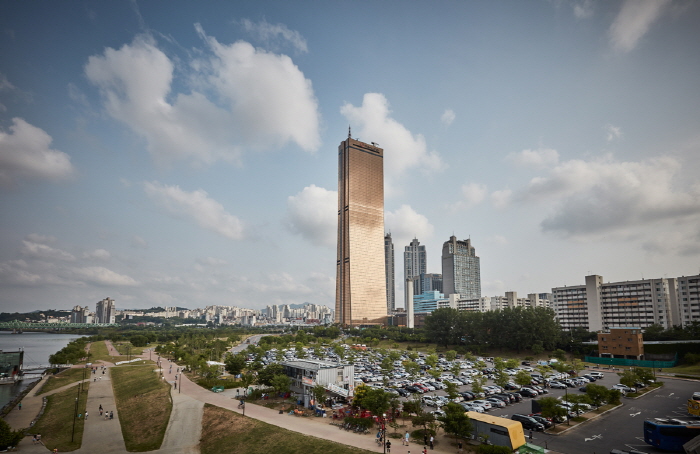
63 Building, le plus haut aux alentours du Fleuve Hangang, est un complexe multi-touristique, avec sa tour d’observation et une variété d’installations pour se divertir. Il est situé tout près du Fleuve Hangang et ses murs en verre dorés qui réflètent, font rougeoyer la région avoisinante dans sa lumière d’or. C’est pour cette raison qu’on l’appelle souvent, la “Tour en Or”.
Ce Bâtiment qui fait 63 étages, a la plus grande tour d’ observation en Corée, et il a également un théâtre IMAX, des restaurants, un centre commercial et un aquarium. La meilleure attraction au 63 Building est probablement sa tour d’ observation. Lorsque vous montez en ascenseur qui est en verre jusqu’à la tour d’observation, vous pouvez voir tous les alentours de la capitale, et les jours clairs, vous pouvez même voir la Mer d’Incheon. Le soir, le Fleuve Hangang, ses ponts très bien éclairés et la circulation des voitures, tout est en harmonie pour créer un panorama spectaculaire. L’aquarium a plus ou moins 400 sortes de vies de mer, 20.000 d’elles au total, qui se font voir dans leurs équipements intérieurs. Depuis les poissons de rivières et de mer, depuis les poissons tropicaux jusqu’aux régions de la jungle ou des régions polaires, toutes sortes de poissons et d’autres créatures de la mer y sont rassemblées.
Le théâtre IMAX a environ la hauteur d’un bâtiment de 6 étages et a des speakers ultra larges et un bon système du son. Il a un programme pour l’interprétation simultanée des langues étrangères pour les visiteurs étrangers. Il y a également des restaurants, un bar, un club santé, un sauna, un bowling, un centre commercial, et divers restaurants de spécialités et autres facilités afin de mettre les touristes plus à l’aise.
Temple Hwagyesa (화계사)
16.2Km 2021-11-15
487, Suyu1-dong, Gangbuk-gu, Seoul-si
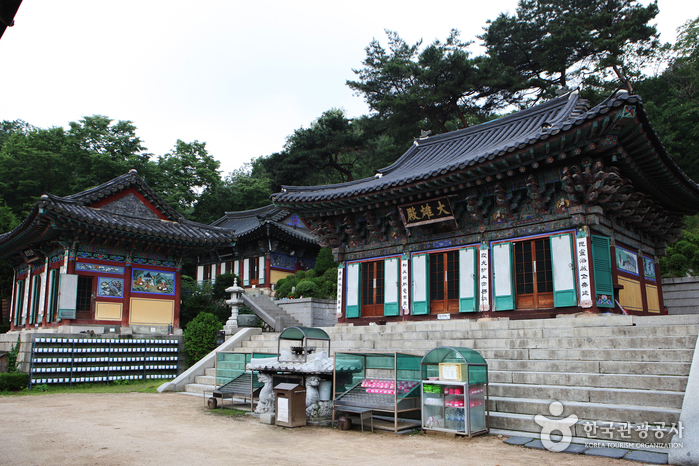
Le temple Hwagyesa, qui relève de l’Ordre Chogye du bouddhisme coréen, est situé au pied du mont Samgaksan à Suyu-dong, Gangbuk-gu, Séoul. Bien qu’il soit situé dans la ville de Séoul, la beauté des montagnes environnantes et des paysages créent une atmosphère sereine pour échapper à la vie urbaine.
Il a été construit dans les premiers styles architecturaux et possède un sanctuaire principal (classé comme patrimoine culturel), le sanctuaire Myeongbu, le pavillon Samsung, le sanctuaire Chulbulobaksungjeon, un pavillon à cloche de temple ainsi que les tours Bohwaru et Haksaru.
Une petite source d’eau du nom de Oktakcheon située dans la vallée (Hwagyegol) à côté du temple Hwagyesa, est connu pour ses pouvoirs surnaturels de guérison des maladies de la peau ou de l’estomac. La légende dit que cette source a été formée à partir des trous faits par les corbeaux picorant les rochers.

Mémorial national du gouvernement provisoire de la République de Corée (국립대한민국임시정부기념관)
16.2Km 2023-01-16
279-24, Tongil-ro, Seodaemun-gu, Séoul
Le Mémorial national du gouvernement provisoire de la République de Corée a été créé dans le but de mettre en lumière le désir d'indépendance du gouvernement provisoire de la République de Corée et de transmettre ces valeurs aux générations futures. Le lieu est constitué d'un terrain de 3 656 ㎡, d'un bâtiment de 9 703 ㎡ et de salles d'exposition de 2 240 ㎡. L'immeuble composé de quatre étages en surface et de trois étages en sous-sol comprend trois salles d'exposition permanentes, une salle d'exposition spéciale, des archives, une « place des symboles », une salle polyvalente et un jardin sur le toit.
L'exposition permanente se concentre sur le Mouvement du 1er mars qui a permis d'établir le gouvernement provisoire de la République de Corée mais aussi sur la formation du gouvernement coréen qui a succédé juridiquement au gouvernement provisoire. Dans la salle d'exposition qui se trouve au 1er étage, une exposition intitulée le « Retour du gouvernement provisoire de la République de Corée » accueille les visiteurs. Par ailleurs, une œuvre d'art mural symbolique dont le titre est la « Vague de l'histoire », est installée sur l'esplanade extérieure. Cette œuvre représente la volonté du gouvernement provisoire d'obtenir l'indépendance ainsi que le dynamisme de la Corée d'autrefois, actuelle et du futur.
Musée de l’université féminine d'Ewha (이화여자대학교박물관)
16.3Km 2022-09-14
52, Ewhayeodae-gil, Seodaemun-gu, Seoul-si
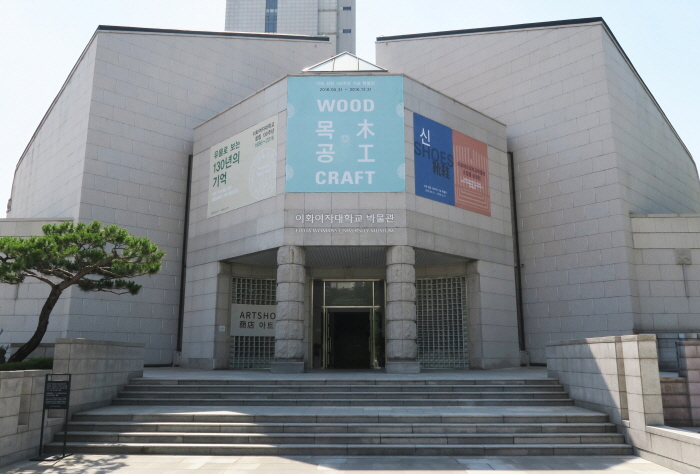
Le musée de l’université féminine de Ewha a été inauguré en 1935 dans le but de préserver l’héritage coréen. Au début, des objets en lien avec l’art folklorique, le travail du bois traditionnel et la poterie étaient exposés dans le hall du bâtiment pincipal de l’université afin d’empêcher leur confiscation. Suite à cela, un musée fut ouvert pour conserver et exposer la collection. Depuis 1972, une exposition de la collection du musée a eu lieu chaque année, et depuis 1996, le musée organise également une exposition spéciale qui prend pour thème une catégorie d’objets de l’héritage culturel. D’autres expositions de moindre importance ont lieu fréquemment afin de sensibiliser le public sur la culture et les arts traditionnels coréens. En tant que centre de recherche sur la céramique, le musée concentre ses resources sur la recherche et l’excavation de fours. Afin de préserver et d’étudier des reliques de valeur historique, les équipes de fouilles ont voyagé dans diverses régions du pays pour étudier des sites historiques et découvrir des artefacts de valeur. Grâce à la publication de livres et de rapports sur ses découvertes, le musée a contribué à améliorer la connaissance et la sensibilité à propos de l’héritage culturel coréen dans le monde universitaire et parmi le public.
Centre d'accueil de l'université Ehwa (이화웰컴센터)
16.3Km 2022-04-01
52, Ehwa Women Université road, Seodaemun-gu, Seoul (서울특별시 서대문구 이화여대길 52)
Le centre Welcome Center de Ehwa est le premier centre du genre dans un campus universitaire (2003). Il sert notamment de centre d'accueil pour tous les étudiants et propose également divers produits liés à cette université. Il est également possible de profiter d'expositions sur place. Le lieu offre également des visites guidés pour le public étranger souhaitant découvrir l'université.
Bibliothèque Gyujanggak à l'université nationale de Séoul (서울대학교 규장각)
16.3Km 2021-09-14
1, Gwanak-ro, Gwanak-gu, Seoul
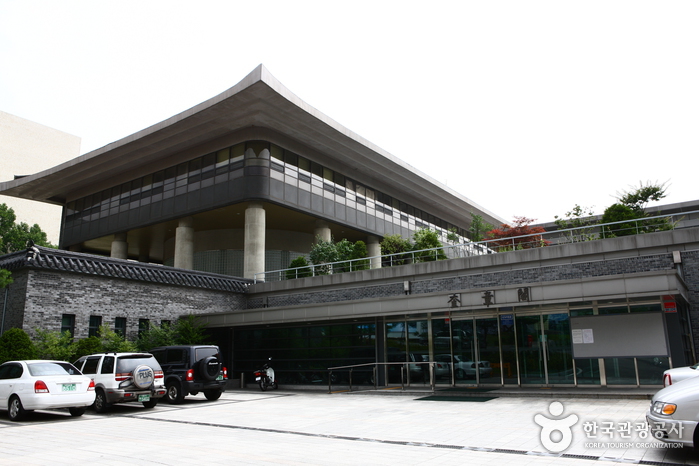
Gyujanggak fut fondée en 1776 au cours du règne du Roi Jeongjo, le 22ème roi de la Dynastie Joseon, époque à laquelle elle se situait dans l'enceinte du palais Changdeokgung. Elle servait de librairie royale qui abritait les écrits des rois précédents, leurs reliques et des livres locaux et étrangers.
Aujourd'hui, Seoul National University conserve les articles du Gyujanggak dans une hanok, une maison traditionelle coréenne, spécialement équipée pour la préservation des biens culturels. Elle abrite en plus une variété de livres sur la politique, l'économie et la société.
Gyujanggak abrite aujourd'hui plus de 280,000 articles dont 7 trésors nationaux, 8 trésors, plus de 180,000 livres anciens, environ 50,000 documents et 18,000 Chaekpan (blocs d'impression). Parmi ces reliques, Joseon Wangjo Sillok (les annales de la Dynastie Joseon, trésor national No. 151), Seungjeongwon Ilgi (le journal du Secrétariat Royal, trésor national No. 303) et Uigwe (les protocoles royaux de la Dynastie Joseon) ont été désignés comme héritages culturels par l'UNESCO. Le hall d'exposition du Gyujanggak est ouvert au public.
Université Nationale de Séoul (서울대학교)
16.3Km 2023-07-05
Sillim-dong, Gwanak-gu, Séoul
Fondée en 1946, l’université nationale de Séoul est riche en histoire et en tradition. L’université a été créée autour de l’université Kyongsong par la fusion de plusieurs universités spécialisées publiques et privées. C’est à présent une université pluridiscipinaire qui s’est hissée à la première place des universités publiques du pays. Elle possède un campus à Daehak-dong dans le quartier de Gwanak-gu, et un campus à Yeongeon-dong dans le quartier de Jongno-gu.
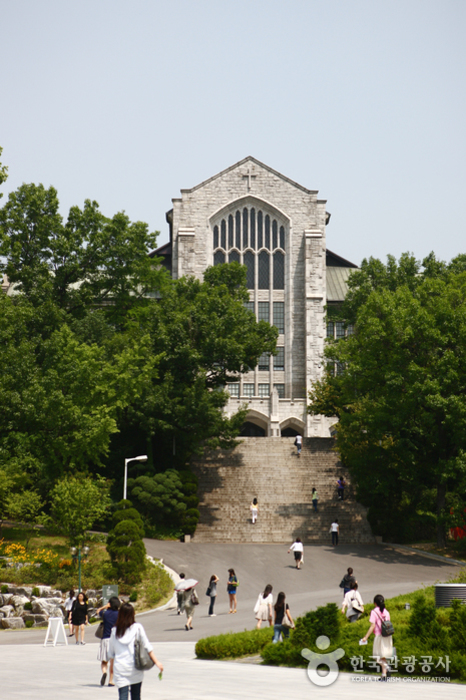
Université des femmes Ewha (이화여자대학교)
16.4Km 2023-07-05
11-1, Daehyeon-dong, Seodaemun-gu, Seoul-si
L'université des femmes Ewha est le plus ancien institut éducatif pour femmes du pays. Il fut fondé par Mary F. Scranton en 1886, une missionaire américaine de l'église épiscopale méthodiste. Le nom de l'école “Ewha” fut donné par l'empereur Gojong (le 26ème roi de la dynastie Joseon, 1863~1907). Les trois vertues promues par l'université sont la vérité, la bonté et la beauté. En 1910, un curriculum de 4 années fut introduit mais en 1943, durant le règne colonial japonais, l'école fut privée de son nom “Ewha” et devint un simple institut avec une durée d'enseignement d'un an. Lorsque la Corée fut libérée en 1945, l'école reprit son nom et devint officiellement Ewha Womans University.
Le quartier de l'université féminine Ewha est un des quartier phare de la ville pour le shopping. Les magasins du quartier vendent des vêtements bon marchés et branchés pour les jeunes. Les restaurants du quartier reflètent le goût des jeunes coréennes, on y trouve de nombreuses chaines de restaurants internationales. Les petites rues du quartier valent également la peine d'être visitées. On y trouve plein de magasins d'accessoires, de petites boutiques de vêtements, de magasins de chaussures, de cafés et de coiffeurs.
Taerim Sanchaejeongsik (태림 산채정식)
16.5Km 2024-12-12
32, Nohae-ro 60-gil, Dobong-gu, Seoul
This restaurant is famous for its dishes of wild vegetables, Deodeok and roots of balloon flowers.
Grilled sliced pork comes with Table d’hote of assorted wild vegetables and grilled Deodeok, and is also very tasty. Water kimchi made from mineral water is deliciously spicy as well.
*Best Korean Restaurant as designated by The Seoul Metropolitan Government
Université de Sogang (서강대학교)
16.5Km 2023-07-05
Sinsu-dong, Mapo-gu, Seoul-si
L’université de Sogang est une université jésuite, privée et mixte, située dans le centre-ville de Séoul.
La proximité géographique de cette université avec d’autres prestigieux établissements d’études supérieures, comme l’université de Yonsei et l’université féminine de Ewha, contribue à la vitalité intellectuelle et sociale de la vie étudiante.
 Français
 한국어
한국어 English
 日本語
日本語 中文(简体)
 Deutsch
 Español
 Русский


