Of one book and stay / 일독일박
2.0Km 2025-08-11
11-1, Pirundae-ro 3-gil, Jongno-gu, Seoul
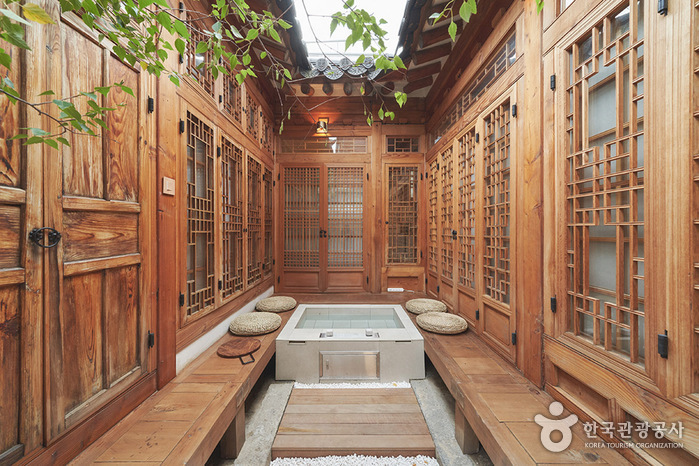
This hanok (traditional Korean house) is located in Seochon Village near Gyeongbokgung Palace. It is a modern C-shaped hanok centered around the inner courtyard, which is the first thing that the guests see after entering through the gate. While it is not expansive, white pebbles and a foot bath make this hanok a unique one. One can enjoy a foot bath while sitting on the porch.
The bedroom, which is located beyond the living room, is furnished with a queen-sized bed. Opening the screen doors brings one to the view of the kitchen area beyond the inner courtyard. A large table, plush sofa, and a small bookcase make the space ideal for books and discussions. Climbing the wooden ladder to the side of the kitchen brings one to the attic, which also doubles as a Korean-style room with a skylight. The kitchen is furnished with a refrigerator, microwave oven, gas stove, electric kettle, toaster, pots, utensils, wine glasses, and bottled water. There is a restroom with a bathtub. The standard occupancy of the house is 4 people.
Rivière Cheonggyecheon (청계천)
2.0Km 2025-09-19
Changsin-dong, Jung-gu, Seoul
+82-2-2290-6114
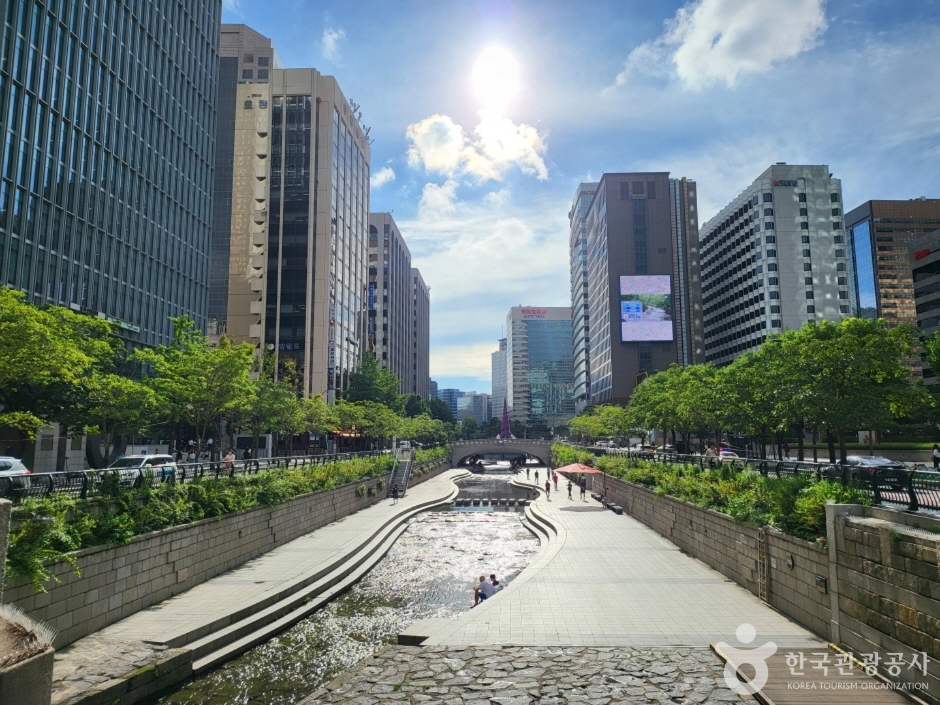
La place Cheonggye, située à Sejong-ro où commence le ruisseau Cheonggyecheon, s’étend sur 160 m de long et 50 m de large, pour une superficie totale de 2 106 pyeong, depuis l’avenue devant le siège du journal Dong-A Ilbo jusqu’au pont Sindapcheolgyo. Elle est aménagée avec des fontaines de formes variées, des cascades, une maquette miniature du ruisseau, des promenades et des sentiers, offrant ainsi un cadre paysager harmonieux. Symbole de la restauration du Cheonggyecheon, cet espace a été conçu comme un lieu de rencontre, de cohésion et d’aspiration à la paix et à la réunification.
La fontaine aux chandelles, illuminée de trois couleurs, ainsi que la cascade à deux niveaux tombant de 4 m de haut offrent un spectacle impressionnant. De part et d’autre de la cascade, on a disposé un muret de pierres provenant des huit provinces du pays, appelé Palseokdam. La nuit, l’eau et la lumière se mêlent pour créer une ambiance féérique. La maquette du Cheonggyecheon, réduite à l’échelle 1/100, constitue également une attraction remarquable.
Pour accéder du parvis au ruisseau, une entrée en escalier se trouve à gauche et le sentier de découverte de Cheonggye à droite. Une portion de 18 m de ce sentier est aménagée en tunnel, offrant aux visiteurs une expérience originale en pénétrant dans le Cheonggyecheon depuis la place. Après l’aménagement de la place Cheonggye, la ville de Séoul transforme cette zone en « rue piétonne » lors des jours fériés, afin que la place, les berges et la chaussée deviennent un espace de détente et de culture pour les citoyens.
Dialogue in the Dark – Bukchon (어둠속의대화 북촌점)
2.1Km 2025-07-04
Gahoe-dong, Jongno-gu, Séoul (Corée du Sud)
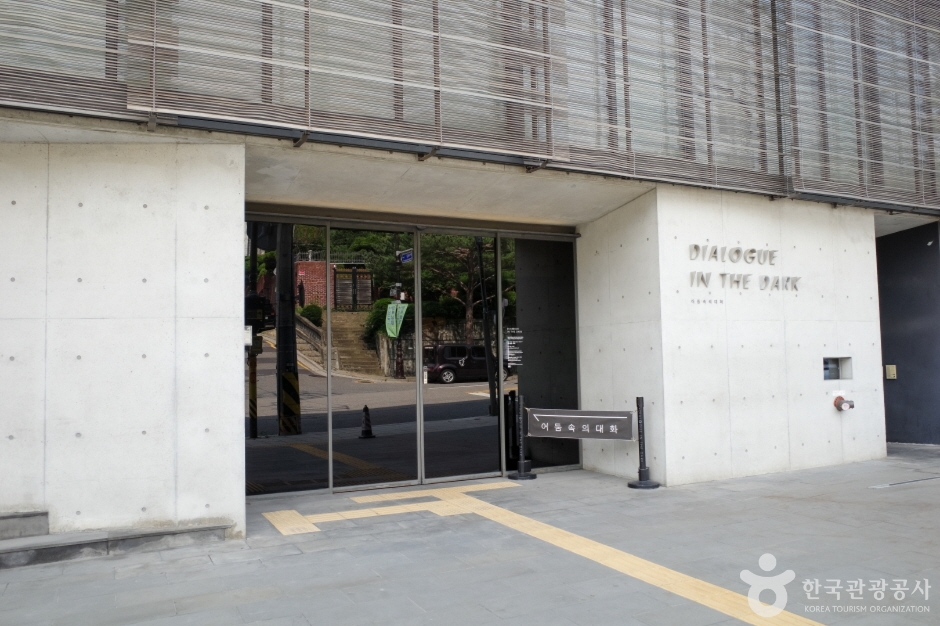
Située près du palais Gyeongbokgung, Dialogue in the Dark – Bukchon est une exposition participative sensorielle unique qui se déroule dans l’obscurité totale pendant 100 minutes. Accompagnés par un·e Roadmaster, les participants explorent différents environnements uniquement à travers les sens du toucher, de l’ouïe, de l’odorat et du goût.
Créée en Allemagne en 1988, cette exposition internationale a été présentée dans plus de 161 villes à travers le monde, touchant plus de 12 millions de visiteurs en Europe, en Asie et en Amérique.
Les visiteurs doivent arriver 15 minutes avant l’heure de réservation pour retirer leurs billets, déposer leurs affaires personnelles et se préparer à l’expérience. L’entrée se fait à l’heure exacte via un ascenseur menant progressivement vers une obscurité complète. Pendant 100 minutes, aucune sortie n’est possible ; il est donc essentiel d’utiliser les toilettes à l’avance.
L’exposition est située à 700 m de la sortie 2 de la station de métro Anguk (ligne 3). Le quartier de Bukchon et ses environs, proches du palais Gyeongbokgung, offrent également de nombreux cafés et restaurants à découvrir avant ou après l’expérience.
Hanok Guesthouse Dongchonchae / 한옥 게스트하우스 동촌재
2.1Km 2025-08-12
21-10, Jahamun-ro 11-gil, Jongno-gu, Seoul
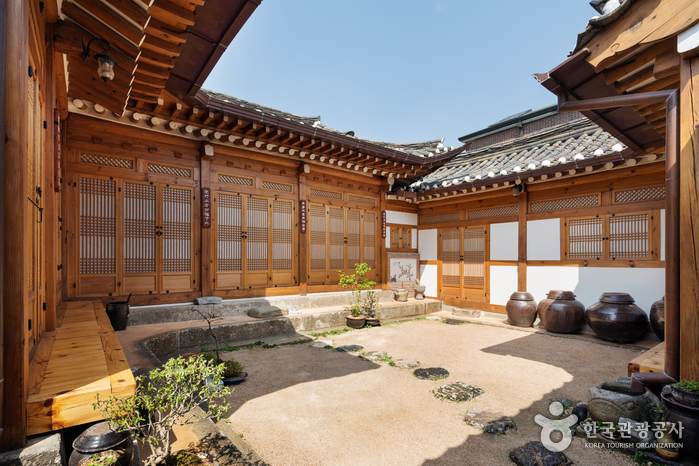
Built in 1939, Dongchonchae was designated as Seoul Well Hanok by the Seoul Metropolitan City in 2016. In 2020, this hanok (traditional Korean house) received the Certificate of KOREA QUALITY from the Korea Tourism Organization in the Heritage Hanok field in recognition of its historicity and quality of services. Dongchonjae is located in the western side of Gyeongbokgung Palace, at Seochon. When one passes through its main gate, one sees the yard, with anchae (women's quarters), sarangchae (men's quarters), and byeolchae (detached quarters) surrounding the plot. Anchae has four rooms, daecheong (wood-floored main hall), a kitchen, and a restroom. One of the rooms is used for tea ceremonies as well. Outside of the sarangchae and byeolchae, which are the living spaces for the owners, visitors have free access to the numaru (raised open floor) and the yard. The anchae’s rooms “Bom” and “Yeoreum” can accommodate 2 to 3 adults each, while the rooms “Gaeul” (Tea Room) and “Gyeoul” are optimal for two. The building is rented out as a whole, so no more than one group may stay in the building at any given time. Standard occupancy is four persons, and eight is the maximum number. There are two restrooms, one within the anchae building, one out in the backyard.
Cooking is not allowed in the kitchen, but guests are free to bring in outside food. Experience programs on offer include nighttime exploration of Seoul City Wall, tea ceremony, folk songs, and rice cake making. Additional payment is only required for rice cake making. Guests may choose between two types of complimentary breakfast: Korean, which comes with rice, soup, and three side dishes; and Western, which comes with bread, salad, and coffee. There are a 100-in screen and mini projector for film watching in the yard or daecheong. Towels, toiletries, hair dryer, bottled water, traditional tea, and capsule coffee are included. The kitchen is equipped with kitchen utensils, a microwave, and a coffee pot, enough for instant foods. Guests also have access to refrigerator and washing machine

Festival des Arts de Corée 2025 (2025 대한민국 미술축제)
2.1Km 2025-07-31
57, Daehak-ro 5-gil, Jongno-gu, Seoul
070-7575-0980
Le Festival des Arts de Corée 2025 est une marque culturelle fédératrice qui promeut et connecte douze grands événements artistiques – biennales et foires d’art – organisés dans les principales villes du pays. Rendez-vous en septembre 2025 pour une célébration artistique d’envergure à travers toute la Corée !
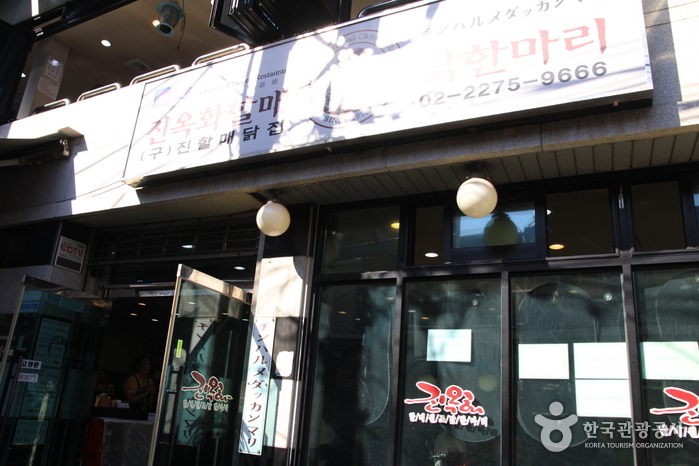
Jinokhwa Halmae Wonjo Dakhanmari (Jin Ok-hwa Original Chicken Restaurant) (진옥화할매원조닭한마리)
2.1Km 2024-12-11
18, Jong-ro 40ga-gil, Jongno-gu, Seoul
+82-2-2275-9666
Jinokhwa Halmae Wonjo Dakhanmari first opened its doors in 1978 and has continued to be a much-loved restaurant on Jongno 5-ga for the past 30 years. The restaurant only uses fresh young chickens, which are about 35 days old, and minimal seasoning to allow diners to fully enjoy the tenderness of the meat. Dip your chicken in the special marinade sauce and couple it with a helping of Kalguksu (a noodle dish) for a perfect meal combination.
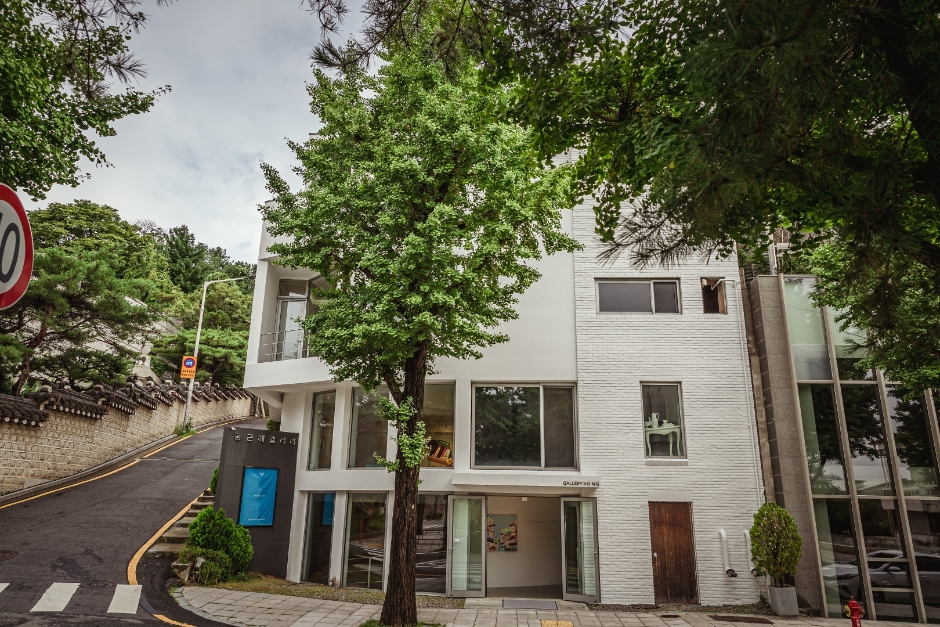
Galerie K.O.N.G (공근혜갤러리)
2.1Km 2024-10-25
38, Samcheong-ro 7gil, Jongno-gu, Seoul
Ouvert depuis 2005, la galerie joue un grand rôle sur le développement de l'art de la photographie en Corée. La galerie se situe désormais près de Cheongwadae, dans l'arrondissement Samcheong-dong. La galerie s'occupe désormais de mettre en avant notamment des artistes contemporains à travers le monde entier.
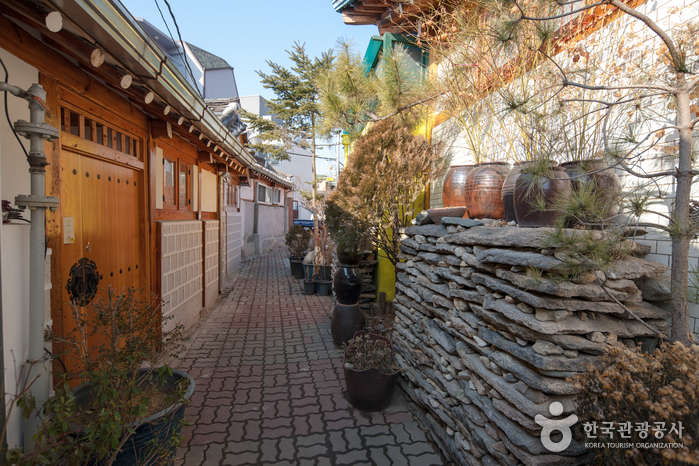
Village Seochon (서촌마을)
2.2Km 2021-07-14
45, Pirundae-ro, Jongno-gu, Seoul
Le village Seochon se situe à l'est du palais Gyeongbokgung. Il s'agit d'un lieu composé à la fois de maisons traditionnels hanok, de petites ruelles paisibles, mais aussi de nouveaux magasins qui forment une très belle harmonie dans le village. En parcourant les nombreuses petites ruelles des lieux, vous pourrez aussi apprécier plusieurs peintures murales très colorèes. Ce village se distingue donc par son côté à la fois pittoresque mais aussi raffiné.
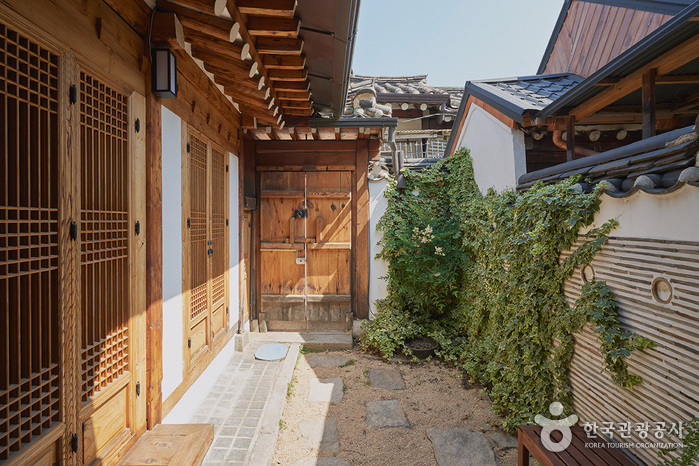
Haeunjae / 하은재
2.2Km 2025-08-12
68-10, Jahamun-ro, Jongno-gu, Seoul
Haeunjae (下隱齋), meaning “hermit’s residence,” is a hanok (traditional Korean house) residence located in Seochon Hanok Village, near Gyeongbokgung Station on Seoul Subway Line 3. It is dedicated to the ideal of “movies and rest,” and takes after the characteristic form of modern hanok with a small courtyard. The entire house is rented out at once, with a queen bedroom, kitchen, movie room, and two restrooms. Up to 4 guests can reserve the house, with each additional guest above the standard of 2 having access to additional bedding.
The movie room is furnished with a Bose sound system, beam projector, and screen, along with a mobile foot bath. The kitchen is equipped with a refrigerator, hand drip coffee maker, toaster, electric kettle, and utensils. A 10% discount is available for guests staying for more than 2 nights on weekdays, and towel replacement and cleaning services are offered for guests staying for more than 3 nights.
The residence is located close to tourist sites like Tongin Market, Gyeongbokgung and Changdeokgung Palaces, and Samcheong-dong area.
Rue de Cheongwadae (청와대 앞길)
2.2Km 2025-08-20
Gungjeong-dong, Jongno-gu, Séoul
+82-2-120
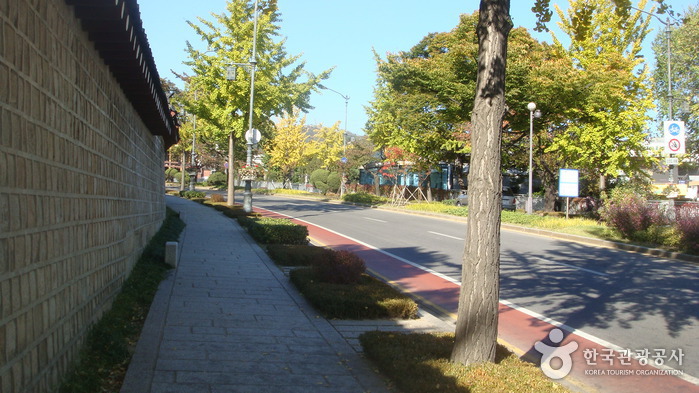
La rue de Cheongwadae a été créée avec l’instauration du gouvernement civil, et s’étend depuis le carrefour de Hyoja à Hyoja-dong jusqu’au carrefour de Palpan à Palpan-dong. En suivant la rue Hyoja depuis la station de métro Gyeongbokgung, vous trouverez le Sarangbang de Hyoja, une fontaine, un bosquet d’hibiscus, le hall Yeonmugwan, le pavillon Daegogak et le hall Yeongbingwan.
Le Sarangbang de Hyoja est un petit bâtiment composé d’un rez-de-chaussée abritant une exposition relatant les 600 ans d’histoire de Séoul, et d’un étage où sont exposés des cadeaux d’hôtes étrangers prestigieux. Les visiteurs peuvent se reposer dans le jardin de derrière. Au Daegogak se trouve un tambour offert au président Kim Yeong-san en souvenir de l’ancien tambour Sinmungo. Le hall Yeonmugwan est l’endroit où le personnel des services de sécurité s’entraîne aux arts martiaux. On y trouve également une citadelle en pierre naturelle, ainsi qu’un espace de repos. Derrière le bosquet d’hibiscus siègent l’ambassade du Vatican et le pavillon Chilgung.
Bordée d’arbres touffus et de parterres fleuris, la rue de Cheonwadae est l’endroit rêvé pour une belle promenade. La résidence présidentelle Cheonwadae (qui signifie « Maison Bleue ») se trouve juste en face de la porte Sinmumun du côté Nord du palais Gyeongbokgung, et la rue se termine sur la porte Chunchumun, où se trouve le centre de presse de Cheonwadae. Un peu plus loin, la rue Samchongdong-gil s’étend depuis la porte Chunchumun jusqu’à la porte Geonchunmun (porte principale du palais Gyeongbokgung). De nombreuses galeries de peinture y sont installées (galerie Gukje, galerie Growrich, galerie Hyundai, etc) , ce qui en fait un lieu de prédilection pour tous les amateurs d’art.
 Français
 한국어
한국어 English
 日本語
日本語 中文(简体)
 Deutsch
 Español
 Русский


