
Dolgorae Sundubu (돌고래순두부)
8.6Km 2024-03-15
15, Junggu-ro 40beon-gil, Jung-gu, Busan
+82-51-246-1825
Dolgorae Sundubu is a restaurant in Gukje Market that serves sundubu jjigae (soft bean curd jjigae). It has quite a tradition, dating back to 1982, and still draws lines of visitors at mealtime thanks to its reputation. Sundubu baekban (soft bean curd set menu), comprised of fresh and gentle sundubu jjigae (soft bean curd jjigae) and Jeolla-style side dishes and kimchi, is delicious and nicely presented.
Nampo Samgyetang (남포삼계탕)
8.6Km 2024-03-15
16-1, Nampo-gil, Jung-gu, Busan
+82-51-245-5075
Nampo Samgyetang serves samgyetang (ginseng chicken soup), a popular pick-me-up food in Korea. The restaurant's history goes back to 1962, so it has developed a loyal following. The samgyetang (ginseng chicken soup) served in the restaurant features Korean chicken boiled down with vegetables and medicinal herbs, resulting in a nutritious bowl of soup. Other menu items include jeonbok samgyetang (abalone and ginseng chicken soup) and dak jeongi gui (roasted chicken).
Samsong Chobap (삼송초밥)
8.7Km 2025-01-23
13 Gwangbok-ro 55beon-gil, Jung-gu, Busan
This is a Japanese restaurant that began in the early 1960s in Nampo-dong. While it is well-known for its Japanese-style gimbap called “gimchobap,” regular patrons consistently order its pufferfish dishes. The bokjiri (malgeuntang) is noted for its rich flavor, achieved by combining seasonal vegetables and pufferfish. The boksashimi (sliced raw pufferfish) menu offers a variety of options, including outer skin, inner skin, and shabu-shabu.
CheongKwanJang - Nampo Branch [Tax Refund Shop] (정관장 남포)
8.7Km 2024-04-18
51, Gudeok-ro, Jung-gu, Busan
-
Yongdusan Jagalchi Special Tourist Zone (용두산 자갈치 관광특구)
8.7Km 2021-03-11
52, Jagalchihaean-ro, Jung-gu, Busan
+82-51-600-4000
Yongdusan Jagalchi Special Tourist Zone is an attractive tourism area embracing history and culture. Vendors in the traditional market welcome tourists with their warm hearts, selling their famous street food such as rice cake, ssiat hotteok (sugar-filled seeded griddlecake), bibim dangmyeon (spicy glass noodles), pat juk (red bean porridge), and pat bingsu (shaved ice with sweetened red beans). Bosu-dong and 40-Step Culture & Tourism Themed Street also show the history of each street to people traveling in the area. Including Yongdusan Park, the special tourist zone includes traditional markets like Jagalchi Market, Gukje Market, and Bupyeong Market, and historical cultural resources like Yeongdodaegyo Bridge, Bosu Book Street, and Busan Modern History Museum. The restoration of Yeongdodaegyo Bridge in November 2013 has created a unique sightseeing attraction that is hard to see in other regions and has emerged as a new famous spot. Bupyeong (Kkongtong) Market and Gukje Market are also special markets full of things to see. Various festivals including Busan International Film Festival, Busan Jagalchi Festival, and Busan Christmas Tree Festival are held for all kinds of visitors. The view from Yongdusan Park and fresh seafood from Jagalchi Market, as well as peaceful strolling at Bosu Book Street and 40-Steps make a trip to Busan memorable and happy.
Current State of Yongdusan and Jagalchi Special Tourist Zone
1) Districts Covered: Areas around Gwangbok, Nampo and Bupyeong-dong, parts of Donggwang, Daecheong, Bosu and Jungang-dong, Busan
2) Total Area: 1,079,836 ㎡
3) Designated on May 14, 2008
* Tourist Attractions
Yongdusan Park, Yeongdodaegyo Bridge, Jagalchi Market, Gukje Market, Bupyeong Market, Bosu Book Street, etc.
Jagalchi Market (부산 자갈치시장)
8.7Km 2025-04-15
52 Jagalchihaean-ro, Jung-gu, Busan
+82-51-245-2594
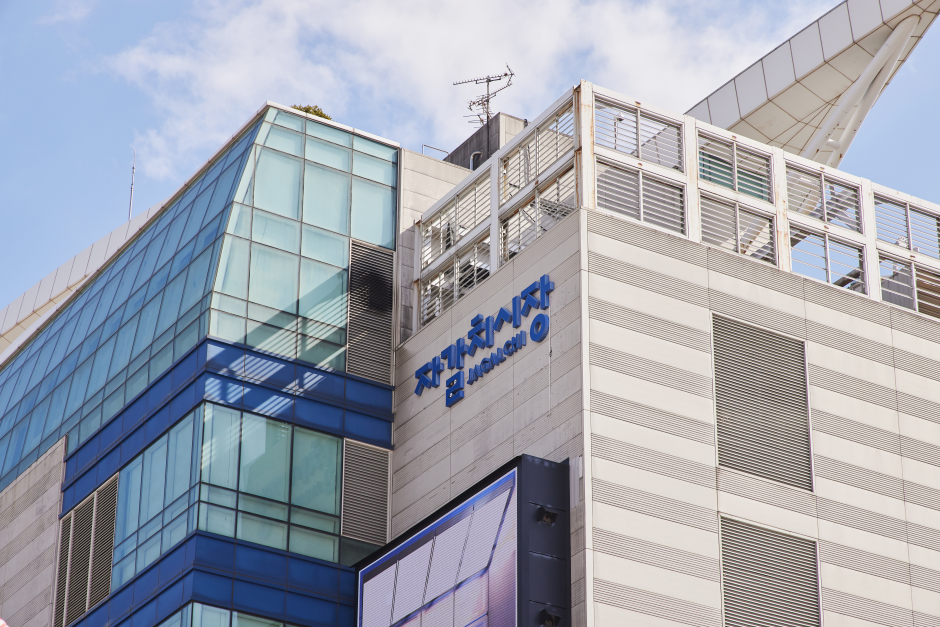
Jagalchi Market, located on the seaside road in Busan's Jung-gu, is one of the largest seafood markets in Korea, selling both live and dried fish. After the Korean War, the market solidified itself as a fish market. Most of the people who sell fish are women, so the vendors here are called Jagalchi Ajumeoni, "ajumeoni" meaning middle-aged or married woman in Korean.
This market represents Busan and is famous throughout the country. Visitors can eat fresh raw fish right at the market. Even nowadays visitors can see women selling mackerel, sea squirts (ascidians) and other seafood on wooden boxes along the road outside of the market and along the shore.
![Ai Hasi - Busan Gukje Market Branch [Tax Refund Shop] (아이하시 부산국제시장)](http://tong.visitkorea.or.kr/cms/resource/11/2889711_image2_1.jpg)
Ai Hasi - Busan Gukje Market Branch [Tax Refund Shop] (아이하시 부산국제시장)
8.7Km 2024-04-18
1F, Bldg. A of Ihasi, 33, Gukjesijang 2-gil, Jung-gu, Busan
-
Gukje Market (국제시장)
8.7Km 2025-10-23
Area of Sinchang-ro 4-ga, Jung-gu, Busan
+82-51-245-7389
The current marketplace of Gukje Market first formed after the liberation of Korea from the Japanese administration when people gathered to trade overseas products left by the Japanese and brought in by Koreans who came back from abroad. Following the Korean War, refugees who fled to Busan set up stalls in order to make a living by selling smuggled or imported products, which developed into Gukje Market (gukje meaning "international" in Korean) of today. Gukje Market is one of Korea’s largest markets and a testament to Korea's modern history. The market is divided into two wings, and first-timers to the market are advised to be careful not to get lost in the maze-like alleys and halls.
Bosu-dong Book Street Cultural Center(보수동 책방골목 문화관)
8.7Km 2023-01-09
8, Chaekbanggolmok-gil, Jung-gu, Busan
+82-51-743-7650
[The used bookstore that sells memories]
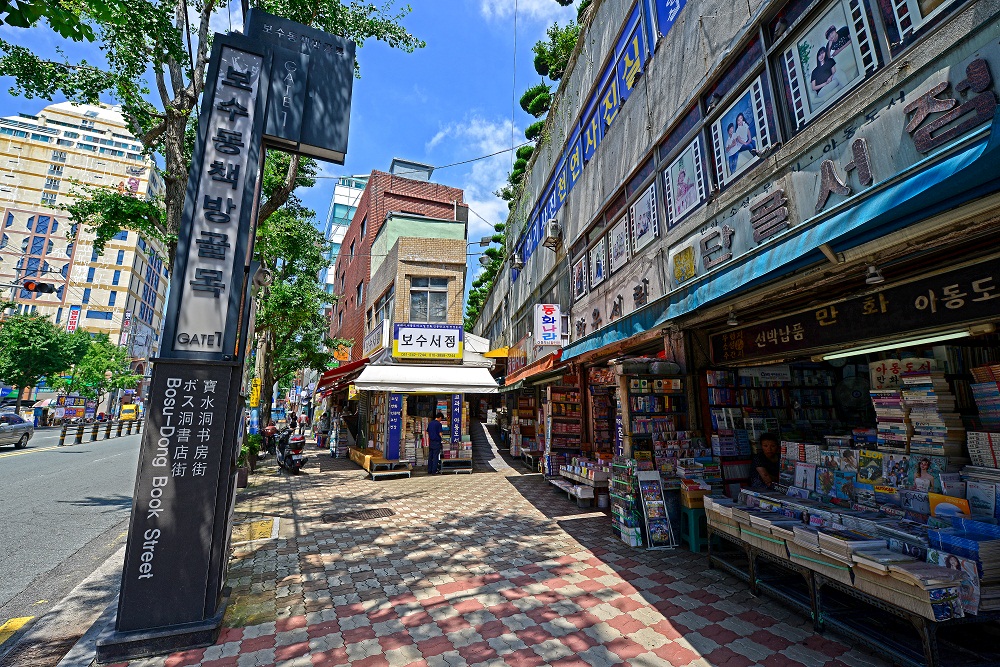
Bosu-dong Book Street has a unique background. It was formed after the independence of Korea (August 15) as a residential area in the empty place where the previous Gukje Market was demolished. Book stores began opening one-by-one and soon the street became known as Bosu-dong Book Street. The street is popular amongst booklovers for their used books as well as new books, and amongst travelers for the street’s unique atmosphere. Many young adults also frequent the street because there are many specialty shops for comic books. Every year, the Bosu-dong Culture Festival takes place and visitors can participate in events such as, make-your-own book cover, make-your-own book, and so on. The festival not only gives an opportunity to learn about the history of Bosu-dong Book Street, but have a good time as well.
Dolsotbapjip (돌솥밥집)
8.7Km 2024-03-15
7-1, Gwangbok-ro 37beon-gil, Jung-gu, Busan
+82-51-246-3888
Dolsotbapjip is a restaurant near Gukje Market that serves bibimbap. It has served a consistently good bowl of bibimbap to its loyal customers over its long history, and people have to wait in line to eat the restaurant’s bibimbap. Dolsotbapjip has only two menus: sundubu jjigae dolsot bibimbap (soft bean curd jjigae and hot stone pot bibimbap) and doenjang jjigae dolsot bibimbap (soybean paste jjigae and hot stone pot bibimbap). Both feature dolsotbap (hot stone pot rice) and namul (salad) to make the bibimbap, served alongside jjigae.
 English
 한국어
한국어 日本語
日本語 中文(简体)
 Deutsch
 Français
 Español
 Русский


