
Samsong Chobap (삼송초밥)
1.5Km 2025-01-23
13 Gwangbok-ro 55beon-gil, Jung-gu, Busan
This is a Japanese restaurant that began in the early 1960s in Nampo-dong. While it is well-known for its Japanese-style gimbap called “gimchobap,” regular patrons consistently order its pufferfish dishes. The bokjiri (malgeuntang) is noted for its rich flavor, achieved by combining seasonal vegetables and pufferfish. The boksashimi (sliced raw pufferfish) menu offers a variety of options, including outer skin, inner skin, and shabu-shabu.
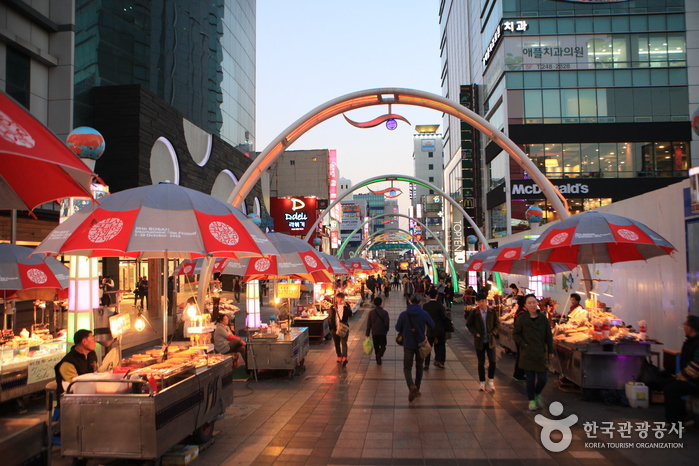
BIFF Square (BIFF 광장)
1.5Km 2025-10-23
4 Nampo-gil, Jung-gu, Busan
+82-1688-3010
Busan’s modern movie district was originally little more than a pair of cinemas that were built following Korea’s liberation from Japanese colonial rule over half a century ago. However, major renovations took place ahead of the first Busan International Film Festival (BIFF), and the newly transformed district was named BIFF Square on September 13, 1996.
Having been remade into a cultural tourist attraction promoting the advancement of Korea’s film industry, BIFF Square has contributed to Busan’s status as an international cultural tourist city. The 428 meter-long street stretching from the Buyeong Theater in Nampo-dong to the overpass in Chungmu-dong was divided into “Star Street” and “Festival Street,” and on the eve of the festival each year the “BIFF Square Ground Opening” is held here. During the ceremony, events such as the hand printing of famous movie celebrities and Nunkkot Jeomdeung (snow-flower lighting) take place. A district such as BIFF Square, crowded with first-run theaters in a city is rare not only in Asia but Europe as well, and for this reason it holds great potential. In recent years, the square has grown into a more complex area, featuring not only movie theaters but also shops and leisure facilities, attracting growing numbers of young visitors and tourists.
Yeongdo Cheonghak Reservoir Observatory (영도 청학배수지 전망대)
1.5Km 2024-02-13
36 Wachi-ro, Yeongdo-gu, Busan
The observatory boasts stunning vistas of Busan's scenery. It is particularly renowned for the breathtaking night view of the Busan Port Bridge, making it a favorite spot for photography enthusiasts. Surrounding areas are well-equipped with a variety of exercise equipment, enhancing the outdoor experience. Additionally, visitors can explore the History Park, embark on the scenic Namparangil 2-course walking trail, or enjoy a leisurely walk or jog around the tranquil Bongnaesan Mountain.
Busan Modern & Contemporary History Museum - Main Building (부산근현대역사관 본관)
1.5Km 2025-08-04
112 Daecheong-ro, Jung-gu, Busan
Busan Modern & Contemporary Museum showcases the evolving identity of Busan through various exhibitions and programs. Housed in the former Bank of Korea Headquarters building, the museum's main building is a first-generation Korean architectural building. It features exhibitions and performances by young artists on the basement floor, and houses the Bank of Korea archive room, a café, a lounge and a gift shop on the first floor. The second floor is dedicated to special exhibitions, while the third and fourth floors offer educational spaces and historical exhibitions that trace Busan’s changing identity from the turbulent colonial period to the present day, offering visitors a meaningful glimpse into modern Korean history.
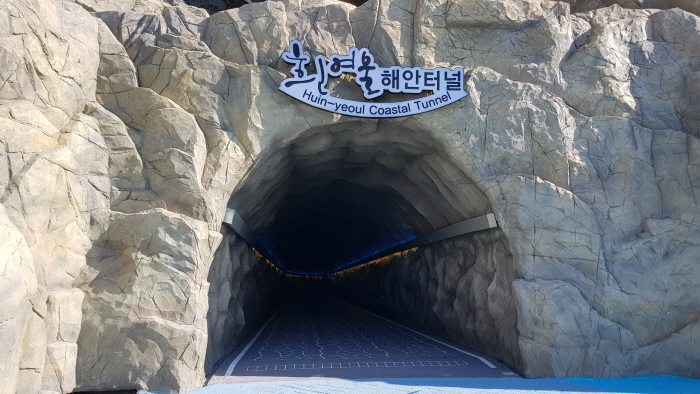
Huin-yeoul Coastal Tunnel (영도 흰여울해안터널)
1.6Km 2023-11-23
1044-6 Yeongseon-dong 4(sa)-ga, Yeongdo-gu, Busan
+82-51-403-1861
Huin-yeoul Coastal Tunnel was formed in December 2018 to help the elderly and the infirm walk smoothly without going through the steep stair section between the piano stairs and wave square near Jeoryeonghaean Coastal Trail. The 70 meter tunnel not only give easy walking route, there's also a photo zone, lightings and more for visitors to enjoy. The lights within the tunnel are lit from 09:00 to 23:00.
Gukje Market (국제시장)
1.7Km 2025-10-23
Area of Sinchang-ro 4-ga, Jung-gu, Busan
+82-51-245-7389
The current marketplace of Gukje Market first formed after the liberation of Korea from the Japanese administration when people gathered to trade overseas products left by the Japanese and brought in by Koreans who came back from abroad. Following the Korean War, refugees who fled to Busan set up stalls in order to make a living by selling smuggled or imported products, which developed into Gukje Market (gukje meaning "international" in Korean) of today. Gukje Market is one of Korea’s largest markets and a testament to Korea's modern history. The market is divided into two wings, and first-timers to the market are advised to be careful not to get lost in the maze-like alleys and halls.
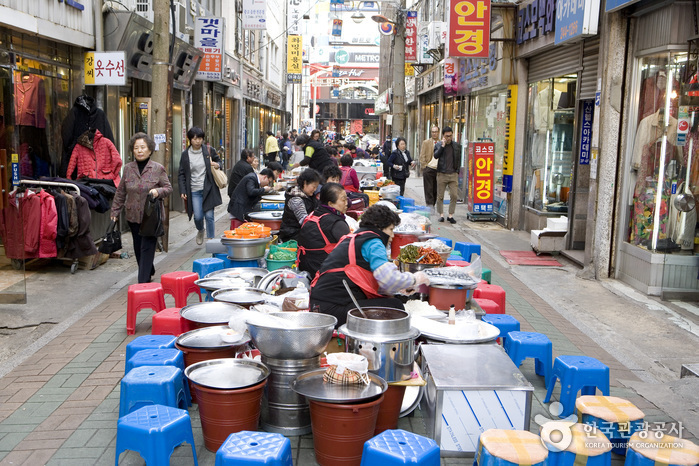
Gukje Market Food Street (국제시장 먹자골목)
1.7Km 2024-03-06
36, Junggu-ro, Jung-gu, Busan
+82-51-245-7389
Gukje Market Food Street has more than 60 years of history as one of Busan's traditional markets' most famous food streets. It is known for a number of dishes, such as Chungmu gimbap served with sweet and sour squid salad, sweet-and-spicy tteokbokki, milmyeon (wheat noodles), dwaeji gukbap (pork and rice soup), sundae, patbingsu (shaved ice with red beans), and Busan’s iconic bibim dangmyeon (spicy glass noodles). These dishes are enjoyed on small stools next to the street stalls. The sight of the diners lining the stall is one of the defining views of traditional markets in Korea. Visitors can also find suitable clothing, shoes, and accessories here.
Bupyeong (Kkangtong) Market (부평시장(깡통시장))
1.9Km 2025-10-23
48 Bupyeong 1-gil, Jung-gu, Busan
+82-51-243-1128
Busan's Bupyeong Market is also known as Kkangtong (tin can) Market. It earned that funny name when it had a variety of imported canned goods from the United States for the US forces stationed in Korea during the Korean War. It was also known as "Dottegi (bustling plea) Market." All foreign products found in the country at that time were supplied from this market. Due to its vast property and many rare goods that were hard to find anywhere else during the time, it was also referred as "Gukje (International) Market." Nowadays, the market has reduced in size as many foreign products are freely imported, but the reputation and potential still remain. Some imported goods including liquor, clothes, ornaments, accessories, fashion items and electronic goods are still sold here.
A night market opens from 19:30-23:30 at the public parking lot and at Arcade 2 of the market . Along the 110m-long street market are 11 kiosks selling Korean food, 6 kiosks selling international food such as Japanese and Filipino foods, and 13 vendors selling clothes and accessories. The entrance of the market greets visitors with bright LED lights and fun performances. A magic show and a guitar performance take place twice a day by the entrance of the market and the at the four-way intersection inside the market.
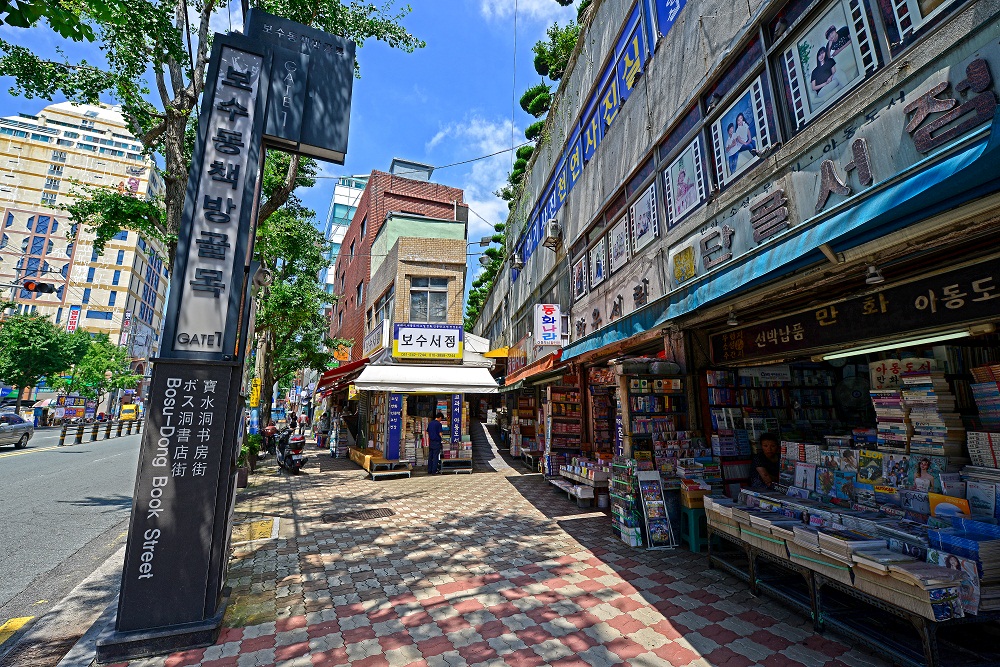
Bosu-dong Book Street Cultural Center(보수동 책방골목 문화관)
1.9Km 2023-01-09
8, Chaekbanggolmok-gil, Jung-gu, Busan
+82-51-743-7650
[The used bookstore that sells memories]
Bosu-dong Book Street has a unique background. It was formed after the independence of Korea (August 15) as a residential area in the empty place where the previous Gukje Market was demolished. Book stores began opening one-by-one and soon the street became known as Bosu-dong Book Street. The street is popular amongst booklovers for their used books as well as new books, and amongst travelers for the street’s unique atmosphere. Many young adults also frequent the street because there are many specialty shops for comic books. Every year, the Bosu-dong Culture Festival takes place and visitors can participate in events such as, make-your-own book cover, make-your-own book, and so on. The festival not only gives an opportunity to learn about the history of Bosu-dong Book Street, but have a good time as well.
Yangsanjip (양산집)
1.9Km 2024-12-26
부산광역시 중구 중구로47번길 30
A long-standing dwaeji gukbap restaurant beloved by both vendors and visitors of the Kkangtong Market. The restaurant is small, so it’s often necessary to wait for a seat. Despite this, it remains popular among regulars, who are more than willing to wait. The popular menu item is the suyuk baekban (boiled pork slices set menu), which includes soup, rice, and separately served boiled pork.
 English
 한국어
한국어 日本語
日本語 中文(简体)
 Deutsch
 Français
 Español
 Русский


