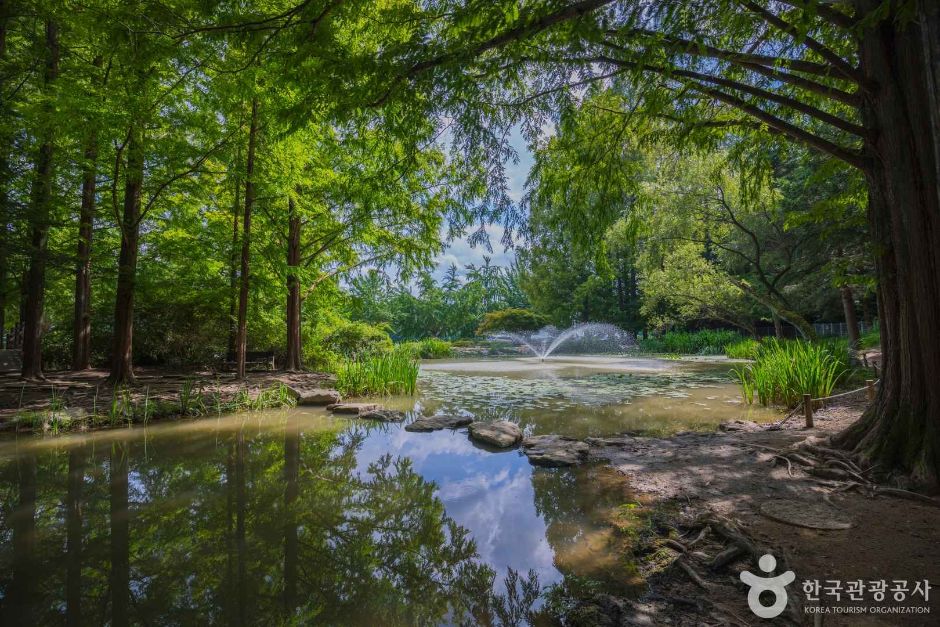
Nakgangmulgil Park (낙강물길공원)
9.7Km 2024-11-14
423 Sanga-dong, Andong-si, Gyeongsangbuk-do
Nakgangmulgil Park, called the Giverny of Korea, is a small waterside park located near Andong Dam. The park is the perfect setting for a relaxing moment, with benches placed under trees and beside walkways throughout the park. The natural environment creates plenty of photo spots. Visitors looking for a longer walk in nature can follow the riverside deck to Wolryeong Park.
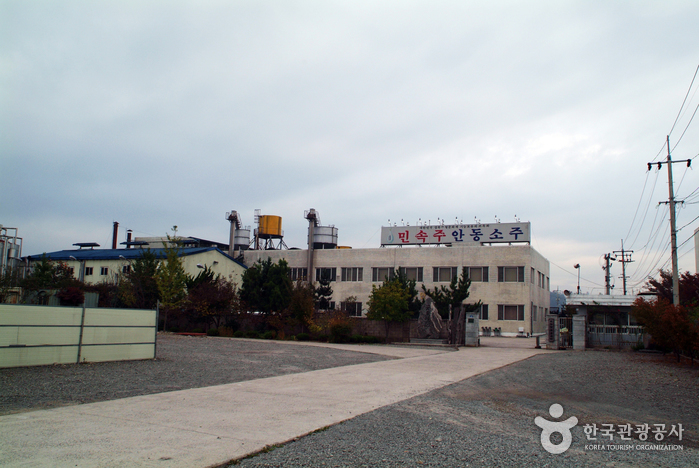
Andong Soju & Traditional Food Museum (안동소주·전통음식 박물관)
9.8Km 2021-12-01
71-1, Gangnam-ro, Andong-si, Gyeongsangbuk-do
Andong Soju & Traditional Food Museum was established in 1995 to promote and pass down the history and cultural characteristics of Andong Soju (Gyeongsangbuk-do Intangible Heritage). Andong Soju is a liquor distilled from wheat with 45 percent ABV that originated during Silla period. This regional liquor became widely known outside of Andong when the Korean government strongly supported the development of regional liquors in anticipation of the Asian Games in 1986 and Seoul Olympic Games in 1988.

Andong Hospital (안동병원)
9.9Km 2025-10-23
11 Angsil-ro, Andong-si, Gyeongsangbuk-do
Founded in 1982 in Andong-si, Andong Hospital is a general hospital and a member organization of Andong Medical Group Hospital.
We operate several specialized centers designated or certified by the Korean Ministry of Health and Welfare (e.g., Regional Emergency Center, Air Ambulance Helicopter, Integrated Cancer Center, Regional Cardio-Cerebrovascular Disease Center (RCDC), Spine and Joint Center, Clinical Trial Center, and Robotic Surgery Center).
Within the Andong Medical Foundation are Andong Hospital, Andong Nursing Hospital, Yongsang Andong Hospital, and Andong Hospital Specialized Care Center so that patients can receive connected care at general acute care hospitals, nursing hospitals, and nursing homes.
Andong Medical Group Hospital oversees Andong Hospital, Andong Convalescent Hospital, and Yongsang Andong Hospital. This allows patients to receive coordinated care at general acute care hospitals, convalescent hospitals, and nursing homes.
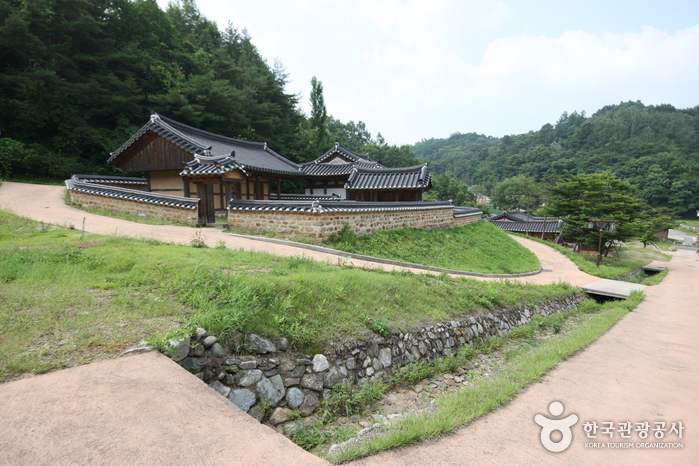
Andong Folk Village (안동민속촌)
10.0Km 2024-05-30
Seonggok-dong, Andong-si, Gyeongsangbuk-do
On the other side of the subsidiary dam of Andong Dam, thatched houses can be sparsely seen on a hilltop. The area is practically an outdoor museum, displaying traditional houses that were moved to safety prior to the construction of Andong Dam. Two jangseung (traditional Korean totem poles) are raised at the entrance of the outdoor museum, followed by a monument inscribed with the poem of famous Andong poet and democracy activist, Lee Yuk-sa. On the monument, his most noted work “Gwangya” (Wild Plain) is carved.
Nearby attractions include Andong Museum, Lee Yuk-sa Monument, a filming site of “Taejo Wang Geon (2000)," and Andongho Lake.
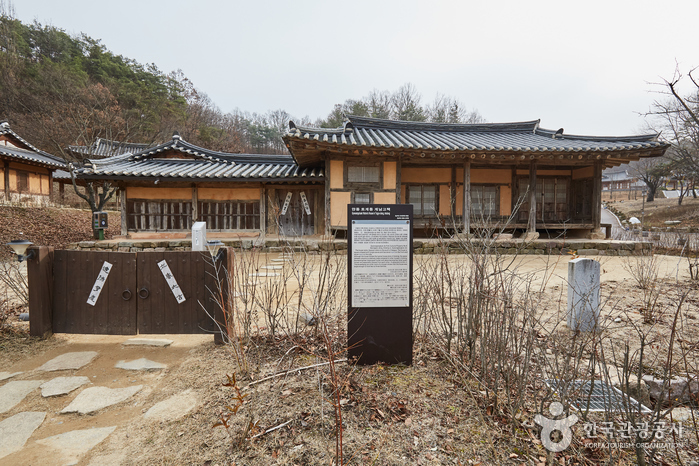
Traditional Resort Gurume (구름에)
10.5Km 2024-12-20
190 , Minsokchon-gil, Andong-si, Gyeongsangbuk-do
Gurume Resort in Andong-si, Gyeongsangbuk-do, consists of seven traditional hanok dating from the 17th, 18th and 19th centuries that were moved to this location because of a flood. The re-assembled hanok have been equipped with modern toilets, bathrooms, and AC units - plus a modern security system. Facilities include a book-cafe, a restaurant, a traditional experience room and a plaza.
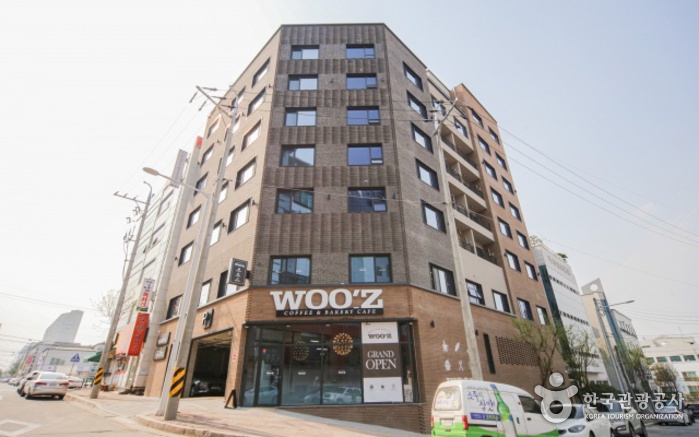
Kase Hotel (formerly Andong Kase) (케이스호텔((주)안동케이스))
10.5Km 2024-12-19
60-16 , Gangnam 2-gil, Andong-si, Gyeongsangbuk-do
The Kase Hotel is 15 minutes by car from both Andong Station and Andong Bus Terminal.The hotel, located inside the Nakdonggan River, offers guests an opportunity to take a walk along the river. All rooms have Netflix installed, and the Family Room, Suite Party Room, and Luxury Party Room all have kitchen facilities and mini swimming pools. A 10-minute drive away is the famous Imcheonggak House and Wolyeonggyo Bridge - not to mention Andong Braised Chicken Street!
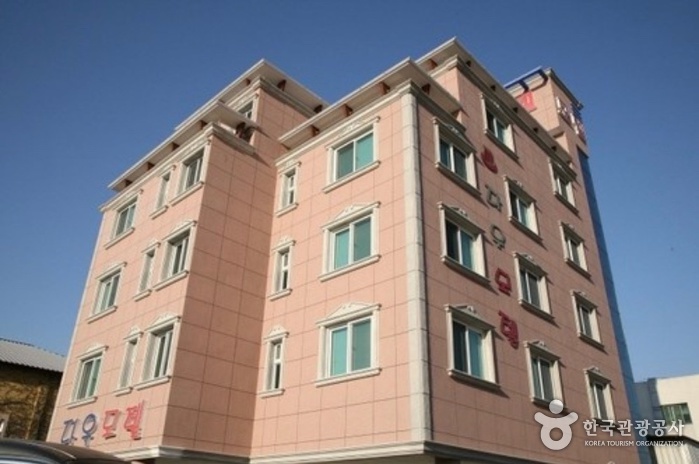
Dawoo Motel (다우모텔)
11.4Km 2024-12-19
66 , Jangteojungang-gil, Andong-si, Gyeongsangbuk-do
The Dawoo is a motel in the downtown area of Pungsan-eup, Andong-si, Gyeongsangbuk-do, whose reasonable rates make it a favorite with visitors to Hahoe Village. Guestrooms are either bedroom-style or ondol-style. There is no extra charge for additional members when family travelers use the ondol room. Some rooms have bathtubs. Bottled water, coffee, and soft drinks are provided free of charge upon arrival. Pets are welcome, and there’s an English language information services if needed. Hahoe Folk Village and Byeongsan Seowon Confucian Academy are just 20 minutes away by car.
Confucian Land (유교랜드)
11.5Km 2024-05-30
346-30 Gwangwangdanji-ro, Andong-si, Gyeongsangbuk-do
Confucian Land, located within Andong Culture & Tourism Resort, is a themed exhibition hall that focuses on Korea's Confucian culture. The facility uses the edu-tainment method to make a difficult subject matter easy to understand for young children. Exhibitions include the teachings of famous Confucian scholars like Toegye Yi Hwang and Yulgok Yi I, traditional musical instruments such as the gayageum and haegeum, as well as a video hall with 3D film capabilities and a children's game area with motion-tracking.
Yeongju Museom Village (영주 무섬마을)
11.8Km 2021-08-24
31-12, Museom-ro 234beon-gil, Yeongju-si, Gyeongsangbuk-do
Located in Sudo-ri in Yeongju, Gyeongsangbuk-do, Museom Village is a charming hanok village surrounded by water. Flowing down from Sobaeksan Mountain and Taebaeksan Mountain, Naeseongcheon Stream and Yeongjucheon Stream converge and loop around Museom Village, surrounding the village on three sides with water. This peninsula-like village is not only the center of traditional Korean culture, but also has a gorgeous natural landscape complete with a wide sandy riverside and a lush inland forest.
Known for Haeudang and Manjukje Houses (two of the most historical hanok houses in the area), the village is also home to other outstanding traditional houses such as the Kim Gyu-jin House and the Kim Wi-jin House. Manjukje House is located at the heart of the village and the oldest traditional house in this hanok village. Manjukje was built in 1666 (7th year of King Heonjong's reign) by Bak Su (the father of the Bannam Bak Family).
Nearby Manjukje is Manun House, built in the early 19th century and named after Kim Hwi-geol (penname “Manun”). The house later became the home of the wife of the famous poet Jo Ji-hun, author of “Byeolli,” a poem expressing the beauty of Museom Village.
Other notable houses include the Kim Wi-jin House (a house belonging to aristocrats), the Kim Jeong-gyu House (a house without the traditional outer fencing), and the Bak Jae-yeon House, where the writings of Bak Gyu-su (a respected scholar during the Joseon period) still remain today.
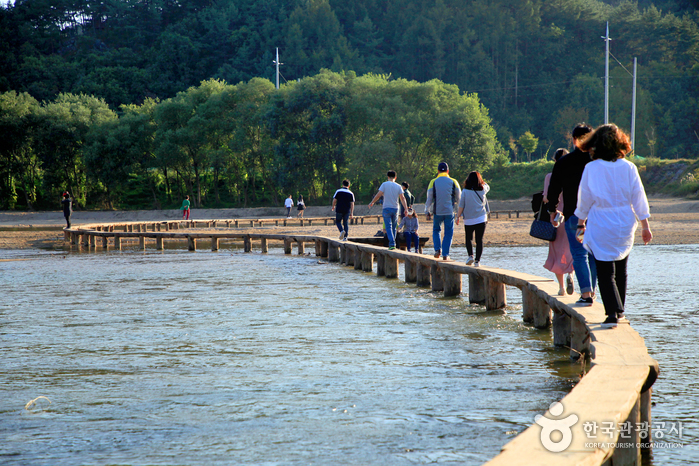
Another famous attraction in the village is the Single Log Bridge, which was the village’s only connection to the outside world for over 350 years before the construction of Sudo Bridge in 1979. It is a tiny bridge in terms of x_width (30 cm), but it stretches for over 150 meters. It is said that the bridge was rebuilt annually after being destroyed each rainy season. With the construction of Sudo Bridge, the Single Log Bridge was no longer needed, but was rebuilt some time later in its original form. To celebrate the bridge’s impressive history, the village hosts the Single-Log Bridge Festival every October.
Andong Gunja Village (안동 군자마을)
11.8Km 2024-02-23
29 Gunjari-gil, Waryong-myeon, Andong-si, Gyeongsangbuk-do
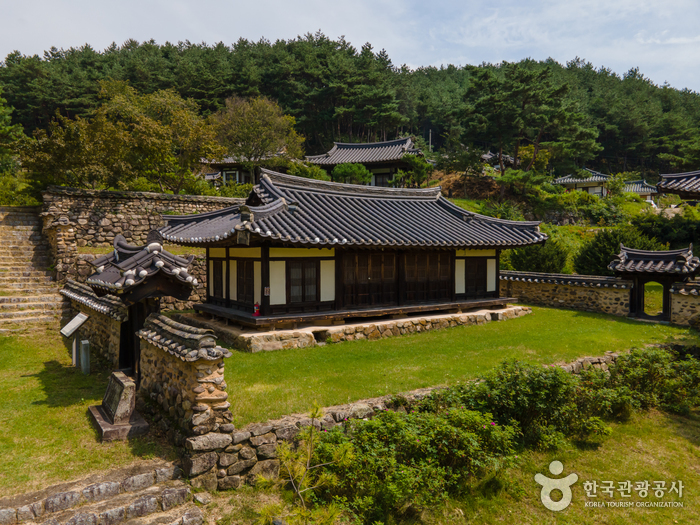
Andong Gunja Village, established 600 years ago, was relocated 2 kilometers from its original site due to submergence during the construction of Andong Dam. The village's tradtional houses and pavilions were meticulously moved to preserve their historic value. Known as Gunja Village, it derives its name from a remark by the Joseon-era civil servant Jeong Gu, who noted, "There is no one in the village who is not a Gunja (gentleman)". The village is home to over 20 ancient houses, including the Hujodang Head House and Takcheongjeong Pavilion, maintained in their original state. Moreover, the village archives over 1,000 documents detailing adoption, property ownership, and labor distribution.
 English
 한국어
한국어 日本語
日本語 中文(简体)
 Deutsch
 Français
 Español
 Русский


