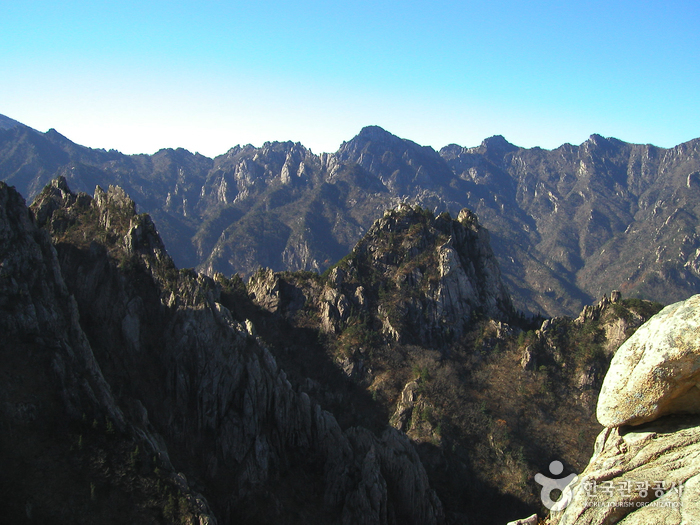
Seoraksan Gwongeumseong Fortress (설악산 권금성)
10.2Km 2024-02-28
1091 Seoraksan-ro, Sokcho-si, Gangwon-do
Gwongeumseong Fortress is a stone castle from the Goryeo dynasty and is located 800 meters above sea level in Seoraksan National Park. From a distance, Gwongeumseong Fortress looks like a rising peak, while up close, the expansive stone floor and remnants of castle walls become visible. Visitors can access the fortress via hiking trails or by taking a cable car. From the fortress, visitors can enjoy the majestic view of Seoraksan Mountain and the blue waters of the East Sea.

Del Pino Hotel & Resort Ocean Play (델피노호텔&리조트 오션플레이)
10.2Km 2024-02-22
1153 Misiryeongyet-gil, Toseong-myeon, Goseong-gun, Gangwon-do
Del Pino Hotel & Resort Ocean Play is a themed water park where visitors can enjoy water playground and spa treatments with hot spring water all year round. It features indoor and outdoor zones, hot springs, and open-air baths. For children, there are Kids' Play Pools, a Kids' River, and an Outdoor Infinity Pool with shallow depths. The indoor area offers panoramic views of the Sokcho coastline through expansive floor-to-ceiling windows.
Seoraksan Cable Car (설악산 케이블카)
10.5Km 2024-04-08
1085 Seoraksan-ro, Sokcho-si, Gangwon-do
A ride on the Seoraksan Cable Car is the best way to enjoy the unexplored regions of Seoraksan Mountain. The cable car station is located in Seoraksan National Park, and it takes about 10 minutes to reach Gwongeumseong Fortress, which is 700 meters above sea level. Since one-way tickets are not available, passengers must purchase a round-trip ticket. From the cable car window, passengers can see famous attractions like Ulsanbawi Peak and Manmulsang Rocks. From Gwongeumseong Fortress, passengers can take in a panoramic view of Seoraksan Mountain. Seoraksan Mountain, seen from the top of Gwongeumseong Fortress, is majestic and mysterious with unique rock formations. Upon reaching the top of the mountain, the entire scenery of Outer Seorak unfolds before one's eyes. Visitors will be amazed by the Allak Hermitage from the Silla dynasty and the Muhagsong Pine Tree, which has survived for hundreds of years just below Gwongeumseong Fortress. There are many tourists on weekends, public holidays, and fall foliage season, so visitors are advised to plan ahead.
Sinheungsa Temple (Seoraksan Mountain) (신흥사(설악산))
10.8Km 2024-03-12
1137 Seoraksan-ro, Sokcho-si, Gangwon-do
Sinheungsa Temple is a temple located in Seoraksan Mountain near Sokcho. It belongs to the Jogye Order of Korean Buddhism. It was originally founded as Hyangseongsa Temple by the monk Jajang in the Shilla dynasty (A.D. 652). Within the temple grounds, cultural heritage sites such as Geungnakbojeon Hall, a wooden structure from the mid-Joseon period, and the Three-story Stone Pagoda at Hyangseongsa Temple Site. The temple offers a templestay program where visitors can experience temple life firsthand. Participants can engage in various activities such as Buddhist ceremonies, Buddhist prayer, 108 prostrations, and lotus lantern and rosary making.
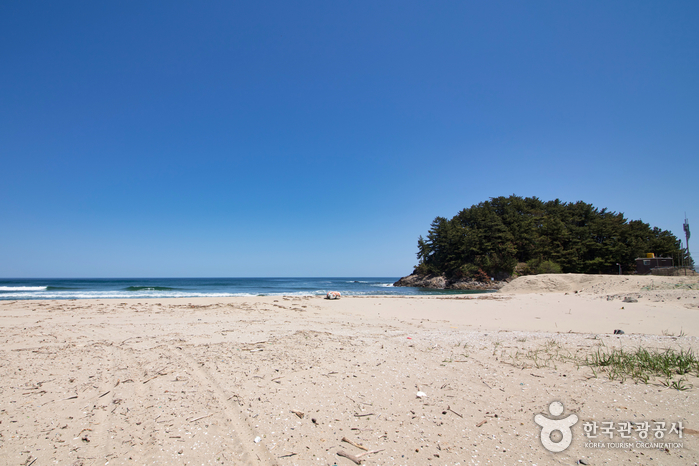
Songjeonhaebyeon Beach (송전해수욕장)
11.6Km 2024-02-05
21-7 Songjeon-ri, Sonyang-myeon, Yangyang-gun, Gangwon-do
This beach ranks among Korea's most favored surfing destinations. With its pristine white sand, it stretches 900 meters in length and 80 meters in x_width, and has a depth of 1 meter. It holds the distinction of being the second largest and longest white sand beach in Yangyang-gun, following Naksanhaebyeon Beach. Notably, the water here is so clean and clear that visitors can enjoy clamming.
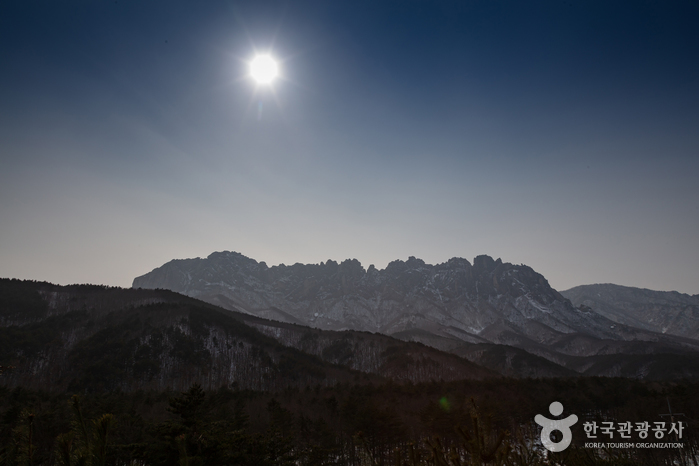
Seoraksan Ulsanbawi Rock (설악산 울산바위)
12.3Km 2024-02-28
1091 Seoraksan-ro, Sokcho-si, Gangwon-do
Ulsanbawi is a rock formation in Seoraksan Mountain that consists of six massive peaks, each reaching 900 meters above sea level. The name "Ulsanbawi" is derived from the shape of the peaks, which spread out like a fence, and it is located at the center of Seoraksan Mountain. This rock is celebrated for its unique shape, the scenic beauty surrounding it, and its hiking trails. It takes about three hours to reach the top of Ulsanbawi from Sogongwon Park.
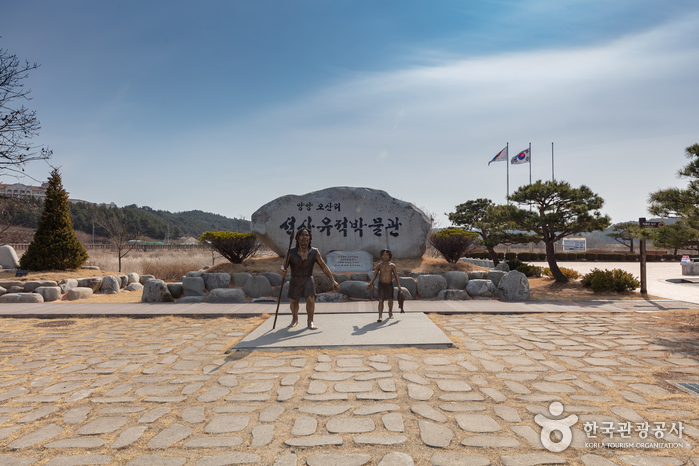
Osan-ri Prehistory Museum (오산리선사유적박물관)
12.4Km 2021-08-11
33, Hakpo-gil, Yangyang-gun, Gangwon-do
Osan-ri Prehistory Museum is dedicated to preserving, researching, and exhibiting artifacts found in the Archaeological Site in Osan-ri, Yangyang. These artifacts, dating back to the Neolithic period about 8,000 years ago, were found over the course of public works on the museum’s surrounding wetlands. The collection of nearly 40,000 artifacts, include earthenware with a raised design, stone arrowheads, and net weights, represent one of the premier archaeological findings of the Neolithic period in Korea. The artifacts themselves speak to the fishing, hunting, and gathering activities of the Neolithic residents of Osan-ri. The museum is divided into indoor and outdoor exhibitions, storage, and research areas. Exhibition Hall 1, located indoors, offers a diorama of the Neolithic lifestyle in Osan-ri, such as fishing, gathering, and earthenware production. Exhibition Hall 2 introduces the prehistoric culture of the Yeongdong region, encompassing the periods from the Neolithic to the Iron Age in Yangyang, Goseong, and Gangneung. Outdoor Exhibition includes Neolithic cottage models, exploration paths, and Ssangho Wetlands, whose nickname of “the dancing reed bed” comes from the mysterious sight of the reed bed rising over the wetlands like an island, dancing to the winds.
Ulsanbawi Rock Milky Way Photo Spot on Old Misiryeong Trail (미시령옛길 울산바위 은하수)
12.5Km 2024-03-18
5110 Donghae-daero, Toseong-myeon, Goseong-gun, Gangwon-do
Misiryeong Pass, historically a pathway connecting Inje to Sokcho, also serves as an observation point for viewing Ulsanbawi Rock in Seoraksan Mountain. More recently, it has gained popularity as a photo spot for capturing the Milky Way. As a result, on clear nights, the parking lot is often filled with eager photographers.
Goseong Hwaamsa Temple (화암사(고성))
12.7Km 2025-12-16
100 Hwaamsa-gil, Toseong-myeon, Goseong-gun, Gangwon-do
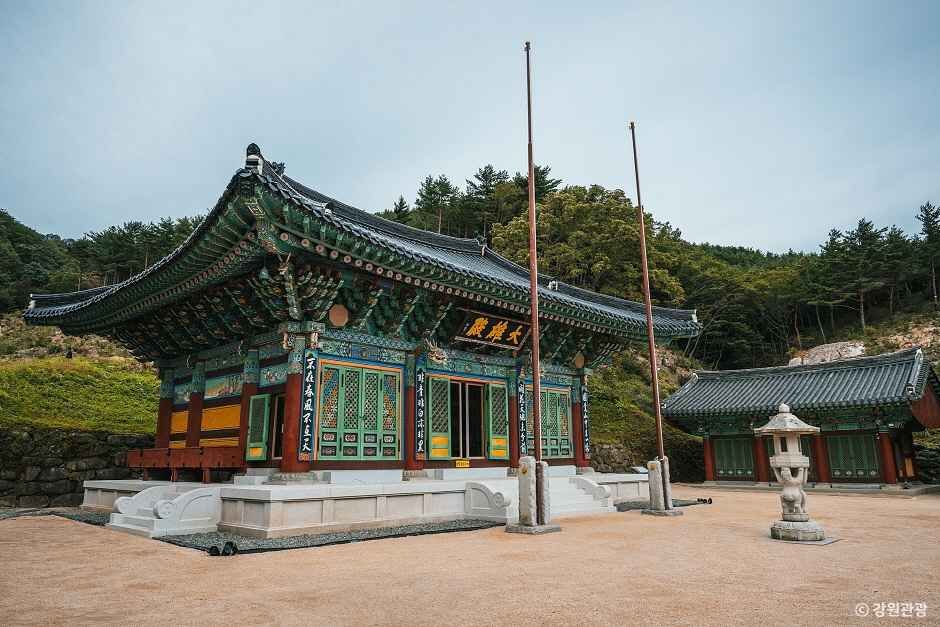
Hwaamsa Temple was built during the Silla period, and then repaired many times throughout history, with the temple even moving locations to where it is now in 1864. The current structures were built in 1991 for the World Jamboree. The temple name also changed throughout history, with the current name being given in 1912. The temple is located in a pristine natural environment, and is home to a traditional tea house, making it a great place to relax and feel at peace.
◎ Travel Information to Discover Hallyu’s Charm - Variety Show "Summer Vacation"
Hwaamsa Temple is where actors Jung Yu-mi and Choi Woo-shik participated in a Templestay program on tvN's variety show "Summer Vacation." The two enjoyed a healing retreat through various temple activities, such as morning prayers and tea talks with Buddhist monks, finding peace of mind away from their daily routines. This tranquil temple is recommended as a special destination to rest your body and mind in nature’s embrace.
Baekchon Makguksu (백촌막국수)
12.9Km 2024-12-10
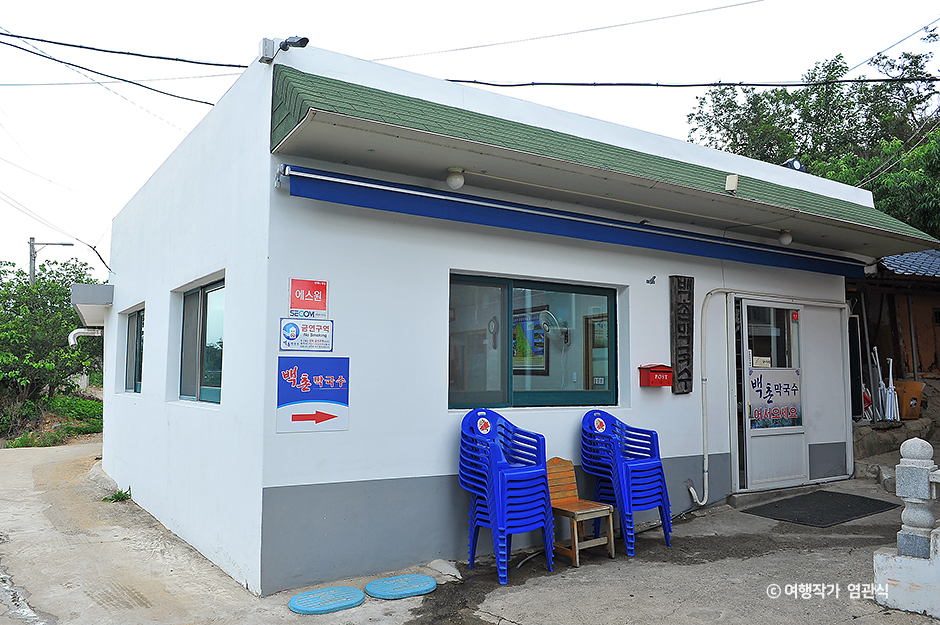
Baekchon Makguksu is a one of the most well-known restaurant in Goseong for serving delicious makguksu (buckwheat noodles), a dish that defines Gangwon-do. Buckwheat noodles in Baekchon Makguksu are served with a dried pollack salad, which, for many regulars, is the thing that makes them come back for more. Baekchon Makguksu’s take on this dish combines the flavors of dongchimi (radish water kichmi) broth with Hamheung-style cold buckwheat noodles. Ingredients consist of dongchimi and buckwheat noodles, topped with dried pollack salad, sesame oil, vinegar, sugar, mustard, and seasoning to taste. The noodles themselves retain the fragrance and the texture of buckwheat quite well. Visitors who prefer their bowl to have a more subtle yet refreshing taste can control the amount of vinegar and seasoning to bring the soup’s flavors forward. Another popular dish here is suyuk (boiled pork slices). After enjoying a meal of makguksu, visitors are recommended to take a leisurely seaside stroll at the nearby Munamhaebyeon Beach.
 English
 한국어
한국어 日本語
日本語 中文(简体)
 Deutsch
 Français
 Español
 Русский


