Okcheon Yongamsa Temple (용암사(옥천))
9.9Km 2022-12-27
400, Samcheong 2-gil, Okcheon-gun, Chungcheongbuk-do
+82-43-732-1400
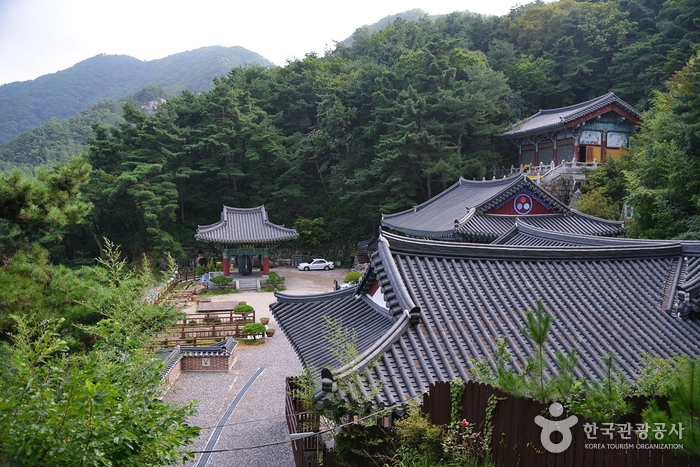
Yongamsa Temple, located in the mid-slope of Jangyongsan Mountain, is a branch of Beopjusa Temple. It was built during the Silla period. Unlike the more common temple arrangements, the stone pagoda in Yongamsa is uniquely situated on a low peak in the north with a view on all sides. The East and West Three-story Stone Pagodas of Yongamsa Temple, a designated Treasure, can be found here, as well as Rock-caved Buddha, and Wooden Seated Amitabha Buddha in Daeseongjeon Hall.

Maninsan Recreational Forest (만인산 자연휴양림)
9.9Km 2023-02-09
106, Sannae-ro, Dong-gu, Daejeon
Maninsan Recreational Forest sits on the border between Daejeon and Geumsan-gun, Chungcheongnam-do, and is located approx. 17 kilometers away from Daejeon Station on National Route 17. It consists of Maninsan, the main peak, as well as Bongsuregol, Keunbaegol, and Jageunbaegol, and, because of its beautiful landscape, it even enshrined the figures of King Taejo and his princes during the Joseon Dynasty. Pure water constantly flows in the valleys and broadleaf trees form a thickly wooded forest. This recreational forest located close to the city has utilized natural ridges and is divided into the family recreation district, youth district, and picnic district to provide a pleasant resting area for citizens. Maninsan Service Area is a convenience facility of the recreational forest built with private capital in 1990 and, at the time of its construction, it utilized the natural valleys as they were without damaging any part of the forest. Decks were installed in the valleys, and the structure itself was built with one semi-underground floor and two ground floors. The main framework was made of reinforced concrete and wood was used as the primary material for construction. Also, a pond was created in front of the rest area to harmonize with the natural landscape. As a result, it is widely praised by experts as the most beautifully constructed rest area in Korea, and it is becoming a place that citizens frequently visit to relax. There are comfortable benches and resting spots situated throughout for visitors to relax while enjoying the views and, in particular, Manillugak is a symbolic recreational facility of Maninsan and a representative pavilion structure. It was built in the architectural style of Segeomjeong Pavilion located on Bugaksan in Seoul while employing reinforced concrete for the main framework. It applies a two-story, wooden tile roof to maintain as much beauty of Korean traditional architecture as possible with the consideration of maintenance.
Daejeon EXPO Plaza (엑스포시민광장)
10.5Km 2025-10-23
169 Dunsan-daero, Seo-gu, Daejeon
Expo Citizen Plaza is a space for visitors to enjoy tourism, cultural life, leisure, and leisure sports. In the square, there is the Hanbat Arboretum. In addition, visitors can participate in or watch various events at an outdoor performance hall with moving shade for the first time in Korea. Well-maintained bike paths and central squares are great for cycling or inline skating. At sunset, the landscape lights of the Expo Bridge light up, so taking a commemorative photo is recommended. There are shops and cafes in the management building of the square where the fountain is installed, so it is perfect for enjoying snacks or light drinks.
Phil Hospital of Korean Medicine (필한방병원)
10.6Km 2025-10-23
(3rd,4th,11th Floors, Calix Building), 128 Cheongsa-ro, Seo-gu, Daejeon
Phil Hospital of Korean Medicine, located in Daejeon, is a training hospital designated by the Ministry of Health and Welfare. With 8 specialized professionals (including 2 doctors) and 70 patient beds, we offer a wide range of services. Director Yoon Je-pil, a specialist in Korean medicine rehabilitation, brings 18 years of experience from a renowned Korean medicine hospital, 7 years at our hospital, and 8 years of international experience in the United States and Africa, making him an excellent choice for international patients. Our head of internal medicine is fluent in Japanese.
We have a women-only immunization ward where we provide immune-boosting foods.
Dedicated staff for international patients and private waiting and treatment areas are also available.
Leeungno Museum (이응노 미술관)
10.7Km 2025-10-23
157 Dunsan-daero, Seo-gu, Daejeon
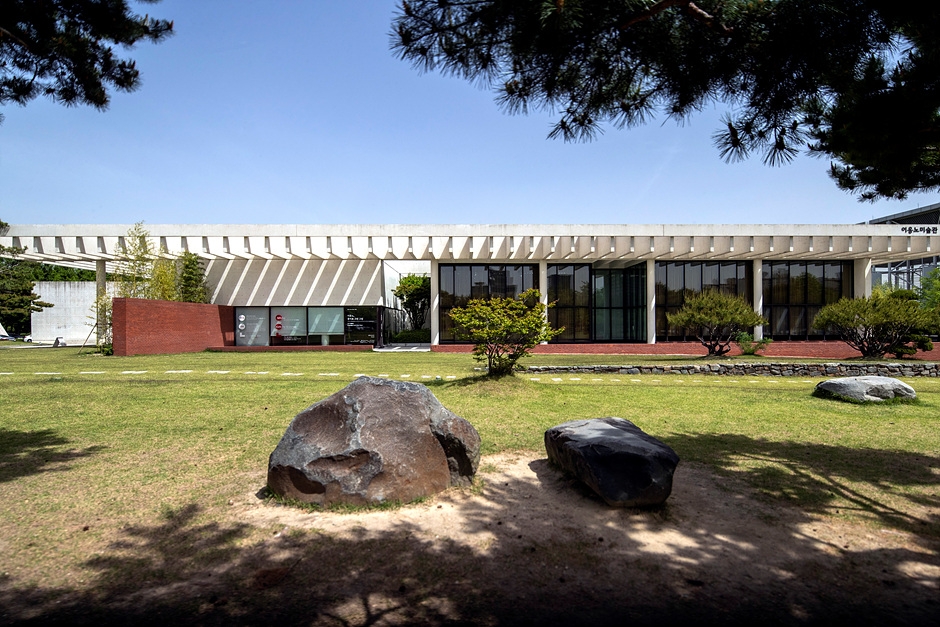
Leeungno Museum, opened in May 2007, commemorates the life and work of the artist Goam Lee Ungno (1904-1989), who devoted his whole life to the modernization and globalization of Korean tradition through architecture. The museum consists of one basement floor and two ground floors designed by French architect Laurent Beaudouin. Various art works from reliefs to paintings can be found throughout the museum.
Daejeon Museum of Art (대전시립미술관)
10.8Km 2025-10-23
155 Dunsan-daero, Seo-gu, Daejeon
Daejeon Museum of Art offers visitors the chance to appreciate contemporary Korean artworks. It includes exhibition halls, a storage facility, an outdoor garden, a lounge, and a gift shop. The collection features paintings, sculptures, photographs, and crafts. Its exhibitions range from permanent collections, storage displays, and contemporary art showcases. It also offers hands-on activity programs, such as printmaking, folk painting, Korean paper art, traditional dyeing, embroidery crafts, and pen drawing.
Konyang University Hospital (건양대학교병원)
10.8Km 2025-10-23
158 Gwanjeodong-ro, Seo-gu, Daejeon
Konyang University Hospital has excellent medical staff and state-of-the-art medical equipment, and a reputation as a clean and friendly hospital. It has been leading a new medical culture with a system that ensures patients enjoy faster and more convenient treatment services.
Additionally, the hospital has developed into a global medical complex that offers patients true joy and satisfaction through creative research, fostering world-class medical staff, and CSR activities.
Konyang University Hospital is dedicated to creating healthy lives for humanity through passion and a can-do spirit. All of its policies are centered around patients. It is committed to providing medical services that satisfy patients and maintaining their safety.
Daejeon Natural Heritage Center (천연기념물센터 (대전))
10.8Km 2025-01-14
927, Yudeung-ro, Seo-gu, Daejeon
+82-42-610-7610
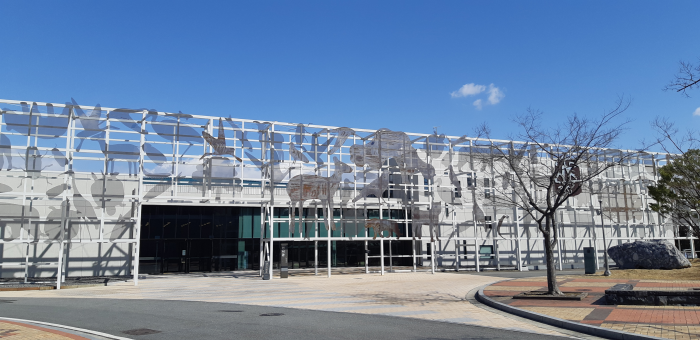
The Natural Heritage Center was established to help visitors learn about the value and importance of natural heritages through exhibitions and education on the methodical study of natural heritages. Fossils of dinosaur eggs and footprints along with animal and plant specimens and many other natural heritages are on display. With the guide of professional researchers, young visitors can learn more about natural heritages through hands-on activities, video education and many other experiential programs that are only provided at the Natural Heritage Center.
The center is developing more exhibitions through academic exchanges with UNESCO and various international organizations specializing in natural heritages.
Hanbat Arboretum (한밭수목원)
10.9Km 2022-12-26
169, Dunsan-daero, Seo-gu, Daejeon
+82-42-270-8474
Hanbat Arboretum, linked with the Government Complex-Daejeon and Science Park, is the largest man-made urban arboretum in Korea. It serves multiple purposes: a reservoir of genetically diverse foliage, an eco-learning center for students, and a recreational area where people can relax and pass the time in the peaceful embrace of nature. The arboretum, standing on a lot measuring 387,000 square meters, is divided into three sections. The West Garden and Nammun Square opened on April 28th, 2005. The East Garden opened on May 9th, 2009, and consists of 19 uniquely themed parks, including the Magnolia Garden, Medicinal Herbs Garden, Rock Garden, and Fruit Garden.
Jeong Jiyong Memorial Hall (정지용 문학관)
11.1Km 2025-08-21
56 Hyangsu-gil, Okcheon-gun, Chungcheongbuk-do
+82-43-730-3408
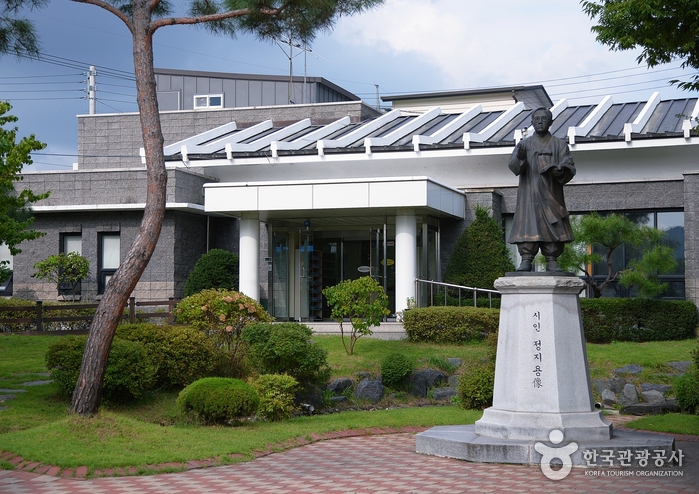
Hagye-ri in Okcheon-gun, Chungcheongbuk-do, is the hometown of Jeong Jiyong, the poet who wrote the poem "Hyangsu" (Nostalgia). The Jeong Jiyong Memorial Hall is located next to Jeong Jiyong's birthplace. The gallery has a Literature Exhibition Hall, which is divided into four parts: Jeong Jiyong's Chronological History, Jiyeong's Life and Literature, Jiyong Literature Map, and Exhibition of his Original Copy of Prose and Poem.
At the Literature Experience Center, visitors can learn more about literature through various multimedia platforms. The Video Room shows a documentary about Jiyong's life and literature, while the Literature Class is the venue for lectures, poem discussions, seminars, and other literature club activities.
 English
 한국어
한국어 日本語
日本語 中文(简体)
 Deutsch
 Français
 Español
 Русский


