![ABC-Mart - Myeong-dong 3(sam)beon-ga [Tax Refund Shop] (ABC마트 ST명동3번가)](http://tong.visitkorea.or.kr/cms/resource/50/2878650_image2_1.jpg)
ABC-Mart - Myeong-dong 3(sam)beon-ga [Tax Refund Shop] (ABC마트 ST명동3번가)
3.1Km 2024-04-17
41, Myeongdong 10-gil, Jung-gu, Seoul
-

Bank of Korea Money Museum (화폐박물관)
3.1Km 2024-03-18
39 Namdaemun-ro, Jung-gu, Seoul
This Renaissance-style three-story stone building is the museum of the Bank of Korea. The older Bank of Korea was established as the central bank of the Korean Empire in 1909 and has been designated as a National Historical Site. During the Japanese colonial period, the bank was renamed the Bank of Joseon, and the building was used as the main and head office of the Bank of Korea until 2001. The building has been used as the nation’s Money Museum since June 2001 in celebration of the 50th anniversary of the Bank of Korea. The museum has 13 exhibition rooms on two floors, with one basement floor and two above-ground floors. It holds special exhibitions of various currency and art collections to provide domestic and foreign visitors with the opportunity to enjoy the history and culture of currency. Visitors can learn about the Bank of Korea and the central banking system, as well as how to identify counterfeit notes and how money is produced and circulated. It is also a good place for children to learn about currencies from around the world. Advance reservations are required, and parking is not available. The museum can easily be reached via subway by getting off at Hoehyeon Station (Seoul Subway Line 4) and exiting through Exit 7.
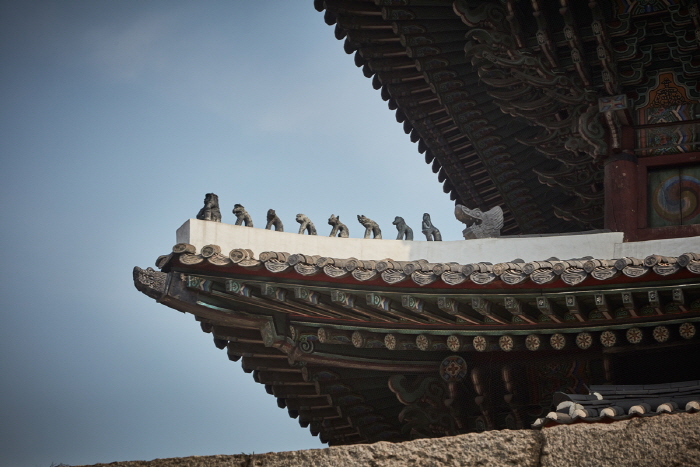
Heunginjimun Gate - Dongdaemun Gate (흥인지문)
3.1Km 2025-10-23
288, Jong-ro, Jongno-gu, Seoul
+82-2-2148-1842
Heunginjimun Gate was built to protect Hanseongbu, which historically housed essential government facilities. Heunginjimun Gate was the gate on the east side of the outer wall of Seoul Fortress among eight gates. It is referred to as Dongdaemun Gate as well. The gate was constructed during King Taejo’s 5th year in 1396, remodeled during the reign of King Danjong in 1453, and was newly built in 1869 during the sixth year of King Gojong’s reign in 1869.
The gate features a hipped roof with five front and two side compartments on a two-storied building. The thin and weak bracket system supports the eaves and is excessively decorated, reflecting the construction features of the late Joseon period. Also, outside of the fortress is the half-circle-shaped Ongseong, a small wall, to protect the gate.
One of the unique factors of Heunginjimun Gate is that it is the only gate among Seoul’s eight to have Ongseong, further exhibiting the style of construction used during the late Joseon period.
![On The Spot - Myeong-dong Branch [Tax Refund Shop] (온더스팟 명동점)](http://tong.visitkorea.or.kr/cms/resource/42/2878642_image2_1.jpg)
On The Spot - Myeong-dong Branch [Tax Refund Shop] (온더스팟 명동점)
3.1Km 2024-04-18
37-4, Myeongdong 8-gil, Jung-gu, Seoul
-
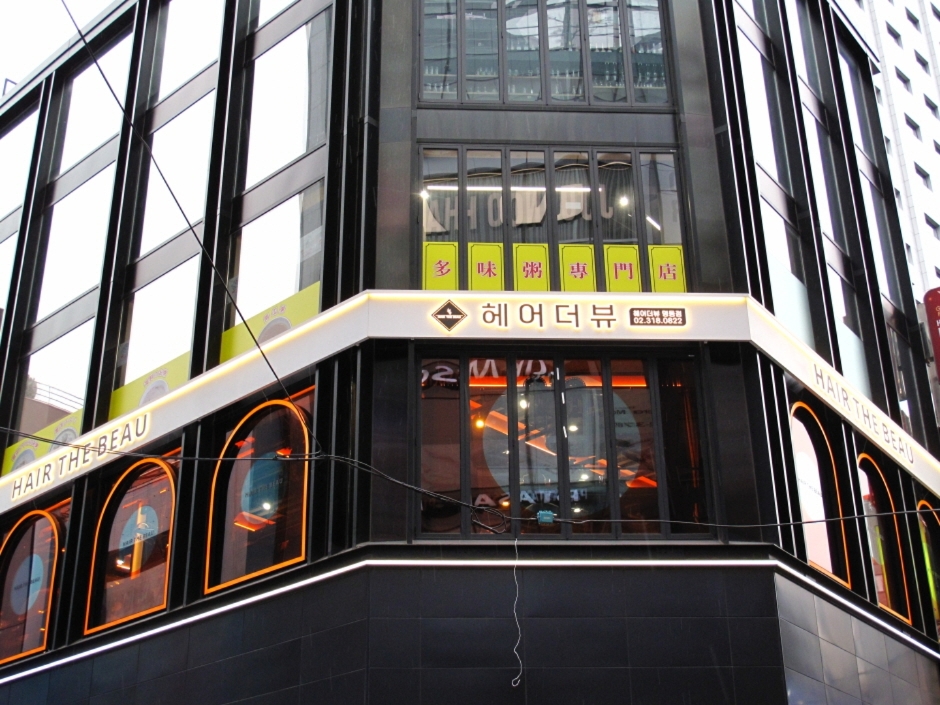
Dami Porridge (다미죽)
3.1Km 2024-03-11
38, Myeongdong 10-gil, Jung-gu, Seoul
+82-2-777-5077
Located in Myeongdong Street, Dami Porridge focuses on porridge. Their delectable porridges are made with a variety of seafood including abalone as well as mushrooms. Porridge is easy to digest and full of nutrients, so it's recommended for when you're not feeling well.
![Stylenanda Flagship Store - Myeong-dong Branch [Tax Refund Shop] (스타일난다플래그쉽스토어 명동)](http://tong.visitkorea.or.kr/cms/resource/53/3314453_image2_1.jpg)
Stylenanda Flagship Store - Myeong-dong Branch [Tax Refund Shop] (스타일난다플래그쉽스토어 명동)
3.1Km 2024-06-27
37-8, Myeongdong 8-gil, Jung-gu, Seoul
-
The Saem - Myeong-dong Branch (No. 1) [Tax Refund Shop] (더샘 명동1호점)
3.1Km 2024-04-16
41, Myeongdong 8-gil, Jung-gu, Seoul
-
![Åland - Myeong-dong Main Branch [Tax Refund Shop] (에어랜드 명동본점)](http://tong.visitkorea.or.kr/cms/resource/81/3314381_image2_1.jpg)
Åland - Myeong-dong Main Branch [Tax Refund Shop] (에어랜드 명동본점)
3.1Km 2024-06-27
40, Myeongdong 8-gil, Jung-gu, Seoul
-
![Onnuri Pharmacy - Jongno Branch [Tax Refund Shop] (온누리약국 종로)](http://tong.visitkorea.or.kr/cms/resource/89/2878189_image2_1.jpg)
Onnuri Pharmacy - Jongno Branch [Tax Refund Shop] (온누리약국 종로)
3.1Km 2024-04-19
1F, 293, Jong-ro, Jongno-gu, Seoul
-
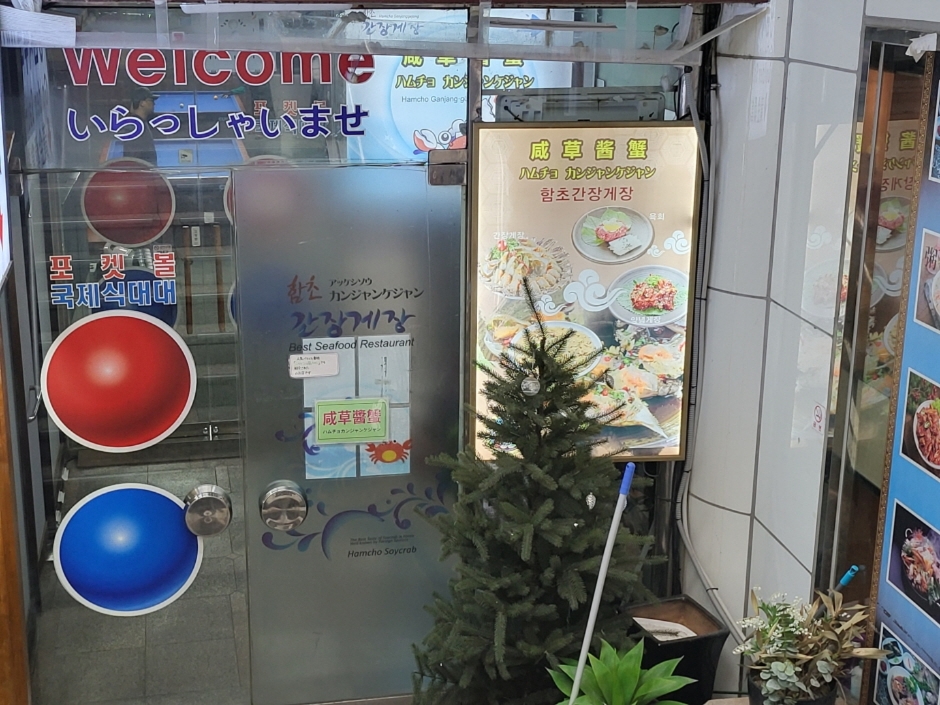
Hamcho Ganjanggejang (함초간장게장)
3.1Km 2024-03-11
27, Myeongdong 8ga-gil, Jung-gu, Seoul
+82-2-318-1624
Situated in Myeongdong Street, Hamcho Ganjanggejang specializes in ganjang gejang (soy sauce marinated crab). Their signature dish, ganjang gejang, is made by marinating blue crab in soy sauce and is a favorite among Koreans. Saeu jang (soy sauce marinated shrimp) and other seafood dishes (abalone, octopus, etc.) are also a must-try. In addition, the traditional Korean side dishes are so tasty that the restaurant never runs out of customers.
 English
 한국어
한국어 日本語
日本語 中文(简体)
 Deutsch
 Français
 Español
 Русский


