
Gyeongui Line Forest Park (Yeontral Park) (경의선숲길(연트럴파크))
1.7Km 2023-08-11
133, Donggyo-ro 51-gil, Mapo-gu, Seoul
Gyeongui Line Forest Park is a linear city park located in Mapo-gu and is also called Yeontral Park. It includes Daeheung-dong, Yeonnam-dong, Saechanggogae Pass, Changjeon-dong, Sinsu-dong, and Wonhyo-ro, which were opened in this order. Gyeongui Line Forest Park is established atop the Gyeongui railroad line and the Gyeongui Line and Airport Railroad Express are constructed as a double track underground. Gyeongui Line Forest Park was designed to be incomplete on purpose to invite the citizens in completing the park. The area which could have been left empty and neglected has turned into a meaningful green park for the citizens by the citizens.
![CheongKwanJang - Hongje Branch [Tax Refund Shop] (정관장 홍제)](http://tong.visitkorea.or.kr/cms/resource/34/2889534_image2_1.jpg)
CheongKwanJang - Hongje Branch [Tax Refund Shop] (정관장 홍제)
1.7Km 2024-04-16
1F, 405, Tongil-ro, Seodaemun-gu, Seoul
-
![Olens - Sinchon Myeongmul Street Branch [Tax Refund Shop] (오렌즈 신촌명물)](http://tong.visitkorea.or.kr/cms/resource/05/2888205_image2_1.jpg)
Olens - Sinchon Myeongmul Street Branch [Tax Refund Shop] (오렌즈 신촌명물)
1.7Km 2024-04-17
1F, 18, Myeongmul-gil, Seodaemun-gu, Seoul
-
Ewha Womans University (이화여자대학교)
1.7Km 2023-07-04
52, Ewhayeodae-gil, Seodaemun-gu, Seoul
+82-2-3277-2114
Ewha Womans University is Korea's first women's university founded in 1886 by American Methodist missionary Mary Scranton. Ewha Womans University is also the most famous women's university in Korea and its name originates from Ehwa Hakdang, a name given by Empress Myeongseong in 1887. Ewha Womans University created a four-year university course in 1910, and in 1943, the name of Ewha was taken away during the Japanese colonial period and downgraded to a one-year school. In October 1945, the year of Korea's independence from Japan, it regained the name of Ewha and was promoted to a university with eight departments. Currently, it consists of 15 graduate schools, 11 colleges, and 67 departments, and there are 8 affiliated research institutes.
The street in front of Ewha Womans University is famous for shopping. This place is full of clothing stores and neat food that boast a popping sensation to suit the tastes of female college students. The shopping street in front of Ewha Womans University is a straight road that lies ahead of Exits 2 and 3 of Seoul Subway Line 2. Alleyways stretch out like branches around this street and are filled with various accessory shops, clothing stores, shoe stores, restaurants, cafes, and beauty salons.
![Miigwech - Sinchon Branch [Tax Refund Shop] (미그웨치 신촌)](http://tong.visitkorea.or.kr/cms/resource/92/2875492_image2_1.jpg)
Miigwech - Sinchon Branch [Tax Refund Shop] (미그웨치 신촌)
1.7Km 2024-04-22
1F, 21, Yonsei-ro, Seodaemun-gu, Seoul
-
Seodaemun Independence Park (서대문독립공원)
1.7Km 2022-12-15
251, Tongil-ro, Seodaemun-gu, Seoul
+82-2-3140-8305
Seodaemun Independence Park was built on the former Seoul Detention Camp. It was used to imprison thousands of Korean independence activists until the liberation from the Japanese occupation on August 15, 1945, as well as the political prisoners during the political turmoil in the 1960s. When the prison was moved to Uiwang-si, Gyeonggi-do in November 1987, the area was restored and turned into a memorial park in August 15, 1992 to honor the sacrifices of the martyrs. The park preserves seven prison buildings, an execution ground, underground women’s prison, and the March 1st Movement Monument that has been moved from Tapgol Park in Jongno.
One of the most significant monuments of the Seodaemun Independence Park is Dongnimmun Gate (Independence Gate), which has been designated a Historic Site. Nearby is Dongnipgwan (Independence Hall), originally called Mohwagwan, which was used to greet Chinese envoys during the Joseon dynasty. Today, the hall enshrines 2,327 tablets inscribed with the names of Koreans who died for the cause of national independence. Standing right next to Dongnimmun Gate are the remnants of Yeongeunmun Gate, another Historic Site. Other sights inside the park include the Patriotic Martyr Monument, Declaration of Independence Monument, and Statue of Dr. Seo Jae-pil, who was an independence activist and publisher of Korea’s first independent newspaper. The main highlight of the park is the Seodaemun Prison History Hall, a former prison building that was renovated into a history museum.
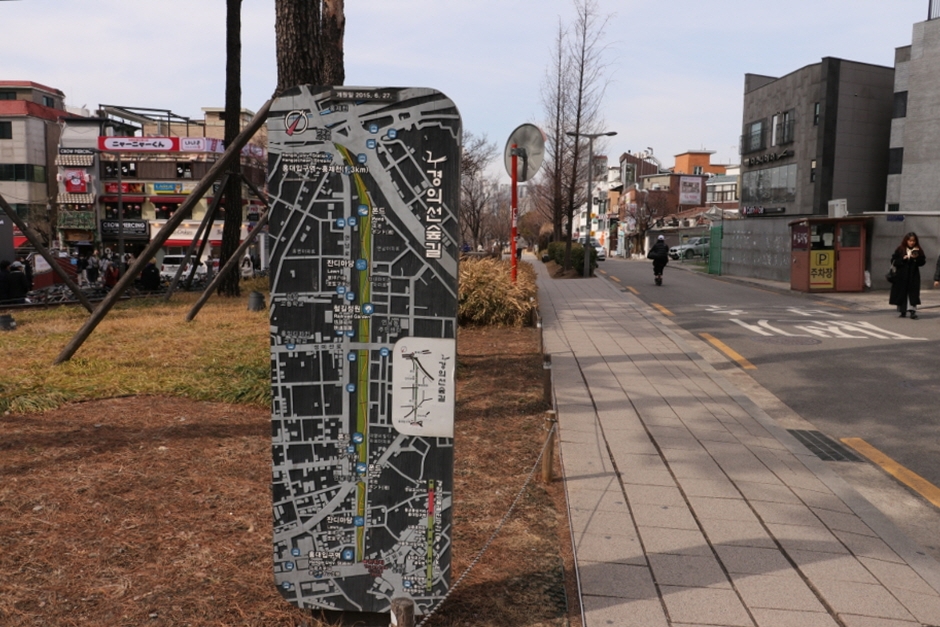
Yeonnam-dong (연남동)
1.7Km 2024-03-19
Yeonnam-dong, Mapo-gu, Seoul
Yeonnam-dong, located near Hongik University Station, has become a hot spot in Seoul as young artists and hipsters gather. It is densely packed with art spaces, and every alley is filled with unique concept cafés and many restaurants. There are also many guesthouses, editorial shops, and fashion stores, along with Yeontral Park, which was transformed from the old Gyeongui Line railroad into a park.
![ABC-Mart - Sinchon Branch [Tax Refund Shop] (ABC마트 GS신촌점)](http://tong.visitkorea.or.kr/cms/resource/95/2890495_image2_1.jpg)
ABC-Mart - Sinchon Branch [Tax Refund Shop] (ABC마트 GS신촌점)
1.7Km 2024-04-22
6, Myeongmul-gil, Seodaemun-gu, Seoul
-
![Nature Collection - Sinchon Branch [Tax Refund Shop] (네이처컬렉션 신촌)](http://tong.visitkorea.or.kr/cms/resource/87/2878287_image2_1.jpg)
Nature Collection - Sinchon Branch [Tax Refund Shop] (네이처컬렉션 신촌)
1.8Km 2024-04-18
14, Yonsei-ro, Seodaemun-gu, Seoul
-
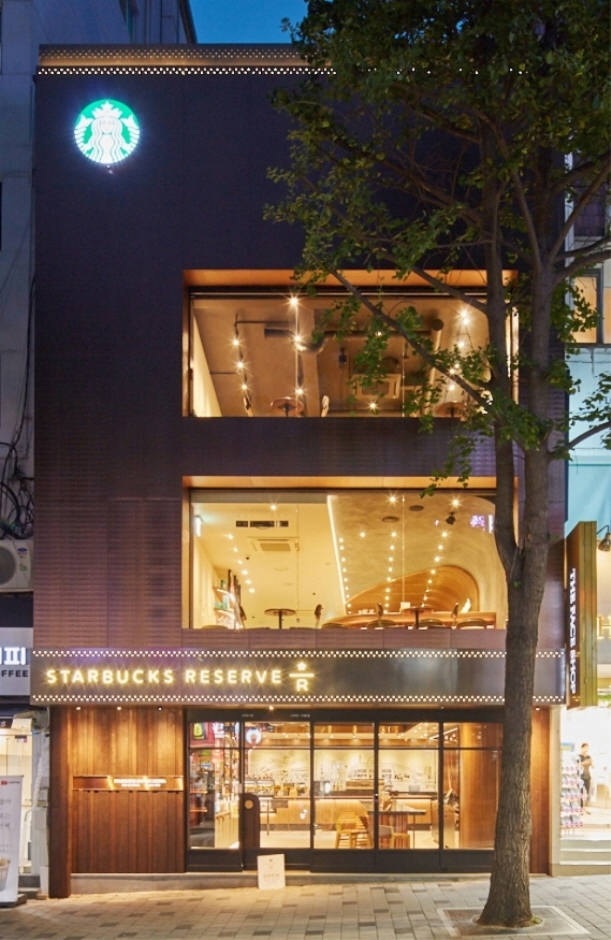
Starbucks Edae R (스타벅스 이대R)
1.8Km 2024-12-27
34 Ewhayeodae-gil, Seodaemun-gu, Seoul
Starbucks Edae R store is the first Starbucks store opened in 1999 and Korea's first Reserve only store
Starbucks Edae R store is the first Starbucks store opened in Korea. It is located 150 meters from the front gate of Ewha Womans University. The store has been loved by customers for over two decades since 1999. In celebrating its 20th anniversary in 2019, the store re-opened as Korea's first Reserve-only store. It specializes in offering specialty coffee and memorable experiences to many customers visiting Korea's first Starbucks store. As the leading store presenting the history and future of Starbucks, it offers high-quality coffee in a beautifully decorated setting, along with unique beverages and exclusive merchandise available only at this particular store.
 English
 한국어
한국어 日本語
日本語 中文(简体)
 Deutsch
 Français
 Español
 Русский


