Bukhansan National Park (Seoul District) (북한산국립공원(서울))
8.7Km 2024-11-27
262 Bogungmun-ro, Seongbuk-gu, Seoul
+82-2-909-0497
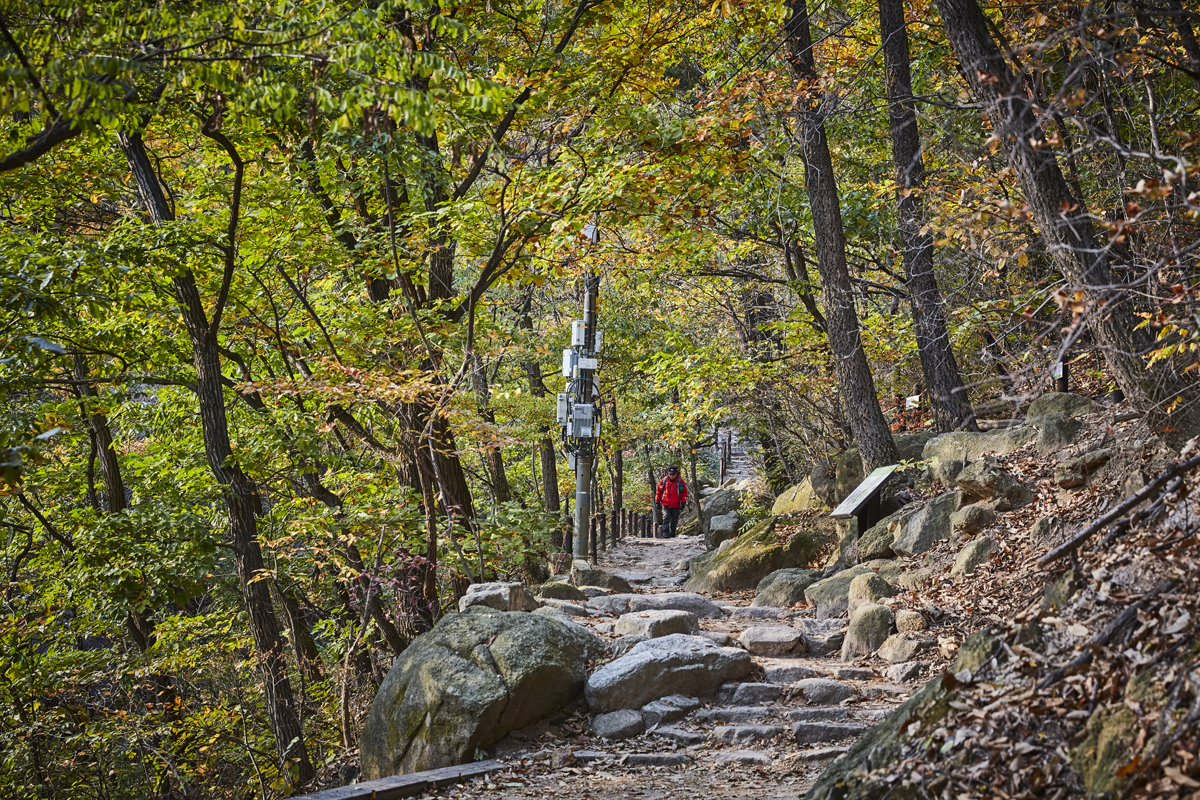
Bukhansan Mountain was officially designated as a national park in 1983. Bukhansan National Park covers both Bukhansan and Dobongsan Mountains, and spans a total area of 80.699 ㎢. At the top of Bukhansan Mountain are Baegundae Terrace (835.6 m), Insubong Peak (810.5 m) and Mangyeongdae Terrace (799.5 m), which gave the mountain the nickname "Samgaksan" or the "three-horned mountain." The mountain had other names: Sambongsan (mountain with three peaks), Hwasan (flower mountain), and Buaak (mountain shaped like a person giving a baby a piggyback ride). The current name, Bukhansan, was given after the Bukhansanseong Fortress was built under King Sukjong of the Joseon dynasty.
Dobongsan Mountain (도봉산)
8.8Km 2021-06-29
Dobong-dong, Dobong-gu, Seoul
+82-2-954-2566
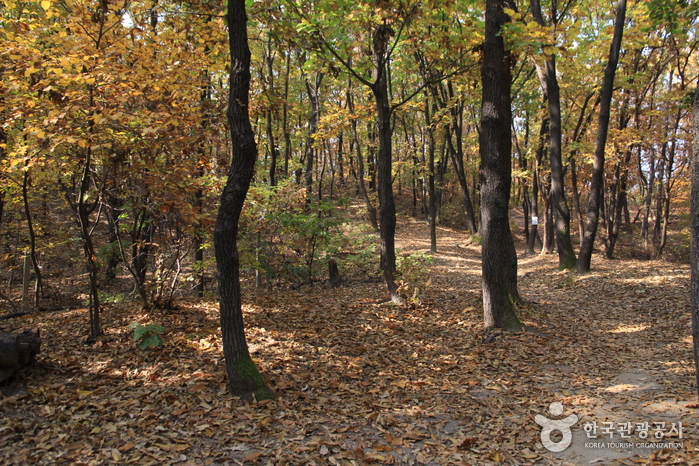
Dobongsan Mountain, located in the northeastern section of Bukhansan National Park, is known for the magnificent rock formations of the main peak, Jaunbong Peak (740.2 m), as well as Manjangbong, Seoninbong, Jubong, Obong Peaks and Uiam Rock. Seoninbong Peak in particular has 37 hiking courses, including the famous Bakjwi (Bat) Course.
The mountain is also home to Cheonchuksa Temple, the oldest temple in the region, and several other temples including Mangwolsa and Hoeryongsa Temples, as well as a number of beautiful valleys such as Dobonggyegok, Songchugyegok, Obonggyegok and Yeongeocheongyegok Valleys. Dobongsan Mountain is easily accessible by public transportation, making it a popular attraction for people living in Seoul.
Seoul Hwagyesa Temple (화계사(서울))
8.8Km 2021-11-02
117, Hwagyesa-gil, Gangbuk-gu, Seoul
+82-2-902-2663
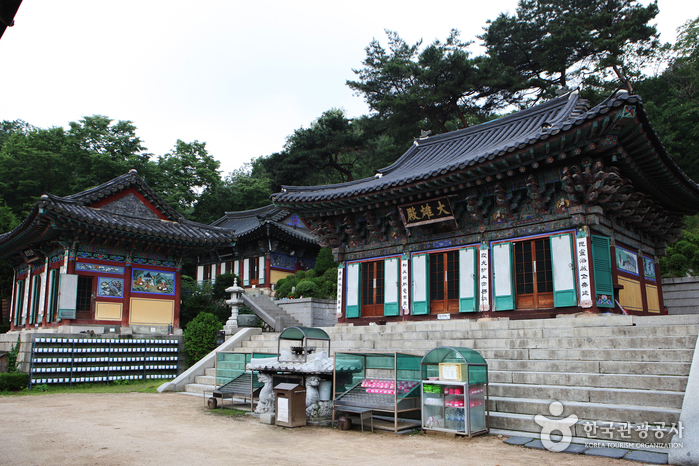
Hwagyesa Temple was built in 1522 (the seventeenth year of the reign of King Jungjong of the Joseon dynasty) by monk Shinwol, but was destroyed in a fire in 1618. It was rebuilt the following year, and expanded In 1866 through the efforts of Monks Yongseon and Beomun.
The temple also has various templestay programs for visitors. Hwagyesa Temple is located not too far from the city but also provides a natural environment.
Wondangsaem Park (원당샘공원)
8.9Km 2024-02-15
16 Haedeung-ro 32ga-gil, Dobong-gu, Seoul
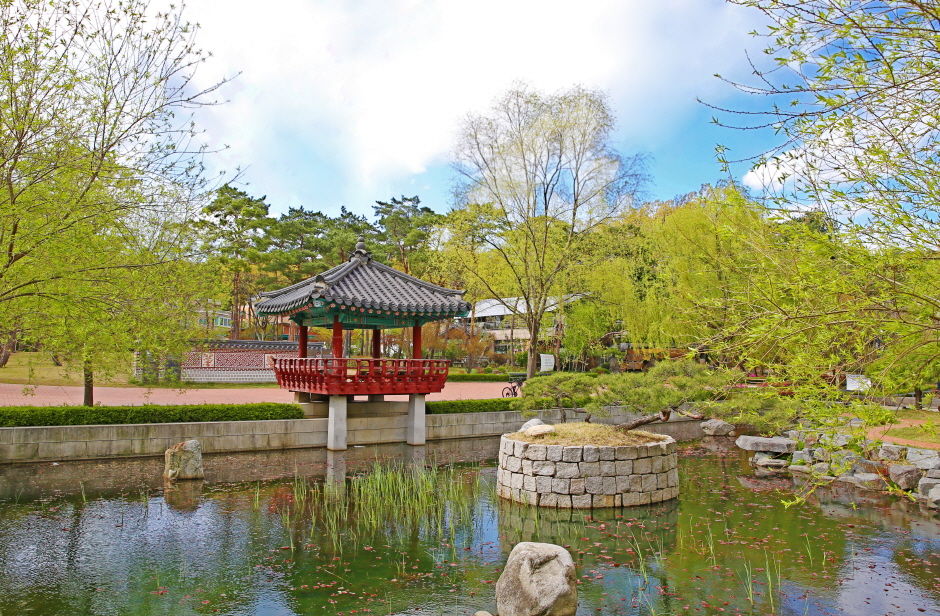
Wondangsaem Pond is named after the Wondang village, where the Yun family settled about 600 years ago. It is a park that harmoniously blends a traditional pond with a Hall of Rejoicing Pavilion called Samojeong, a wall fall, and a floral wall. During autumn, the golden foliage of an 800-year-old ginkgo tree enriches the surroundings, and a deck path around the tree offers a delightful stroll.

Seokparang (석파랑)
9.0Km 2024-09-02
309 Jahamun-ro, Jongno-gu, Seoul
+82-2-395-2500
Seokparang is a place built by relocating the Sarangchae of Heungseon Daewongun, the father of King Gojong of the Joseon dynasty. It boasts beautiful late Joseon-style gardens and three traditional hanok buildings. Here, one can enjoy authentic Gungjung hanjeongsik (royal Korean table d'hote) for both lunch and dinner, featuring meticulously prepared dishes such as traditional porridge, chilled salads, steamed prawns, kimchi cabbage wraps with pork, soybean paste jjigae set menu, and desserts. Diners can also savor traditional liquors crafted by artisans from across the country.
Myongji Hospital (명지병원)
9.1Km 2025-10-23
55 Hwasu-ro 14beon-gil, Deogyang-gu, Goyang-si, Gyeonggi-do
Myongji Hospital is a general hospital located in Goyang-si with various departments and specialized treatment centers.
We operate Breast Thyroid Center, Prostate Cancer and Kidney Cancer Center, Ovarian Cancer and Gynecological Cancer Center, and Robotic Surgery Center for specialized treatment, and have introduced the latest medical device, da Vinci Xi to conduct surgeries for various types of cancer as well as robotic surgeries for a wide range of benign diseases. In addition, we provide more specialized and prompt medical services to patients through advanced facilities such as the Radiology Center, Rehabilitation Center, Intervention Center, and Comprehensive Health Checkup Center. Specifically, we are prominent in the field of organ transplantation and operate the Organ Transplant Center performing liver, kidney, lung, and heart transplants. We offer interpretation services for foreign patients by professional coordinators who speak English, Russian, Mongolian, and Chinese to eliminate language barriers by opening the International Medical Center in 2009 and provide guesthouses, airport pick-up and send-off services for foreign patients as well to maximize their convenience.
National Women's History Exhibition Hall (국립여성사전시관)
9.1Km 2021-09-23
50, Hwajung-ro 104beon-gil, Deogyang-gu, Goyang-si, Gyeonggi-do
+82-31-819-2288
The National Women’s History Exhibition Hall opened on December 9, 2002 in Daebang-dong, Seoul, but was moved to its current location in Goyang, Gyeonggi-do on September 1, 2014. The hall uses both traditional display techniques as well as creative media art to showcase the history and culture of women in Korea. The exhibition hall aims to give women their rightful place in Korean history, in addition to enhancing women’s sense of pride and expand gender equality through various activities, including public education programs and special exhibitions.

Kansong House (간송옛집)
9.4Km 2025-04-01
149-18 Sirubong-ro, Dobong-gu, Seoul
The 100-year-old traditional hanok Kansong House sits by the burial mound of Kansong Jeon Hyeong-pil (1906-1962), who played a significant role in preserving the cultural heritages of Korea during the Japanese colonial period. This house was orginally built by Kansong's adoptive father Jeon Myeong-gi (1870-1919) to us as a storage facilities for harvested agriculture from the northern Gyeonggi-do and Hwanghae. After his father's death, Kansong used the house as a ritual house for his father and often stayed here. Some damages were done to the house during the Korean War, and partial repair was made after his death.
Bugak Skyway Palgakjeong Pavilion (북악스카이 팔각정)
9.6Km 2024-12-31
267 Bugaksan-ro, Jongno-gu, Seoul
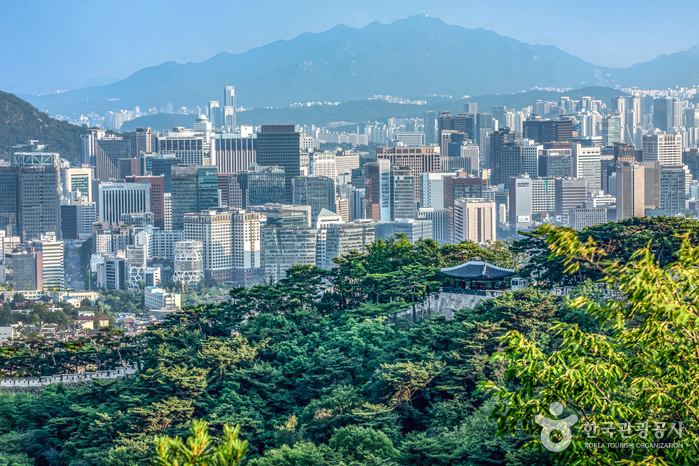
Bugak Skyway Palgakjeong Pavilion exudes a tranquil, serene beauty regardless of the season. The pavilion, which sits on Bugaksan's 1,652,900 square meter summit at an altitude of 345 meters, was built in a traditional Korean-style and became a popular attraction within the city. There are also spaces for visitors to enjoy food and drinks.
Dooly Museum (둘리뮤지엄)
9.6Km 2025-03-31
6 Sirubong-ro 1-gil, Dobong-gu, Seoul
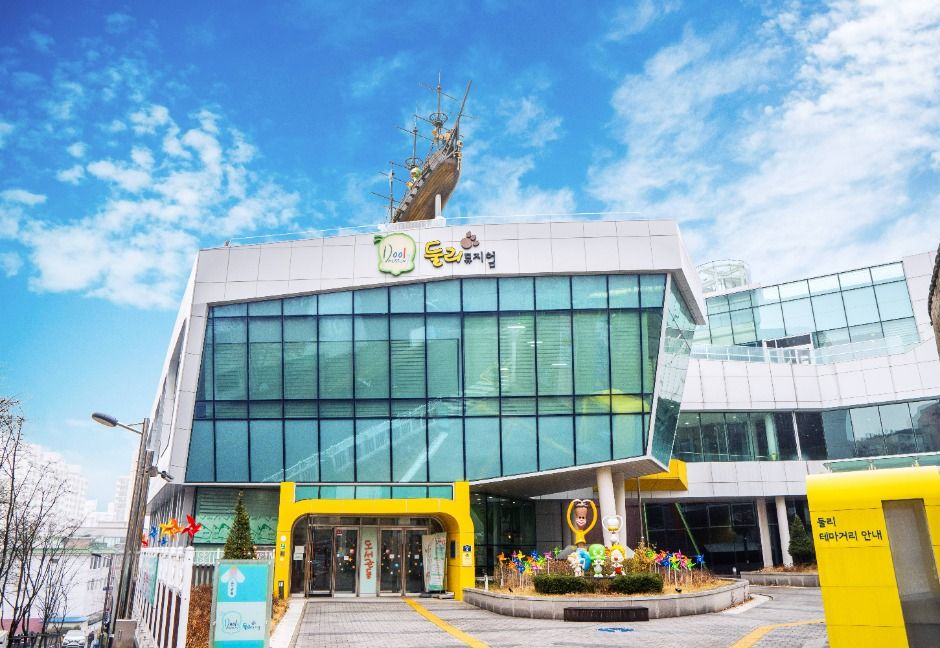
Dooly Museum is Korea's first museum to be dedicated to a single character. The museum is dedicated to Dooly, the main character from the Korean cartoon series "Dooly the Little Dinosaur." The cartoon was published as a series on a comic magazine called "Bomulseom" from 1983 to 1993, following Dooly's adventure that begins from his arrival to Ssangmun-dong inside a glacier from the Ice Age. Inspired by the series, this interactive museum was founded in Ssangmun-dong and explores the value and meaning of the hit series through the expansion of its works such as the animation series, character merch, and other media sources.
 English
 한국어
한국어 日本語
日本語 中文(简体)
 Deutsch
 Français
 Español
 Русский


