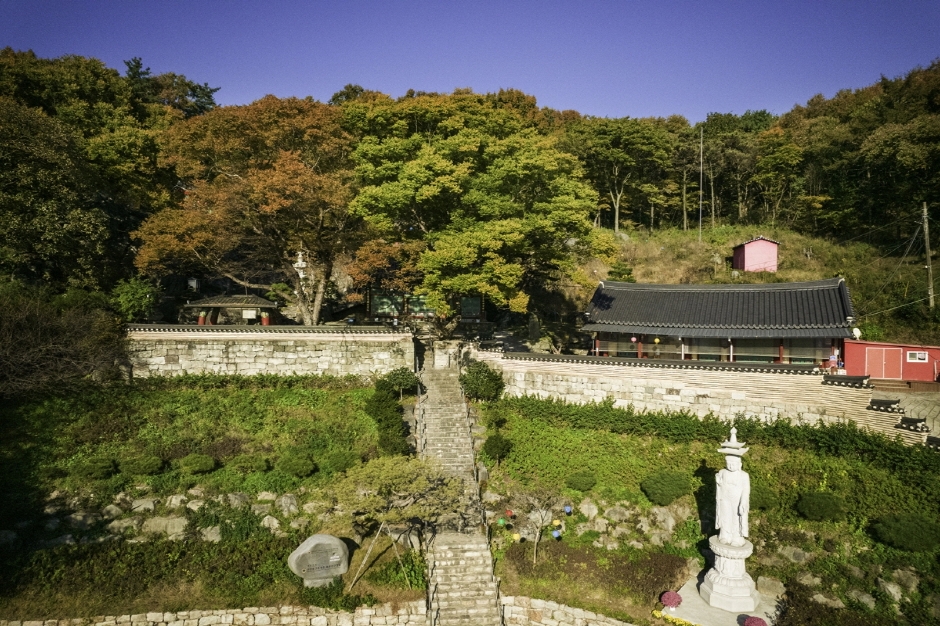
Hongseong Gujeoram Hermitage (구절암(홍성))
14.2Km 2024-01-18
163 Geobuk-ro 218beon-gil, Guhang-myeon, Hongseong-gun, Chungcheongnam-do
Gujeoram Hermitage is located within a bamboo forest on a small mountain. The pathway is winding, without any signs marking the way, but this adds to the charm.
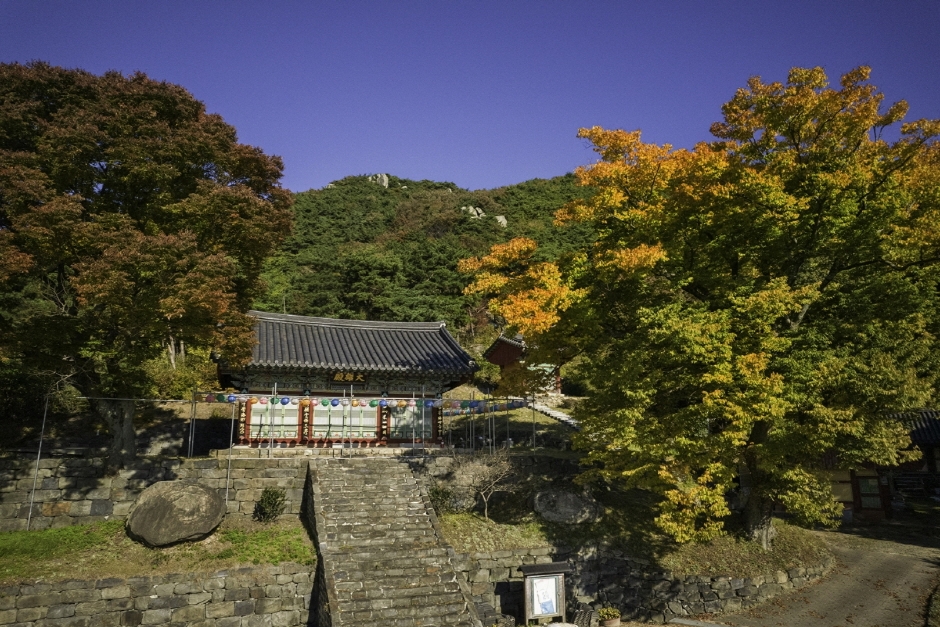
Hongseong Seongyeonsa Temple (석련사(홍성))
14.5Km 2024-01-18
76 Guseongbuk-ro 160beon-gil, Guhang-myeon, Hongseong-gun, Chungcheongnam-do
Seongnyeonsa Temple is located on the side of Baegwolsan Mountain, and is a branch temple of Sudeoksa Temple. The path to the temple is paved, making it easy to enjoy the beautiful scenery along the way. A bit further up the mountain from Daeungjeon Hall, visitors will be greeted by a large stone-carved Buddha that was made recently. The lack of moss and weathering makes it stand out from other rock-carved Buddha statues, while showing the unwavering faith of the local Buddhists.

Splas Resom (스플라스 리솜)
15.4Km 2024-06-05
45-7, Oncheondanji 3-ro, Yesan-gun, Chungcheongnam-do
Splas Resom, previously called Resom Spa Castle, is Korea’s first membership spa resort. Spa Castle is located in Yesan, Chungcheongnam-do, which is only an hour and a half drive away from Seoul. It is within 30 minutes drive from beautiful mountains, the western seas, and close to plenty of cultural tourist attractions.
Splas Resom uses waters from the Deoksan hot springs, whose waters have been enjoyed by Koreans for six hundred years. The resort is equipped with a large banquet hall, seminar room, and a relaxation complex that includes everything from a cultural arts plaza, to a garden, and walking trails.
The hot spring waters are known to be effective against skin troubles, gastroenteric disorders, neuralgia, and muscular pains, and are also great for skin rejuvenation.
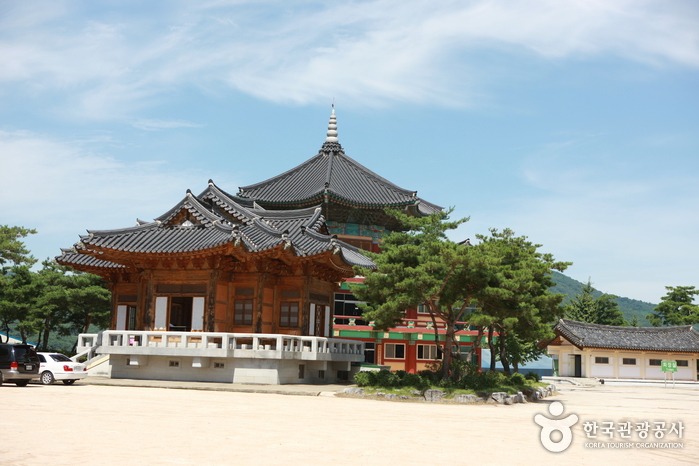
Korea Traditional Architecture Museum (한국고건축박물관)
15.5Km 2022-08-18
543, Hongdeokseo-ro, Yesan-gun, Chungcheongnam-do
The traditional Korean architectures designated as valuable cultural assets scattered throughout the nation are on display at a one-tenth or one-fifth scale in this museum for the purpose of promoting and passing down the history of Korean architecture.
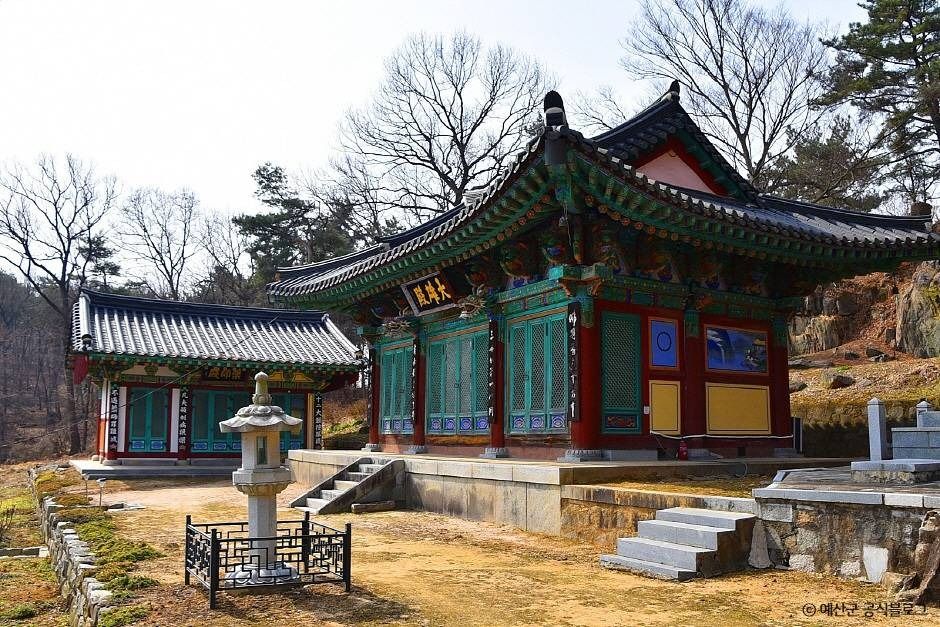
Yesan Hwaamsa Temple (화암사 (예산)
15.6Km 2025-08-18
21-29, Yonggung 1-gil, Yesan-gun, Chungcheongnam-do
Hwaamsa Temple is located near Joseon dynasty's scholar and writer Kim Jeong-hui's, also referred to his pen name Chusa, house. The temple has ties with the ancient writer, as the temple is known to have been repaired and renovated by Kim Jeong-hui's great grandfather. There are no records that explains the foundation of Hwaamsa Temple, and only a timeline of its reconstruction can be found in "Records of Hwaamsa Temple Restoration" plaque, which is displayed in Sudeoksa Temple Museum. The timeline was recorded by Kim Myeong-hee in 1848, and written by Kim Seong-hee, and carved by Cho Seok-shin. The name "Hwaamsa" was given by King Yeongjo (r. 1724-1776).
Sudeoksa Temple (수덕사)
15.8Km 2021-12-03
79, Sudeoksaan-gil, Yesan-gun, Chungcheongnam-do
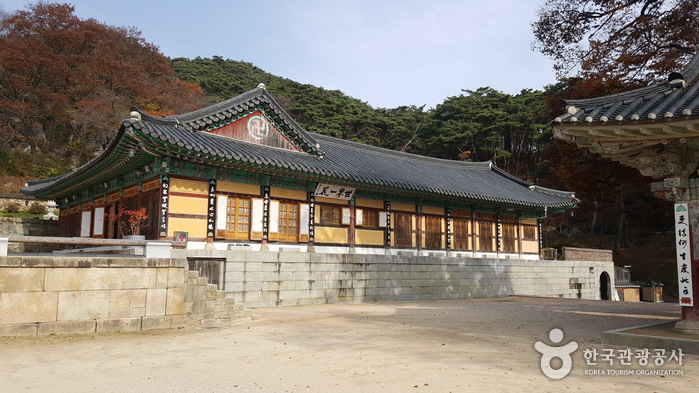
Sudeoksa Temple, which has played an important role in the history of Korea’s Buddhism, is located at the foot of Deoksungsan Mountain. It was one of twelve temples from the Baekje Kingdom mentioned in Chinese historical records. There is no historical record of when the temple was founded but researchers believe it was founded sometime during the reign of King Wuideok (554-597).
The main building of Sudeoksa Temple, Daeungjeon Hall, was constructed in 1308 during the Goryeo dynasty. It was repaired four times between 1528 and 1803, but fortunately kept its original beauty. In addition to Daeungjeon Hall, Sudeoksa Temple houses many cultural treasures, such as the Three-story Stone Pagoda of Sudeoksa Temple.
Yugu Mural Street (유구벽화거리)
16.0Km 2024-12-24
34-5 Sijang-gil, Yugu-eup, Gongju-si, Chungcheongnam-do
Yugu Mural Street is centered around a textile factory that has operated since the 1950s. The walls surrounding the factory feature murals of elderly women weaving at looms, spinning machines, and vibrant tile mosaics. Visitors can learn about the history of the textile industry through dioramas, while the Yugu Textile History Exhibition Hall displays various weaving machines. With a traditional market nearby, it's an excellent destination for a combined tour.
Picturesque Arboretum (Gallery in the Garden) [그림같은 수목원(그림이 있는 정원)]
16.0Km 2024-02-26
102-36, Chungseo-ro 400beon-gil, Gwangcheon-eup, Hongseong-gun, Chungcheongnam-do
The Picturesque Arboretum has nearly 1,330 species of plants, including 460 species of trees, with particular emphasis on pine trees. It is home to a Wildflower Garden, Greenhouse, Lotus Garden, Rock Garden, Observatory, Art Museum, Rhododendron Road, Waterfall, Korea Traditional Furniture Exhibition Hall, Nature Ecology Center, and a café.
Yugu Saekdong Hydrangea Garden (유구색동수국정원)
16.3Km 2025-02-04
44 Changmal-gil, Yugu-eup, Gongju-si, Chungcheongnam-do
Stretching along a 1-kilometer riverside, Yugu Saekdong Hydrangea Garden showcases a stunning display of hydrangeas, with photo spots scattered throughout. In addition to hydrangeas, cherry trees, peonies, daffodils, and other flowers bloom year-round. During peak hydrangea season in early summer, the garden comes alive with cultural and artistic performances, including busking. Visitors can also participate in hands-on activities like making hydrangea soap, candles, and cup holders. Its proximity to Yugu Traditional Market makes it a perfect stop for a connected tour.
Chusa Memorial Hall (추사기념관)
16.4Km 2024-12-27
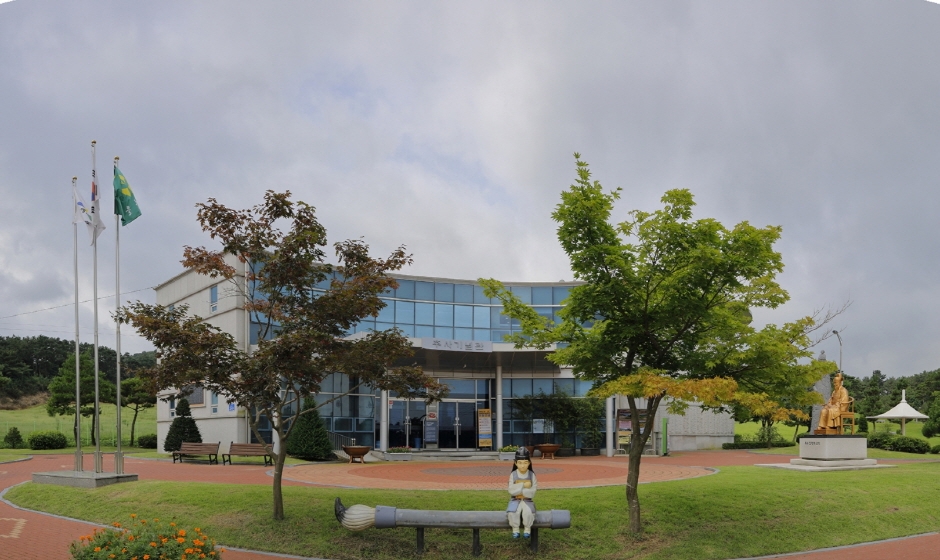
Chusa Memorial Hall opened in 2008, holds works of Chusa Gim Jeong-hui including his arts, epigraphy, calligraphy and more. The memorial hall preserves and exhibits Chusa Gin Jeong-hui's works to show future generations about his achievements.
 English
 한국어
한국어 日本語
日本語 中文(简体)
 Deutsch
 Français
 Español
 Русский


