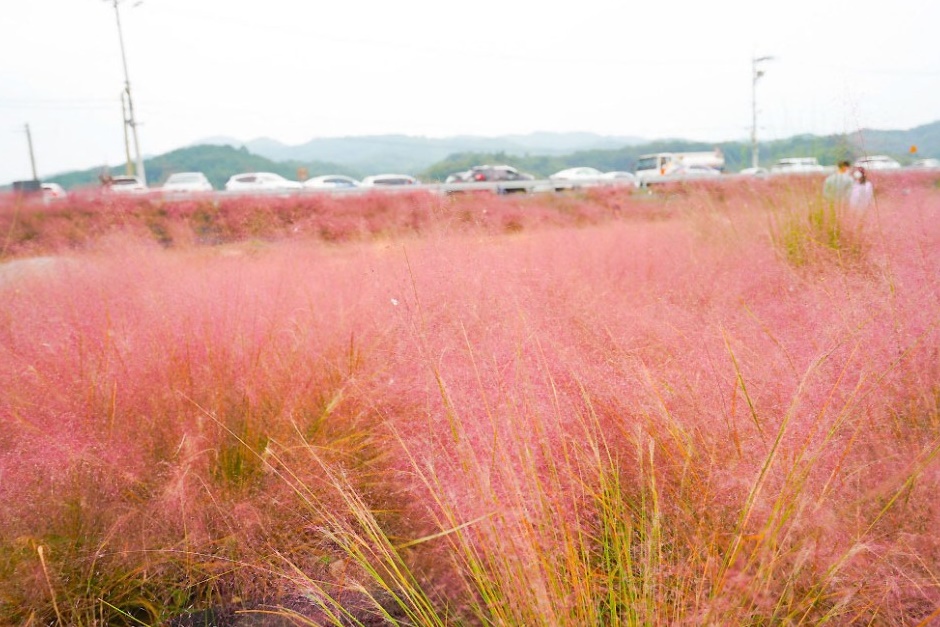
Yugu Pink Muhly Garden (유구핑크뮬리정원)
16.5Km 2025-02-04
648-18 Yuguri, Yugu-eup, Gongju-si, Chungcheongnam-do
Yugu Pink Muhly Garden boasts a breathtaking sea of cotton candy-like pink muhly, with its flowers peaking in fall. The garden also features an eco-playground with a sand play area, a play tunnel, and spider nets. Nearby attractions include a hydrangea garden, a traditional market, a mural street, and a textile history exhibition hall, making it an ideal spot for a combined tour.
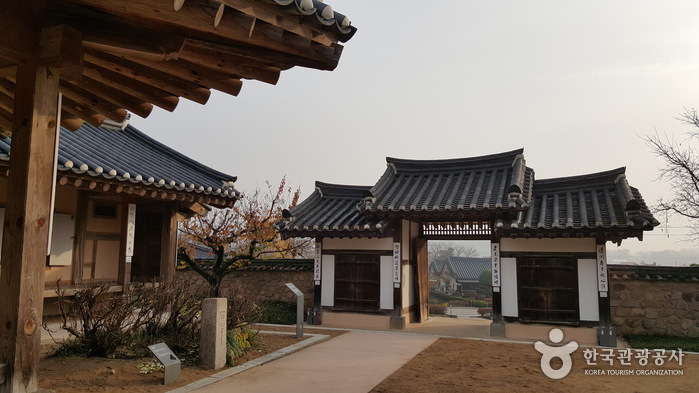
House of Chusa (추사고택)
16.6Km 2022-12-28
261, Chusagotaek-ro, Yesan-gun, Chungcheongnam-do
House of Chusa, Chusa Gotaek in Korean, is the traditional Korean house of the renowned scholar and calligrapher Chusa, also known as Kim Jeong-hui. This old house is known to have been constructed by the great-grandfather of Chusa, Kim Han-Sin.
The Korean-style house compound (266.11 m²) consists of munganchae (a guesthouse), soseuldaemun (a high gate), sarangchae (ㄱ-shaped men's quarters), anchae (ㅁ-shaped women’s quarters) and a shrine where the remains of Chusa are enshrined. Theㄱ-shaped Sarangchae stretches for one kan (traditional measuring unit) to the south and 2 kans to the east and is comprised of two rooms and a daecheongmaru (living area). The Anchae consists of a six-kan daecheongmaru and two one-kan rooms.
Located on the ground is a tomb where Chusa’s great-grandfather (Kim Han-Sin) and his wife (Hwasun Princess) are buried. Nearby, visitors will see a gate that was constructed to commemorate Princess Hwasun’s faithfulness to her husband.
Located approximately 600 meters to the north of the old house is a lacebark pine tree, which was designated as a Natural Monument. The lacebark pine tree, originally from northern China, is among the few of its kind in Korea. It is said that Chusa snuck the pine across the border from China (formerly, the Qing dynasty) into the country when he was 25 years old and planted it at the tomb of his great-grandfather. Originally, the tree had three branches, but two were broken and the third branch was damaged. In 1980, the damaged branch was treated and since then, the tree has been kept under strong protection.

House and Tomb of Kim Jeong-hui (추사김정희선생고택·묘)
16.6Km 2024-02-21
261, Chusagotaek-ro, Sinam-myeon, Yesan-gun, Chungcheongnam-do
This house and tomb are where Kim Jeong-hui (pen name: Chusa, 1786-1856), a Joseon-era scholar and artist, lived and was laid to rest. Chusa Memorial Hall and Chusa Experience Center are found next to the house. After studying in Qing China, Kim Jeong-hui served in multiple government posts. He is best known for his unique calligraphical style, which bears his courtesy name (Chusa), and many works of art that survive to this day. The Experience Center offers traditional art experiences inspired by Kim Jeong-hui’s works.
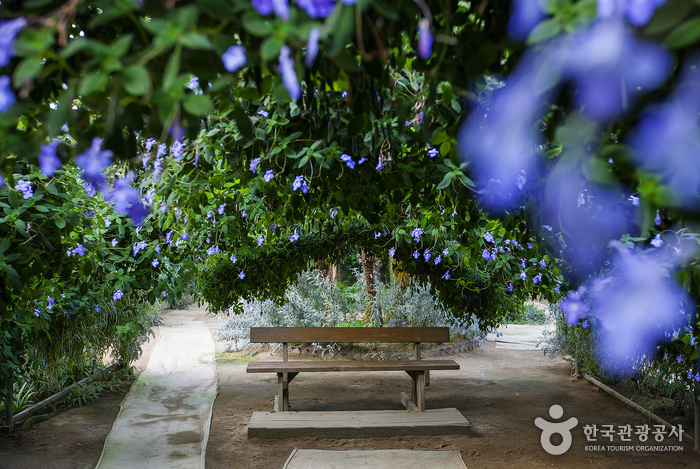
World Flower Botanical Garden (세계꽃식물원)
18.2Km 2022-12-26
37-37, Asanman-ro, Asan-si, Chungcheongnam-do
World Flower Botanical Garden opened to the public in 2004 and sees 15,000~20,000 visitors every year. This internationally recognized garden is Korea's largest greenhouse garden that features over 3,000 species of plants and flowers. To cultivate gardening culture in Korea, the garden founded LIAF Garden Center, acronym for "Life is a Flower." The garden center offers diverse gardening programs and products.
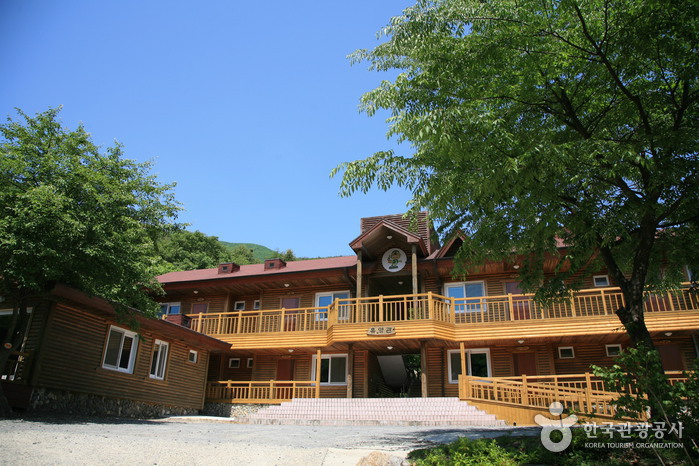
Oseosan National Recreational Forest (국립 오서산자연휴양림)
18.7Km 2022-07-22
531, Oseosan-gil, Boryeong-si, Chungcheongnam-do
Oseosan National Recreational Forest was opened on September 22, 2001 around Myeongdaegyegok Valley in Boryeong-si, Chungcheongnam-do. The area is separated from the city area, making it perfect for peaceful retreats into nature. There is a training center and many walking paths through the forest. The trail leading to the summit of Oseosan Mountain is popular among families and couples for its view of the sunset.
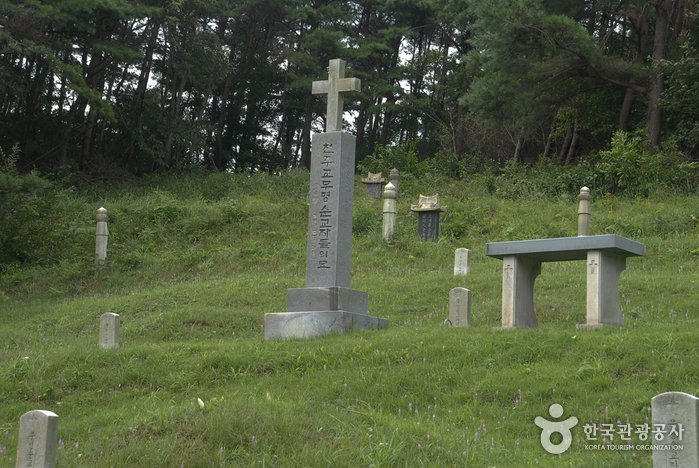
Cheongyang Daracgol Julmudeom Holy Site (청양 다락골 줄무덤 성지)
18.9Km 2025-01-09
78-6, Darakgol-gil, Cheongyang-gun, Chungcheongnam-do
Julmudeom refers to the unmarked graves of anonymous Catholic martyrs in Darakgol, Cheongyang in Chungcheongnam-do. Darakgol is also the birthplace of St. Choi Gyeong-hwan and Choi Yang-eop (the second Catholic priest in Korea) was also martyred in Gwacheon, Gyeonggi-do. Because the grave is of more than one individual, it was given the name Julmudeom (group graveyard).
Although the exact number of martyrs and their exact cause of death is unknown, they were buried by family resulting in the 37 mounds in three sections. In 1982, Cheongyang Cathedral established monuments to commemorate the unidentified martyrs, and Julmudeom became a well-known site for Catholic pilgrimages. In 1986, the remains of St. Choi Gyeong-hwan Francisco were relocated to the Jeoldusan Martyrs’ Shrine reducing the total number of mounds at Julmudeom to 36.
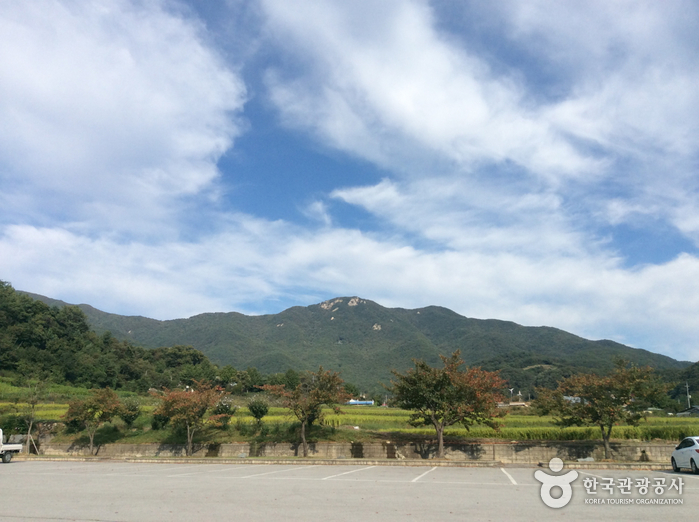
Seosan Gayasan Mountain (가야산(서산))
19.2Km 2022-11-17
Sansu-ri, Seosan-si, Chuncheongnam-do
Gayasan Mountain has easy and enjoyable hiking trails connecting Gayabong Peak, the main peak, with other peaks and mountains, namely Wonhyobong Peak (677 m), Ogyangbong Peak (621.4 m), Illaksan Mountain (521.4 m), Sujeongbong Peak (453 m), and Sangwangsan Mountain (307.2 m). The trails are as easy and suitable for all hikers including the elderly and young hikers. A distant view of the west sea is even visible from the top of the mountain. Gayasan Mountain offers amazing scenery all year round, most notably in spring when azaleas, royal azaleas, and an array of wildflowers are in full bloom.
The mountain also contains the Seosan Rock-carved Buddha Triad (National Treasure), which is considered the best rock-carved Buddha from the Baekje period. The mountain is also home to Bowonsa Temple Site, Gaesimsa Temple, and Illaksa Temple. With one National Treasure, six Treasures, and four cultural heritages preserved on the mountain, it is safe to say that Gayasan Mountain is the heart of Naepo Culture Zone (northwestern region of the province of Chungcheongnam-do), making the entire mountain a cultural asset.
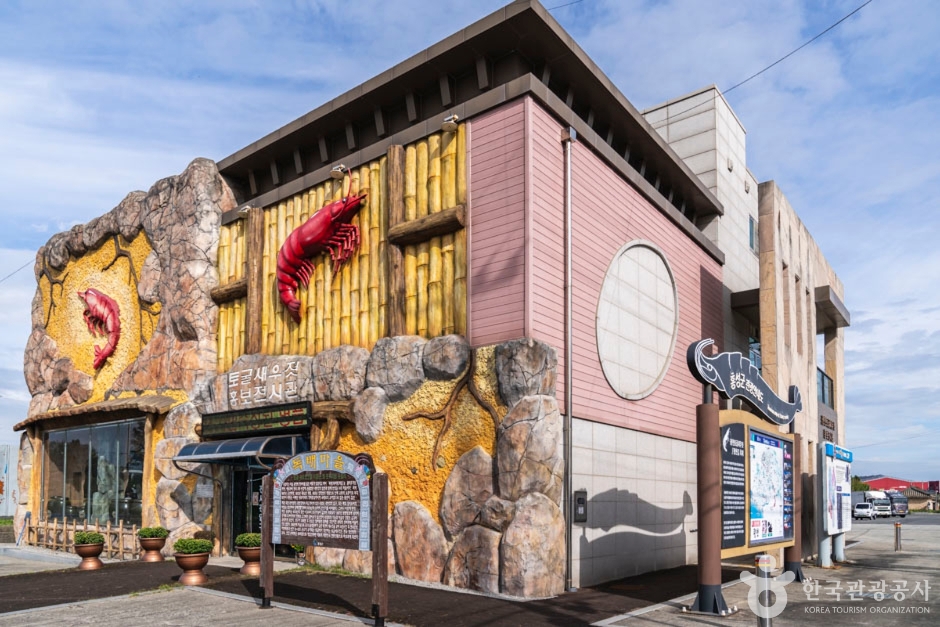
Gwangcheon Cave Salted Shrimp Complex (광천토굴새우젓단지)
19.3Km 2024-02-26
119, Gwangcheon-ro, Gwangcheon-eup, Hongseong-gun, Chungcheongnam-do
Gwangcheon Cave Salted Shrimp Complex is a collection of shops offering saeujeot (salted shrimp), a specialty of Gwangcheon. Gwangcheon’s proximity to the Yellow Sea makes it a famous place for jeotgal (salted seafood), particularly those made with shrimp. Gwangcheon’s saeujeot (salted shrimp) is stored and aged in a former mine cave tunnel, so it has great quality. There is even an exhibition hall dedicated to Gwangcheon cave salted shrimp. The Gwangcheon Cave Salted Shrimp & Dried Laver Festival is held in October.
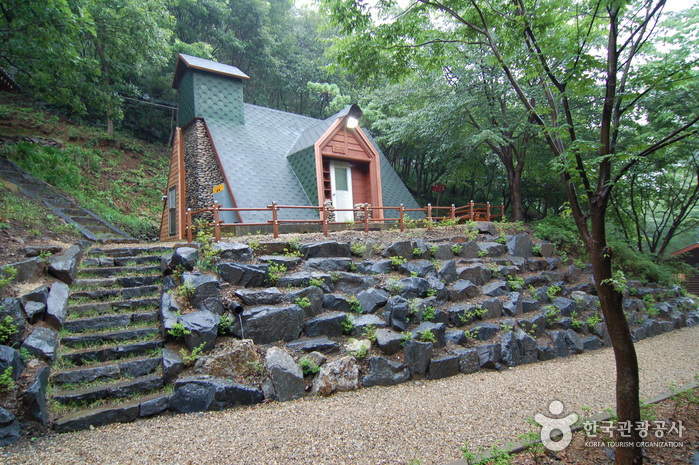
Chilgapsan Recreational Forest (칠갑산자연휴양림)
19.3Km 2021-10-28
668-103, Chilgapsal-ro, Cheongyang-gun, Chungcheongnam-do
Chilgapsan Recreational Forest opened in 1990 within a lush natural forest. The park offers many amenities to enjoy a relaxing time in nature. Overnight guests can stay in a cabin, complete with heating, a kitchen, and shower, or camp in the campground. The forest is also capable of hosting retreats, with training buildings and a lecture hall. Day visitors can enjoy the many walking trails and hiking paths, as well as a water playground and observation decks. The forest is located next to Chilgapsan Provincial Park, with many valleys in the area for more time in nature, as well as Cheonjangho Lake and Modeoksa Temple.
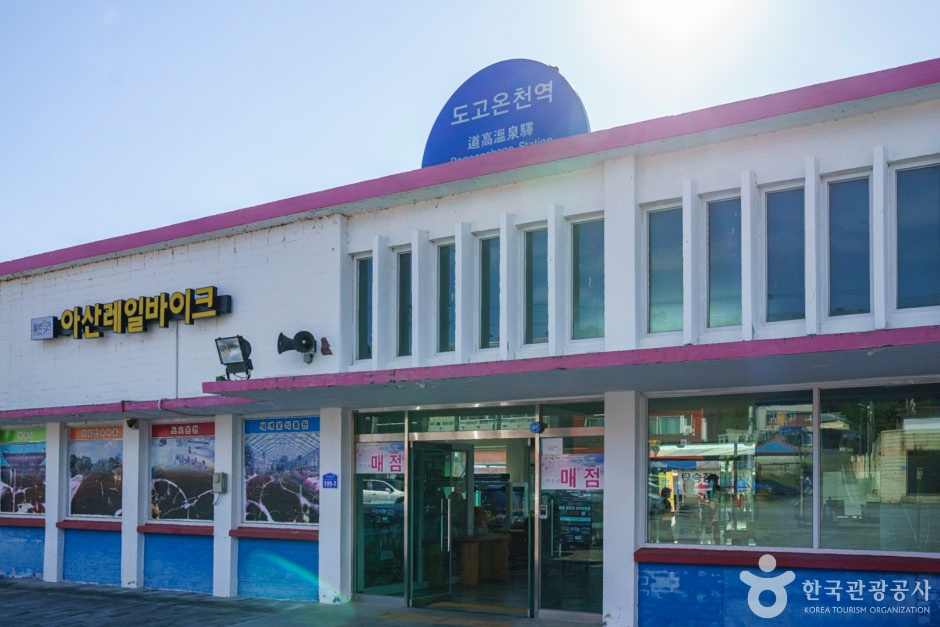
Asan Rail Bike (아산레일바이크)
19.6Km 2024-02-21
199-7, Asanman-ro, Dogo-myeon, Asan-si, Chungcheongnam-do
Asan Rail Bike was refashioned from a disused railway and station. The 4.8 km-long round-trip course allows visitors to ride the rail bike for about 40 minutes. The charmingly rural landscape seen from the rail bike changes with the seasons.
 English
 한국어
한국어 日本語
日本語 中文(简体)
 Deutsch
 Français
 Español
 Русский


