![The Izzat Collection - Shinsegae Paju Branch [Tax Refund Shop] (아이잗컬렉션 신세계파주)](http://tong.visitkorea.or.kr/cms/resource/16/3313416_image2_1.jpg)
The Izzat Collection - Shinsegae Paju Branch [Tax Refund Shop] (아이잗컬렉션 신세계파주)
2.1Km 2024-06-27
200 Pilseung-ro, Tanhyeon-myeon, Paju-si, Gyeonggi-do
-
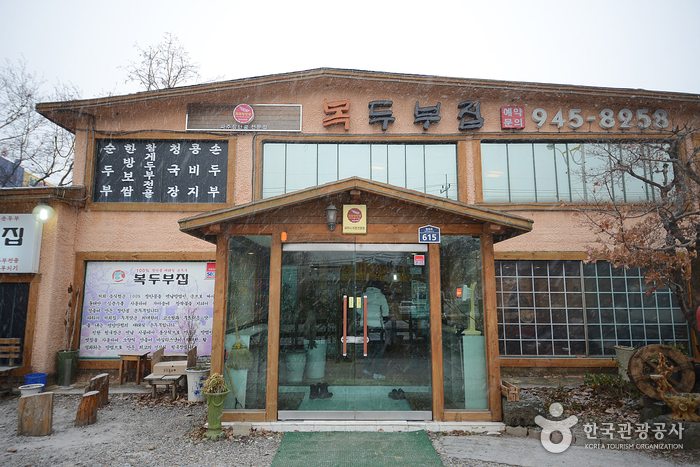
Bokdubujip (복두부집)
2.2Km 2024-02-23
615 Pyeonghwa-ro, Tanhyeon-myeon, Paju-si, Gyeonggi-do
031-945-8258
Bokdubujip is a bean curd specialty restaurant located near Jangneung Royal Tomb, a World Heritage site in Paju. They use 100% Korean beans from Jangdan-gun to make their bean curd. The signature dishes include byeotjip cheonggukjang (rich soybean paste jjigae) and chamge dubu jeongol (hairy crab and bean curd hot pot). Additionally, they offer a variety of other dishes such as jangdankong suje dubu (handmade jangdankong bean curd), dwaejigogi duruchigi (stir-fried pork), and gochujang jjigae (red chili paste jjigae).

Paju Jangneung Royal Tomb [UNESCO World Heritage] (파주 장릉(인조, 인열왕후) [유네스코 세계문화유산])
2.2Km 2021-07-19
90, Jangneung-ro, Paju-si, Gyeonggi-do
+82-31-945-9242
Located in Paju, Jangneung is the tomb of King Injo (1595-1649, reign 1623-1649), the 16th ruler of the Joseon dynasty, and Queen Inyeol.
King Injo took the throne in 1623 after having overthrown the previous king, Gwanghaegun, in a military revolt. During his reign, King Injo faced challenges from two foreign invasions in 1627 and 1637. He died in 1649 in Changdeokgung Palace.
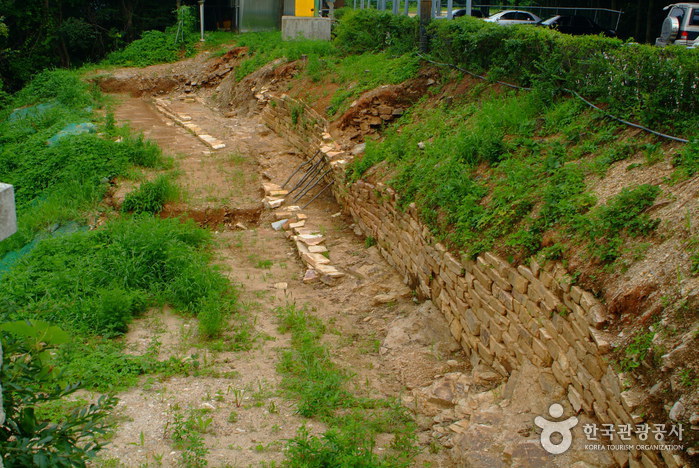
Odusanseong Fortress (파주 오두산성)
2.7Km 2024-12-03
Seongdong-ri, Paju-si, Gyeonggi-do
Odusanseong Fortress is built around the strategic summit of Odusasn Mountain. The walls stretch across roughly 620 meters and were built during the Baekje dynasty. The fortress is built on the intersection of the Imjingang River and the Hangang River on the summit of Odusan Mountain (119 meters). The mountain’s slope is steep and stones used in the construction of the fortress walls are scattered here and there at the summit. These scattered stones are evidence that the fortress underwent repairs several times during the Samguk (Three Kingdoms) era and the Joseon dynasty, as these stones were evidently quarried and used to mend the fortress walls. Excavations have discovered a great deal of earthenware, white porcelain, tile, and iron arrowheads. Topographically, the fortress sits on a prime strategic junction and the Unification Observatory has been situated there as well. The fortress stands as an important object of study concerning fortifications and structures from the Baekje dynasty. It has been recorded on the stele of King Gwanggaeto, Samguksagi (History of the Three Kingdoms), in the Naekjebongi (Baekje Annals) and on Daedongyeojido (Map of Korea) that the fortress was the Gwanmi Fortress of Baekje, attracting many scholars and researchers interested in this period.
Café Calming
4.4Km 2024-02-28
311 Soraji-ro, Paju-si, Gyeonggi-do
Café Calming is a serene dessert café celebrated for its stunning view of the Hangang River, offering a tranquil escape. The café's signature dish is the saengmango bingsu (shaved ice with fresh mango), which is garnished an entire sliced mango on top. Its spacious interior and outdoor terrace provide plenty of seating, with the terrace exuding the feel of a Southeast Asian resort. Alongside this, the café serves homemade scones that complement their slightly sour espresso perfectly. A notable highlight of the Café Calming is its stunning views of the Hangang River at sunset.
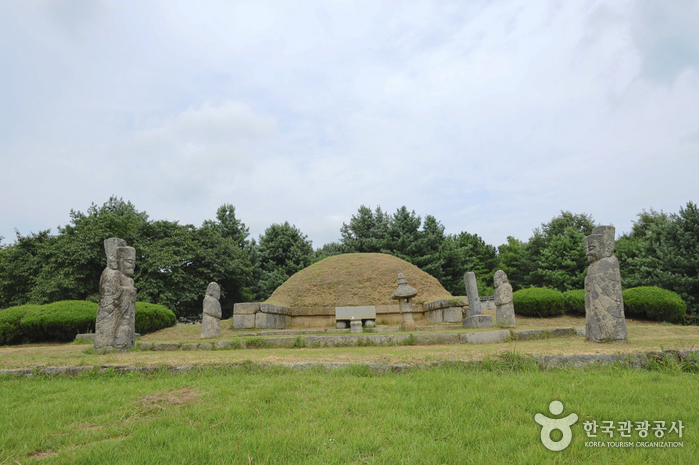
Tomb of Hwang Hui (황희정승묘)
6.4Km 2024-02-07
23-83 Jeongseung-ro 88beon-gil, Tanhyeon-myeon, Paju-si, Gyeonggi-do
Hwang Hui (1363-1452) is a prime minister who played a significant role in the early Joseon dynasty. Constructed in three stages, the tomb's burial mound is notably large. Hwang Hui was an official instrumental in establishing the foundations of Joseon. He served under King Taejong, the 3rd king of Joseon, and King Sejong, the 4th king, making notable contributions in diplomacy, law, science, and national defense. His descendants have continued to honor his legacy by maintaining the tomb.
![E-Mart - Paju Branch [Tax Refund Shop] (이마트 파주)](http://tong.visitkorea.or.kr/cms/resource/46/2888946_image2_1.jpg)
E-Mart - Paju Branch [Tax Refund Shop] (이마트 파주)
6.5Km 2024-04-22
10, Dangha-gil, Paju-si, Gyeonggi-do
-
Olive Young - Paju Dayul Branch [Tax Refund Shop] (올리브영 파주다율점)
6.6Km 2024-06-26
#104~#106, 20, Haeol 2-gil, Paju-si, Gyeonggi-do
-
Olive Young - Paju Geumneung Station Branch [Tax Refund Shop] (올리브영 파주금릉역점)
7.1Km 2024-06-27
1F, 84, Geumneungyeok-ro, Paju-si, Gyeonggi-do
-
![Olive Young - Paju Gyoha Branch [Tax Refund Shop] (올리브영 파주교하)](http://tong.visitkorea.or.kr/cms/resource/58/2880958_image2_1.jpg)
Olive Young - Paju Gyoha Branch [Tax Refund Shop] (올리브영 파주교하)
7.2Km 2024-04-22
1F, #110, to 112, 260, Cheongseok-ro, Paju-si, Gyeonggi-do
-
 English
 한국어
한국어 日本語
日本語 中文(简体)
 Deutsch
 Français
 Español
 Русский


