CHIAMGOTAEK / 치암고택
3.3Km 2025-08-12
297-10, Toegye-ro, Andong-si, Gyeongsangbuk-do
+82-54-858-4411, +82-10-3530-4413
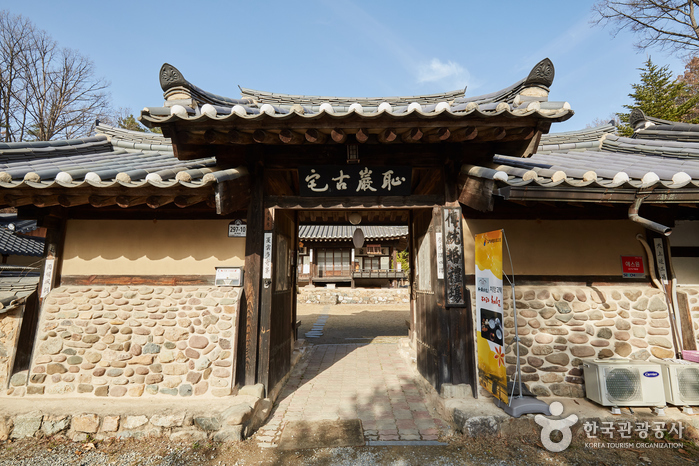
Chiam Old House in Anmak-dong, Andong, Gyeongsangbuk-do is an old traditional Korean house once owned by Lee Man-hyeon(pen name Chiam) who was the 11th-generation descendant of “Toegye” Yi Hwang, one of the most prominent Korean Confucian scholars of the Joseon Dynasty and a high-ranking government official during the reign of King Gojong. This house was originally located in Wonchon-ri, Dosan-myeon but was relocated to its current location in 1976 after a flood caused by the collapse of Andong Dam. Chiam Old House consists of 22 rooms, 5 gates, and 1 detached building. The main building is taller than the detached building. One of the unique features of this detached building is that it has both gable roof and gambrel roof on either side. Listed as Gyeongsangbuk-do Folklore Material No. 11, Chiam Old House now serves as a guesthouse for those wishing to experience an old traditional Korean house. The rooms that are open to guests are “Seongmyeongjae,” “Gyeongeopjae,” and “Nakseongdang.” The large room called “Bakkatchae,” or outer building, is the most comfortable one to stay in for a night, since it's furnished with kitchen, TV, air conditioner, and bathroom. “Seongmyeongjae” means “honesty and integrity” in Korean. It’s an “ondol (Korean floor heating system)” room typical of any traditional Korean house, where you have to sleep on the floor. "Gyeongeopjae" is the most popular one among the guests, and its name means “unselfish and reverent.” The rooms next to the gate called “Ilgeonjae,” “Seokcheonjae,” and “Hakgujae” located along the wall are great places to stay if you want to see the surroundings and the old house at the same time. “Jamnyongdang” on the east side of the main building is named after the small pond in the yard, and it means “to strive to be a man of virtue like the dragon flying in the sky.” There are lots of beautiful flowers in the small garden in complete harmony with the old house and surrounding mountains, making it a great place to take a leisurely walk as you experience the history.

Festival international de la danse des masques de Andong (안동국제탈춤페스티벌)
3.6Km 2025-09-23
239, Yuksa-ro, Andong-si, Gyeongsangbuk-do
- Centre d'appels 1330 : +82-54-1330 (coréen, anglais, japonais, chinois)
- Pour obtenir plus d'info : +82-54-841-6397~8 / +82-54-840-6398 (coréen)
Le Festival international de danse des masques d’Andong est un événement dédié au masque et à la danse masquée, éléments universels de la culture mondiale, visant à transmettre leur valeur universelle et à en partager l’attrait. Outre les danses masquées coréennes inscrites au patrimoine culturel immatériel de l’humanité de l’UNESCO, le festival rassemble les représentations de 34 troupes issues de 25 pays, offrant ainsi l’occasion unique de découvrir la diversité des danses masquées à travers le monde. Au programme figurent des spectacles sur scène, des parades urbaines, ainsi qu’un concours international de danses masquées. Les visiteurs pourront y apprécier la richesse des expressions et des récits que chaque culture transmet à travers ses masques et ses danses.
Parc Grasswon (그라스원)
3.6Km 2023-07-10
273, Yuksa-ro, Andong-si, Gyeongsangbuk-do
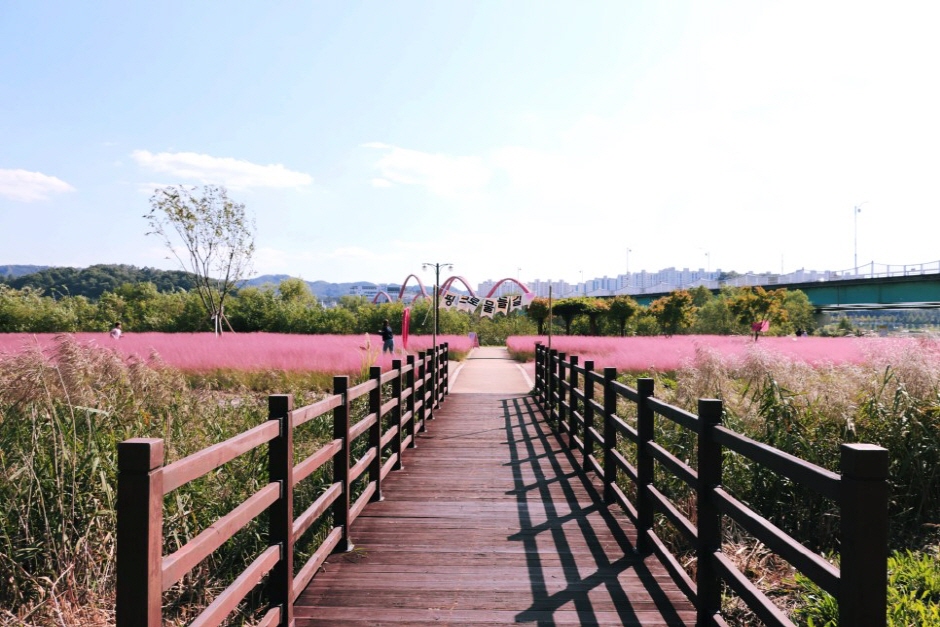
Le parc Grasswon se situe sur les bords du fleuve Nakdonggang dans la ville de Andong. Le site, réputé pour son pont Yeonggadaegyo, propose des sentiers de promenade dans une belle nature. Le site est particulièrement réputé en automne. Il est possible de rejoindre le parc Baekjo depuis les lieux faisant de l'endroit un endroit recommandé pour découvrir le fleuve Nakdonggang.
Kase Hotel (formerly Andong Kase)/ 케이스호텔((주)안동케이스)
3.6Km 2025-08-13
60-16, Gangnam 2-gil, Andong-si, Gyeongsangbuk-do
+82-54-857-0007
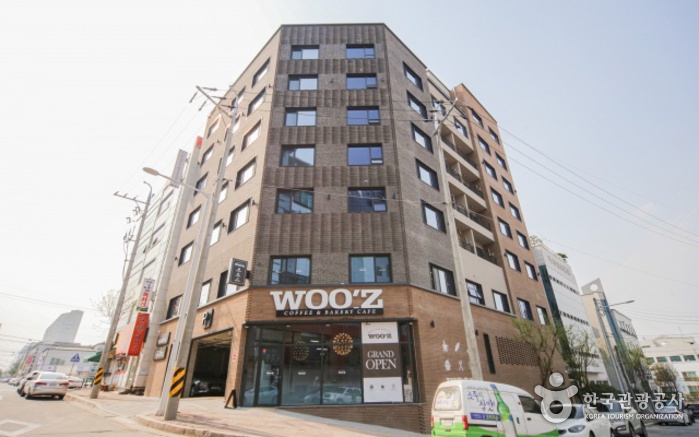
This 8-story hotel is located about 15 min by car from Andong Station and Andong Terminal. Its riverside location at Nakdonggang River offers guests an opportunity to take a walk along the river. There are 42 rooms in total, in seven types, all furnished with elegance in mind with low-saturation walls, gray curtain, and gold-framed furniture. All rooms have Netflix streaming access. Family Room, Suite Party Room, and Luxury Party Rooms have refrigerators, induction stoves, microwave ovens, and kitchen sinks for cooking. These rooms also have a mini swimming pool for children, making them especially popular in summer. Luxury Party Room, which can accommodate up to 8 guests, has a living room separated from the bedroom, allowing easier management of space. Both rooms also have a TV. Andong’s tourist sites, such as Imcheonggak House, which is Treasure No. 182 of Korea, Andong Jjimdak Alley, and Woryeonggyo Bridge is reachable by car in 10 min.

Rue du jjimdak de Andong (안동시장 찜닭골목)
3.6Km 2024-10-25
30, Beonyeong-gil, Andong-si, Gyeongsangbuk-do
Cette rue a été formée les années 1970 depuis l'apparition d'une « allée du poulet » où l'on vendait du poulet cru ou rôti dans le marché d'Andong. Avec la popularité du poulet frit assaisonné sur le marché global du poulet, les marchands de poulets devaient trouver un moyen de préserver leurs ventes, c'est dans ce cadre qu'a été créé l'Andong Jjimdak (poulet braisé).
Les plats sur place sont réputés pour leur goût sucré et piquant, le prix bas et la quantité généreuse de nourriture proposé par les marchands.C'est ainsi que le lieu est devenu célèbre comme l'« allée du jjimdak ».
Actuellement, l'allée abrite une trentaine de restaurants servant du jjimdak attirant une moyenne de 20 000 clients les week-end.
Si l'Andong Jjimdak n'est pas considéré comme un plat traditionnel transmis depuis les temps anciens, une recette similaire a néanmoins été trouvée dans Suunjapbang et Eumsikdimibang, les livres de recettes les plus anciens de Corée. L'Andong Jjimdak est un plat réputé sur le plan nutritionnel, riche en protéines mais aussi en vitamines.
Minu Sutbul Jangeo Nara(민우숯불장어나라)
7.4Km 2025-08-01
24, Gwangmyeong-ro, Andong-si, Gyeongsangbuk-do
+82-54-843-6888
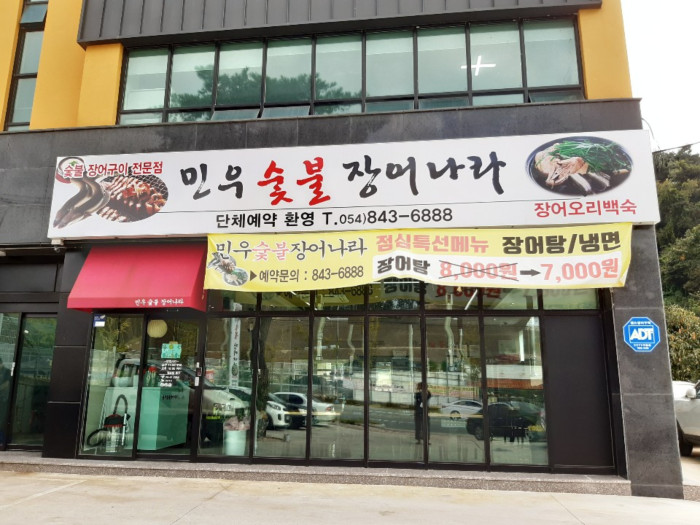
This is a place where you can enjoy healthy eel dishes. The best menu at this restaurant is grilled eel. This Korean dishes restaurant is located in Andong-si, Gyeongsangbuk-do.
Ecole des Bonnes Manières de Andong (안동예절학교)
9.8Km 2023-04-07
434, Gamae-ri, Waryong-myeon, Andong-si, Gyeongsangbuk-do
+82-54-841-0511
L'Ecole des Bonnes Manières de Andong, située dans la ville de Andong, est un haut lieu de la culture confucianiste en Corée. Elle permet de découvrir les bonnes manières du passé en Corée.
Vous pourrez aussi y apprendre l'étiquette lors de la cérémonie du thé et découvrir les mélodies traditionnelles à travers des instruments tels que le Janggu (tambour à double face) et le Gayageum (harpe coréenne à douze cordes) ainsi que découvrir les jeux folkloriques comme le Yut-nori et le cerf-volant. L'école propose un grand nombre de programmes: danse du masque, fabrication d'objets en papier traditionnel, cuisine traditionnelle, mariage traditionnel et rafting sur la rivière Nakdonggang.
Plusieurs sites touristiques se trouvent non loin de là comme l'école confucianiste Dosan Seowon, le musée des sciences sur la forêt et le centre littéraire Yi Yuk-sa.
Hakbongjongtaek / 학봉종택
9.9Km 2025-08-12
2830-6, Pungsantaesa-ro Seohu-myeon, Andong-si, Gyeongsangbuk-do
+82-54-852-2087, +82-10-6811-1106
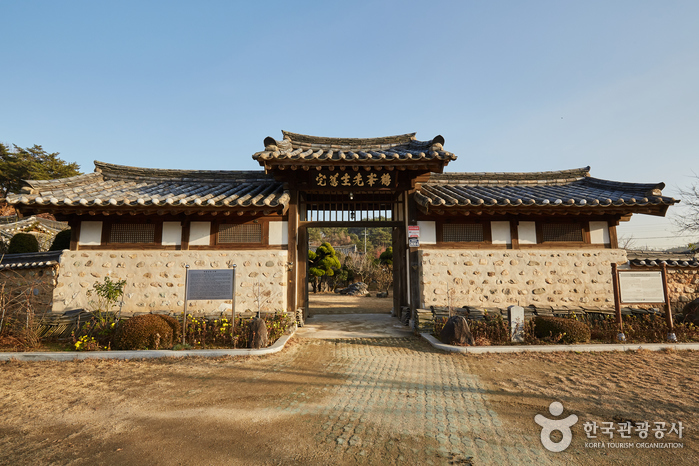
'Hakbong Head House is the head house of the Uiseong Kim clan and was originally built near Sogyeseodang Village School by Kim Gwang-chan, an 8th-generation descendant of Hakbong Kim Seong-il, in 1762. In 1964, the house was moved to its current location.
The main building (bonchae) was extended from a ‘ㅁ’-shaped structure to a ‘巳’–shape structure. The anchae (women’s quarters) consists of a daecheong (main floored room) measuring 2-kan (a unit of measurement referring to the distance between two columns) on the right, an anbang measuring 2-kan on the left, and kitchen at the end. The upper part of the low-ceilinged kitchen has a gobang (storeroom) in which household goods used to be stored. The daecheong is large compared to the overall size of the house because head houses usually held many ancestral rites.
The Hakbong Head House has an impressive modern garden that was created during construction work carried out when the house was relocated after the Japanese colonial era. The well-maintained garden with its fantastically-shaped trees and rocks also serves as a venue for musical concerts on a regular basis. Guests will surely be fascinated to find out about the history of the people who once inhabited this house and dedicated themselves to the country in times of trouble.
Oryuheon House / 오류헌
10.3Km 2025-08-12
18-15, Gireumaje-gil, Andong-si, Gyeongsangbuk-do
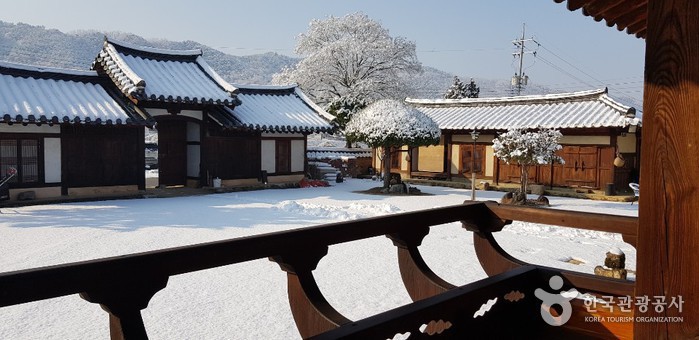
Oryuheon House, located near Imhaho Lake in Andong, Gyeongsangbuk-do, offers a chance to stay in a historic house from the Joseon period. The house, also known as Mogwa House, was built by Kim Won-jung, the third son of Sukjong-era rector of the National Academy Kim Bang-geol, when he formed a family of his own in 1678. It was designated as the National Folk Cultural Heritage No. 184. The door’s wooden frame and the open floor space exemplify the beauty of the literati house of the Joseon period, while the sarangchae (men’s quarters) and daemunchae (gate quarters) showcase the sophisticated architecture of the era. Anchae (women’s quarters) retains its original appearance, while the sarangchae was rebuilt in 1920. The construction of the Imha Dam in 1990 resulted in the house’s relocation to its present location.
The owner of the house resides in anchae and sarangchae. Guests have access to a space that includes a 2-kan room, which can accommodate up to 4, an open floor space, and a bathroom. Cooking is prohibited in the house, but guests can make use of a grill located on a small yard reserved for the guests. Korean-style breakfast, including menus like chicken porridge or lotus leaf rice, are offered free of charge in the morning. Nearby sights include the water sports activities in Imhaho Lake, Manhyujeong Pavilion, Hahoe Village, and Dosanseowon Confucian Academy.
Jeongjae Head House / 정재종택
13.1Km 2025-08-12
경상북도 안동시 임동면 경동로 2661-8
+82-10-8590-0625
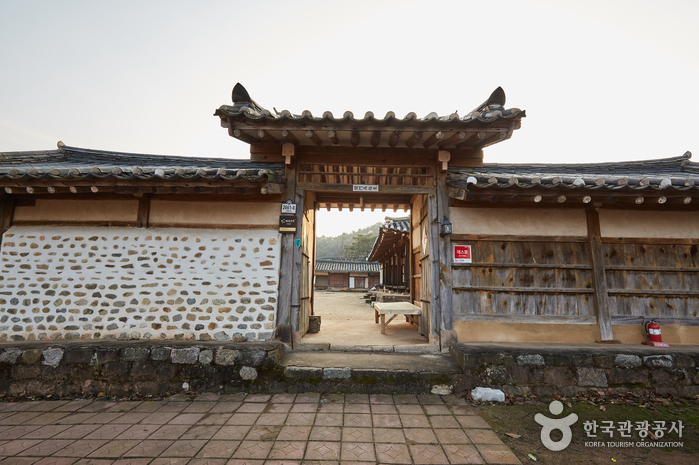
Boasting more than 300 years of tradition, Jeongjae Traditional House is the head house of Ryu Chi-myeong (pen-name: Jeongjae), who inherited the study of Togye Yi Hwang (1501-1570), one of the two most prominent Korean Confucian scholars of Joseon. The old house features the characteristic construction elements of a Joseon hanok, including the stylobate, wooden pillars, toenmaru (the narrow wooden porch running along the outside of the building), tiled roof, and other structures, and commands an open view of Imha Lake. The house was originally built by Ryu Gwan-hyeon, the great-great-grandfather of Ryu Chi-myeong, in 1735 (the 11th year of the reign of King Yeongjo of Joseon) in the village of Handeul in Imdong-myeon, Andong-si, Gyeongsangbuk-do, but it was relocated to the foot of Guamsan Mountain in 1987 when Imha Dam was built and the surrounding area was submerged as a result. The house consists of the daemunchae (gate building), jeongchim (a ‘ㅁ’-shaped house with a tiled roof), haengnangchae (servants’ quarters), a shrine, and a pavilion. The sarangchae (men’s quarters) is clearly visible, while the anchae (women’s quarters) is concealed within the house. The sarangchae has a sarangmaru (wooden floor), a large sarangbang room, a small sarangbang room, and there is a small maru between the two rooms. The buildings of the sarangchae and anchae are clearly divided into segregated spaces for men and women according to Confucian tradition. The anchae has a daecheongmaru (large wooden floor) in the middle; a main room, kitchen, and toilet on the right; and a numaru (upper floor) and sangbang (upper room) on the left. The small side door of the main gate links to the door by which to enter the anchae, which has a small vegetable garden. Manujeong Pavilion (Gyeongsangbuk-do Cultural Heritage Material No. 37) is a half-hipped roof building with single-layered eaves located on the left side of the house outside the main gate. It is the place where Ryu Chi-myeong used to teach his students, and consists of a large maru and a guest room. The pavilion is also surrounded by the beautiful scenery of Imha Lake, mountains, and chestnut trees. Jeongjae Traditional House provides two special experience programs: Making Songhwaju, which is the Ryu family’s home-brewed liquor (15 to 18 degrees) made with rice, glutinous rice, yeast, pine needles, and chrysanthemums, led by the owner’s wife (Intangible Cultural Asset No. 20); and Making Tarak, which is a fermented milk drink that has been made by the Ryu’s family for some 500 years. As the recipe for making Tarak is relatively simple, and uses yeast that is usually used to make raw rice wine like Makgeolli, people can easily make it at home. The house also runs a traditional music program designed to show participants how to play the gayageum (Korean zither with twelve strings) and sing Korean folk songs, and stages small concerts.
 Français
 한국어
한국어 English
 日本語
日本語 中文(简体)
 Deutsch
 Español
 Русский


