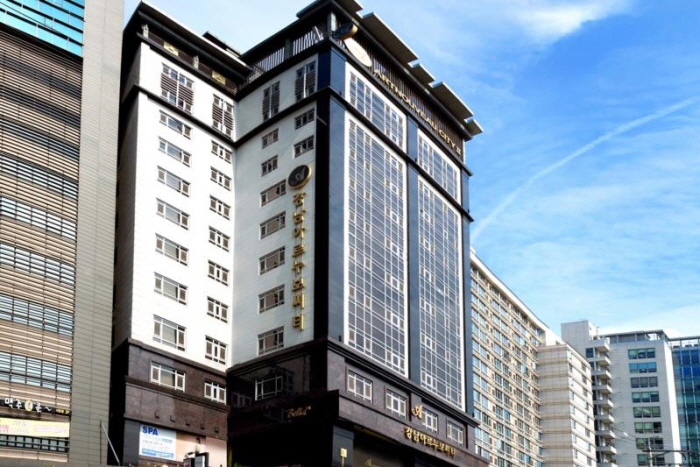
Gangnam Artnouveau City Hotel (강남아르누보씨티호텔)
11.1Km 2025-07-28
49, Seocho-daero 74-gil, Seocho-gu, Seoul
Gangnam Artnouveau City is a luxury residence hotel located 10 min away by foot from Seoul Subway Line 2 and Shinbundang Line Gangnam Station. Yangjaecheon Cafe Street, Banpo Hangang Park, and Apgujeong Rodeo Street are reachable in 20 min using public transportation, making the hotel an ideal base camp for tourism and shopping. All rooms are equipped with a kitchen sink, refrigerator, drum washing machine, and work desk. Microwave, electric rice cooker, premium kitchen utensils, and cooking utensils allow both short-term tourist guests and long-term business guests to prepare their food in the room. There are 192 rooms in total, with 4 types of Crystal Double, Crystal Twin, Sapphire Double, and Sapphire Family. The hotel eschews the modern interior of typical hotels in lieu of an elegant, old-fashioned interior reminiscent of Victorian Britain. Polished wooden floors, dark-brown furniture, patterned bedding and wallpaper, and chandelier help create a rustic atmosphere. In-hotel amenities include a restaurant serving homemade Italian cuisine, meeting room, fitness center, and the sky garden. The business center, which is open 24 hr, offers basic electronic services like copying, printing, scanning, and fax. There is a dedicated rest area for Arabian guests, and the hotel offers tourist information in English, Japanese, and Chinese. Other services include currency exchange, mail and package sending, and washing.

Residencia Sangchonjae (상촌재)
11.1Km 2023-08-17
Jahamun-ro 17-gil 12-11, Jongno-gu, Seúl
La Residencia Sangchonjae, administrada por la Fundación Cultural de Jongno, es un espacio cultural tradicional hanok ubicado en la Aldea Sejong del barrio de Okin-dong, distrito de Jongno-gu, Seúl. Este lugar opera varios programas culturales coreanos, como exposiciones, programas educativos y eventos para experimentar plenamente las cuatro estaciones de Corea. El nombre Sangchonjae se concibió a partir del antiguo nombre de la Aldea Sejong, la parte occidental del palacio Gyeongbokgung y el lugar de nacimiento del rey Sejong. La residencia refleja el estilo de vida de un campesino común durante la dinastía Joseon. Consta de tres edificios: el edificio principal, la casa de huéspedes conocida como sarangchae y el anexo. Hay un centro de experiencias en el interior que ofrece ceremonias del té y juegos tradicionales.
Daemun (대문)
11.2Km 2025-05-19
139-6, Sirubong-ro, Dobong-gu, Seoul
Daemun table d’hote consists of delicious Mung Bean jelly cake mixed with beef and vegetables, sweet vegetable salads with fruit sauce, five colors of pan-fried flour dough with duck, and cold jellyfish salad with mustard dressing. Tasty side dishes such as bulgogi and outer leaf of cabbage mixed with soybean paste and rice in a hot stone pot, and soybean paste stew, come right after the main course.
Of one book and stay / 일독일박
11.2Km 2025-08-11
11-1, Pirundae-ro 3-gil, Jongno-gu, Seoul
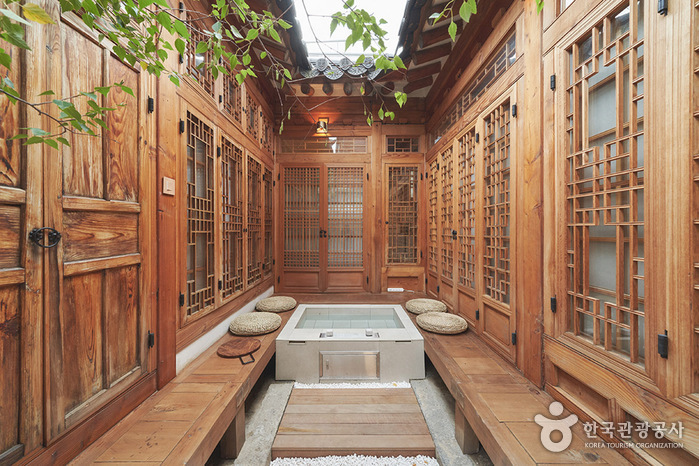
This hanok (traditional Korean house) is located in Seochon Village near Gyeongbokgung Palace. It is a modern C-shaped hanok centered around the inner courtyard, which is the first thing that the guests see after entering through the gate. While it is not expansive, white pebbles and a foot bath make this hanok a unique one. One can enjoy a foot bath while sitting on the porch.
The bedroom, which is located beyond the living room, is furnished with a queen-sized bed. Opening the screen doors brings one to the view of the kitchen area beyond the inner courtyard. A large table, plush sofa, and a small bookcase make the space ideal for books and discussions. Climbing the wooden ladder to the side of the kitchen brings one to the attic, which also doubles as a Korean-style room with a skylight. The kitchen is furnished with a refrigerator, microwave oven, gas stove, electric kettle, toaster, pots, utensils, wine glasses, and bottled water. There is a restroom with a bathtub. The standard occupancy of the house is 4 people.
Estación Cultural de Seúl 284 (문화역 서울 284)
11.2Km 2023-08-11
Tongil-ro 1, Jung-gu, Seúl.
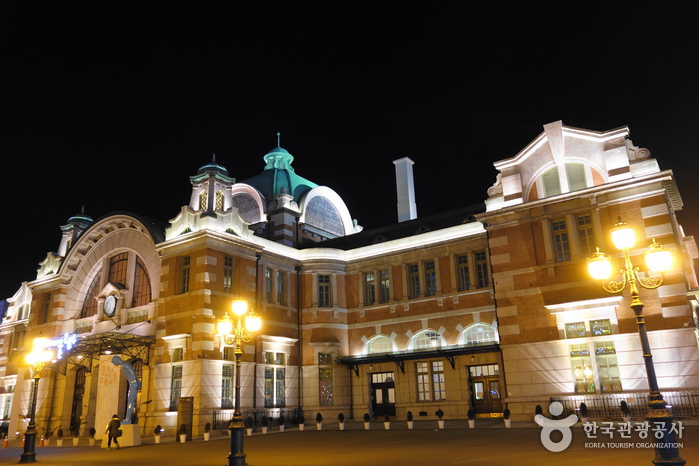
El edificio de la antigua Estación de Seúl fue diseñado por Tsukamoto Yasushi, un profesor de la Universidad de Tokio. La construcción de la estación empezó en junio de 1922 y fue completada en septiembre de 1925. Debido a su particular tejado, la estación recibió mucha atención en sus primeros años. Después de la liberación de Corea, la estación paso de llamarse Estación de Gyeongseong a Estación de Seúl. Durante la Guerra de Corea, la estación fue parcialmente destruida, pero reconstruida de nuevo más adelante. Después de que Corea iniciase su período de industrialización, la parte sur y la parte oeste de la estación se unieron para dar cabida al incremento del movimiento ferroviario.
En 2004, cuando se construyó la nueva estación, la antigua quedó cerrada, pero después de su reconstrucción en 2011 fue abierta como espacio multicultural con el nombre de Estación Cultural de Seúl 284. El área más grande, la sala Jungang, sirve para albergar actuaciones, exposiciones y eventos, mientras que el segundo piso tiene una sala como lugar para actuaciones culturales, exposiciones, seminarios académicos y reuniones de negocios, entre otros.
Estación de Seúl (서울역)
11.3Km 2023-08-11
Hangang-daero 405, Yongsan-gu, Seúl
Se trata de una terminal de todas las líneas de Gyeongbu (Seúl-Busan), KTX (tren de alta velocidad de Corea), trenes Saemaul, Mugunghwa y Nuriro (tren eléctrico ecológico). También tiene una línea de conexión llamada AREX (Airport Express) que une esta estación con el Aeropuerto Internacional de Incheon. En la Estación de Seúl se registra el mayor número de pasajeros en Corea, con un promedio diario de 100.000 pasajeros que entran y salen del complejo de la estación de tren, que incluye el nuevo edificio terminado en 2003. La Tienda Departamental Galleria y el hipermercado Lotte Mart, que se encuentran en las inmediaciones, también son lugares muy populares.
Modern Nulang Central City Branch (모던눌랑 센트럴시티점)
11.3Km 2025-12-03
205, Sapyeong-daero, Seocho-gu, Seoul
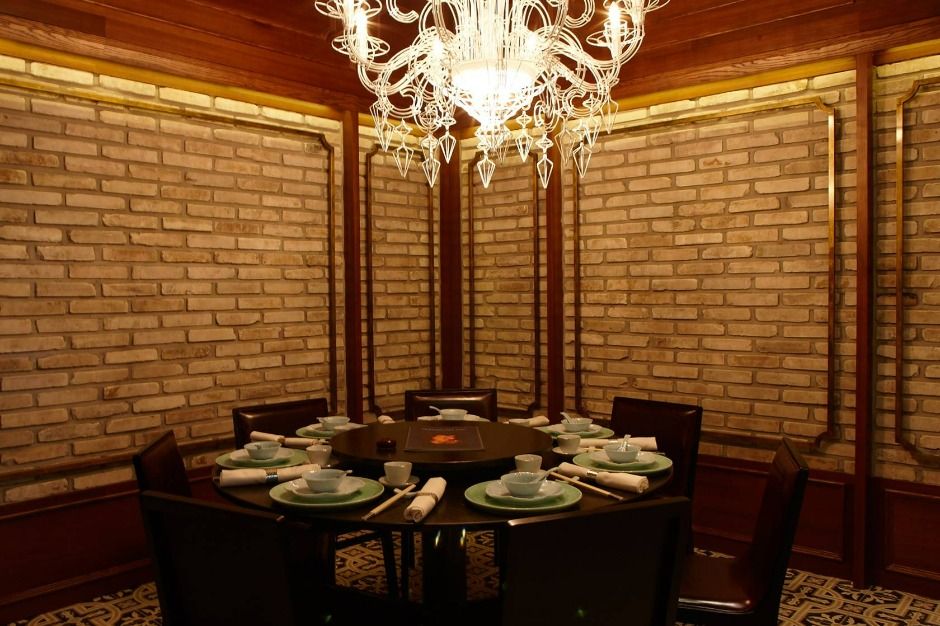
Setting a romantic and modern atmosphere, Modern Nulang is a Chinese restaurant inspired by the "New Woman" concept from Shanghai's modern history. The restaurant’s design reflects Shanghai’s modern culture in the 1930s, portraying itself as a place that sets trends and is frequented by intelligent, sophisticated women. Decorative elements like a train platform, murals, and antique décor are scattered throughout the space, capturing the aesthetic essence of that era. Even the food served here stays true to the concept, presented in an elegant and romantic fashion. Signature menu items include Modern Nulang Shanghai Roll Platter, Braised Pork Belly with Chinese Buns, and Mint Lime Shrimp.
Palacio Gyeonghuigung (경희궁)
11.3Km 2025-05-13
Saemunan-ro 45, Jongno-gu, Seúl.
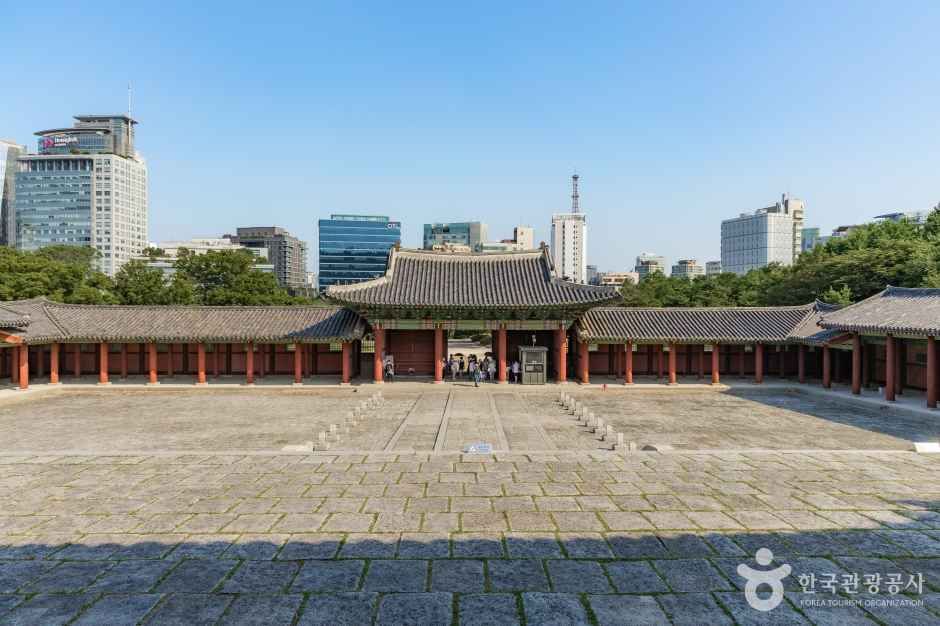
Hacia finales de la época de Joseon, el palacio Gyeonghuigung fue considerado como un palacio secundario del monarca; y por su ubicación, hacia el oeste (seo, en coreano) de Seúl, en ocasiones fue nombrado como Seogwol (Palacio del Oeste).
El palacio secundario era el lugar en donde el rey se refugiaba en momentos de emergencia. Desde Injo a Cheoljong, aproximadamente 10 reyes de la dinastía Joseon pasaron algún momento de sus vidas en este palacio. Fue construido respetando el relieve de las montañas que lo rodeaban, por lo que posee una belleza tradicional en su arquitectura y un gran significado histórico. Hubo tiempos en los que tenía una dimensión enorme, por lo que se tuvo que levantar un puente con forma de arco para conectarlo con el palacio Deoksugung. Para la audiencia real, estaban los edificios Sungjeongjeon y Jajeongjeon; y como cuartos privados, los edificios Yungbokjeon y Hoesangjeon. Sumaban un total de aproximadamente 100 edificios de distinto tamaño dentro del palacio. Sin embargo, gran parte del palacio fue derrumbada y dañada por la invasión japonesa de 1908.
Hoy en día, la puerta principal del palacio, Heunghwamun, es utilizada como la puerta de acceso al Hotel Shilla.
Cerca del palacio Gyeonghuigung se encuentra el Museo de Historia de Seúl, la calle Jeongdong y la siempre abarrotada calle Jong-ro. Una vez que haya recorrido Gyeonghuigung, puede cruzar la calle Jeongdong y caminar hacia el palacio Deoksugung. El camino del muro de piedra del palacio Deoksugung está considerado como uno de los más elegantes de la ciudad.
Texas de Brazil Central City Branch (텍사스 데 브라질 센트럴시티점)
11.3Km 2025-12-03
205, Sapyeong-daero, Seocho-gu, Seoul
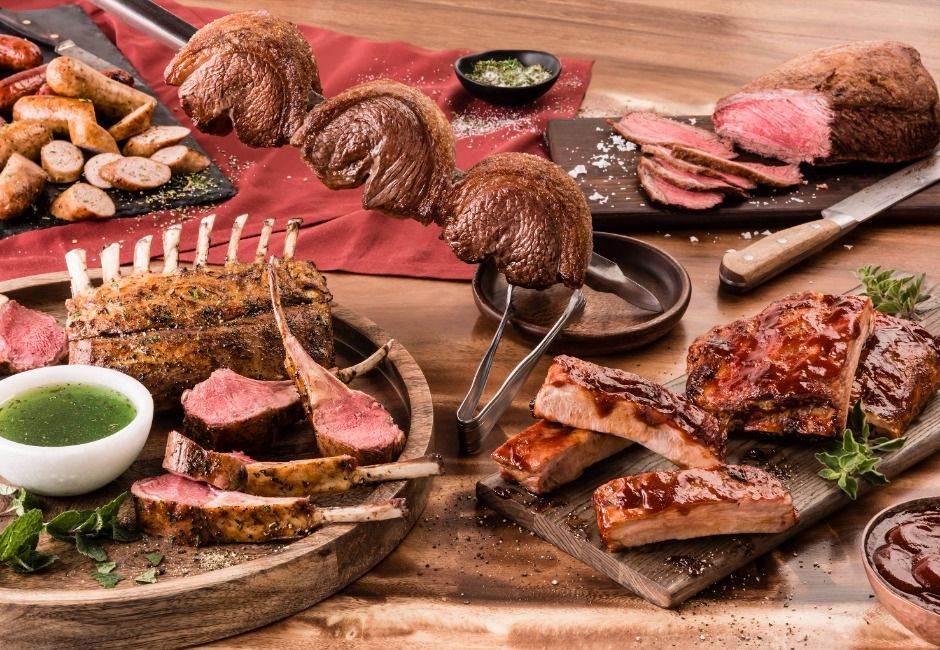
Located in Seocho-gu, Texas de Brazil Central City Branch offers 15 different types of churrasco—traditional Brazilian steak barbecue—and 50 varieties of Brazilian dishes. Churrasco refers to meat skewered on a 1.2-meter-long stick and grilled over hard charcoal, making it tender and juicy. The carver also comes to the guest’s table to slice—or "carve"—the meat portions according to the guest’s request. Not only is the food served here a treat for the palate, but for the eyes as well.
Terminal de Autobuses Expresos de Seúl (서울고속버스터미널 (경부/영동))
11.3Km 2021-05-20
Sinbanpo-ro 194, Seocho-gu, Seúl.
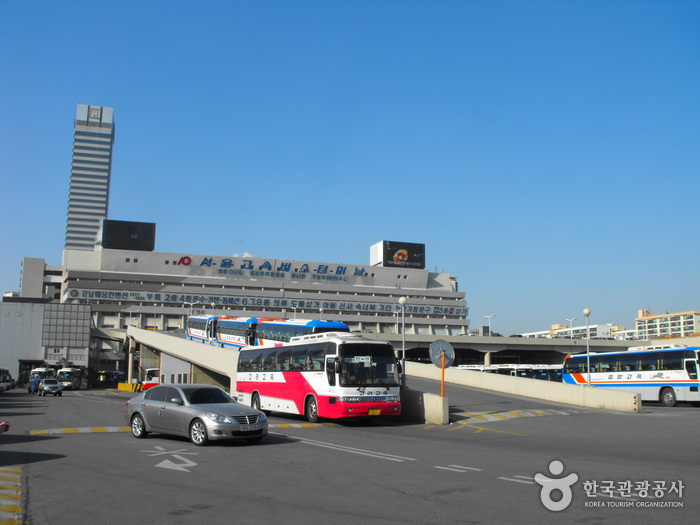
Situada en el barrio de Banpo-dong de Seúl, la Terminal de Autobuses Expresos de Seúl abrió sus puertas en octubre de 1981 y está conectada con las líneas 3, 7 9 del metro de Seúl. La mayoría de sus rutas son servicios expresos a las principales ciudades del país. El edificio se encuentra al este del centro comercial Shinsegae Central City.
 Español
 한국어
한국어 English
 日本語
日本語 中文(简体)
 Deutsch
 Français
 Русский


