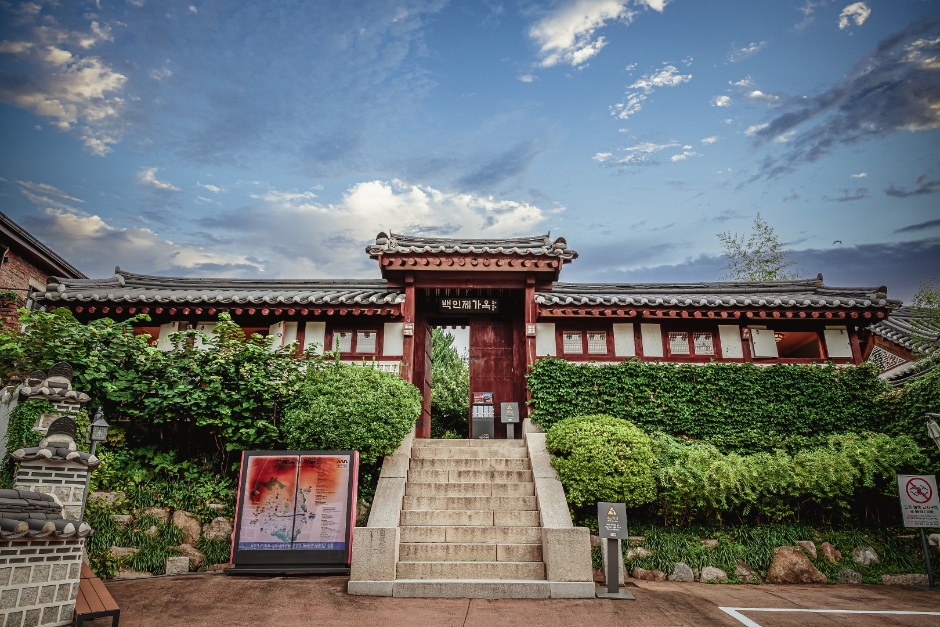
Residencia Baek In-je (백인제가옥)
2.5Km 2025-04-18
Bukchon-ro 7-gil 16, Jongno-gu, Seúl
La Residencia Baek In-je está situada en Gahoe-dong. Este edificio conserva el estilo moderno de hanok diseñado durante la colonización japonesa. En un terreno amplia de 2.460 ㎡, la vivienda cuenta con habitaciones y jardines alrededor del salón principal. También hay un pequeño espacio separado para el descanso. La casa mantiene la belleza tradicional del propio hanok con remodelaciones. Así, es una de las representaciones arquitectónicas más conocidas del barrio de Bukchon, junto con la Residencia Yoon Bo-seon.
Diversas características destacan la casa construida en pino negral, presentado por primera vez en Seúl durante la Exposición de Gyeongseong en 1907. Por ejemplo, la Residencia Baek In-je está compuesta por un pasillo que une el salón y las habitaciones, lo que es peculiar en comparación con el hanok clásico. Por otro lado, el pasillo al estilo japonés, la habitación con esteras, el empleo de ladrillos rojos y ventanas de cristal reflejan el paisaje de la época. Asimismo, el salón suele ser de un piso, pero está dividido en dos plantas en esta construcción. Siendo un patrimonio cultural, este lugar agrupa toda la hermosura de hanok, permitiendo contemplar del jardín al salón, del patio al interior de la casa y del trasero del inmueble separado.
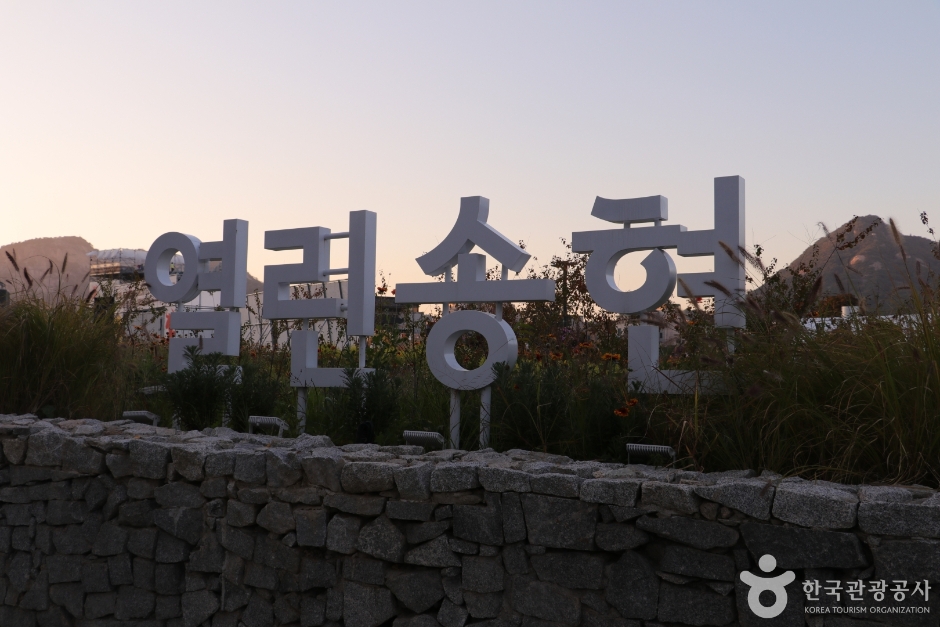
Parque Abierto Songhyeon (열린송현녹지광장)
2.5Km 2025-05-28
Songhyeon-dong 48-9, Jongno-gu, Seúl
El Parque Abierto Songhyeon es un espacio verde ubicado en el barrio de Songhyeon-dong, distrito de Jongno-gu, Seúl, muy cerca del Palacio Gyeongbokgung. Durante el período de ocupación japonesa (1910-1945), el sitio se utilizó como vivienda para el Banco Shokusan, y posteriormente como cuartel militar y de la embajada estadounidense, y fue devuelto al Gobierno coreano en 1997. Tras la devolución, quedó abandonado y rodeado por un alto muro; pero en 2022, la propiedad pasó a la Corporación Nacional de Vivienda de Corea y posteriormente al Gobierno Metropolitano de Seúl, abriéndose al público como el Parque Abierto Songhyeon. El espacio, destinado ahora para el descanso y la cultura, se puede ver desde la avenida Yulgok-ro, y está decorada con flores cosmos y zinnias. Dentro del parque hay un atajo que conecta el Palacio Gyeongbokgung y el barrio de Bukchon. No muy lejos se encuentran sitios turísticos destacados como Cheong Wa Dae, la Plaza Gwanghwamun, Insadong y el barrio de Bukchon.

Namsan Seoul Tower (남산서울타워)
2.5Km 2025-04-02
Namsangongwon-gil 105, Yongsan-gu, Seúl.
Abierta al público el 15 de octubre de 1980, la Torre de Seúl ha sido designada como una importante atracción turística, desde la que se puede tener una hermosa vista panorámica de Seúl. La Torre de Seúl, de 236,7 metros de altura, construida sobre el monte Namsan –de 243 m–, ha sido conocida como la mejor torre de Asia. Tras 30 años de apoyo ferviente de los turistas, fue remodelada el 9 de diciembre de 2005. La letra N significa “nuevo”, por su aspecto, y fue invertido un coste de construcción total de 15 mil millones de wones en dar a la Torre de Seúl su nueva apariencia. Con la construcción del nuevo sistema de alumbrado, varía en cada estación o evento. Además, la iluminación, con el tema de “La flor de Seúl”, tiene lugar desde las 19:00 hasta la medianoche, con el empleo de 6 reflectores distintos desde diferentes ángulos. El lobby cuenta con una Zona Multimedia, una Sala de Experiencia del Pabellón, salas de exhibiciones y salas de actuaciones. También hay el restaurante N Grill, de estilo occidental, que gira 360 grados cada 48 minutos, y el Sky Restroom que ofrece comodidad y vistas panorámicas de Seúl; ambos son ideales para parejas y amigos.
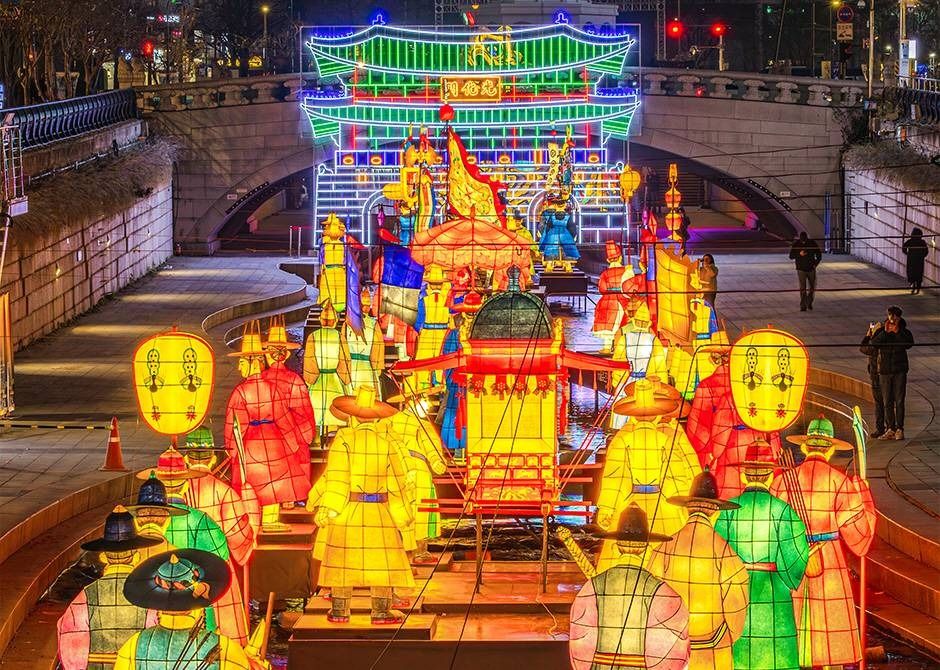
Festival de los Faroles de Seúl (서울빛초롱축제)
2.5Km 2025-12-31
Taepyeong-ro 1-ga 1, Jung-gu, Seúl.
02-3788-8168
Es un festival internacional de faroles realizado desde el año 2009 en pleno centro de Seúl. Este año, en la edición 2025-2026, habrá unas estructuras iluminadas sobre dos arroyos de la ciudad: Cheonggyecheon y Uicheon.
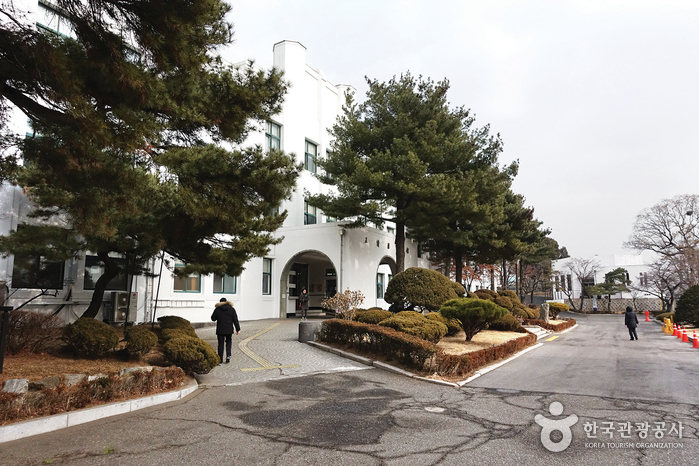
Biblioteca Jeongdok (서울특별시교육청 정독도서관)
2.6Km 2021-08-05
Bukchon-ro 5-gil 48, Jongno-gu, Seúl
La biblioteca fue fundada en el año 1977 en el antiguo Colegio Secundario Gyeonggi, ubicado en Bukchon de Jongno-gu, Seúl. Conserva aproximadamente 490.000 libros, 16.300 materiales no textuales, etc., y, en el edificio anexo podrá encontrarse con más de 12.000 materiales académicos. Su finalidad es contribuir en la educación y en el desarrollo cultural, ofreciendo información actualizada, fuentes de estudio y cultural a los ciudadanos de Seúl. Más allá de ofrecer el servicio de alquiler de textos y funcionar como un espacio de lectura, también realiza variedad de programas culturales; encuentro con autores, exposición fotográfica, club de lectura, teatro de marionetas, concierto musical, espectáculo de danzas, etc. La otra gran diversión de la biblioteca es la función de películas.
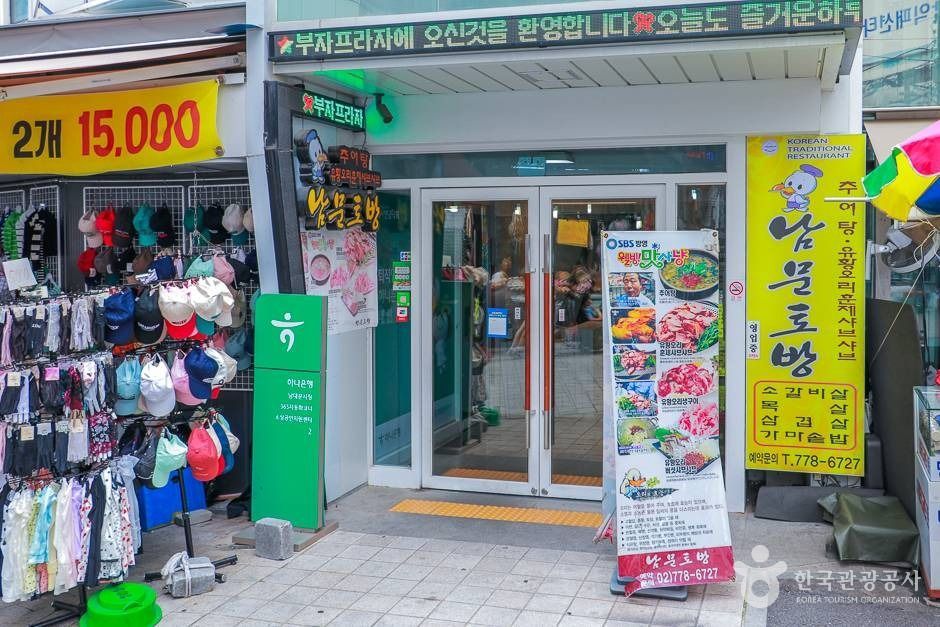
Nammun Tobang (남문토방)
2.6Km 2026-01-05
45-3, Namdaemunsijang-gil, Jung-gu, Seoul
This restaurant offers customers loach soup in Gyeongsang-do style and fried loach. Smoked duck shabu shabu and vegetables, as well as Smoked duck casserole are also a good choice.
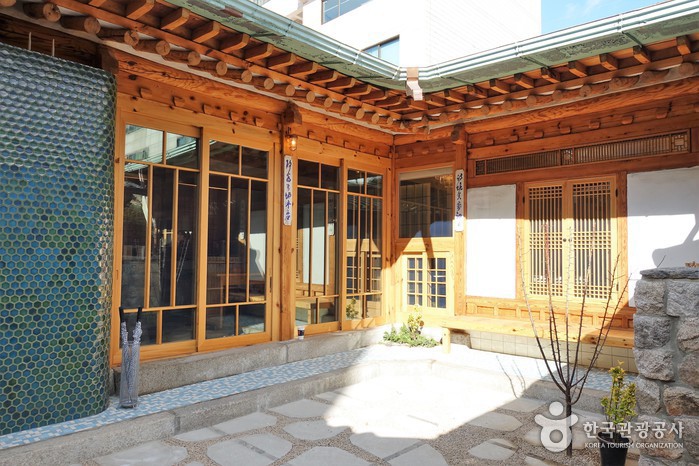
Hyehwa1938 / 혜화1938
2.6Km 2025-08-12
7, Sungkyunkwan-ro 16-gil, Jongno-gu, Seoul
Located in (no suggestions)-dong of Seoul, Hyehwa 1938 is a lodging facility which is based on the remodeling of an 80-year- old traditional Korean house. A traditional Korean house expert initially wanted to use it as an office but later decided to turn it into a guest house due to its large size. As a result, the unique beauty of traditional Korean house was revived while improving practicality. The Woojeong room and Sarang room are now resized to accommodate max 8 persons which used to be only max 4 in the past. Despite the remodeling, the aura and atmosphere of the traditional Korean house is well preserved. Inside the room, you can see that the chandelier of the rich house in the '30s are accompanied by modern furniture and electronics which maintain unique harmony. Open the windows to see sansuyu and maehwa along with other various seasonal trees with beautiful colors and also the space such as edges and sewers are well arranged to avoid any discomforts with your eyesight. The heart of architecture offers only two rooms for guests, and you are all welcome to enjoy the true beauty of Korea.
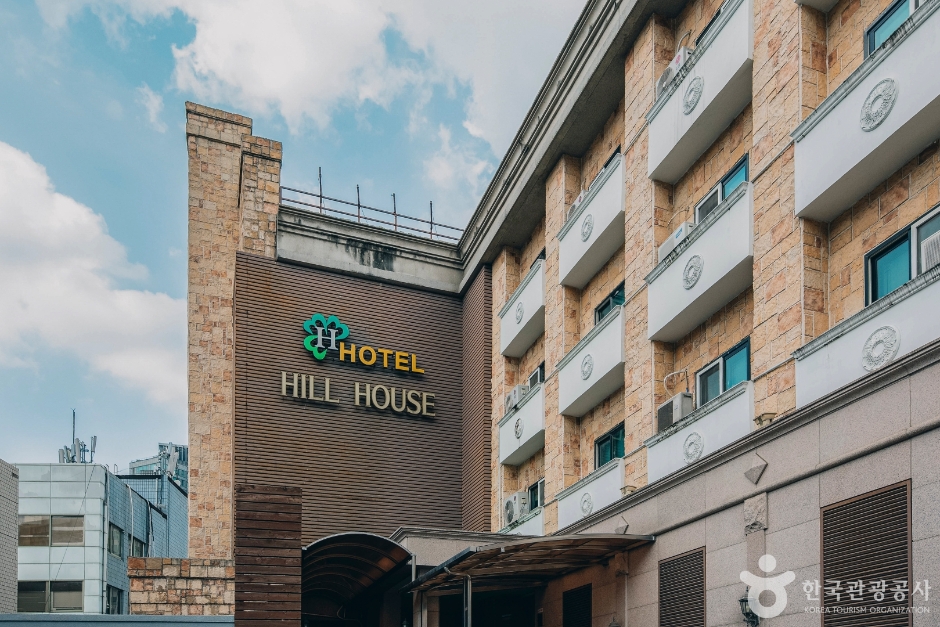
Hill House Hotel (힐하우스 호텔)
2.6Km 2025-10-23
42, Sogong-ro 3-gil, Jung-gu, Seoul
Hill House Hotel is a business hotel located at the foot of Mt. Namsan Park in Seoul. The hotel opened in 2006 with 40 rooms in all. There are various types of rooms including double room, twin room, deluxe twin room, and suite room. The hotel is earning raves for the neat and clean condition of its rooms. In particular, the hotel is ideal for travelers who prefer quiet accommodations since it is located in a residential area.
The room offers various amenities. Free Internet is available in all rooms, and a notebook PC is available for use at the communal space in the lobby. Complimentary breakfast of toast, coffee, cereal, etc. is offered. There is a communal microwave in the cafeteria, too. A baggage counter is also available for customers’ convenience.
The hotel offers easy access to public transportation, being located near Subway Hoehyeon Station, Seoul Station, and Myeongdong Station. You can visit Namsan Seoul Tower, Namdaemun Market, etc. on foot. Myeongdong is a mere 10-minute walk from Namdaemun Market. With large department stores and duty-free shops, Myeongdong is a hot place for foreign travelers. The hotel is also near Cheonggyecheon, so it is recommended to travelers who want to enjoy a tour of downtown Seoul.
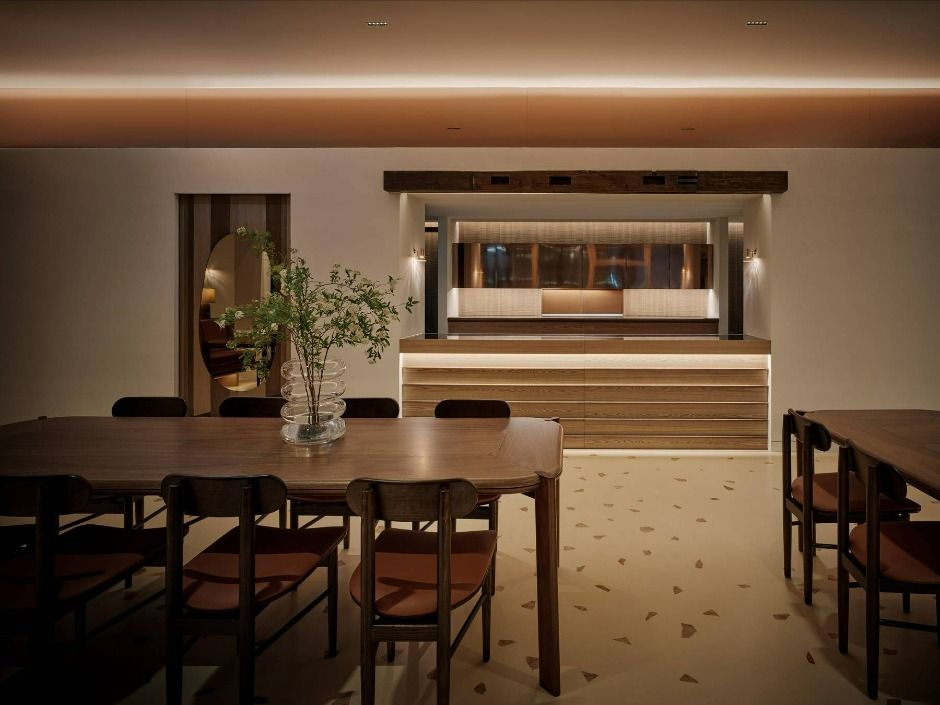
Mallijihwa Main Branch (만리지화 본점)
2.6Km 2025-11-27
17, Jong-ro 3-gil, Jongno-gu, Seoul
Mallijihwa, which embodies the meaning "eel that travels 10,000 ri and met fire," is an eel dining brand that modernizes the depth of Korean gastronomy. The restaurant's name was inspired by the eel's remarkable strength to swim across vast oceans to its spawning grounds—so significant that it is referred to as "malli fish" in the "Donguibogam" ("A Precious Mirror of Eastern Medicine"). Hence the name, Mallijihwa specializes in serving grilled eel, which is carefully grill with briquettes. The restaurant reinterprets eel with Korean aesthetics, offering a comfortable and elegant dining experience in a space that blends traditional architectural elements with a modern twist. The dishes served here offers an outstanding dining experience where the texture of the eel melts in one's mouth, and its flavor lingers long after. Signature dishes include grilled eel rice bowls, grilled eel, eel gujeolpan (platter of nine delicacies), and eel meal courses. The restaurant also offers seasonal lunch box made with fresh, seasonal ingredients.
Modern Shabu House Gwanghwamun D Tower Branch (모던샤브하우스 광화문D타워점)
2.6Km 2025-12-03
17, Jong-ro 3-gil, Jongno-gu, Seoul
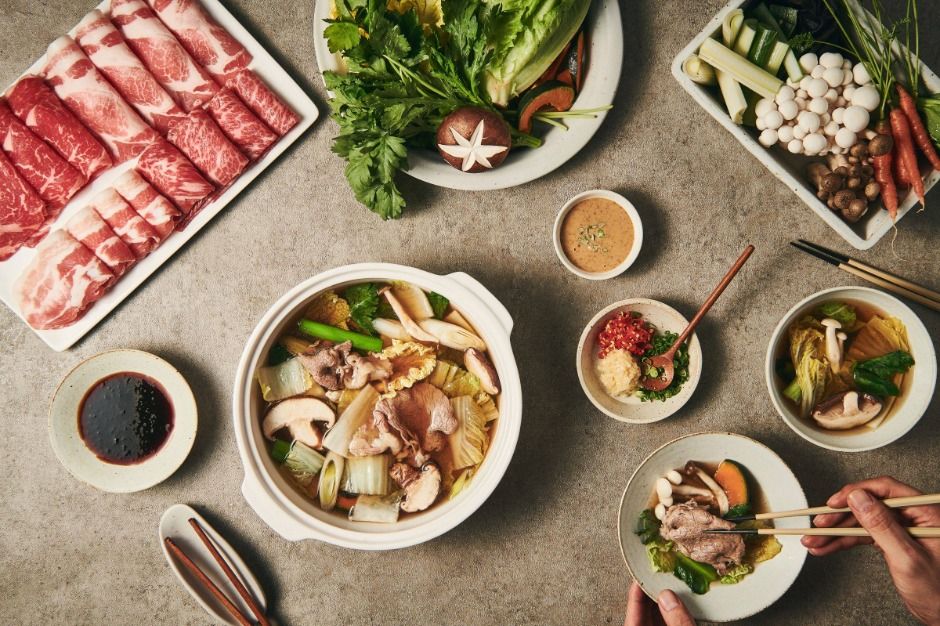
Located in Jongno-gu, Modern Shabu House Gwanghwamun D Tower Branch offers a selection of specialty broths to enjoy unlimited beef, pork, and vegetables. The restaurant serves four cuts of pork and beef in every course. The interior is designed with natural materials like earth, stone, and wood, inspired by the fluid process of cooking ingredients like meat and vegetables in a pot. The design reflects the natural movement and flow of ingredients as they cook together. The restaurant also has a range of private rooms, making it a popular choice for families with children and for gatherings, providing a comfortable dining experience.
 Español
 한국어
한국어 English
 日本語
日本語 中文(简体)
 Deutsch
 Français
 Русский


