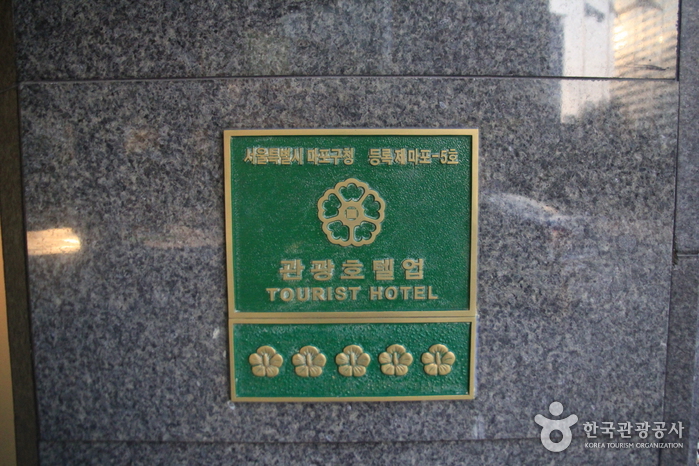
Lotte City Hotel Mapo (롯데시티호텔 마포)
3.3Km 2025-10-23
109, Mapo-daero, Mapo-gu, Seoul
Lotte City Hotel Mapo is a premium business hotel that opened on March 10, 2009. Conveniently located near Myeongdong, Seoul Station, Hongdae, and Yeouido, it has easy access to public transportation including the airport railroad to Incheon International Airport and Gimpo Airport. The hotel provides 5-star hotel facilities at reasonable prices. The 284 guestrooms include 100 twin rooms, 182 double rooms, and 2 ondol rooms, while the subsidiary facilities include a swimming pool, a gym, and a business center equipped with free internet service, a fax machine, a copy machine, a printer, and stationary. The double rooms feature a spacious workplace for business travelers, while twin rooms have a luxurious and comfortable interior. The family twin rooms are for family travelers, and ondol rooms provide a chance for visitors to experience the traditional Korean lifestyle. The buffet-style hotel restaurant ‘Naru’ features an elegant ambience and fresh dishes cooked at its open kitchen.
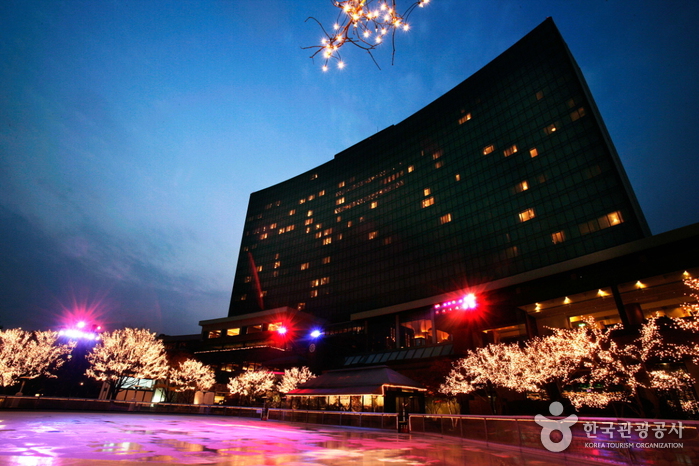
Pista de Patinaje sobre Hielo del Grand Hyatt Seoul (그랜드하얏트 서울 아이스링크)
3.3Km 2021-03-23
Sowol-ro 322, Yongsan-gu, Seúl
La hermosa pista de patinaje sobre hielo del Hotel Grand Hyatt ha aparecido en varios anuncios y dramas televisivos coreanos. Es particularmente popular entre las parejas, ya que las maravillosas luces de la pista, la vista nocturna de la ciudad y la música suave la hacen muy romántica.
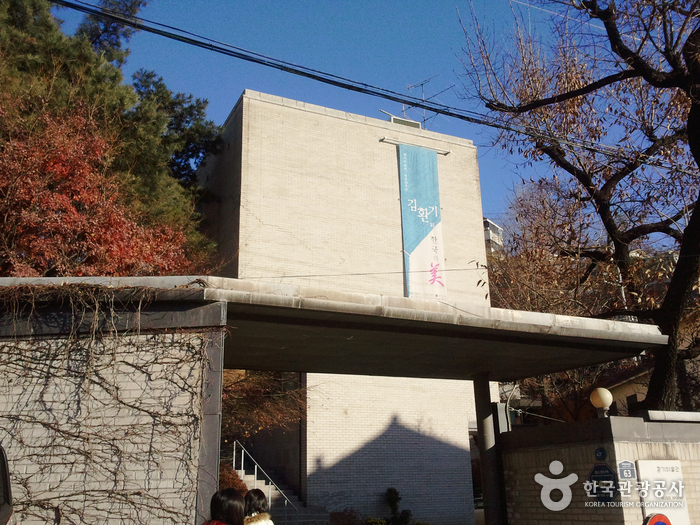
Museo Whanki (환기미술관)
3.3Km 2021-05-21
Jahamun-ro 40-gil 63, Jongno-gu, Seúl
La Fundación Whanji inauguró el Museo Whanki en 1992 en honor al pintor Kim Whanki (1931-1974). El museo posee alrededor de 300 piezas de Kim Whanki, así como realizar diversas exhibiciones especiales sobre el arte contemporáneo y otros eventos, además de exposiciones permanentes de las obras de Kim Whanki. Con dichas actividades, el Museo Whanki se esfuerza por recordar el valor del pintor Kim y sus influencias, y desarrollar más el arte coreano.
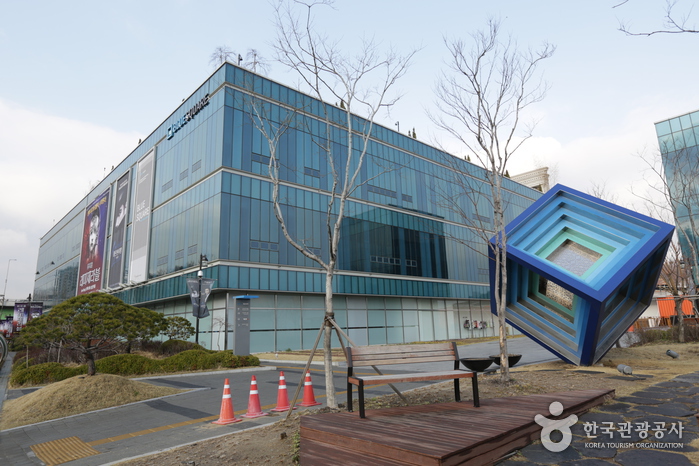
Blue Square (블루스퀘어)
3.5Km 2021-03-25
Itaewon-ro 294, Yongsan-gu, Seúl
Blue Square es un complejo cultural construido por Interpark Group para dar apoyo a las artes escénicas. Abrió en noviembre de 2011, convirtiéndose en la mayor sala de actuaciones de arte de Corea. Tiene un teatro con 1.726 butacas, una sala de conciertos con 1.400 butacas y espacio de pie para 3,000 personas, y dos grandes teatros.

Wan Chai (완차이)
3.5Km 2026-01-05
50-7, Myeongmul-gil, Seodaemun-gu, Seoul
Wan Chai is a Chinese restaurant with a name meaning "spicy," and is a must-visit for those who love spicy food. Rather than the original spicy Chinese Sichuan cuisine, a small amount of Korean spices have been added to create even better tasting dishes. The most popular item on the menu is a large plate of reddened mussels known as the Extra Spicy Stir-fried Mussels. The dish is a mixture of spicy red peppers, garlic, and spicy sauce, stir-fried to perfection. Many customers also come in for the gul jjamppong (spicy noodle soup with oysters). Even the jajangmyeon (noodles in black bean sauce) tastes great here, with clean-tasting black soy bean sauce. Finally, for dessert, lychee is served, a unique treat to finish off a meal at Wan Chai.
Museo de Arte Leeum (리움 미술관)
3.5Km 2024-08-05
Itaewon-ro 55-gil 60-16, Yongsan-gu, Seúl.
Situado sobre el monte Namsan, con vistas al río Hangang, el Museo de Arte Leeum se compone de tres espacios que representan el arte y la cultura del pasado, presente y futuro. También se encuentran el Centro de Educación y Cultura de los Niños de Samsung.
El museo también tres edificios: Museo 1, concebido por el arquitecto suizo Mario Botta según los motivos de la porcelana tradicional y dedicado al arte tradicional coreano; Museo 2, realizado por el arquitecto francés Jean Nouvel con diseños y materiales innovadores y consagrado al arte contemporáneo; y el Centro de Educación y Cultura de los Niños, concebido por el arquitecto holandés Rem Koolhaas. Así, estos tres edificios, construidos con diversos materiales y técnicas innovadoras representan los diferentes estilos de cada arquitecto, están dotados en sí mismos de valores artísticos.
Si el Museo 1 muestra la belleza de la porcelana coreana con telas que simbolizan la tierra y el fuego, el Museo 2 utiliza aceros oxidados y cristales por primera vez en el mundo. El Centro de Educación y Cultura de los Niños, que parece flotar en el aire al utilizar hormigón negro, representa un espacio futurista. En el Museo 1 se exponen obras representantes del arte tradicional coreano. La sala de exposiciones permanente presenta cerca de 120 piezas representativas de la colección del museo sobre cuatro pisos, y se compone de diferentes secciones: Goryeo Cheongja (celadón azul de la dinastía Goryeo), Buncheongsagi y Baekja (porcelana blanca) de la dinastía Joseon, pinturas, caligrafías, arte budista y artesanía del metal. La colección del museo está considerada como la mejor de Corea tanto por su calidad como por su cantidad.
El Museo 2 alberga alrededor de 70 obras, que recogen obras representantes del arte del país desde 1910 y las del arte contemporáneo de otros países desde 1945. Entre estas obras se encuentran las de artistas que abrieron nuevos horizontes al arte moderno: Alberto Giacometti, Francis Bacon, Mark Rothko, Joseph Beuys y Andy Warhol. Usted podrá encontrar también obras de artistas que forman parte de las corrientes principales del arte contemporáneo como Damien Hirst o Mattew Barney. El museo gestiona también un instituto de conservación y de archivos de arte coreano con el fin de restaurar el patrimonio del país.
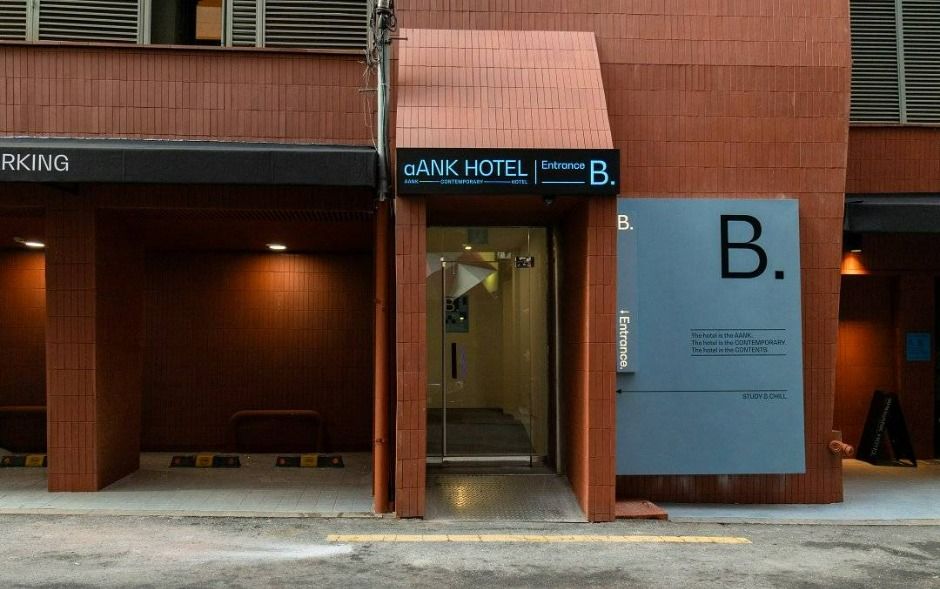
The Hyoosik Aank Hotel Sinchon (더휴식 아늑호텔 신촌점)
3.6Km 2025-04-11
49, Yonsei-ro 2-gil, Seodaemun-gu, Seoul
The Hyoosik Aank Hotel Sinchon welcomes guests with a neat and modern atmosphere. Each room is tailored to suit every guest's need with comfort as the main priority. The hotel's room types include a standard room, music room, multi-room equipped with Playstation 4, PC room, creative illust room equipped with a drawing tablet, creative piano room, and a business room. The hotel also has a parking lot, guest lounge, coin laundry, and a ping pong table.
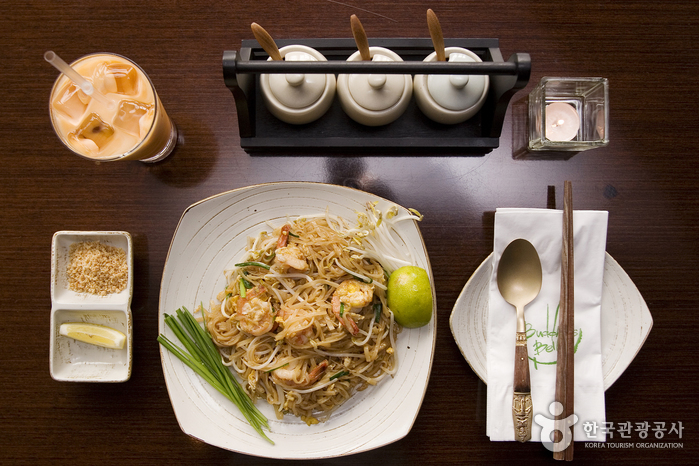
Buddha's Belly - Itaewon Branch (부다스벨리 이태원)
3.6Km 2025-05-14
48, Noksapyeong-daero 40-gil, Yongsan-gu, Seoul
+82-2-796-9330
It is a Thai food specialty store located in Itaewon. This restaurant's signature menu is som tam. This Western dishes restaurant is located in Yongsan-gu, Seoul.
Gungnara Naengmyeon Mukbap (궁나라냉면묵밥)
3.6Km 2025-08-01
6, Jibong-ro 12-gil, Jongno-gu, Seoul
Gungnara Naengmyeon Mukbap originally opened in Ansan, serving up delicious meals of naengmyeon and mukbap. The restaurant became popular, and eventually moved to its current location in Seoul. The jiggly acorn jelly goes well wit the sweet and sour broth in mukbap, a favorite summer-time dish. Visitors can also order the dish with a warm broth for a delicious and healthy dish year round.
Suyeonsanbang (수연산방)
3.6Km 2024-07-19
8, Seongbuk-ro 26-gil, Seongbuk-gu, Seoul
Suyeonsanbang, a traditional Korean tea house located in Seongbuk-dong, was originally the house where the late Korean author Lee Tae-Jun wrote many of his books. Now, his estate has opened Suyeonsanbang’s doors to the public in the form of a charming and peaceful tea house. Famous for its savory tea, beautiful nature, and rich history, Suyeonsanbang has been covered by a variety of foreign media outlets like NHK (Japan), BBC (UK), French TV channels, and numerous Japanese magazines. To take a break during the summer heat, visitors come to Suyeonsanbang to try their patbingsu (shaved ice with red beans), one of its summer specialties. So come relax and be inspired in this traditional Hanok tea house.
 Español
 한국어
한국어 English
 日本語
日本語 中文(简体)
 Deutsch
 Français
 Русский


