Marine Adventure Park (마린어드벤처파크)
4.5Km 2025-01-06
727 Taejong-ro, Yeongdo-gu, Busan
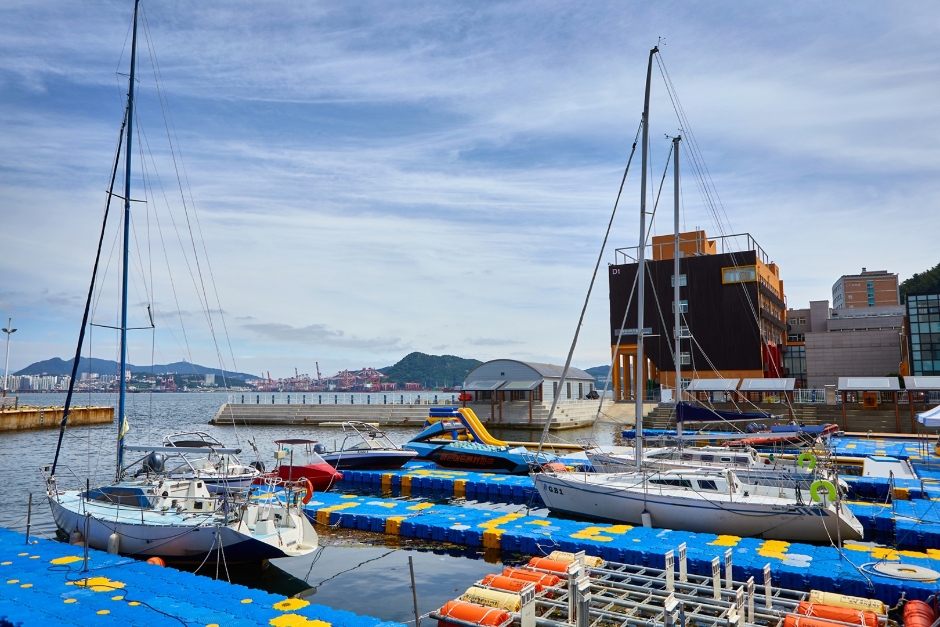
Marine Adventure Park is a park where visitors can enjoy thrilling marine sports on the blue sea of Busan. The jet boat, which sails the sea with 440 horsepower, is famous for its exhilarating speed and 360-degree turns. Moreover, round boats driven by jet skis and marble boats for four people constantly turn and shake the passengers off balance. Visitors can also enjoy SUP yoga on a stand-up paddle board on the sea. Packages consisting of two or three activities are cheaper than regular prices.
Sarangbang (사랑방)
4.6Km 2024-12-27
816 Taejong-ro, Yeongdo-gu, Busan
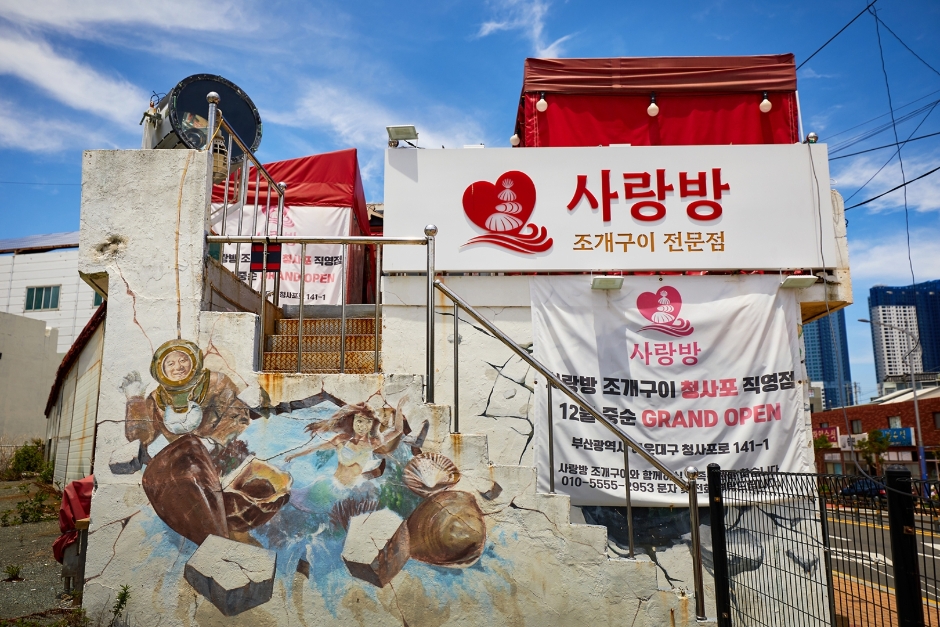
Sarangbang is a grilled seafood restaurant located in Taejongdae. The upstairs has an outdoor seating designed like a food stall. The restaurant also has a three-tiered fish tank on display inside with clams, abalones, and shells, so visitors can see how fresh they are. Various seafood such as clams, scallops, and shrimps are served on a three-tier tray. The ingredients are well prepared and served with instructions on how to eat them. If eating the seafood is not enough, visitors can opt to order Sandeomi Seafood Ramyeon.
Uam-dong Urban Forest (우암동 도시숲)
4.6Km 2025-04-10
6-6 Donghang-ro 106beonga-gil, Nam-gu, Busan
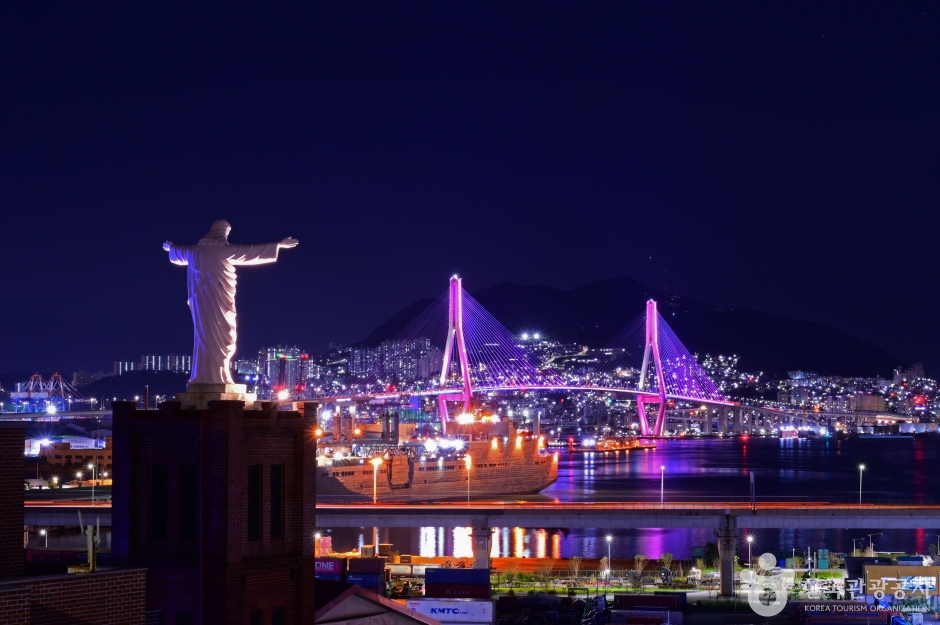
Uam-dong Urban Forest is famous for its exotic view of the Jesus Christ statue of Donghang Cathedral, which resembles the Christ the Redeemer statue in Rio de Janeiro. It offers a stunning panoramic night view of Busan, spanning the Yeongdo Sea and Busan Harbor Bridge, along with a moon installation photo zone where visitors can take striking silhouette pictures. It is a perfect place to enjoy the beautiful views, snap memorable photos, and relax in the small green forest.

Amnam-Park (암남공원)
4.7Km 2025-07-18
Die großartigen Aussichten auf die prächtigen Klippen und die mit Bäumen gesäumte Küste vom Amnam-Park lassen das blau-grüne Wasser mit der bewaldeten Landschaft verschmelzen.
Nach der Erklärung zum Schutzgebiet war der Zutritt zu diesem Gebiet verboten, bis es schließlich 1996 wieder der Öffentlichkeit zugänglich gemacht wurde, und Besucher zum ersten Mal die unberührte Landschaft erleben konnten.
Im Park kann man heute angeln, ein Observatorium besuchen und sich an Spazierwegen und einer erhabenen Brücke erfreuen. Die Fülle an Pinien entlang der Wege machen es zu einem angenehmen Spaziergang; auf dem Weg hinauf zum Observatorium bietet dieses gut beforstete Gebiet großartige Aussichten. Wenn Sie angeln möchten, können Sie dies auf dem Meer oder von den fantastisch geformten Felsen aus tun.
Es gibt eine berühmte Straße vom Songdo-Strand zum Amnam-Park, die beliebt ist für sehr gemütliche Fahrten. Die Fahrt dauert etwa 5 min., wenn Sie zu Fuß gehen wollen, brauchen Sie etwa 20 Minuten.
Taejongdae Cliffed Coast [National Geopark] (태종대 (부산 국가지질공원))
5.3Km 2024-04-26
24 Jeonmang-ro, Yeongdo-gu, Busan
Taejongdae Cliffed Coast was formed by many layers of rock being forced together beneath a lake during the Cretaceous period, and then worn away over time by the sea. The coast features many geological formations, including sea caves and uniquely shaped rocks. Visitors can enjoy walking on the forested paths, or take the train course to easily access Taejongdae Observatory and Yeongdo Coastal Culture Space.
Korea Medical Institute Busan Branch ((재)한국의학연구소 부산분사무소)
5.4Km 2025-10-23
5F, 14 Jobang-ro, Dong-gu, Busan
Korea Medical Institute (KMI), a leader in 'K-health checkups,' operates health checkup centers across eight locations nationwide, from Seoul to Jeju. KMI has been striving to prevent and detect diseases early. It has led the popularization of comprehensive medical examinations in Korea. Based on 42 years of accumulated data and expertise, KMI has enhanced its capabilities in health checkups, services, and brand value.
By utilizing its diagnostic data accumulated over the years, KMI provides accurate test results and follow-up care promptly.
KMI will stay committed to becoming a lifetime health management partner and 'K-health checkup' leader by leveraging its excellence in Korean medicine, beyond health checkups for foreign patients.
Busan Citizens Hall (부산시민회관)
5.4Km 2021-06-03
16, Jaseong-ro 133beon-gil, Dong-gu, Busan
+82-51-630-5200
Busan Citizens' Hall has the longest history of all public cultural spaces in Korea, having opened on October 10, 1973. The hall consists of a 1,606-seat grand theater, 407-seat small theater, art galleries, an art shop, cafeteria, and other amenties.
Good Moonhwa Hospital (좋은문화병원)
5.5Km 2025-10-23
119 Beomil-ro, Dong-gu, Busan
Good Moonhwa Hospital is a general hospital that has been in operation since 1978. It has 22 departments and 23 specialized medical centers, including a Gynecologic Cancer Center, an Infertility Center, a Natural Childbirth Center, a Neonatal Intensive Care Center, a Gastroenterology Endoscopy Center, an Artificial Heart Center, and a Breast & Thyroid Center.
Hocheon Village (호천마을)
5.8Km 2025-04-10
491 Eomgwang-ro, Busanjin-gu, Busan
Located in the Busanjin-gu district of Busan, the Hocehon Village is famous for its colorful houses, which provide a stunning backdrop for photos. As the night dawns, the warm-lamps-lit streets with colorful houses create a romantic atmosphere, making it one of the top places to visit for night views. The village became well known after getting featured in various dramas and movies, including the popular drama “Fight My Way (2017).” Another highlight of Hocehon Village is the 180-step staircase adorned with a stunning fish mural. The Hocheon Village Cultural Platform at the Village provides residents and creators with opportunities to sell their products and participate in cultural experiences and educational activities.
Busan Cultural Center (부산문화회관)
5.8Km 2021-08-06
1, UN pyeonghwa-ro 76beon-gil, Nam-gu, Busan
+82-51-607-6000
Busan Cultural Center began construction in October 1983 and finished constructing three halls in 1993. In April 2010, the cultural center underwent renovations and reopend in October. The architecture format used traditional Korean houses with a large, medium, and small halls. Large gates and walls were removed to allow easy access. The roof used concrete slabs to recreate traditional patterns and the exterior walls are made of granite stone.
 English
 한국어
한국어 日本語
日本語 中文(简体)
 Deutsch
 Français
 Español
 Русский


