Hanbando Raft Village (한반도 뗏목마을)
13.1Km 2024-01-09
70 Seonam-gil, Hanbando-myeon, Yeongwol-gun, Gangwon-do
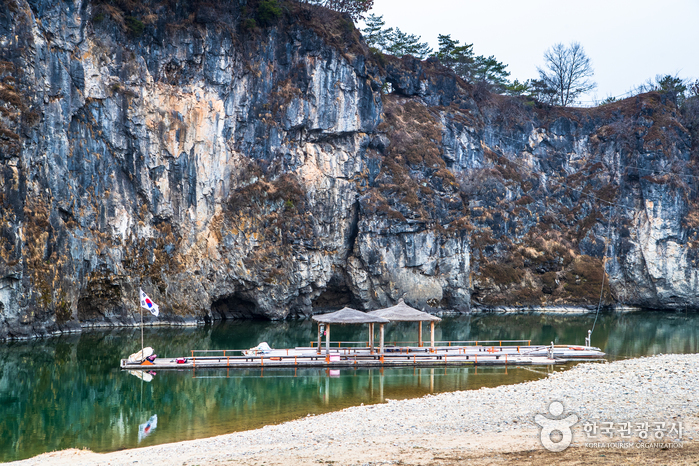
The Hanbando Raft Village is a raft experience center in Seonam Village, Ongjeong-ri, famous for its topography in the shape of the Korean Peninsula. It takes about 30 minutes to go back and forth on a raft from the east coast of the Mini Korean Peninsula to the west coast. While riding the raft, the boatman tells the story of the topography of the Mini Korean Peninsula and the fish living here. It is available from spring to autumn. In addition, various raft experiences are under operation, such as the Seogang Underwater Surveyor, a remodeled rafting boat that allows you to clearly view the underwater scenery.
Hanbando Electric Kart Experience Center (한반도 전기카트 체험장)
13.5Km 2024-01-09
63-33 Ansaenae-gil, Hanbando-myeon, Yeongwol-gun, Gangwon-do
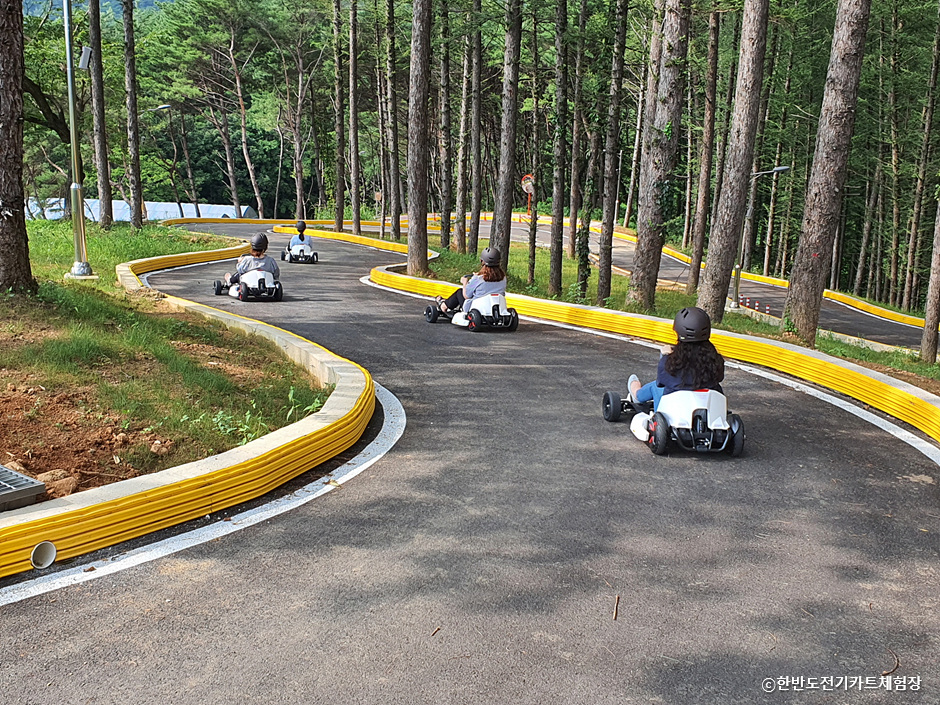
Hanbando Electric Kart Experience Center is Korea's first outdoor electric go-kart experience center using renewable energy. It is located in a pine forest in Sincheon-ri, Hanbando-myeon. All facilities and tracks, including helmets and karts, are kept clean and safe, allowing anyone to enjoy driving once they follow simple operation methods and precautions. Stretched pine trees lining up next to the winding track double the speed and coolness. Solar power, a renewable energy source, was installed in the experience center to preserve the pristine wetlands and pine forests. Feel the dynamic eco-friendly speed in clean nature!<Br> * Minimum driver x_height is 130 cm
Taksajeong Pavilion (탁사정)
13.8Km 2024-02-26
478 Jewon-ro, Bongyang-eup, Jecheon-si, Chungcheongbuk-do
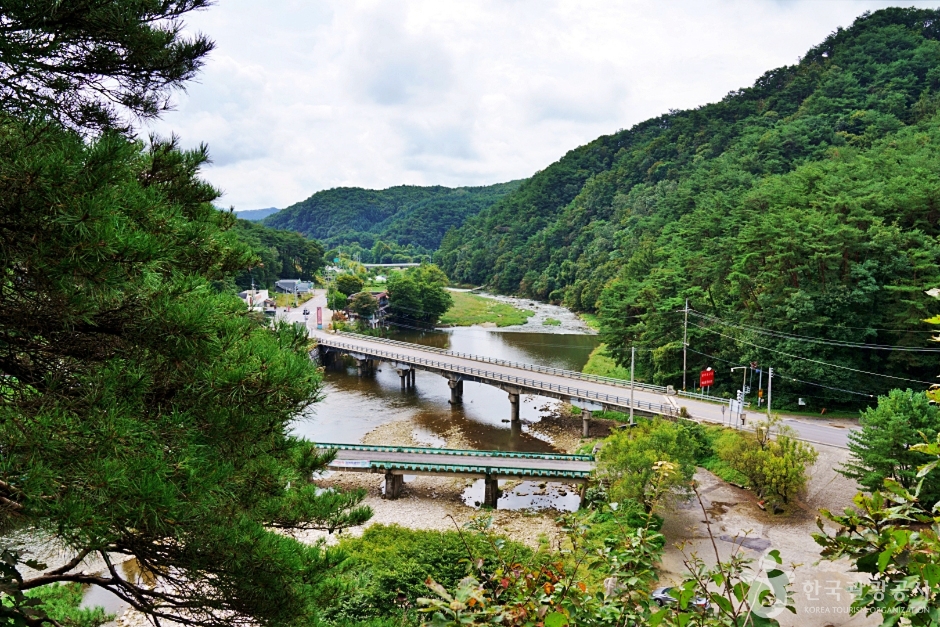
Taksajeong Pavilion, located at the bend of Jecheon Stream in the valley, is celebrated for its picturesque scenery of clear water, sand, and pine trees. It's believed that these pine trees were transported from Jeju Island in the 16th century. The combination of a cool valley breeze, the stream's vivid blue, and a quaint waterfall, alongside the ancient pine trees, creates a serene harmony. This spot is also well-known as a favorite camping site in Jecheon.
Cheongpung Land (청풍랜드)
14.7Km 2024-07-02
6, Cheongpungho-ro 50-gil, Jecheon-si, Chungcheongbuk-do
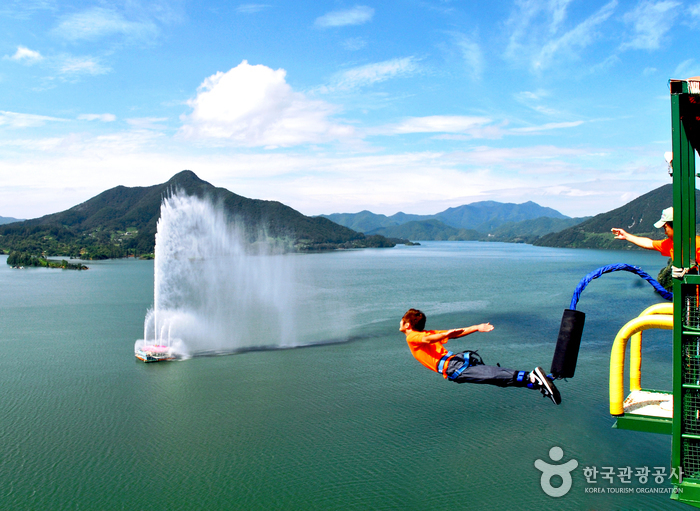
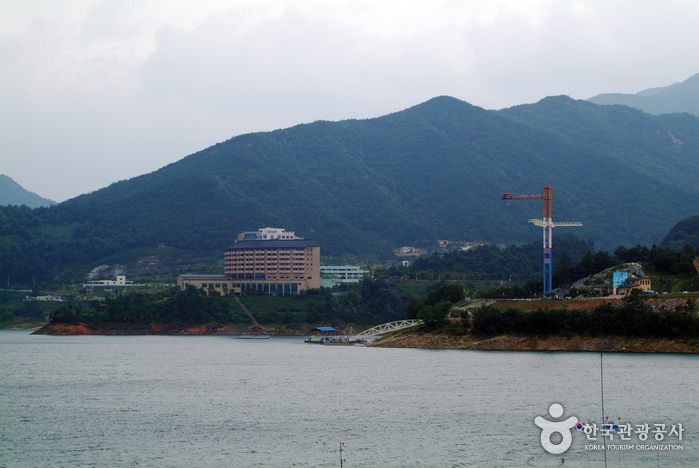
Cheongpung Land was created in 2002 near Chungjuho Lake in Cheongpung-myeon, Jecheon-si, Chungcheongbuk-do. It features beautiful scenery and the maximum use of practical space to build Korea’s first multi-tower. Based on planning, constructing, and test runs, it is operated by Over Class Inc. which is cosigned by Jecheon-si. The multi-tower’s three main facilities are a 62-meter Bungee Jump, Korea’s first-ever Ejection Seat, and Big Swing. The bungee jump highlights safety by adding a safety line to the gear to prevent falling accidents caused by breaking of the bungee cord rubber.
Cheongpung Land (청풍랜드)
14.8Km 2025-07-09
San 26, Gyo-ri, Cheongpung-myeon, Jecheon-si, Chungcheongbuk-do
+82-43-648-4151
Cheongpung Land est un parc de loisir créé en 2002 près du lac de Cheongpunghoban (lac de Chungjuho à Cheongpung-myeon, Jecheon-si dans la province du Chungcheongbuk-do. Le parc accueille trois attractions pleines de sentations fortes : une tour de saut à l’élastique haute de 62 mètres, le tout premier siège éjectable de Corée et « Big Swing », une expérience à gravité nulle. On peut également y admirer des geysers d’eau jaillissant à 162 mètres dans l’air, ainsi qu’une vue panoramique sur le paysage environnant.
Le parc est l’une des plus grandes attractions touristiques de la région, et se trouve non loin d’autres destinations populaires, comme le site de tournage du drama historique de KBS « Daejo Wangeon », le mont Geumsusan et le parc national de la montagne Woraksan.

Jecheon Baengnyeonsa Temple (백련사(제천))
15.0Km 2021-10-25
414, Myeongam-ro 5-gil, Jecheon-si, Chungcheongbuk-do
+83-43-653-4996
Baengnyeonsa Temple is located at the foothills of Gamaksan Mountain in Jecheon, Chungcheongbuk-do. The temple is currently composed of the main hall Daeungjeon, Samseonggak Shrine, Muyeomdang Hall, Boeungmun Gate, and residential houses. Daeungjeon Hall enshrines a wooden statue of a sitting Buddha, is an artifact from the Joseon period (1392-1910).
The history of the temple dates back to 662 (the second year of King Munmu’s reign during the Silla Kingdom), when a small shrine called Baengnyeonam Hermitage was built by the great monk Uisang on the east side of Baengyeonji Site. The temple has been reconstructed and restored numerous times throughout the course of several wars. The temple once encompassed many branch temples and shrines such as Mireuksa, Sinheungsa, Cheonsuam, Eunjeokam, and Cheongnyeonam, but only their foundation sites remain today.
Jeongbangsa Temple (정방사)
15.2Km 2021-11-10
165, Oksunbong-ro 12-gil, Jecheon-si, Chungcheongbuk-do
+82-43-647-7399
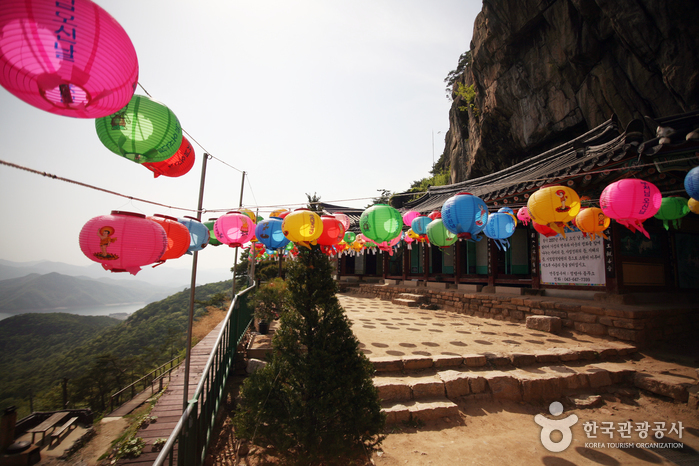
Located on a ridge of Sinseonbong Peak (845 meters) nearby Geumsusan Mountain, Jeongbangsa Temple was founded by Buddhist Monk Uisang in the second year (662) of King Munmu’s reign during the Silla dynasty. Jeongbangsa Temple is a branch of Beopjusa Temple located on Songnisan Mountain and is a well known oratory amongst Buddhists. The temple offers fantastic views of Cheongpungho Lake that are said to calm and clear the mind. A unique feature of this temple is the mountain wall making up a portion of the temple roof.
![JOGYUNDANG [Korea Quality] / 조견당[한국관광 품질인증]](http://tong.visitkorea.or.kr/cms/resource/33/2652633_image2_1.jpg)
JOGYUNDANG [Korea Quality] / 조견당[한국관광 품질인증]
15.6Km 2024-07-24
27, Gogaok-gil, Jucheon-myeon, Yeongwol-gun, Gangwon-do
+82-33-372-7229
Located in Jucheon-myeon, Yeongwol-gun, Gangwon Province, Jogyeondang (House of Kim Jong-gil) is a traditional “hanok” stay. The nine rooms of the house follow the traditional “hanok” format. Anchae, the inner building with nearly 200 years of history, is dignified and elegant as befitting of its age. The majestic rafters of the building were built from 800-year-old trees, and the “daecheongmaru” raised floor has a sheen from years of care. Sarangchae and Byeolchae, restored in 2007 and 2009, respectively, make up for their relative lack of historical weight with freshness and convenience. The Inner Sarangchae faces the Anchae and the courtyard, while the Outer Sarangchae connects to a space with floor tables, cushions, and bookcases for drinking tea or reading. Guests staying in the three rooms in the Outer Sarangchae and the Anchae Geonneonbang rooms must use a shared bathroom, while other rooms come with private bathrooms. The uniqueness of Jogyeondang lies in its extensive cultural program, which ranges from tea ceremonies to soirees in the historical building. The complex’s manager has many stories to tell about the history of the house and its construction. Breakfast is also available upon reservation and payment, and English and Chinese services are provided for international visitors.
Cheongpung Cultural Heritage Complex (청풍문화재단지)
15.8Km 2022-12-26
2048, Cheongpungho-ro, Jecheon-si, Chungcheongbuk-do
+82-43-641-5532
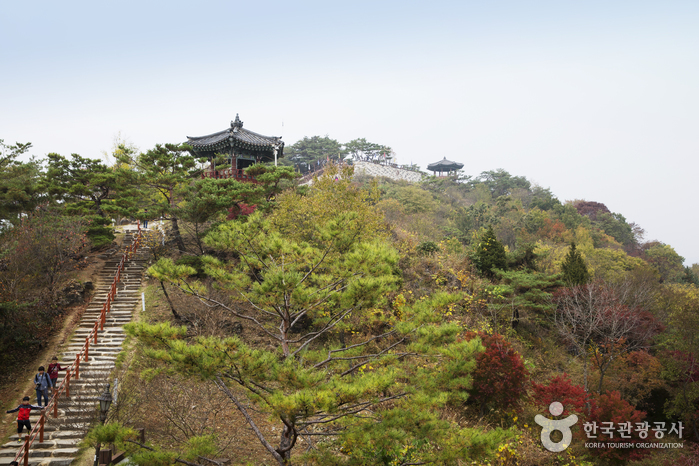
Cheongpung Cultural Heritage Complex in Jecheon, Chungcheongbuk-do contains a variety of cultural heritages and artifacts that were collected from the region before it was flooded in 1985 during the construction of Chungju Dam. Here, visitors can see Hanbyeongnu Pavilion (Treasure), Stone Standing Buddha (Treasure), Paryeongnu Pavilion, Geumnamnu Pavilion, Geumbyeongheon Hall, Eungcheonggak Pavilion and the Cheongpunghyanggyo Local Confucian School as well as nearly 2,000 household artifacts. It has become an outdoor museum of the glorious culture of the upper reaches of the Namhangang River.
Youngwol Y Park (젊은달와이파크)
16.0Km 2024-01-09
1467-9 Songhakjucheon-ro, Jucheon-myeon, Yeongwol-gun, Gangwon-do
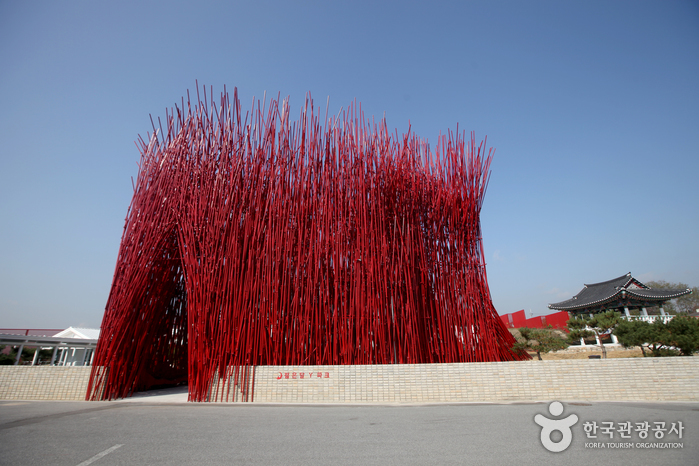
Youngwol Y Park is a complex art space that recreated the Sulsaem Museum, which opened in 2014, into a regeneration space that combines contemporary works of art, museums, and workshops. This newly created contemporary art space was planned by sculptor Choi Ok-yeung. Located in Jucheon-myeon’s untouched beautiful nature, the space is composed of Red Bamboo, Red Pavilion, and Jupiter, which are works using the signature red color of Choi Ok-yeung. The artist designed the space according to various themes, such as life, space, and regeneration, intending to evoking various feelings within visitors through viewing and experience. It is a huge art museum and land art space divided into 11 landscapes, and it's worth taking the time to look around slowly.
 English
 한국어
한국어 日本語
日本語 中文(简体)
 Deutsch
 Français
 Español
 Русский


