Kansong Art Museum (간송미술관(서울 보화각))
9.4Km 2025-06-30
102-11 Seongbuk-ro, Seongbuk-gu, Seoul
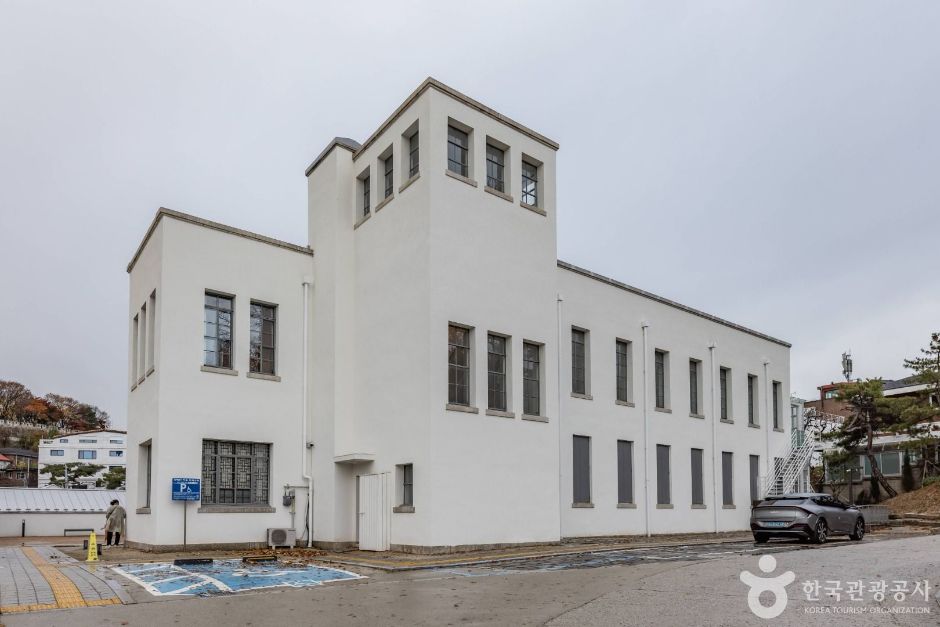
Kansong Art Museum was the first private art museum in Korea, opened as Bohwagak in 1938 by Kansong Jeon Hyeong-pil. The name was changed to the current Kansong Art Museum in 1966. Bohwagak was designated as National Registered Cultural Heritage No. 768 on December 30, 2019. Jeon Hyeong-pil dedicated his life to preserving and researching Korea’s representative relics that were devaluated and purposefully obliterated during the Japanese colonial era, as well as to acknowledging their cultural excellence and beauty. The museum houses 11 national treasures and 24 treasures.
Gwangnaru Hangang Park (광나루한강공원)
9.4Km 2021-12-25
83-66, Seonsa-ro, Gangdong-gu, Seoul
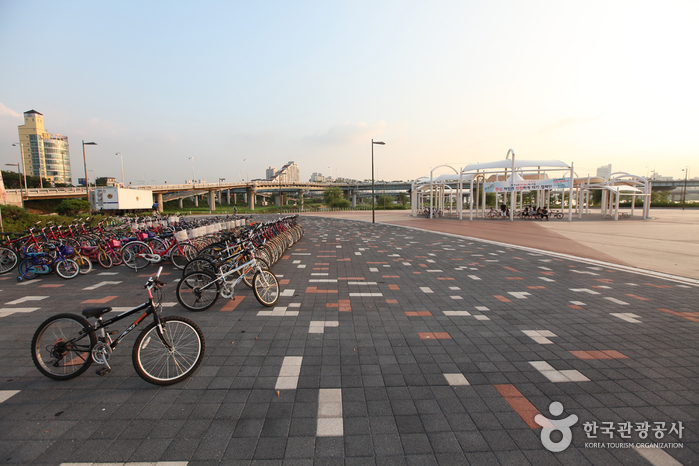
Hangang Citizen's Park, composed of 12 areas including Jamsil, Ttukseom and Jamwon, is an eco-friendly park providing areas for sports and leisure. The park is equipped with various cultural and recreational facilities and also has an ecological park. Gwangnaru Hangang Park formed naturally through rich silt that flowed in from the upper Hangang River that was then filled with reeds, creating an ideal habitat for groups of migratory birds.
Seoul Grand Park (서울대공원)
9.4Km 2023-03-17
102, Daegongwongwangjang-ro, Gwacheon-si, Gyeonggi-do
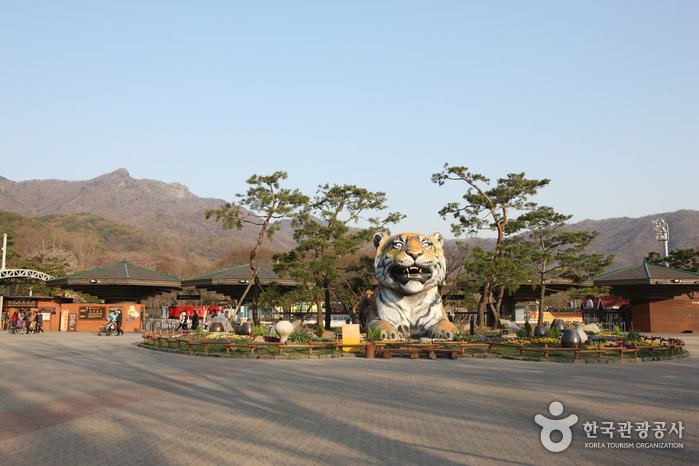
Seoul Grand Park is a family-friendly amusement park consisting of various themed facilities that promote the growth and preservation of diverse animals and plants.
[Seoul Zoo]
Seoul Zoo aims to provide an ideal environment for animals to grow and live as well as exhibit, preserve, and research rare animals and educate the public. As a result of the zoo's hard work and efforts, it is the only zoo in Korea to be certified as a member of both ISIS and IUDZG-WZO.
[Botanical Garden]
Seoul Grand Park's Botanical Garden was opened in 1985 amidst the lush forest situated at the foot of Cheonggyesan Mountain. The garden consists of a greenhouse, exhibition facilities, and themed gardens that boast a collection of over 41,000 plants from 1,262 different species. The greenhouse preserves and exhibits tropical and subtropical plants that are not found in Korea. Moreover, the Botanical Garden offers various activities and experience programs related to plants and forests.
[Theme Garden]
The Theme Garden is one of the most representative facilities of Seoul Grand Park. The Theme Garden consists of a Rose Garden and Children's Zoo. Seasonal plants and flowers as well as diverse themed garden programs are offered.
[Healing Place]
The Healing Place is a forest formed at the foothills of Cheonggyesan Mountain that surrounds the border of Seoul Grand Park. Main facilities consist of Healing Forest Walkway; Water, Wind & Sunshine Healing Zone; Barefoot Road; Aroma Garden; and Forest Plaza.
[Healing Forest Walkway]
Healing Forest Walkway is a walking path lined by diverse trees that form a lush forest serving as a habitat for small animals like squirrels, rabbits, raccoons, and more. The walking path is approximately 8 kilometers long and divided into four sections. The shortest course takes approximately 30 minutes to complete, while the full course requires 3 hours.
[Campsite]
The campsite within the Seoul Grand Park is the perfect place to camp out, hold picnics and enjoy recreational activities with friends and families. The main facilities consist of a campsite, volleyball court, basketball court, snack bar, and shower facilities. The campsite is open from March to November, except in the case of harsh weather conditions.
Gwanak Starlight Walk (관악별빛산책)
9.4Km 2025-12-15
1642-7 Sillim-dong, Gwanak-gu, Seoul
+82-2-828-5743
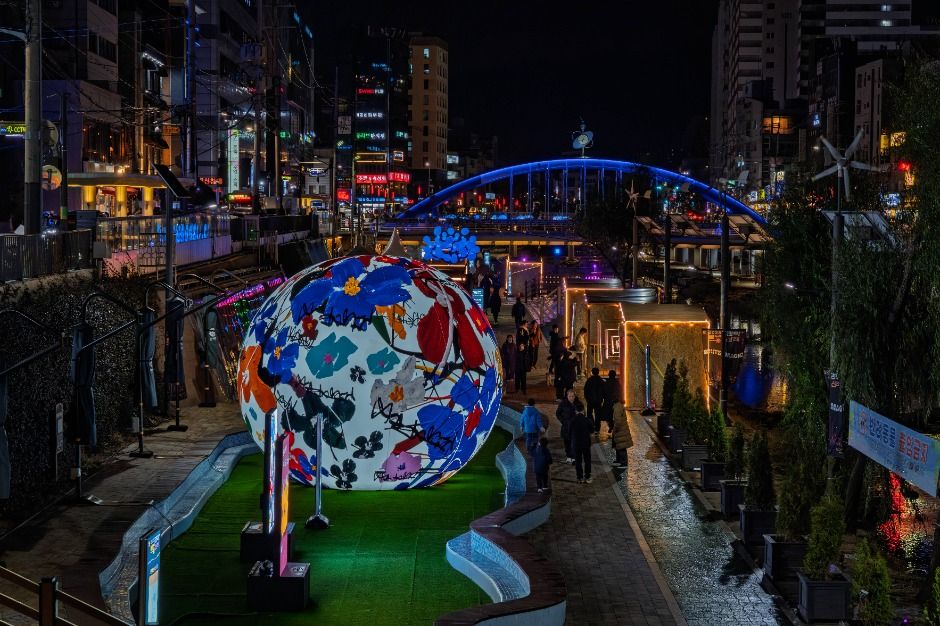
Gwanak Starlight Walk is a signature winter festival of Gwanak-gu in Seoul. It's a lighting festival where visitors can enjoy beautiful light installation along Byeolbitnaerincheon Stream. The event area spans 300-meters from Sillimgyo Bridge to Bongnimgyo Bridge. The diverse lighting artworks created by ten different Korean artist teams come together to create a space where stories of individuals all become one as a community. Various hands-on programs offer visitors a chance to see and enjoy the sights and sounds of the city throughout the festival period.

Bukjeong Village (북정마을)
9.5Km 2024-02-15
132-3 Seongbuk-ro 23-gil, Seongbuk-gu, Seoul
Bukjeong Village, situated along the slopes of Seongbuk-dong, offers a glimpse into Korea's old alleyways. The village expanded as refugees from the Korean War (1950–1953) and people from various regions settled, building houses under the collapsed walls of Hanyang doseong (Seoul City Wall). Presently, the village is home to young artists, and the broad street in front of the village bus stop hosts various community events.
Severance Hospital (연세대학교 의과대학 세브란스병원)
9.5Km 2025-10-23
50-1 Yonsei-ro, Seodaemun-gu, Seoul
THE FIRST & THE BEST
As the first Western-style hospital in Korea, and with over 140 years of history, Severance Hospital (Gwanghyewon) has been leading the medical industry in Korea since its foundation in 1885.
Dedicated to improving the quality of medical services through specialization, Severance Hospital has the distinction of being the first hospital in Korea to operate six specialized hospitals: the Dental Hospital, Cancer Center, Rehabilitation Hospital, Cardiovascular Hospital, Children's Hospital, and Eye Hospital.
In 2023, Severance Hospital achieved a world first by performing 40,000 robotic surgeries and introduced a new paradigm in cancer treatment by bringing Carbon Ion Therapy to Korea for the first time.
As a global leader in advanced medical technology and patient-centered services, Severance Hospital was the first medical institution in Korea to receive JCI (Joint Commission International) accreditation and has ranked first in the medical service sector of the NCSI (National Customer Satisfaction Index) for 14 consecutive years.
Yonsei University Dental Hospital (연세대학교 치과대학병원)
9.5Km 2025-11-21
50-1 Yonsei-ro, Seodaemun-gu, Seoul
Since November 1915, when Dr. William J. Scheifley established the Department of Dentistry at Severance Union Medical School, officially introducing Western dental medicine to Korea, Yonsei University Dental Hospital has maintained its status as the nation's first and foremost dental institution for over 100 years. Notably, Yonsei University Dental Hospital, equipped with the finest medical professionals, state-of-the-art facilities, and a well-coordinated collaborative system among departments, excels in the treatment and prevention of oral and maxillofacial diseases while prioritizing the happiness and well-being of its patients. It stands as the premier dental hospital in Korea.
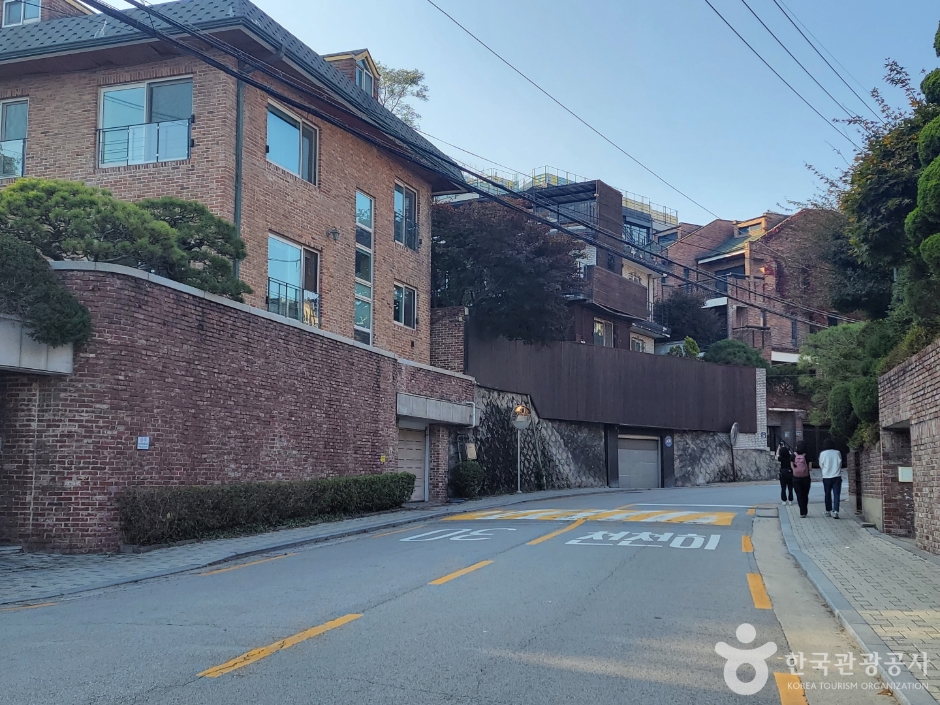
Seongbuk-dong–Bukchon Hanok Village Course (성북동고택북촌산책길)
9.5Km 2025-11-06
68, Seonjam-ro 5-gil, Seongbuk-gu, Seoul
The Seongbuk-dong–Bukchon Hanok Village Course is a nostalgic path connecting famous old houses in Seongbuk-dong and Bukchon Hanok Village, divided by the old city walls. Along the way, you'll find historic sites like Gilsangsa Temple, Jeongbeopsa Temple, Han Yong-un’s Simujang House, and novelist Lee Tae-jun's House. The trail also features charming cultural spots, such as the traditional tea house Sooyeon Sanbang and the Seongbuk Museum of Art.
◎ Travel information to meet Hallyu’s charm - "Parasite"
The scene in the alley where Ki-woo visited Mr. Park's house in a wealthy neighborhood for expensive tutoring was filmed in a residential area in Seongbuk-dong. Seongbuk-dong, an old wealthy village, has luxury mansions lined up in. There are many pretty cafés and galleries here and there, so it's good to take a leisurely look around. Mr. Park's house was a filming set, which was demolished after filming.
Seodaemun Independence Park (서대문독립공원)
9.5Km 2022-12-15
251, Tongil-ro, Seodaemun-gu, Seoul
Seodaemun Independence Park was built on the former Seoul Detention Camp. It was used to imprison thousands of Korean independence activists until the liberation from the Japanese occupation on August 15, 1945, as well as the political prisoners during the political turmoil in the 1960s. When the prison was moved to Uiwang-si, Gyeonggi-do in November 1987, the area was restored and turned into a memorial park in August 15, 1992 to honor the sacrifices of the martyrs. The park preserves seven prison buildings, an execution ground, underground women’s prison, and the March 1st Movement Monument that has been moved from Tapgol Park in Jongno.
One of the most significant monuments of the Seodaemun Independence Park is Dongnimmun Gate (Independence Gate), which has been designated a Historic Site. Nearby is Dongnipgwan (Independence Hall), originally called Mohwagwan, which was used to greet Chinese envoys during the Joseon dynasty. Today, the hall enshrines 2,327 tablets inscribed with the names of Koreans who died for the cause of national independence. Standing right next to Dongnimmun Gate are the remnants of Yeongeunmun Gate, another Historic Site. Other sights inside the park include the Patriotic Martyr Monument, Declaration of Independence Monument, and Statue of Dr. Seo Jae-pil, who was an independence activist and publisher of Korea’s first independent newspaper. The main highlight of the park is the Seodaemun Prison History Hall, a former prison building that was renovated into a history museum.
National Memorial of Korean Provisional Government (국립대한민국임시정부기념관)
9.6Km 2023-01-16
279-24, Tongil-ro, Seodaemun-gu, Seoul
The National Memorial of Korean Provisional Government was established to shine a light on the proud history of the Korean Provisional Government's independence and the spirit of a democratic republic and to pass it on to future generations. The four-story memorial building with three underground floors houses three permanent exhibits, one special exhibit, Larchiveum, Symbol Plaza, storage, multi-purpose hall, and rooftop garden over a total area of 3,656 square meters, a total floor area of 9,703 square meters and a total exhibition space of 2,240 square meters. The permanent exhibits consist of a series of historic events from the March 1st Movement, which served as a turning point for the formation of the Provisional Government, to the foundation of the Korean Government that succeeded the mantle of the provisional government, while the special exhibit on the 1st floor currently hosts a special opening exhibition under the title of 『The Return of the Provisional Government of the Republic of Korea』. Moreover, a symbolic wall installation under the theme of "Waves of History" is displayed in the outdoor plaza on the 1st floor of the memorial expressing the Provisional Government’s desire for independence and the dynamics of the past, present, and future of Korea.
 English
 한국어
한국어 日本語
日本語 中文(简体)
 Deutsch
 Français
 Español
 Русский


