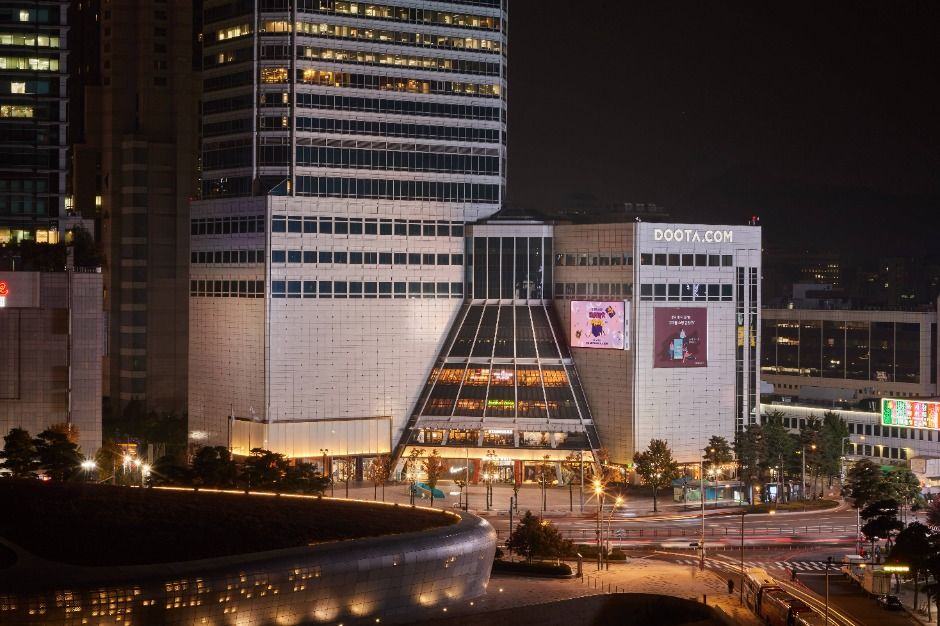
Doota Mall (두타몰)
1.9Km 2025-10-23
275, Jangchungdan-ro, Jung-gu, Seoul
Doota Mall is a must-visit shopping destination that represents Dongdaemun-the center of K-fashion and culture in Seoul. Doota offers a true one-stop shopping experience across fashion, beauty, lifestyle, and dining-from K-designers, sportswear, women and men's apparel to a wide variety of cafes and restaurents. Open until midnight, Doota welcomes intenational travelers with special gifts and exclusive benefits.

Imun Seolnongtang (이문설농탕)
2.0Km 2025-06-18
38-13 Ujeongguk-ro, Jongno-gu, Seoul
Imun Seolnongtang has been serving its hearty seolleongtang for over a hundred years since it first opened in 1907. Even its name has a long history: the word imun comes from Imun-gol, the now-obsolete name of the restaurant’s location, and seolnongtang, an old variation of the word seolleongtang. During the Japanese colonial rule, the restaurant’s regular customers included Gijeong Son, the marathon gold-medalist at the 1936 Berlin Olympics. The meal served at this restaurante is reputed to stay consistent from the Japanese colonial period.
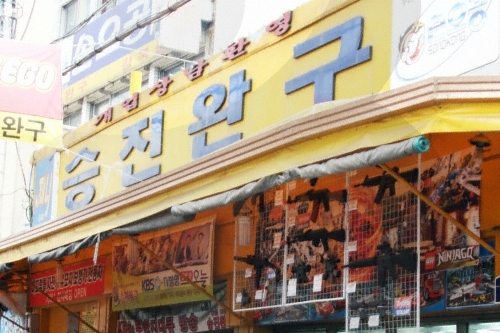
Seungjin Toy (승진완구)
2.0Km 2025-01-06
30, Jong-ro 52-gil, Jongno-gu, Seoul
Seungjin Toy is a toy store that carries almost every kind of toy imaginable from stuffed animals to character dolls and much more. What makes this store even more attractive to many customers is that their merchandise is, on average, 30% cheaper than that of their competitors.
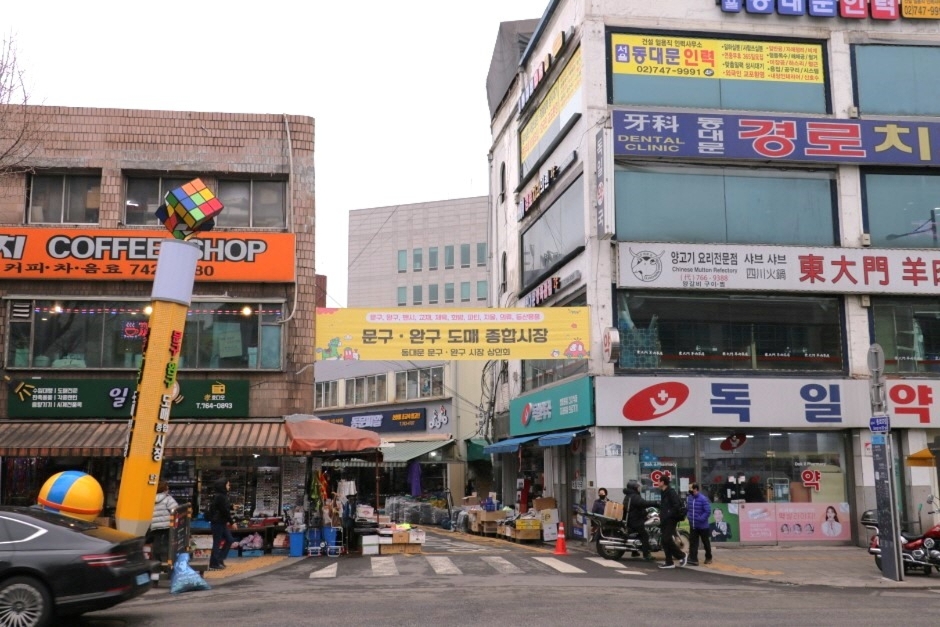
Dongdaemun Stationery Store Street (동대문 문구완구거리)
2.0Km 2024-03-15
21-1, Jong-ro 52-gil, Jongno-gu, Seoul
Dongdaemun Stationery Store Street houses nearly 120 stores selling stationery products like notebooks, crayons, pencils, backpacks, as well as other products like children’s gifts, decorations, and party products. Products can be found at prices nearly 30 to 40% lower than the consumer products, which can be lowered even further when buying in bulk. Products past the season may see the prices drop by more than half.
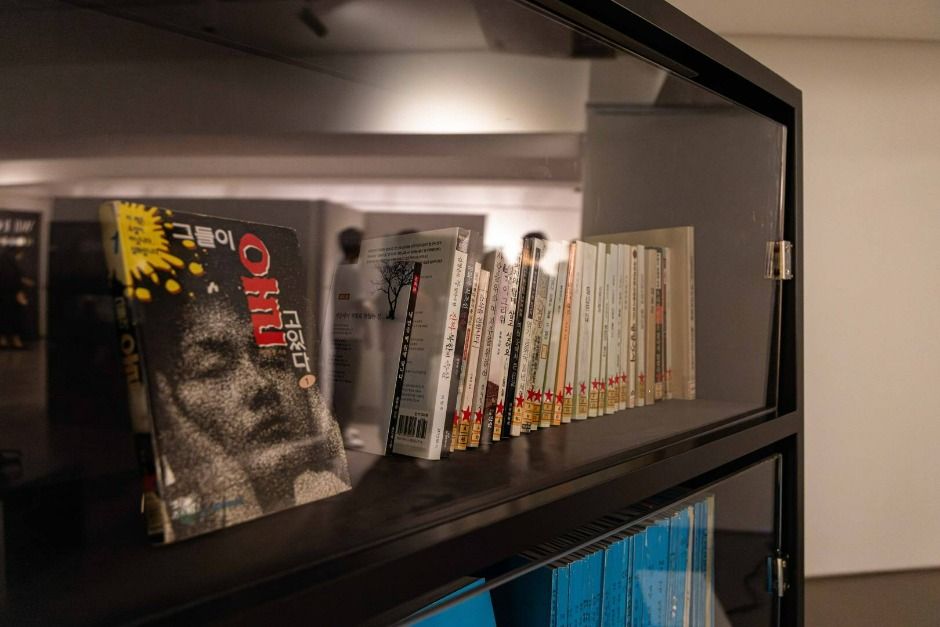
NKDB North Korean Human Rights Exhibition Hall (북한인권전시실)
2.0Km 2025-11-13
393 Samil-daero, Jongno-gu, Seoul
The NKDB North Korean Human Rights Exhibition Hall is a permanent exhibition space dedicated to North Korean human rights. Although it is a small space, it resonates deeply and serves as a "dark tourism" site that records and testifies to the ongoing reality of human rights violations in North Korea. The North Korean Human Rights Information Center (NKDB), which operates this exhibition hall, is the organization that collects and archives the most extensive records of human rights concerning North Korean residents in the world. The testimonies and records presented here represent a living history, a story unfolding in the present, unavailable elsewhere. Through donated North Korean artifacts, including these records, visitors can glimpse the present-day North Korea and encounter artwork by North Korean defectors.
Jogyesa Temple (조계사(서울))
2.0Km 2024-10-25
55 Ujeongguk-ro, Jongno-gu, Seoul
As the main temple as well as the district head temple of the Jogye order in Seoul, Jogyesa Temple is the center of Korean Buddhism. The temple was built in the late 14th century during the Goryeo period but was completely destroyed in a fire. It was rebuilt under the name of Gakwangsa Temple in 1910 with the effort of many respectful monks, namely Han Yong-un and Lee Hee-gwang. The temple was given a role as the head temple of Korea’s Buddhism and renamed to Tegosa Temple in 1936. In 1954, a purification drive took place to eliminate Japanese influence and revive traditional Buddhism, which established the present day Jogyesa Temple as a result.
Jogyesa Temple plays an important role in Korean Buddhism as the head temple of the Jogye order. Jogyesa Temple’s Dharma Hall serves as the main venue for several Buddhist events, holding rituals, lectures, ceremonies, and other events all year long. The annual lantern festival in celebration of Buddha's birthday also takes place at this temple.
Nolboo Bossam & Budaejjigae Euljiro6ga(놀부보쌈&부대찌개 을지로6가)
2.0Km 2024-10-15
2F, 34, Euljiro43-gil, Jung-gu, Seoul
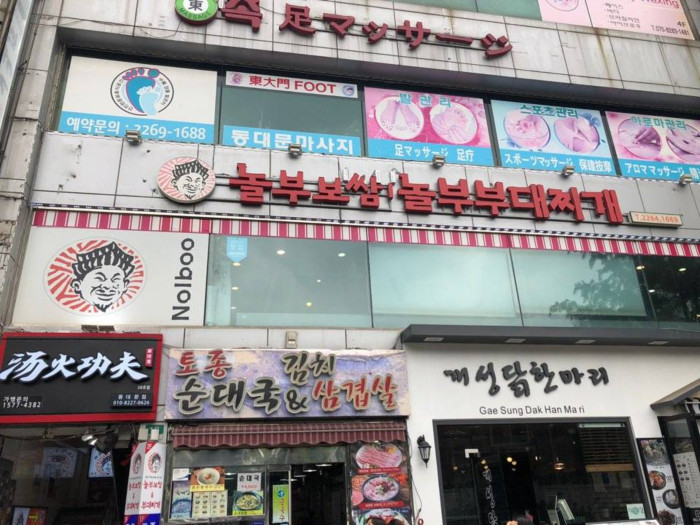
This is a Korean cuisine located in Dongdaemun Gate, Seoul. One of Korea’s representative restaurant franchises. The best menu at this restaurant is napa wraps with pork.
Hello apM (헬로에이피엠)
2.1Km 2025-05-13
253 Jangchungdan-ro, Jung-gu, Seoul
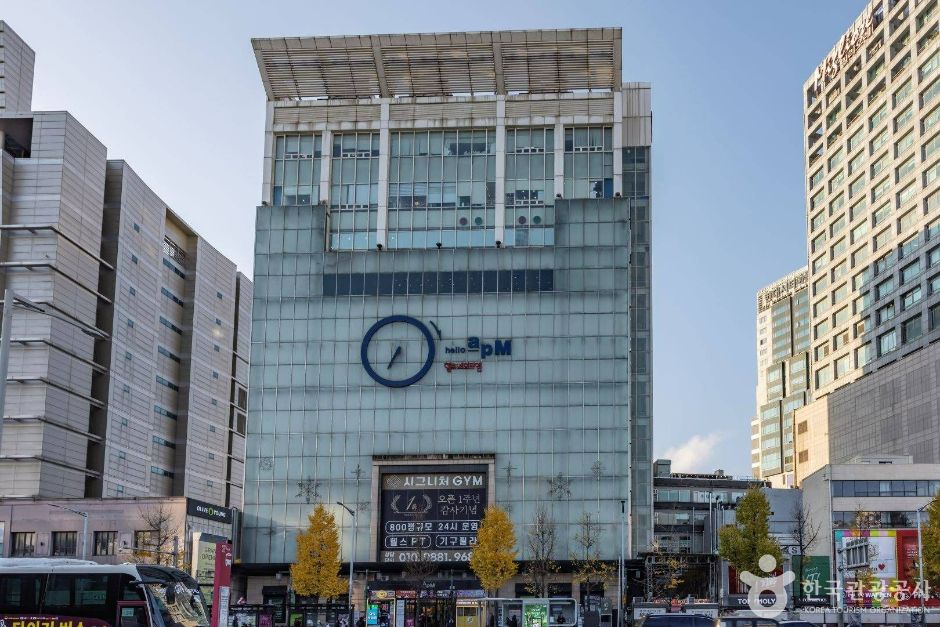
Hello apM is located within the Dongdaemun shopping district and appeals to customers in their 10s and 20s for it's latest trending styles and low prices. It is crowded year-round with young people from all over the world. Bargaining has faded out over recent years with prices more often indicated.
Dongdaemun Design Plaza (동대문디자인플라자 (DDP))
2.1Km 2024-10-24
281 Eulji-ro, Jung-gu, Seoul
Dongdaemun Design Plaza (DDP) has a meaning of Dream, Design, and Play. It holds various exhibitions, fashion shows, forums, conferences, and other domestic and international events. The building complex is divided into sections, which are named Allimteo, Beaumteo, Sallimteo, DDP Design Museum, Design Market & Eoullim Plaza, and Dongdaemun History & Culture Park. Designed by world-renowned architect Zaha Hadid, the building's exterior attracts the attention of many photographers with its delicate curves and bold shapes.
Palace Royal Guard Changing Ceremony (수문장 교대의식)
2.1Km 2025-07-11
161 Sajik-ro, Jongno-gu, Seoul
+82-2-3210-1645
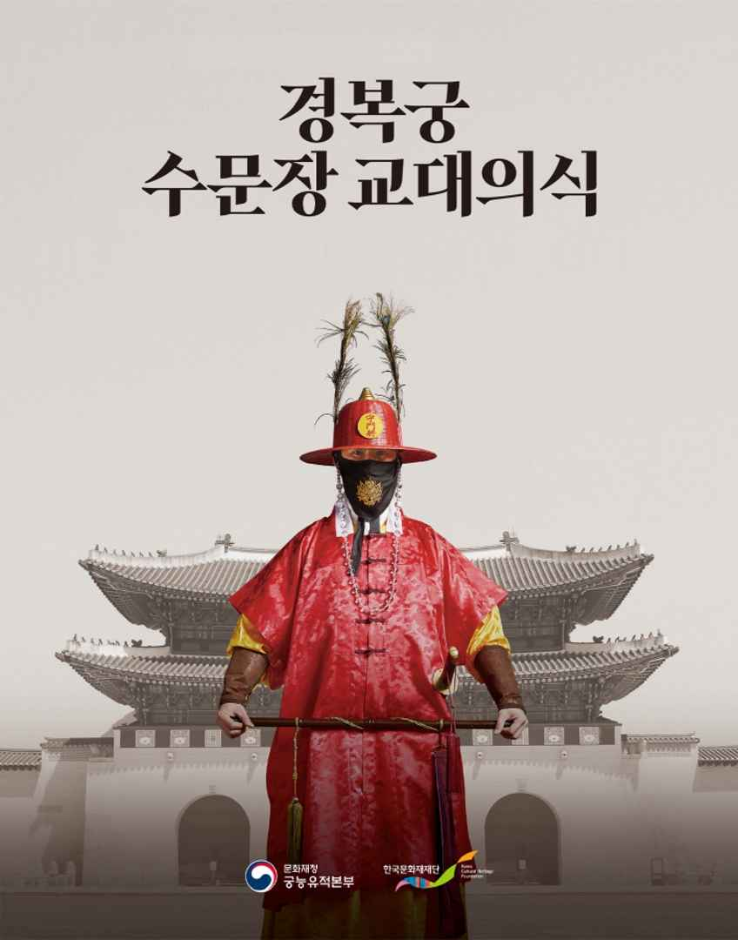
In the Joseon dynasty, the royal guards of the palace were gatekeepers who were responsible for guarding the the main gates of Gyeongbokgung Palace as well as the main gates of the city such as Heunginjimun Gate and Sungnyemun Gate. The royal guards worked in shift duties and were in charge of opening and closing Gwanghwamun Gate. Before the royal guard system was enforced in 1469, the palace gates were protected by soldiers of the central army. The Palace Royal Guard Changing Ceremony held at Gyeongbokgung Palace and the Gwanghwamun area reenacts the guard-changing procedure that took place during the Joseon dynasty, along with the reproduction of costumes and weapons, based on historical records.
 English
 한국어
한국어 日本語
日本語 中文(简体)
 Deutsch
 Français
 Español
 Русский


