Korea House (한국의집)
1.0Km 2025-10-23
10, Toegye-ro 36-gil, Jung-gu, Seoul
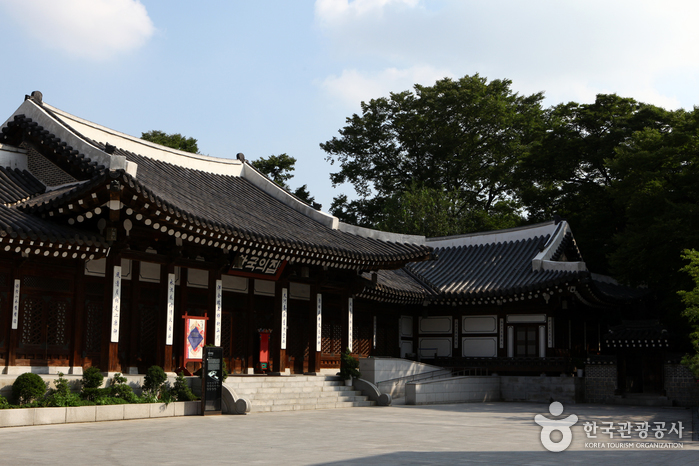
The Korea House was opened in 1981. It is a traditional Korean building that introduces the culture and lifestyle of Koreans, where you can experience traditional architecture and a classical atmosphere. The building was built in the style of the Joseon Dynasty's Jagyeong-jeon building at the Gyeongbok Palace. It is the only building built in the traditional architectural style. You will feel its antiquity as you enter the building.
It is divided into the Haerin-gwan (a space for people to get acquainted with each other), the Traditional Theater, and three annex buildings (Munhyang-ru, Nokeum-jeong and Cheongwu-jeong). At Haerin-gwan, you can enjoy traditional music at Garak-dang and try traditional food at Sohwa-dang. In the square of Garak-dang you can view a traditional wedding (on the weekends) or people playing folk games. Also, at the Traditional Theater, about 156 seats are available, and in the afternoons Human Cultural Assets or members of the National Center for Korean Traditional Performing Arts and the National Corps members present traditional music and dances. Sinayui, Salpuri, Pansori, the Drum Dance and the Bongsan Mask Dance are the most popular programs for foreigners. The programs are all explained in English and Japanese.
In the Cultural Gift Shop you can view various crafts made by traditional craftsmen. It is always open and the crafts are for sale as well. There are pottery, ceramics, golden crafts, knots and embroidery etc; approximately 500 pieces of artwork made by craftsmen from 20 different fields. Next to the House of Korea is the Namsan-gol Hanok Village where visitors can explore traditional houses.
Myeong-dong (명동)
1.0Km 2024-05-17
66, Eulji-ro, Jung-gu, Seoul
+82-2-778-0333
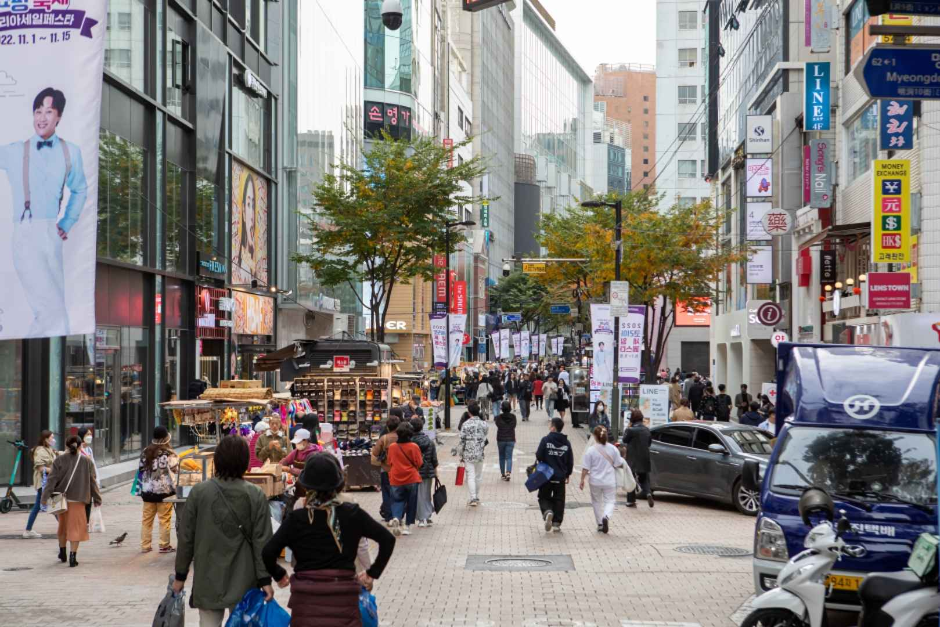
Myeong-dong is one of the primary shopping districts in Seoul. The two main streets meet in the center of the block with one beginning from Myeong-dong Subway Station (Seoul Subway Line No. 4) and the other from Lotte Department Store at Euljiro. Many brand name shops and department stores line the streets and alleys. Common products for sale include clothes, shoes, and accessories. Unlike Namdaemun or Dongdaemun, many designer brands are sold in Myeong-dong. In addition, several major department stores have branches here, including Lotte Department Store, Shinsegae Department Store, Myeong-dong Migliore, Noon Square and M Plaza. The department stores carry many premium labels and other fashionable goods at reasonable prices.
Myeong-dong also has family restaurants, fast food, plus Korean, Western and Japanese dining options. Many restaurants in Myeong-dong specialize in dongaseu (pork cutlet) and kalguksu (noodle soup). Other businesses in the area include hair salons, banks and theaters.
Myeong-dong Tourist Information Center (명동관광정보센터)
1.0Km 2023-01-03
66, Eulji-ro, Jung-gu, Seoul
+82-2-778-0333
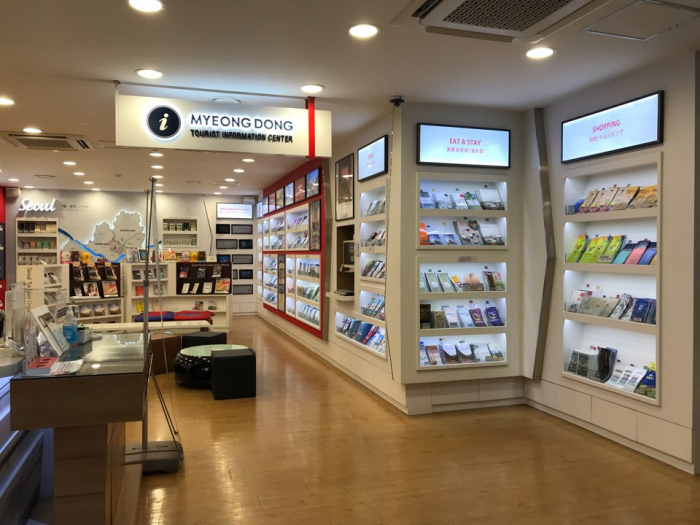
Myeong-dong Tourist Information Center provides information on traveling, shopping, attractions, and more in Seoul. Service is provided in Korean, English, Japanese, and Chinese. The center also offers experience programs like using Hangeul stamps.
Kyung-In Museum of Fine Art (경인미술관)
1.0Km 2024-03-04
11-4, Insadong 10-gil, Jongno-gu, Seoul
+82-2-733-4448
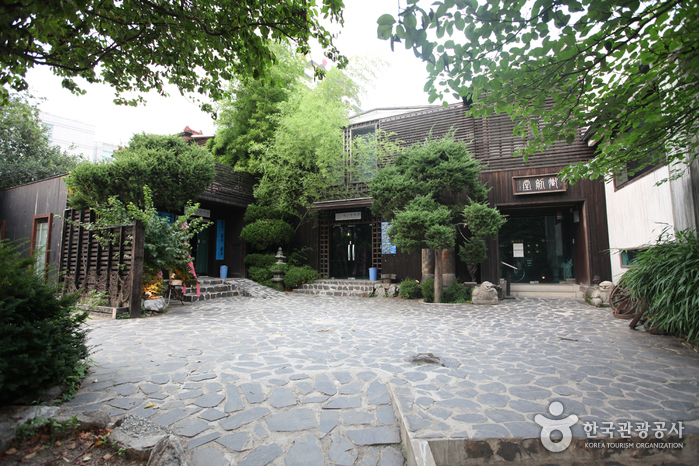
Kyung-In Museum of Fine Art is located in Insa-dong. It has six exhibition rooms, an atelier, an outdoor exhibition area, and a traditional tea house. It hosts outdoor concerts in spring and fall, and Q&A sessions with authors can also be found as well. The traditional tea house offers about 15 types of traditional Korean tea in a space that overlooks the garden.
Museum Kimchikan (뮤지엄 김치간)
1.0Km 2025-06-19
(4-6th floor, Maru Art Center), 35-4 Insadong-gil, Jongno-gu, Seoul
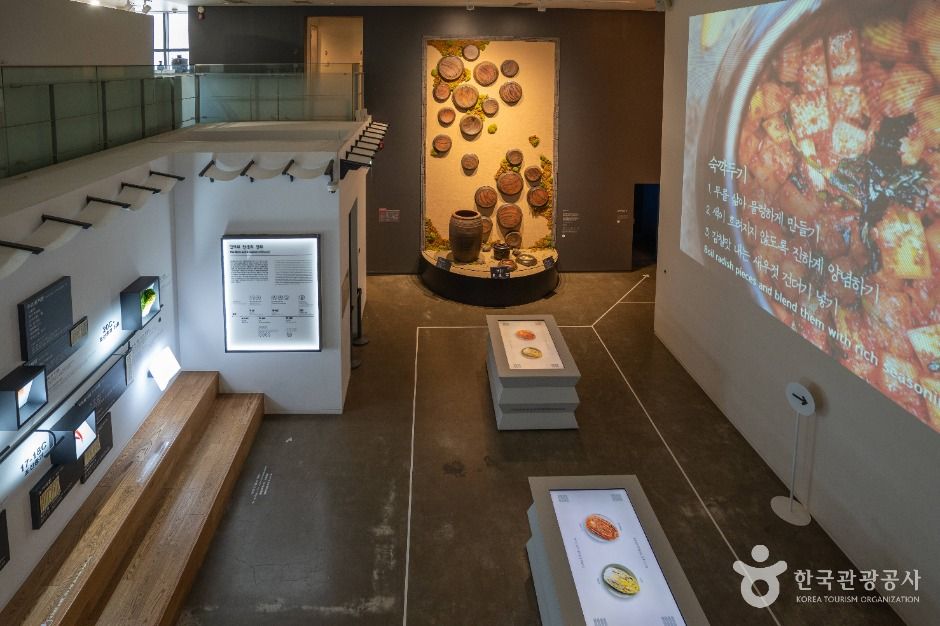
Museum Kimchikan is a museum dedicated to kimchi in Insa-dong’s Maru Art Center. The exhibition details the culture, history, trajectory, and efficacy of kimchi and teaches the visitors how to make kimchi through videos. Visitors can also sample different types of kimchi. The museum offers both individual and group experience programs.
Bosingak Belfry (보신각 터)
1.0Km 2024-03-04
54, Jong-ro, Jongno-gu, Seoul
+82-2-2133-2641
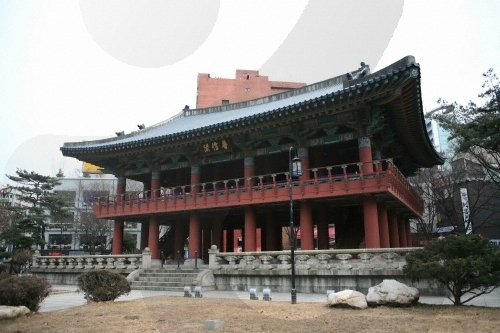
Bosingak Belfry is also known as Jonggak. It was the site in which a large bell, used to keep the time in Seoul, was found during the Joseon period (1392-1897). Bosingak Belfry was burned down during the Korean War (1950-1953) and was reconstructed in 1979. The original bell was moved to the Gyeongbokgung Palace, and a new bell was forged in 1985. At midnight, January 1, the bell at the Bosingak Belfry is rung to welcome the new year. Many people gather around the belfry to make a wish for their new year.
Nakseonjae Hall (낙선재)
1.0Km 2021-09-30
99, Yulgok-ro, Jongno-gu, Seoul
+82-2-2148-1822
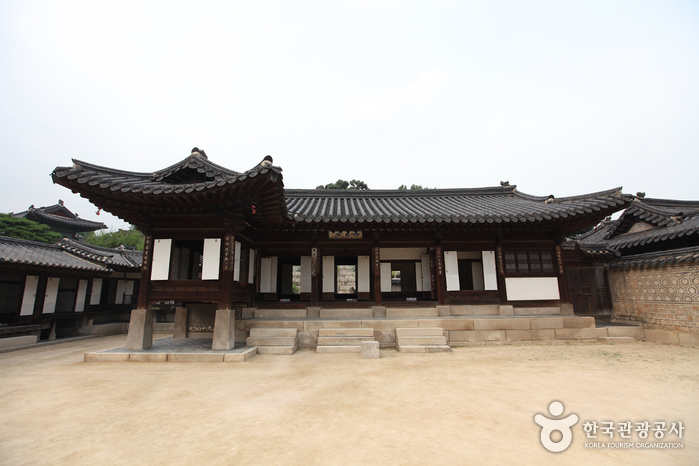
Located inside Changdeokgung Palace, Nakseonjae Hall is a one-story structure built in ikgong style (bird wing-shaped eaves placed on top of the pillars) with a hip tiled and gable roof. It has 6 kan in the front and 2 kan (traditional unit of measurement of the space between pillars) to the sides. It originally belonged to the nearby Changgyeonggung Palace, but came to be considered a part of Changdeokgung Palace in more recent years.
The hall was constructed in 1846 (12th year of King Heonjong’s reign) and it is collectively called Nakseonjae together with the adjacent Seokbokheon Hall and Sugangjae Hall.
Behind the building is a flower garden made of stacked large stones. The chimney, the flowers, and the oddly shaped stones harmoniously blend into one another to create an outstanding landscape gardening.
Ssamzigil (쌈지길)
1.1Km 2025-10-23
44 Insadong-gil, Jongno-gu, Seoul
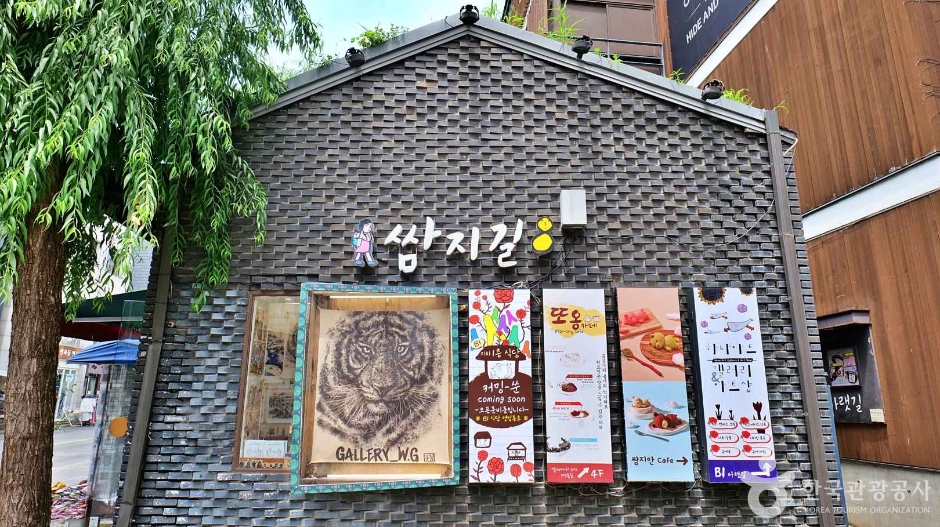
Ssamzigil is an Insa-dong landmark and a shopping mall specializing in crafts. It is a place where the traditions of Korea come together with its present. Follow the paths that lead seamlessly from the lower floors to the upper floors and browse the small craft shops that inhabit the floors. You can find both works of traditional craft and contemporary craft here. Some craft shops also offer craft experiences, and one can also find restaurants and galleries within the complex.
HIDE AND SEEK - Ssamzigil Branch (하이드앤시크 쌈지길점)
1.1Km 2025-11-06
44 Insadong-gil, Jongno-gu, Seoul
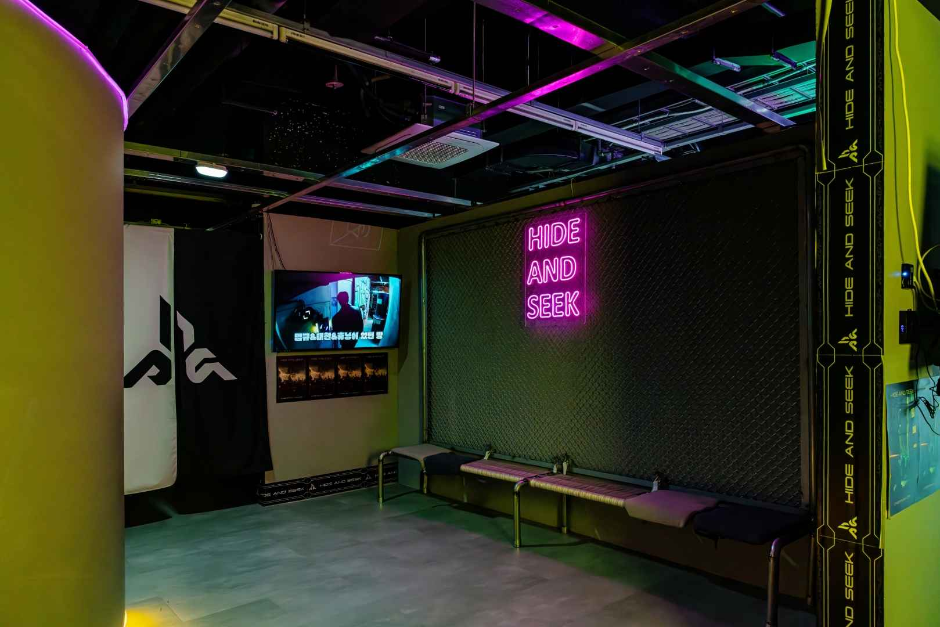
This is where TXT members enjoyed escape games on their own series, “TO DO X TXT.” Chosen as the tagger by random draw, Huening Kai showed impressive game skills, using his instincts to “eliminate” the other members.
World Pansori Festival (월드판소리페스티벌)
1.1Km 2025-07-30
28 Toegye-ro 34-gil, Jung-gu, Seoul
+82-2-904-2835
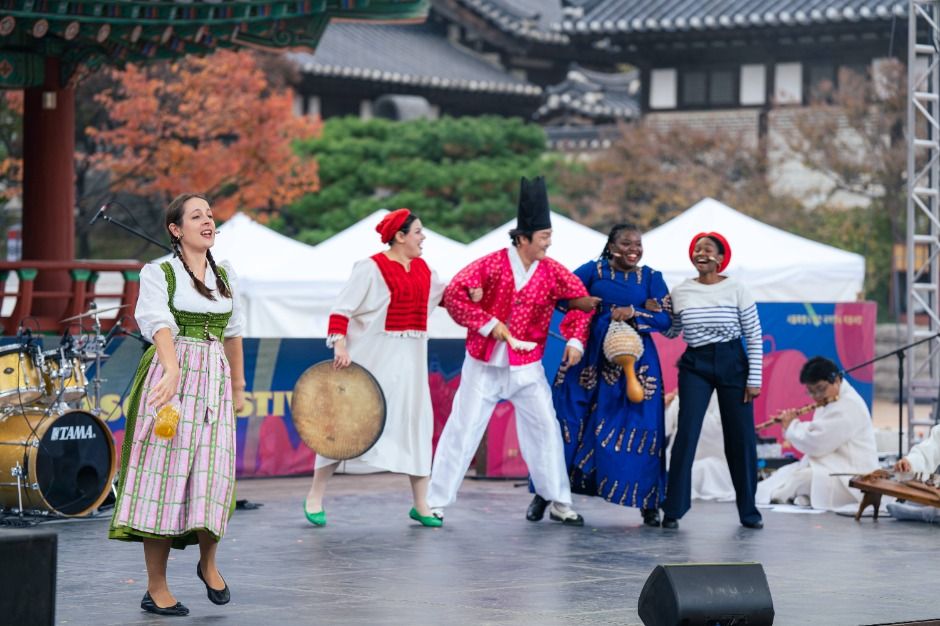
World Pansori Festival is an international music festival that aims to promote pansori, the traditional Korean epic chant, and its values. The festival consists of a variety of performances and concert programs based on its yearly theme. In addition, the festival also has interactive activities for the attendees, such as a free pansori lesson and arts-and-crafts, to make pansori and traditional Korean music more accessible to the public.
 English
 한국어
한국어 日本語
日本語 中文(简体)
 Deutsch
 Français
 Español
 Русский


