
Jinju Hoegwan (진주회관)
2.3Km 2024-06-19
26 Sejong-daero 11-gil, Jung-gu, Seoul
+82-2-753-5388
Jinju Hoegwan is a renowned kongguksu (noodles in cold soybean soup) eatery near City Hall Station. Kongguksu is a traditional Korean summer dish made by boiling and grinding soybeans into a creamy broth, served with noodles, offering a refreshing and nutty flavor. Kongguksu is available from March to November. Their staff-recommended menu includes kimchi bokkeumbap (kimchi fried rice), freshly roasted by the staff, along with kimchi jjigae and samgyeopsal (pork belly).
![E-Mart 24 - The Bank Of Korea Branch [Tax Refund Shop] (이마트24 한국은행)](http://tong.visitkorea.or.kr/cms/resource/78/2878578_image2_1.jpg)
E-Mart 24 - The Bank Of Korea Branch [Tax Refund Shop] (이마트24 한국은행)
2.3Km 2024-04-18
9, Namdaemun-ro 5-gil, Jung-gu, Seoul
-
![ABC-Mart - Myeong-dong 3(sam)beon-ga [Tax Refund Shop] (ABC마트 ST명동3번가)](http://tong.visitkorea.or.kr/cms/resource/50/2878650_image2_1.jpg)
ABC-Mart - Myeong-dong 3(sam)beon-ga [Tax Refund Shop] (ABC마트 ST명동3번가)
2.3Km 2024-04-17
41, Myeongdong 10-gil, Jung-gu, Seoul
-
![On The Spot - Myeong-dong Branch [Tax Refund Shop] (온더스팟 명동점)](http://tong.visitkorea.or.kr/cms/resource/42/2878642_image2_1.jpg)
On The Spot - Myeong-dong Branch [Tax Refund Shop] (온더스팟 명동점)
2.3Km 2024-04-18
37-4, Myeongdong 8-gil, Jung-gu, Seoul
-
The Saem - Myeong-dong Branch (No. 1) [Tax Refund Shop] (더샘 명동1호점)
2.3Km 2024-04-16
41, Myeongdong 8-gil, Jung-gu, Seoul
-
![Åland - Myeong-dong Main Branch [Tax Refund Shop] (에어랜드 명동본점)](http://tong.visitkorea.or.kr/cms/resource/81/3314381_image2_1.jpg)
Åland - Myeong-dong Main Branch [Tax Refund Shop] (에어랜드 명동본점)
2.3Km 2024-06-27
40, Myeongdong 8-gil, Jung-gu, Seoul
-
![Stylenanda Flagship Store - Myeong-dong Branch [Tax Refund Shop] (스타일난다플래그쉽스토어 명동)](http://tong.visitkorea.or.kr/cms/resource/53/3314453_image2_1.jpg)
Stylenanda Flagship Store - Myeong-dong Branch [Tax Refund Shop] (스타일난다플래그쉽스토어 명동)
2.3Km 2024-06-27
37-8, Myeongdong 8-gil, Jung-gu, Seoul
-
![Innisfree - Myeong-dong Station Branch [Tax Refund Shop] (이니스프리 명동역)](http://tong.visitkorea.or.kr/cms/resource/29/2878629_image2_1.jpg)
Innisfree - Myeong-dong Station Branch [Tax Refund Shop] (이니스프리 명동역)
2.3Km 2024-04-18
2F, 43, Myeongdong 8-gil, Jung-gu, Seoul
-
Seodaemun Independence Park (서대문독립공원)
2.3Km 2022-12-15
251, Tongil-ro, Seodaemun-gu, Seoul
+82-2-3140-8305
Seodaemun Independence Park was built on the former Seoul Detention Camp. It was used to imprison thousands of Korean independence activists until the liberation from the Japanese occupation on August 15, 1945, as well as the political prisoners during the political turmoil in the 1960s. When the prison was moved to Uiwang-si, Gyeonggi-do in November 1987, the area was restored and turned into a memorial park in August 15, 1992 to honor the sacrifices of the martyrs. The park preserves seven prison buildings, an execution ground, underground women’s prison, and the March 1st Movement Monument that has been moved from Tapgol Park in Jongno.
One of the most significant monuments of the Seodaemun Independence Park is Dongnimmun Gate (Independence Gate), which has been designated a Historic Site. Nearby is Dongnipgwan (Independence Hall), originally called Mohwagwan, which was used to greet Chinese envoys during the Joseon dynasty. Today, the hall enshrines 2,327 tablets inscribed with the names of Koreans who died for the cause of national independence. Standing right next to Dongnimmun Gate are the remnants of Yeongeunmun Gate, another Historic Site. Other sights inside the park include the Patriotic Martyr Monument, Declaration of Independence Monument, and Statue of Dr. Seo Jae-pil, who was an independence activist and publisher of Korea’s first independent newspaper. The main highlight of the park is the Seodaemun Prison History Hall, a former prison building that was renovated into a history museum.
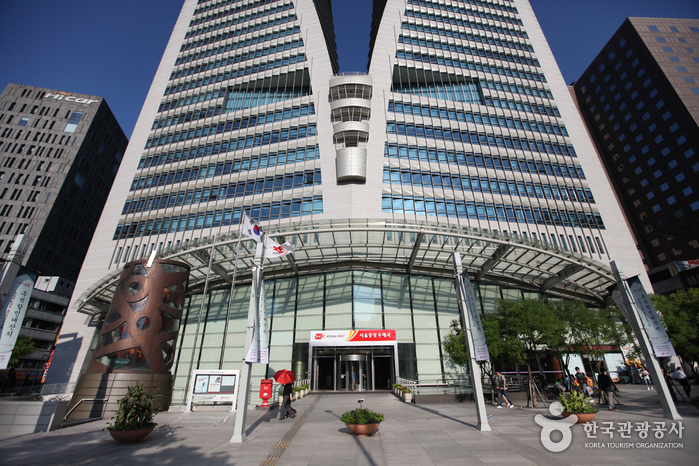
Korea Postage Stamp Museum (우표박물관(구.우표문화누리))
2.3Km 2024-03-06
B2, 70, Sogong-ro, Jung-gu, Seoul
+82-2-6450-5600
The Korea Postage Stamp Museum was established to promote stamp culture. Here, visitors can explore the history of stamps throughout the ages, with a wide variety of subjects and types. Its main facilities include Postal Service History, Hands-on Postage Stamp Experience, Informative Postage Stamps, and Philately Classroom. Reservations are required for weekend tours and can be made on the website.
 English
 한국어
한국어 日本語
日本語 中文(简体)
 Deutsch
 Français
 Español
 Русский


