
Lagidang [Korea Quality] / 락이당 [한국관광 품질인증]
1.1Km 2024-08-27
121, Gyedong-gil, Jongno-gu, Seoul
+82-507-1358-3701
Lagidang is a foreigner-only guesthouse in the heart of Bukchon Hanok Village in Jeongno-gu, Seoul. Public transportation links are good, with Exit 3 of Anguk Subway Station just a seven-minute walk away. The house has a fine view over Bukchon Hanok Village, and early-rising guests will also catch the sunrise in the south-eastern sky. The guesthouse is decorated with art works and Joseon-period antiques.
Choong Ang High School (중앙고등학교)
1.1Km 2025-10-23
164 Changdeokgung-gil, Jongno-gu, Seoul
+82-2-742-1321
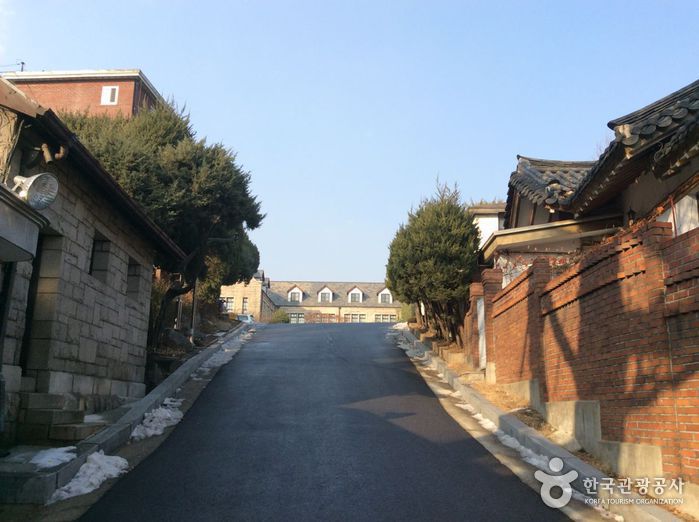
Choong Ang High School is located in Jong-ro near Samcheongdong-gil. It was built to educate the public at the beginning of the 20th century. The school’s main building was reconstructed in 1937 after the original two-story brick house was destroyed in 1934. The main building situated in front of the main gate is a two-story H-shaped granite stone building in Gothic style, with a four-story tower in the middle.
The school holds historical significance because it was designed by Park Dong Jin, one of Korea's first modern architects and the designer of Korea University’s main building, library, and the Chosun Ilbo Newspaper Company building. The main building of Choong Ang High School is designated as Historic Site No. 281. Many national leaders were educated at the gothic building during the grim period when Korea was trying to escape Japanese colonial rule.
HANILKWAN - Gwanghwamun Branch (한일관 광화문)
1.1Km 2024-03-18
50, Jong-ro 1-gil, Jongno-gu, Seoul
+82-2-722-7557
It is a store that has been operating with a long tradition since 1939. This Korean dishes restaurant is located in Jongno-gu, Seoul. The most famous menu is bulgogi.
Rakkojae Seoul Bukchon Hanok Hotel (락고재 서울 북촌 한옥호텔)
1.1Km 2025-10-27
49-23 , Gyedong-gil, Jongno-gu, Seoul
+82-2-742-3410
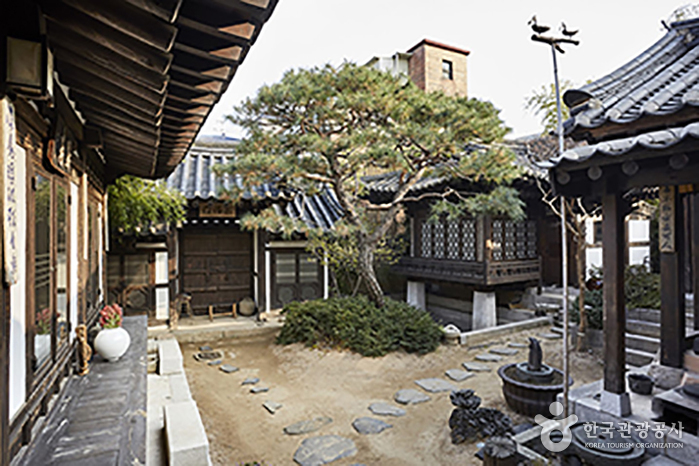
Rakgojae Bukchon Hanok Hotel in Jongru-gu, Seoul, is a traditional hanok compound with a 130-year history, renovated by master carpenter Jeong Yeong-jin. The elegant gate and stone walls, the traditional roof tiles, the jangdokdae jar store, the pavilions and ponds - not to mention the beautiful pine trees - express the archetypal beauty of hanok. Sitting on the daecheongmaru (wooden patio) with a breeze in the trees, guests will feel taken back in time. Guestrooms are clean and comfortable, and visitors can relax in a wood-fired red-clay sauna and a jade-covered ondol room,. Traditional culture programs are available.
![Inwoohouse [Korea Quality] / 인우하우스 [한국관광 품질인증]](http://tong.visitkorea.or.kr/cms/resource/56/3009456_image2_1.jpg)
Inwoohouse [Korea Quality] / 인우하우스 [한국관광 품질인증]
1.1Km 2023-09-12
1-9 , Gyedong 6-gil, Jongno-gu, Seoul
+82-2-742-1115
Inwoo House is a traditional hanok down an alley in Gye-dong, Jongno, Seoul. There is a swallow's nest under the eaves, and the pride of this house is that the swallow family returns every spring. Each room in the house has a private bathroom. Residents can sample Korean culture by taking part in traditional paper crafts, knot bracelet making, and fan decorating. The location is convenient for restaurants, cafes, and convenience stores, and Gyeongbokgung Palace, Changdeokgung Palace, Insadong, and Samcheong-dong are all within walking distance.
![CheongKwanJang - Gwanghwamun Branch [Tax Refund Shop] (정관장 광화문)](http://tong.visitkorea.or.kr/cms/resource/93/2889693_image2_1.jpg)
CheongKwanJang - Gwanghwamun Branch [Tax Refund Shop] (정관장 광화문)
1.1Km 2024-04-22
20, Sajik-ro 8-gil, Jongno-gu, Seoul
-
Seoul Sajik Park (사직공원(서울))
1.1Km 2021-11-12
89, Sajik-ro, Jongno-gu, Seoul
+82-2-2148-4149
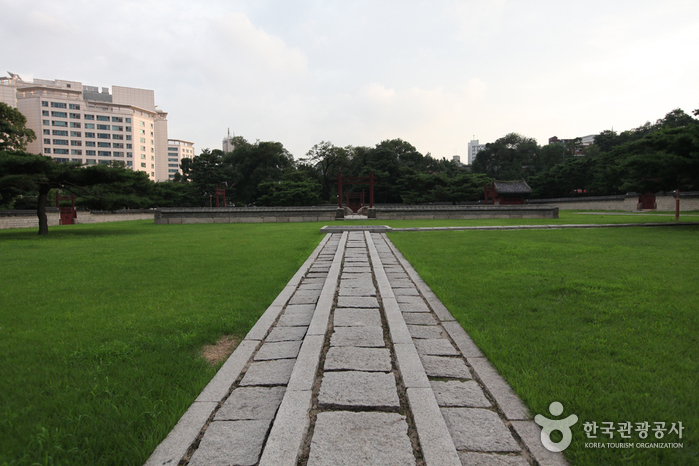
Sajik Park is one of the three most popular parks in Jongno-gu along with Tapgol Park and Samcheong Park. Located west of the Government Complex-Seoul on the southeastern foothills of Inwangsan Mountain, the park measures an impressive 188,710 m².
The name of the park dates back to 1395 when Taejo Yi Sung-gye made Sajik Altar (altar to the State deities) at the center of the park. "Sa" refers to the deity of the earth while "jik" refers to the deity of the five grains. Rites wishing for a good harvest were held regularly at Sajik Altar.
In the park are several playgrounds, statues of Sin Saimdang, Hwanghakjeong, and Yulkog Yi I, and the Municipal Children's Library. Dangun Shrine and Jongno Library are situated nearby. By following the path next to Sajik Park for approximately 5 minutes, travelers can reach the Inwangsan hiking path with relative ease.
Bukchon Son Mandu Bukchon Branch (북촌손만두 북촌점)
1.1Km 2024-12-10
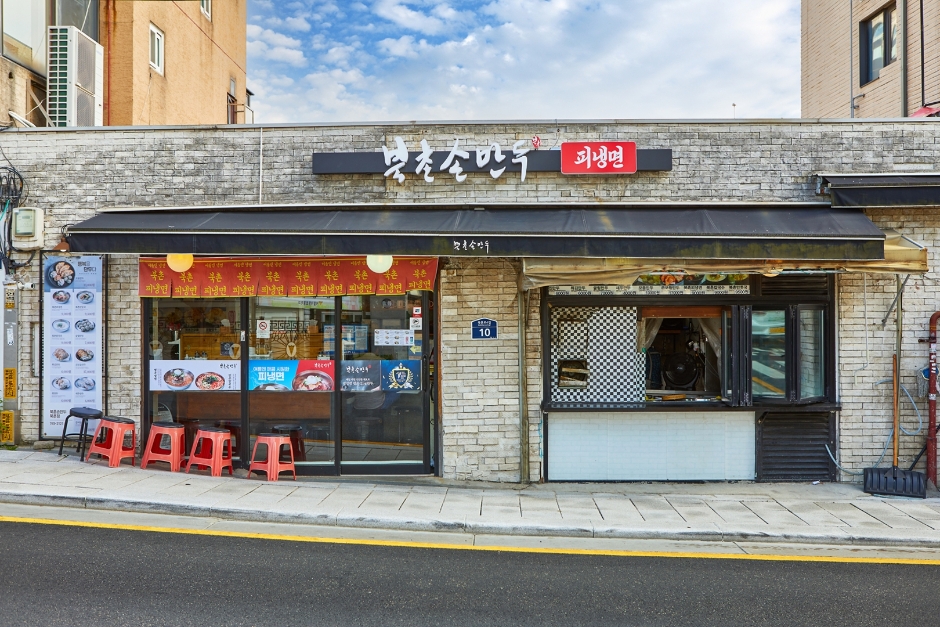
This third-generation family-owned handmade mandu restaurant has been in business since 1953. Its handmade mandu bears the tradition of nearly 70 years. This restaurant distinguishes itself above others with its unique expertise in the art of mandu-making and fresh ingredients, capturing deep flavors with care in each mandu. A full spread of mandu is available here, from steamed mandu to thin-skin mandu, deep-fried mandu, shrimp mandu, and galbi mandu, which can be ordered in individual pieces or as an assorted package. Mandu and noodles go perfectly together, and here, visitors can enjoy mandu with cold buckwheat noodles or noodle soup. The most recommended menu is the noodle soup, which serves thick, plump noodles in warm broth. But that does not mean that the cold buckwheat noodles are lacking: cold buckwheat noodles are served in a cool, red kimchi broth.
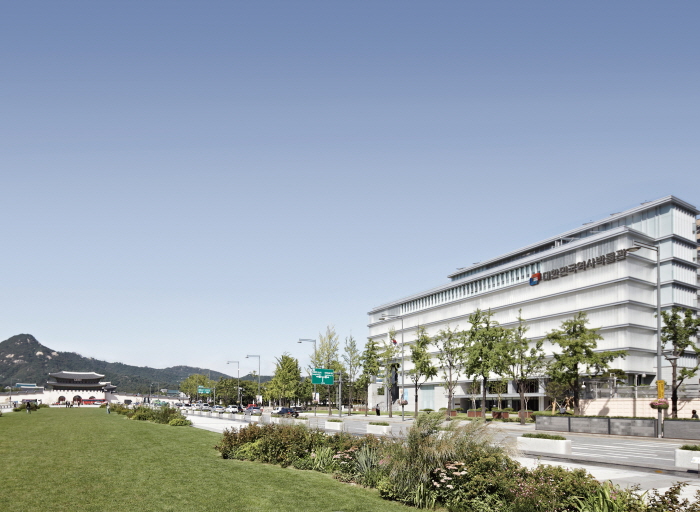
National Museum of Korean Contemporary History (대한민국역사박물관)
1.2Km 2022-12-27
198, Sejong-daero, Jongno-gu, Seoul
+82-2-3703-9200
The National Museum of Korean Contemporary History opened on December 26, 2012, and showcases Korea's modern history, from the opening of Incheon Port to current times. The museum provides an in-depth look at the changes in the nation through exhibitions and educational programs, as well as researching, developing, and collecting materials. The museum is comprised of four exhibition halls; Prelude to the Republic of Korea, Foundation of the Republic of Korea, Development of the Republic of Korea, and Modernization of South Korea, toward the World. In addition, the Korean History Dream Village features a hands-on program hall for children to learn modern and contemporary history. In addition to special exhibitions, the museum also offers educational and cultural programs for children.
 English
 한국어
한국어 日本語
日本語 中文(简体)
 Deutsch
 Français
 Español
 Русский


