Byukchoji Gardens (벽초지수목원)
18.8Km 2025-10-23
242 Buheung-ro, Gwangtan-myeon, Paju-si, Gyeonggi-do
+82-31-957-2004
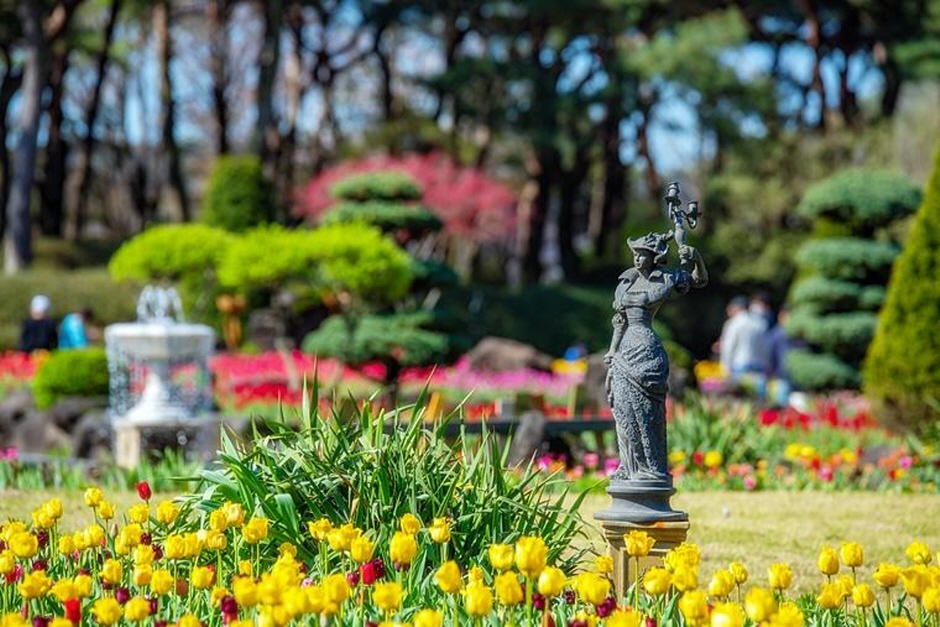
Byukchoji Gardens is made up of a Korean-style and a European-style garden. It is home to nearly 1,400 species of plants. Each garden is organized under a single theme, such as mythology, adventure, and freedom. Byukchoji Gardens also features walking trails, ponds, greenhouses, and lawns. Byukchoji Pond has a Lotus Flower Garden with lotus flowers blooming. Visitors can walk on the trails built above the pond to examine the flowers up close. Nearby tourist sites include Bakdalsan Mountain, Paju Book City, and the Paju Samneung Cluster, a UNESCO World Heritage site.

Dongnimmun Gate (독립문)
18.8Km 2022-12-15
251, Tongil-ro, Seodaemun-gu, Seoul
Dongnimmun stands at the location originally known as Yeongeun, where envoys were once treated. When a Chinese envoy visited, the King would go out through this door to greet. In 1898, to announce the independence from Japan, Dongnimun was constructed with the fund collected by the citizens. The traces of the past still remain on Dongnimmun with two pillars in front of Dongnimmun being the remains of Yeongeunmun.
The Arc de Triomphe in France can be recalled in comparison to Dongnimmun. Dongnimmun was built using granite with a passageway x_height of 14.28 meters. On the top it is written ‘Dongnimmun’ in Korean with the national flag drawn on each side. On the inner-left side there are stone stairs leading to the attic. The national flower Mugunghwa are planted around Dongnimmun. Now it is surrounded by roads and it is eye-catching to view when passing by.
Seodaemun Prison History Museum (서대문형무소역사관)
18.8Km 2024-12-02
251 Tongil-ro, Seodaemun-gu, Seoul
Seodaemun Prison was built under the Japanese administration to imprison independence movement activists. It first opened on October 21, 1908 under the name Gyeongseong Prison. Eventually, so many activists were imprisoned that the building had to be expanded. At that time, the name changed to Seodaemun Prison on September 3, 1912. Eighty years later, the prison was turned into Seodaemun Independence Park on August 15, 1992 to commemorate the Korean patriots who were tortured in prison, giving their lives for freedom. Of the many buildings, only seven were preserved for their historical significance, among which three prison buildings and the execution site were designated as a Historic Site. In 1998, the park underwent another transformation into today's Seodaemun Prison History Hall to educate the public on the importance of Korea's independence and the sacrifices of those who fought to achieve it.
Ewha Womans University Museum (이화여자대학교박물관)
18.8Km 2022-09-14
52, Ewhayeodae-gil, Seodaemun-gu, Seoul
+82-2-3277-3152
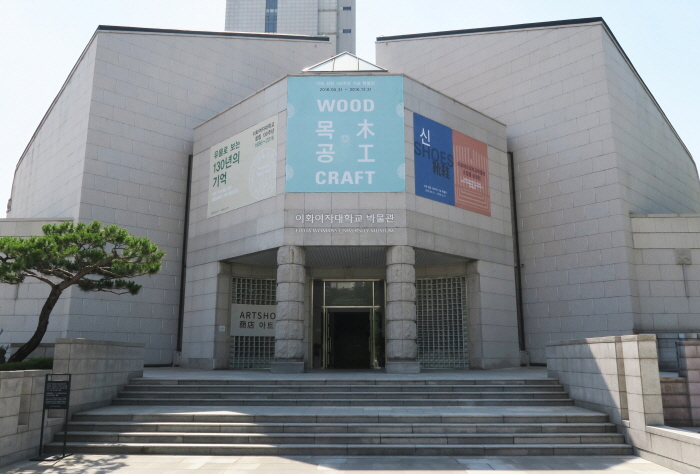
The Ewha Womans University Museum was established in 1935 with the goal of preserving the cultural heritage of Korea. Originally, items related to folk art, traditional woodwork, and pottery were put on display in the hall of the main university to keep them from being confiscated during the Japanese occupation. This later led to the opening of the museum to display and store the growing collection.
Regular exhibitions of the museum’s collection have been taking place annually from 1972. Since 1996, the museum also held special exhibitions that focus on other themes related to cultural heritage. Additional small-scale exhibitions are also held frequently to promote Korea's traditional culture and art.
A ceramics research facility as well as a more traditional museum, a large portion of the museum’s efforts is focused on the research and excavation of kilns. To this aim, excavation teams from the museum have traveled to various parts of the country to conduct studies on historic sites and assess the value of artifacts. Through the publication of books and reports on its discoveries, the museum has contributed to raising knowledge and awareness of Korean cultural heritage in academia and among the public.
Ewha Welcome Center (이화웰컴센터)
18.8Km 2022-09-13
52, Ewhayeodae-gil, Seodaemun-gu, Seoul
+82-2-3277-3277
Ewha Welcome Center opened in 2013 as the first promotional center and visitor center of its kind on a university campus in Korea, comprised of an information desk, exhibition lounge, and gift shop. The information desk offers useful information to help visitors get the most out of their Ewha campus experience. The exhibition lounge introduces the history, traditions, and vision of the present-day and future of the university year-round. Visitors can purchase university gear at the gift shop. Furthermore, foreign visitors can take part in a range of campus tour programs in English and Chinese for an enriching experience.
Bugaksan Mountain (북악산)
18.9Km 2024-03-04
Cheongun-dong, Jongno-gu, Seoul
+82-2-765-0297
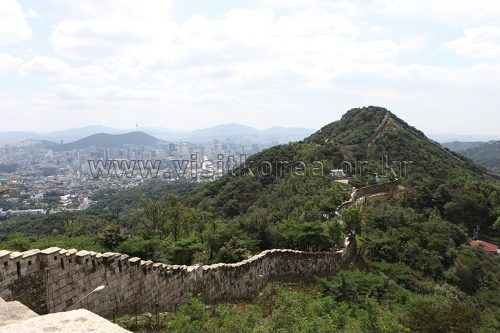
Bugaksan Mountain is the mountain that one can see behind the Gyeongbokgung Palace and the Cheong Wa Dae to the north. Hanyangdoseong, the city wall that surrounded the historic capital of Hanyang, was built by connecting the ridges of this mountain. These walls can still be found today, having been preserved quite well. Different trails weave through the area along the Hanyangdoseong, the Seoul City Wall, and one can visit these trails at night as well. Bugak Skyway is a road that connects Changuimun Gate to Jeongneung Royal Tomb, and one can get a great view of Seoul’s city center from the Palgakjeong Pavilion on Bugak Skyway.
Cheongun Literature Library (청운문학도서관)
18.9Km 2023-08-16
40 , Jahamun-ro 36-gil, Jongno-gu, Seoul
Cheongun Literature Library is located at the foot of Inwangsan Mountain and can be reached by following the mountain's walking trail starting from Changuimun Gate along the fortress wall. This public hanok library is designed in consideration of the sloped topography and the natural scenery of Inwangsan Mountain. The library consists of two floors: an underground floor and a ground floor. While the ground floor is designed as a traditional hanok, the underground floor is made of concrete to support the hanok building and the spacious outdoor yard. By implementing the natural slope in the library's design, the underground southern entrance is exposed, allowing sunlight to enter. The underground floor features a wide collection of books while the ground floor serves as a place for reading. The natural environment surrounding the library adds to the hanok building's traditional and peaceful charms.
Olivine Spa (올리바인 스파)
18.9Km 2025-10-23
4-1 Tongil-ro 16-gil, Jongno-gu, Seoul
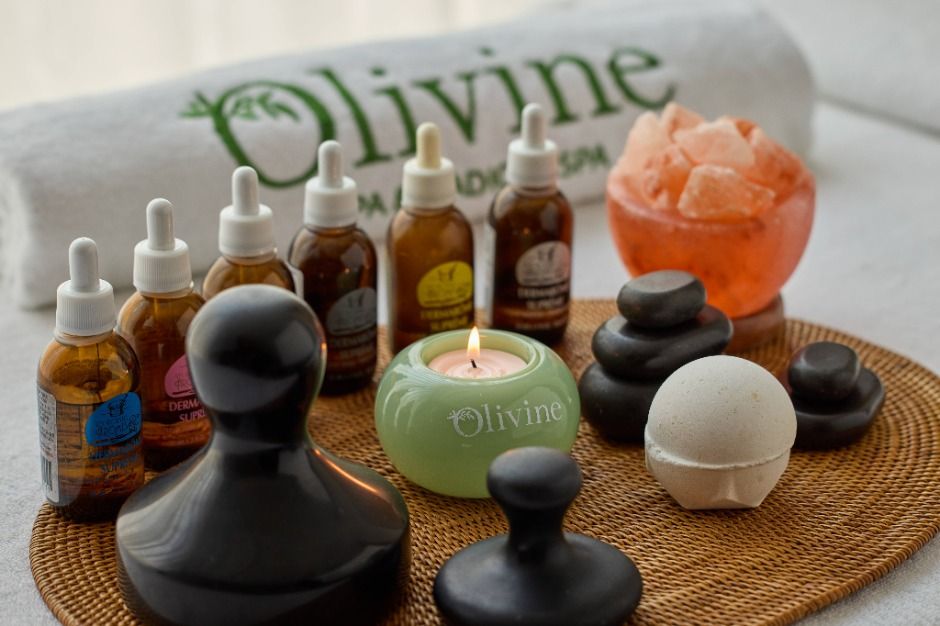
Chosen as one of the 25 recommended wellness tourist destinations by the Ministry of Culture, Sports and Tourism and the Korea Tourism Organization, Olivine Spa operates a luxury spa and a beauty & slimming center in downtown. The spa also provides professional pre-natal and post-natal massage, body shape care, and various beauty programs in partnership with Seran General Hospital and Olivium (a postpartum care center). Olivine Spa provides massages by top-tier therapists in the industry who will relieve fatigue and eliminate toxins accumulated through daily life. They will help your body become healthier and more balanced, ensuring customer satisfaction. Furthermore, Olivine Spa uses Swiss premium brands Les Nouvels Aroma and Darphin in their programs. Its beauty & slimming center provides customized consulting and various beauty-related medical programs in partnership with medical staff at Seran General Hospital.
Ewha Womans University (이화여자대학교)
18.9Km 2023-07-04
52, Ewhayeodae-gil, Seodaemun-gu, Seoul
+82-2-3277-2114
Ewha Womans University is Korea's first women's university founded in 1886 by American Methodist missionary Mary Scranton. Ewha Womans University is also the most famous women's university in Korea and its name originates from Ehwa Hakdang, a name given by Empress Myeongseong in 1887. Ewha Womans University created a four-year university course in 1910, and in 1943, the name of Ewha was taken away during the Japanese colonial period and downgraded to a one-year school. In October 1945, the year of Korea's independence from Japan, it regained the name of Ewha and was promoted to a university with eight departments. Currently, it consists of 15 graduate schools, 11 colleges, and 67 departments, and there are 8 affiliated research institutes.
The street in front of Ewha Womans University is famous for shopping. This place is full of clothing stores and neat food that boast a popping sensation to suit the tastes of female college students. The shopping street in front of Ewha Womans University is a straight road that lies ahead of Exits 2 and 3 of Seoul Subway Line 2. Alleyways stretch out like branches around this street and are filled with various accessory shops, clothing stores, shoe stores, restaurants, cafes, and beauty salons.
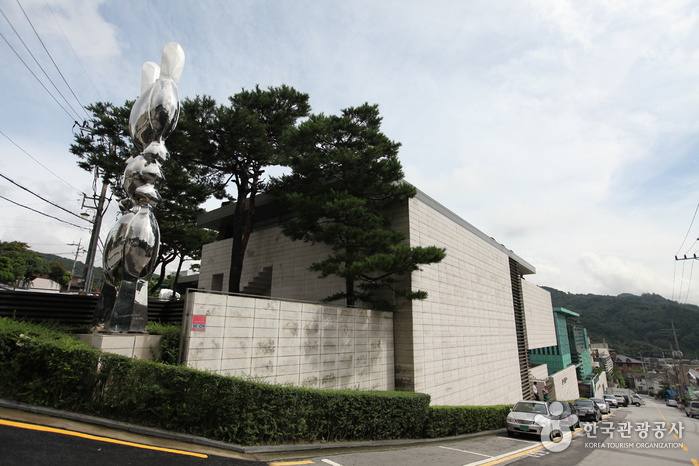
Gana Art Center (가나아트센터)
18.9Km 2024-03-18
28 Pyeongchang 30-gil, Jongno-gu, Seoul
The Gana Art Center located at the foothills of Bukhansan Mountain has been showcasing more than 300 exhibitions since its opening in 1983. Through both national and international exhibitions, the Gana Art Center is a recognized gellery. With numerous fairs and exhibitions, Gana Art Center not only invite internationally known artists, but also promotes other forms of art, such as music, theater, mime, etc. Through their flexibility in promoting all art forms, the visitors will surely be able to find the theme of their interest.
 English
 한국어
한국어 日本語
日本語 中文(简体)
 Deutsch
 Français
 Español
 Русский


