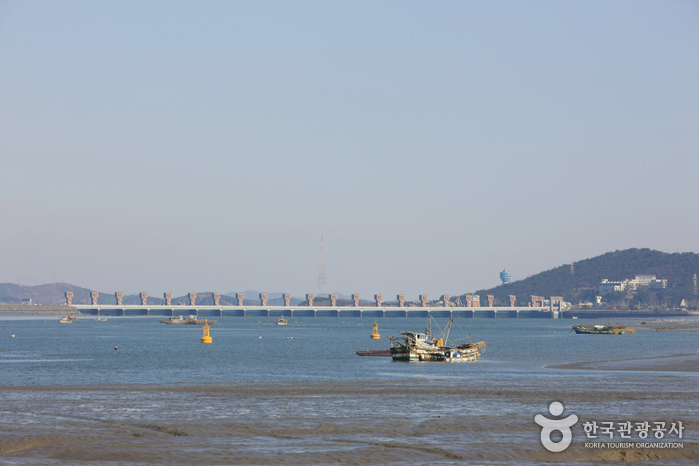
Gunsan Geumgang Estuary Bank (금강하구둑(군산))
9.4Km 2024-04-07
120, Cheolsae-ro, Gunsan-si, Jeonbuk-do
Geumgang Estuary Bank was completed in 1990 as part of an agricultural development project for 6 cities and counties in Chungcheongnam-do and Jeollabuk-do. The Korea Agricultural and Rural Infrastructure Corporation invested approximately 100 billion won for the project and the construction lasted for 8 years. The estuary bank can hold up to 130 million tons of water. The 1,840-meter long bank serves a bridge that connects Chungcheongnam-do to Jeollabuk-do.
Aside from being the source of water for agricultural and industrial use in Jeollabuk-do and Chungcheongnam-do, the bank also provides flood control for the area around Geumgang River. It helps keep Gunsanhang Port operational by preventing soil
and sand from accumulating at the mouth of the river. It also prevents the backwash of seawater from causing damage to farmlands. Geumgang Estuary Bank has an important role as a tourist destination by connecting Gunsan and Janghang.
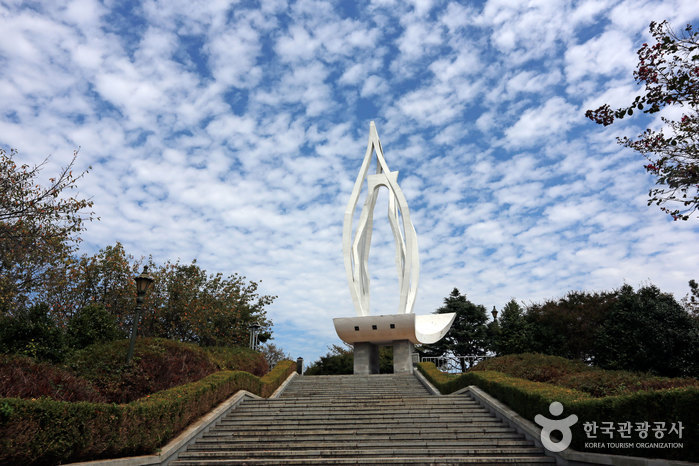
Wolmyeong Park (월명공원)
9.8Km 2024-04-07
26-3, Wolmyeonggongwon 1-gil, Gunsan-si, Jeonbuk-do
Wolmyeong Park is a popular tourist destination in Gunsan and
connects five mountains in the vicinity. The park has 12 kilometers of walking trails, as well as an observatory, sculpture park, and various monuments. From Susi Tower, which resembles a flame or wind-blown sail, people can see all of downtown Gunsan, the sea to the south of Gunsan, the mouth of the Geumgang River, and the large Janghang smelting factory.
The park has well-arranged gardens and 30-year old rattan and cherry trees. A cherry blossom photo contest is held every April, when the park is covered in cherry blossoms.
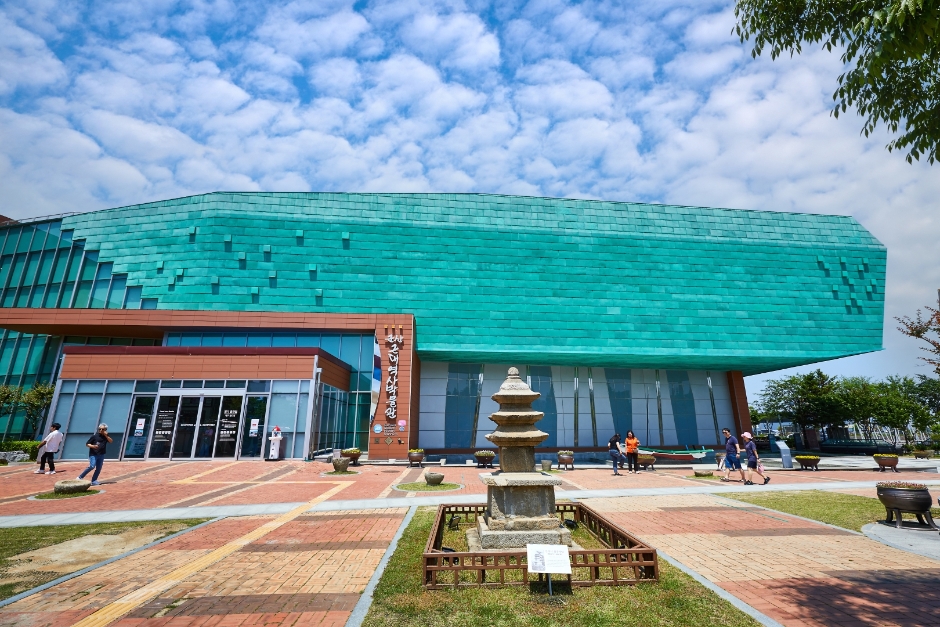
Gunsan Modern History Street (군산 근대화 거리)
10.1Km 2024-04-07
41, Jangmi 1-gil, Gunsan-si, Jeonbuk-do
Gunsan was historically an important trading port. Because of that, it often served as the landing point of new culture in Korea. One such example is the modern culture during the Japanese colonial period, which traces of that time can still be found today. At Gunsan Modern History Street, you will find Gunsan Modern History Museum, Old Gunsan Customs Office, Gunsan Modern Art Museum, Gunsan Modern Architecture Hall, and the former Joseon Bank building standing in a row. If you want to see Gunsan’s past and present, a visit to the museum is recommended. The area between Leesungdang and this area is the old city center of Gunsan, home to shops and cafes that build upon Gunsan’s uniquely retro aesthetics.
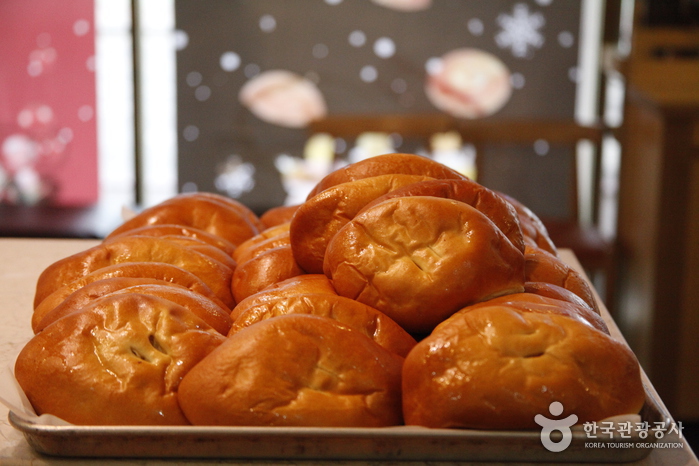
Leesungdang (이성당)
10.2Km 2025-10-23
177 Jungang-ro, Gunsan-si, Jeonbuk-do
Leesungdang, established in 1945, is the oldest bakery in Korea, renowned for its popular yachaeppang (vegetable bun) and danpatppang (bun with sweet red bean filling). Danpatppang is made with rice flour and generously filled with sweet red bean paste. Yachaeppang features a chewy texture with a variety of vegetables inside. It is also famous as one of the representative tourist attractions in Gunsan.
◎ Travel information to meet Hallyu’s charm
This bakery, with its rich history and popularity among Koreans, has been featured in several variety shows, including "Two Days and One Night," "Infinite Challenge," "Home Alone," and "Night Goblin."

Yubudo Island (유부도)
11.9Km 2024-02-21
Yubudo-gil, Janghang-eup, Seocheon-gun, Chungcheongnam-do
Yubudo Island is a small island in front of Seocheon's coastline, accessible by ferry from Janghang Port in about 30 minutes. The island boasts extensive tidal flats and saltern developed with embankment. It is a place where saltwater and freshwater mix, making it abundant in fish like grey mullet and shrimp. Yubudo Island is also known as a resting spot for over 100 species of migratory birds.
Donggunsan Hospital (의료법인 오성의료재단 동군산병원)
11.9Km 2025-10-23
149 Jochon-ro, Gunsan-si, Jeonbuk-do
Donggunsan Hospital is a general hospital equipped with advanced medical equipment and system, ensuring high accuracy in tests and diagnoses, and providing high-quality treatment and medical services.
The hospital aims to become a genuinely good, patient-centered institution. It focuses on fostering Health Promotion Center, Gastrointestinal Endoscopy Center as well as areas of vascular surgery, cosmetic procedures, varicose vein surgery, dental cosmetics, minimally invasive spinal surgery to offer top-tier medical care and preventive services. Additionally, with the establishment of an International Medical Center and dedicated patient rooms, Donggunsan Hospital is well-prepared for treating international patients, paving the way for its evolution into a global hospital.
 English
 한국어
한국어 日本語
日本語 中文(简体)
 Deutsch
 Français
 Español
 Русский


