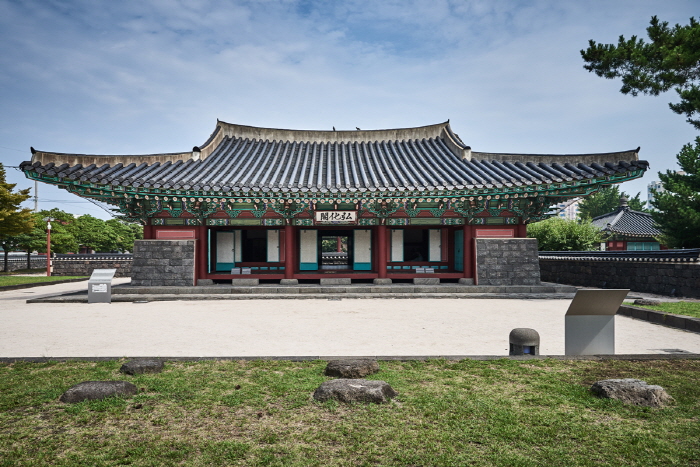
Jeju-mok Government Office (제주목관아)
2.3Km 2024-03-15
25 Gwandeok-ro, Jeju-si, Jeju-do
+82-64-710-6714
The Jeju-mok Government Office was a gwana, or regional government office, that historically served as the center of Jeju Island’s political, administrative, and cultural activities, spanning from its early days as the State of Tamna through the Joseon period. A significant portion of the structure was destroyed in a fire in 1434, leading to subsequent rebuilding efforts. From 1991, archeological excavations were conducted in four stages, enabling the meticulous restoration of several key buildings within the complex. These include the Honghwagak Pavilion, Yeonhuigak Pavilion, Uyeondang Pavilion, Gyullimdang Pavilion, and Gwandeokjeong Pavillion, all of which were restored by December 2002. Additionally, the complex is known for hosting annual nighttime events.
![NBA [Tax Refund Shop] (엔비에이)](http://tong.visitkorea.or.kr/cms/resource/41/2887441_image2_1.jpg)
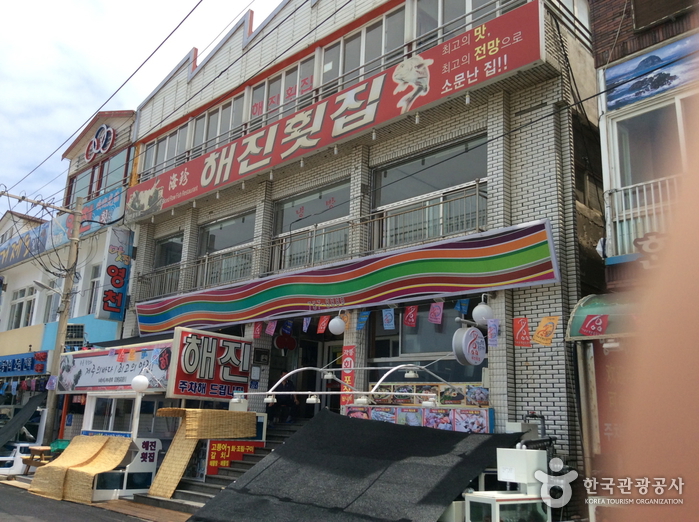
Haejin Hoetjip (해진횟집)
2.4Km 2024-03-18
22-1 Seobudu-gil, Jeju-si, Jeju-do
+82-64-722-4584
Haejin Hoetjip is a restaurant located on the breakwater of the western pier at Jeju Port. Its signature dish is gumunjaengi (also known as neungseongeo or sea bass), a delicacy unique to Jeju. In addition to this, the restaurant offers a variety of fresh hoe (sliced raw fish) including chamdom (sea bream) and dageumbari (sawedged perch). Diners on the second and third floors can enjoy views of the Jeju sea. Haejin Hoetjip is a popular spot for both locals and visitors.
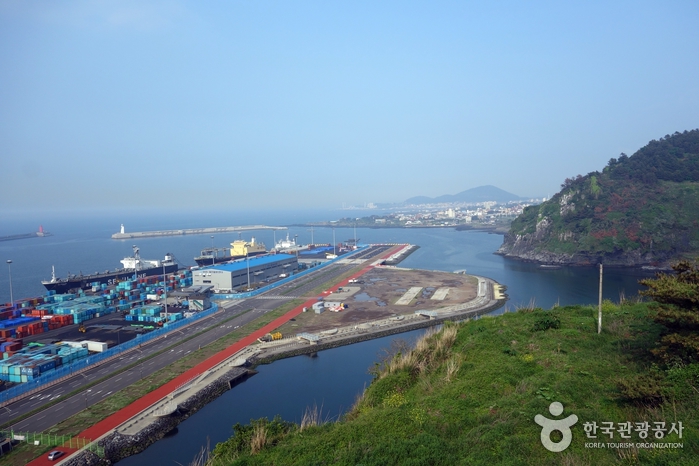
Sanji Lighthouse (산지 등대)
2.4Km 2021-03-18
108-1, Sarabongdong-gil, Jeju-si, Jeju-do
+82-64-740-6000
The name Sanji derives from the area being recorded as Sanjichon Village, literally translated as the mountainous village, in Tamna Sullyeokdo, a book of paintings showing life in Jeju. This record was created in 1702 by painter Kim Nam-gil, under the command of the Jeju Province governor, Lee Hyeong-sang.
Sanjicheon Stream originates from Hallasan Mountain and empties itself into the sea. Sitting halfway up Sarabong Peak, one of the signature parks on Jeju-do island, Sanji Lighthouse overlooks the port of Jeju.
![JDX - Jeju Donam Branch [Tax Refund Shop] (JDX 제주도남)](http://tong.visitkorea.or.kr/cms/resource/34/2887434_image2_1.jpg)
JDX - Jeju Donam Branch [Tax Refund Shop] (JDX 제주도남)
2.5Km 2024-04-17
1F, and 2F, 436, Yeonbuk-ro, Jeju-si, Jeju-do
-

Byeoldobong Peak (Beri Oreum) (별도봉(베리오름))
2.5Km 2025-08-18
Seonban-ro, Jeju-si, Jeju-do
+82-64-740-6000
Situated in the east of Hwabuk 1-dong and along the coast, Byeoldobong is a parasitic mountain made of siliciclastic sedimentary rocks and lava. Its northern slope is dominated by steep cliffs where a large rock called Jasalbawi Rock (Suicide Rock) is located. At the bottom of the cliffs are Goraegul Cave (Whale Cave) and an oddly-shaped rock that looks like a mother carrying her child on her back.
Despite being only 136m high, Byeoldobong is home to Jangsu Trail, a walking path that stretches over 1.8km around coastal cliffs, overlooking the ocean. Considered the most pleasant trail on Jeju Island, it offers a spectacular view of numerous peaks, Jeju Port and its nearby villages, and the emerald-blue sea. Naturally, it is a popular tourist destination for family visitors and couples.
![Olive Young - Jeju Tapdong Branch [Tax Refund Shop] (올리브영 제주탑동)](http://tong.visitkorea.or.kr/cms/resource/85/2887285_image2_1.jpg)
Olive Young - Jeju Tapdong Branch [Tax Refund Shop] (올리브영 제주탑동)
2.5Km 2024-04-16
15-1, Tapdong-ro, Jeju-si, Jeju-do
-
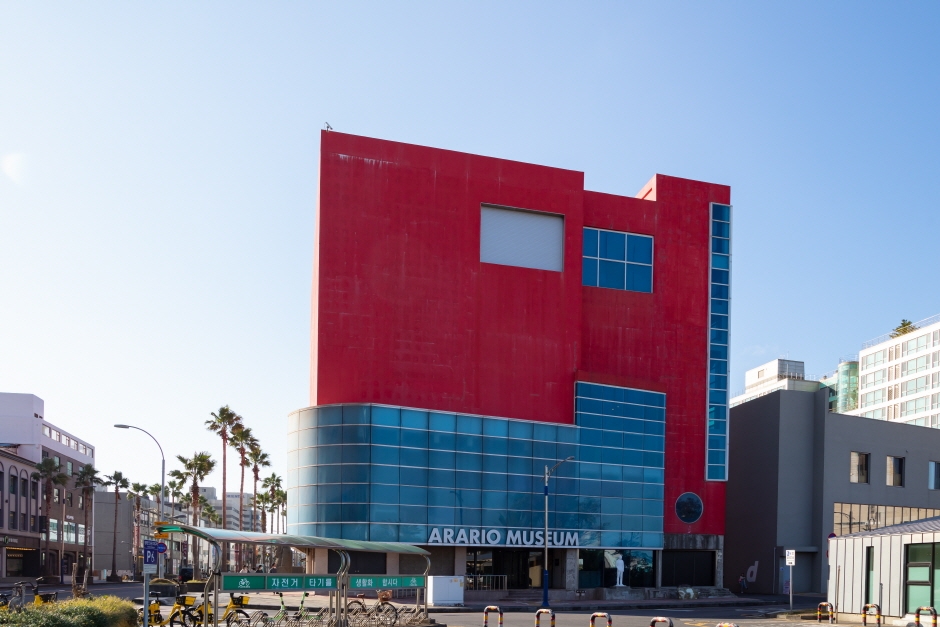
Arario Museum Tapdong Cinema (아라리오 뮤지엄 탑동 시네마)
2.5Km 2023-05-05
14, Tapdong-ro, Jeju-si, Jeju-do
+82-64-720-8201
Arario Museum Tapdong Cinema was created by Kim Chang-il, a famous artwork collector in Korea, who reused an abandoned building to make a contemporary art museum. The building did not go through extreme renovation, allowing visitors enjoy the building's original features along with the artworks. The underground floor and four ground floors hold exhibits where visitors can take photographs (flash photography not allowed), and the fifth floor houses a souvenir shop and a cafe where visitors can relax and enjoy panoramic views of the old city center and Tap-dong.
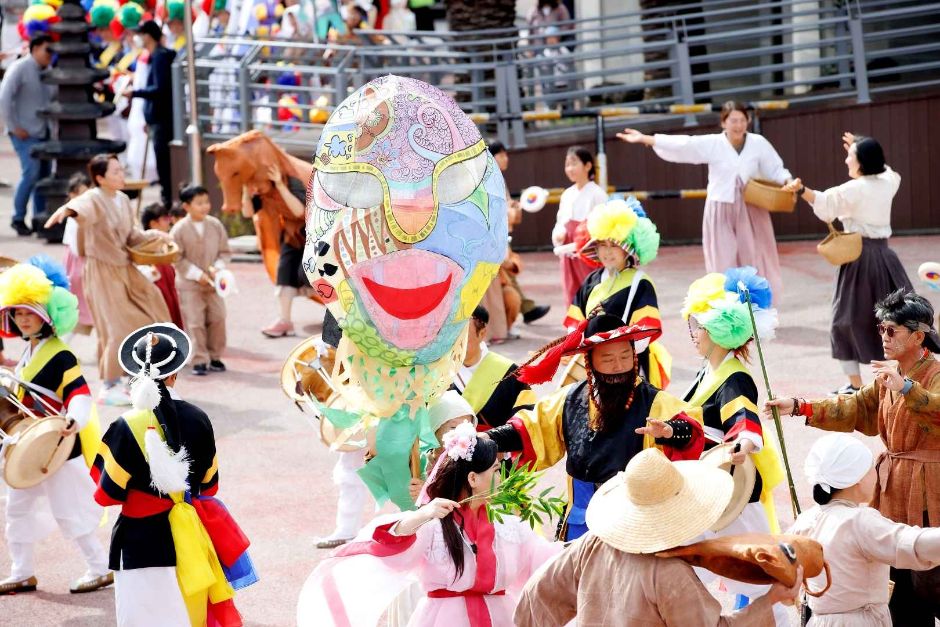
Tamna Culture Festival (탐라문화제)
2.5Km 2025-07-11
2 Jungang-ro, Jeju-si, Jeju-do
+82-64-753-3287
The Tamna Cultural Festival is a celebration of Jeju’s unique cultural heritage, including folklore, mythology, history, and daily life. The festival’s highlight is the 1.7 km street parade with over 1,500 participants, showcasing active community involvement. The event also features high-quality performances that attract many visitors.
![Tamra One - Jeju Branch [Tax Refund Shop] (탐라원 제주)](http://tong.visitkorea.or.kr/cms/resource/33/2887433_image2_1.jpg)
Tamra One - Jeju Branch [Tax Refund Shop] (탐라원 제주)
2.6Km 2024-04-17
381, Yeonbuk-ro, Jeju-si, Jeju-do
-
 English
 한국어
한국어 日本語
日本語 中文(简体)
 Deutsch
 Français
 Español
 Русский


