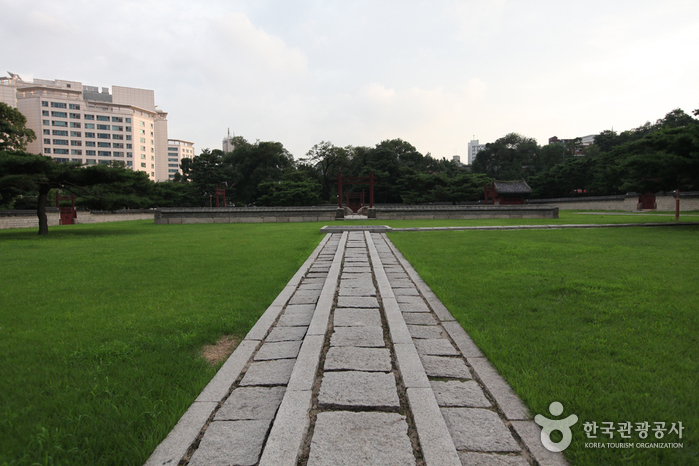
Parc Sajik à Séoul (사직공원(서울))
11.0Km 2022-09-19
89, Sajik-ro, Jongno-gu, Seoul-si
+82-2-2148-2834
Le parc Sajik est l’un des trois parcs les plus populaires de Jongno-gu, avec le parc Tapgol et le parc Samcheong. Situé à l’Ouest du complexe du gouvernement central, au Sud-Est du mont Inwang, le parc possède la taille impressionnante de 188,710 m².
Le nom du parc remonte à 1395, lorsque Taejo Lee Sung-gye construisit le premier Sajikdan (autel dédié aux divinités d’Etat), avec en son centre, le sanctuaire Jongmyo (sanctuaire ancestral royal). « Sa » désigne la divinité de la terre, tandis que « jik » se réfère au dieu des cinq céréales. Des rituels pour obtenir une bonne récolte avaient lieu régulièrement au Sajikdan. Néanmoins, le site n’a pas été reconnu officiellement comme parc jusqu’en 1922, lors de la période coloniale japonaise.
Dans le parc, on trouve plusieurs terrains de jeux, des statues de Sin Saimdang, Hwanghakjeong et Yi I (souvent mentionné sous son nom de plum « Yulgok »), ainsi que la bibliothèque municipale des enfants. Le sanctuaire de Dangun et la bibliothèque de Jongno se trouvent à proximité. En suivant le sentier près du parc Sajik pendant environ 5 minutes, les visiteurs peuvent atteindre le parcours de randonnée du mont Inwang relativement facilement.
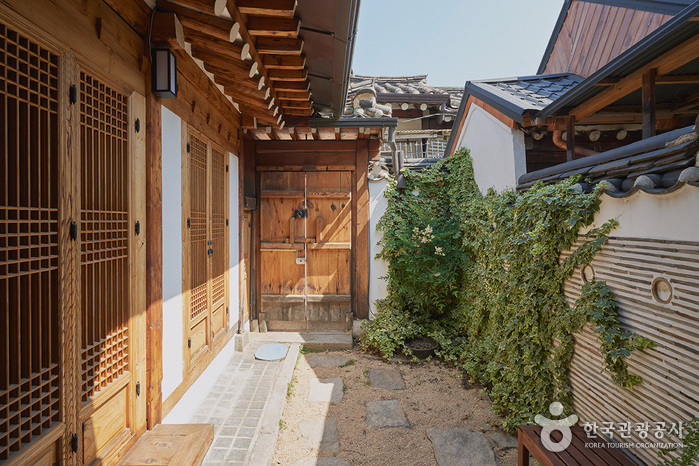
Haeunjae / 하은재
11.0Km 2025-08-12
68-10, Jahamun-ro, Jongno-gu, Seoul
Haeunjae (下隱齋), meaning “hermit’s residence,” is a hanok (traditional Korean house) residence located in Seochon Hanok Village, near Gyeongbokgung Station on Seoul Subway Line 3. It is dedicated to the ideal of “movies and rest,” and takes after the characteristic form of modern hanok with a small courtyard. The entire house is rented out at once, with a queen bedroom, kitchen, movie room, and two restrooms. Up to 4 guests can reserve the house, with each additional guest above the standard of 2 having access to additional bedding.
The movie room is furnished with a Bose sound system, beam projector, and screen, along with a mobile foot bath. The kitchen is equipped with a refrigerator, hand drip coffee maker, toaster, electric kettle, and utensils. A 10% discount is available for guests staying for more than 2 nights on weekdays, and towel replacement and cleaning services are offered for guests staying for more than 3 nights.
The residence is located close to tourist sites like Tongin Market, Gyeongbokgung and Changdeokgung Palaces, and Samcheong-dong area.
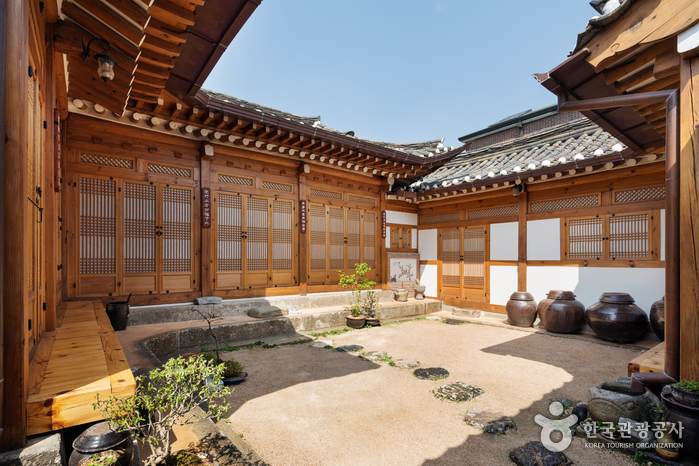
Hanok Guesthouse Dongchonchae / 한옥 게스트하우스 동촌재
11.1Km 2025-08-12
21-10, Jahamun-ro 11-gil, Jongno-gu, Seoul
Built in 1939, Dongchonchae was designated as Seoul Well Hanok by the Seoul Metropolitan City in 2016. In 2020, this hanok (traditional Korean house) received the Certificate of KOREA QUALITY from the Korea Tourism Organization in the Heritage Hanok field in recognition of its historicity and quality of services. Dongchonjae is located in the western side of Gyeongbokgung Palace, at Seochon. When one passes through its main gate, one sees the yard, with anchae (women's quarters), sarangchae (men's quarters), and byeolchae (detached quarters) surrounding the plot. Anchae has four rooms, daecheong (wood-floored main hall), a kitchen, and a restroom. One of the rooms is used for tea ceremonies as well. Outside of the sarangchae and byeolchae, which are the living spaces for the owners, visitors have free access to the numaru (raised open floor) and the yard. The anchae’s rooms “Bom” and “Yeoreum” can accommodate 2 to 3 adults each, while the rooms “Gaeul” (Tea Room) and “Gyeoul” are optimal for two. The building is rented out as a whole, so no more than one group may stay in the building at any given time. Standard occupancy is four persons, and eight is the maximum number. There are two restrooms, one within the anchae building, one out in the backyard.
Cooking is not allowed in the kitchen, but guests are free to bring in outside food. Experience programs on offer include nighttime exploration of Seoul City Wall, tea ceremony, folk songs, and rice cake making. Additional payment is only required for rice cake making. Guests may choose between two types of complimentary breakfast: Korean, which comes with rice, soup, and three side dishes; and Western, which comes with bread, salad, and coffee. There are a 100-in screen and mini projector for film watching in the yard or daecheong. Towels, toiletries, hair dryer, bottled water, traditional tea, and capsule coffee are included. The kitchen is equipped with kitchen utensils, a microwave, and a coffee pot, enough for instant foods. Guests also have access to refrigerator and washing machine
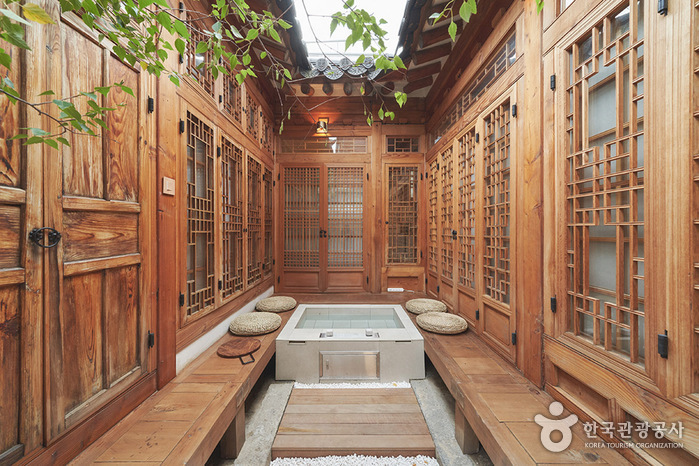
Of one book and stay / 일독일박
11.1Km 2025-08-11
11-1, Pirundae-ro 3-gil, Jongno-gu, Seoul
This hanok (traditional Korean house) is located in Seochon Village near Gyeongbokgung Palace. It is a modern C-shaped hanok centered around the inner courtyard, which is the first thing that the guests see after entering through the gate. While it is not expansive, white pebbles and a foot bath make this hanok a unique one. One can enjoy a foot bath while sitting on the porch.
The bedroom, which is located beyond the living room, is furnished with a queen-sized bed. Opening the screen doors brings one to the view of the kitchen area beyond the inner courtyard. A large table, plush sofa, and a small bookcase make the space ideal for books and discussions. Climbing the wooden ladder to the side of the kitchen brings one to the attic, which also doubles as a Korean-style room with a skylight. The kitchen is furnished with a refrigerator, microwave oven, gas stove, electric kettle, toaster, pots, utensils, wine glasses, and bottled water. There is a restroom with a bathtub. The standard occupancy of the house is 4 people.
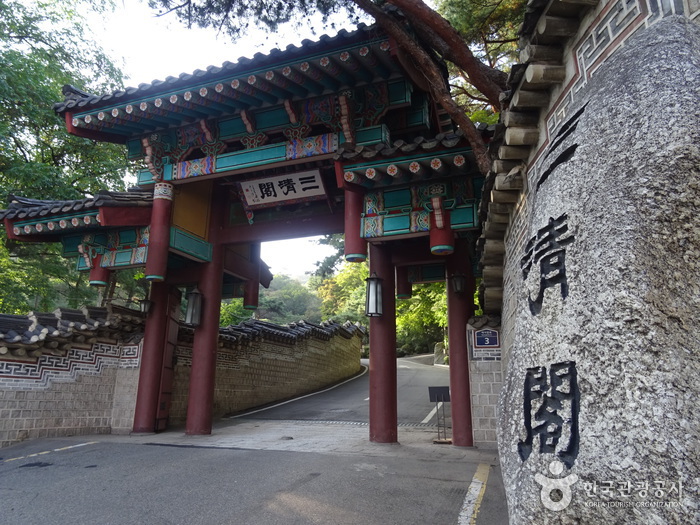
Samcheonggak (삼청각)
11.1Km 2021-08-07
3, Daesagwan-ro, Seongbuk-gu, Seoul-si
+82-2-765-3700
Le pavillon Samcheong, fut établi en 1972, c’était un lieu pour les dîners et importantes négotiations gouvernementales dans les années 70-80. En 1990, le pavillon changea de nom et devint un restaurant jusqu’à ce que la direction en change en décembre 1999.
C’est en 2000, que le site et ses bâtiments furent désignés lieu de culture. Samcheonggak est dorénavant ouvert au grand public. En Octobre 2001, Samcheonggak s’ouvrit également comme centre de représentations traditionnelles. Actuellement les 6 maisons traditionnelles ou « hanok » qui composent le site de Samcheong-gak sont gérées par le centre culturel Sejong. Parmi les 6 bâtiments on compte une salle de spectacle, un restaurant, une maison de thé et un salle de reception pour les invités.
Le Pavillon Samcheong est l’un des endroits les plus connus de Séoul où l’on peut voir des spectacles traditionnels et dîner.
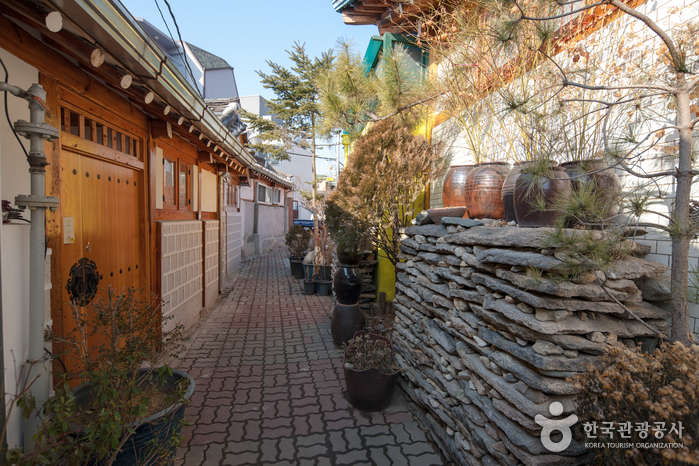
Village Seochon (서촌마을)
11.2Km 2021-07-14
45, Pirundae-ro, Jongno-gu, Seoul
Le village Seochon se situe à l'est du palais Gyeongbokgung. Il s'agit d'un lieu composé à la fois de maisons traditionnels hanok, de petites ruelles paisibles, mais aussi de nouveaux magasins qui forment une très belle harmonie dans le village. En parcourant les nombreuses petites ruelles des lieux, vous pourrez aussi apprécier plusieurs peintures murales très colorèes. Ce village se distingue donc par son côté à la fois pittoresque mais aussi raffiné.

Sangchonjae (상촌재)
11.2Km 2023-08-25
12-11 Sangchonjae, Jahamun-ro 17gil, Jongno-gu, Seoul
Sangchonjae House, administré par la Fondation culturelle de Jongno, désigne un espace culturel hanok situé dans le village de Sejong, Ogin-dong, Jongno-gu. Le site propose différentes activités culturelles autour des traditions en Corée.
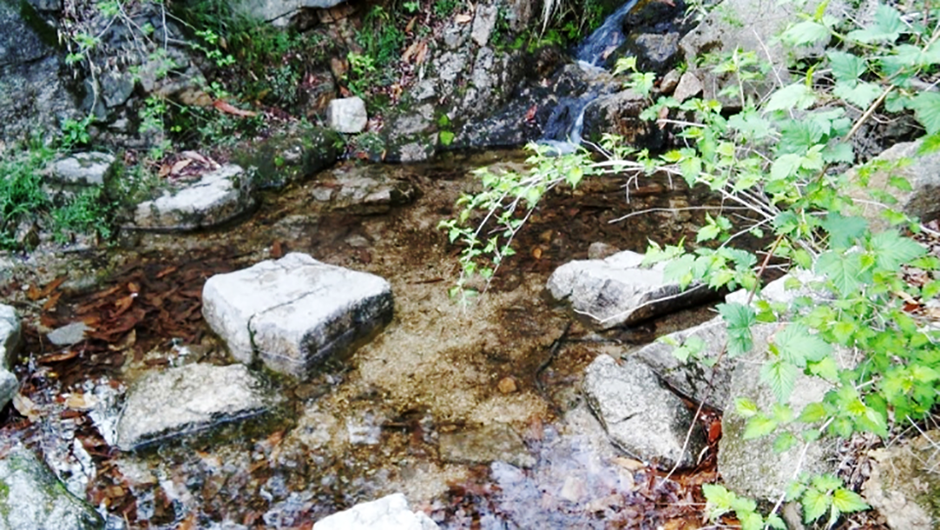
Vallée de Suseong-dong (수성동계곡)
11.7Km 2025-04-18
185-3, Okin-dong, Jongno-gu, Seoul
Les courants d'eau de la vallée Suseong-dong s'écoulent du mont Inwangsan pour rejoindre la rivière Cheonggyecheon. Le site apparaît dans la peinture "Jangdong Palgyeongcheop" tout comme dans des récits historiques datant de la dynastie Joseon.
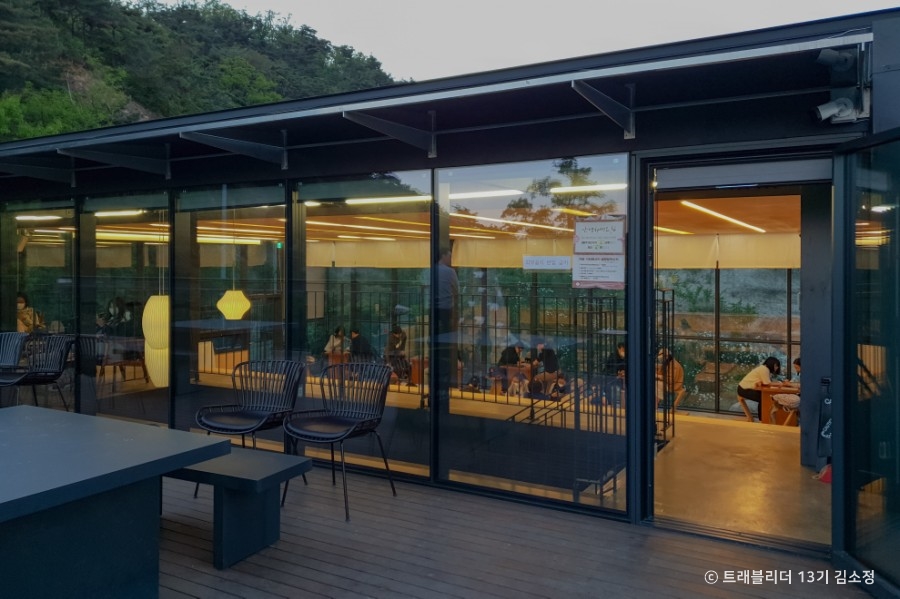
Poste de lecture 'The Forest' sur le mont Inwangsan (인왕산 더숲 초소책방)
11.8Km 2025-04-18
172, Inwangsan-ro, Jongno-gu, Seoul (서울특별시 종로구 인왕산로 172)
Poste de lecture 'The Forest', situé dans le mont Inwangsan, fut inauguré dans un premier temps afin de protéger Cheong Wa Dae avant sa rénovation en espace culturel consacré à la lecture. Le site était en effet un poste de garde durant l'incident de Kim Shin-jo en 1968 et symbolise la douleur de la division des deux Corée. Il est encore possible d'apprécier l'extérieur en brique des lieux et la porte en fer datant de l'époque. Le site est désormais un café lecture réputé pour sa vue sur la tour Namsan.
Bibliothèque littéraire Cheongun (청운문학도서관)
11.9Km 2023-08-25
40, Jahamun-ro 36gil, Jongno-gu, Seoul
La bibliothèque littéraire Cheongun si situe au pied du mont Inwangsan, elle est accessible en suivant les chemins de trekking du mont à partir de la porte Changuimun le long des murailles de la forteresse. L'établissement est réputé pour son architecture en hanok et les vues du mont Inwangsan.
 Français
 한국어
한국어 English
 日本語
日本語 中文(简体)
 Deutsch
 Español
 Русский


