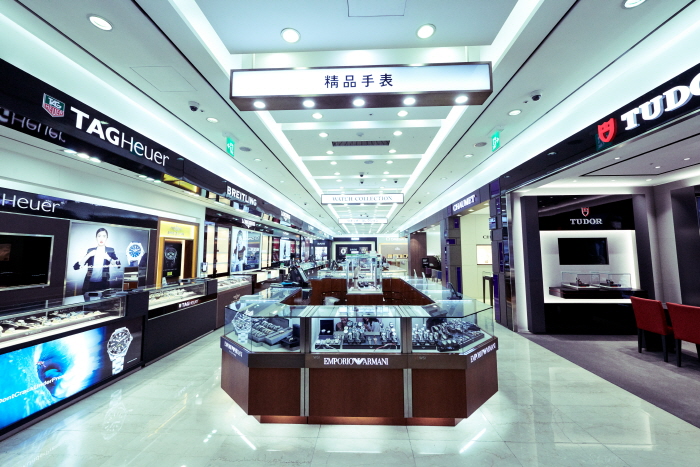
Dongwha Duty Free (동화면세점)
2.8Km 2025-08-04
Sejong-daero 149, Jongno-gu, Seúl.
Dongwha Duty Free solo tiene en venta las mejores marcas del mercado. Puede encontrar las últimas marcas con más tendencia de perfumes, cosméticos, accesorios, entre otros. Aparte de marcas coreanas y extranjeras, puede también encontrar productos de especialidad coreana u objetos tradicionales de todo el mundo.
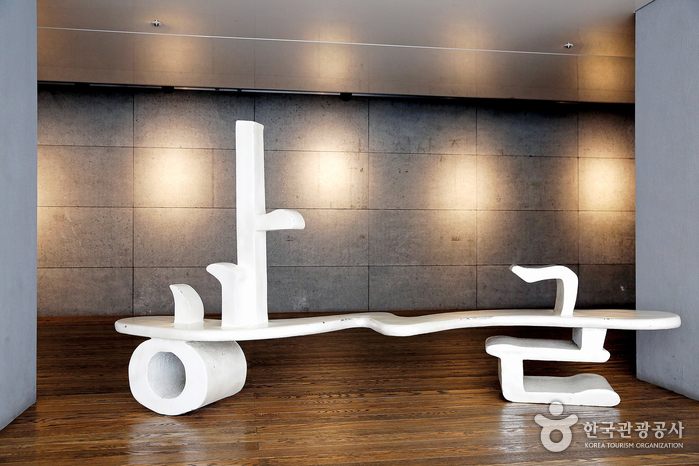
Sala de la Historia del Rey Sejong y del Almirante Yi Sun-shin (세종충무공이야기)
2.8Km 2022-09-19
Sejong-daero 175 (subsuelo), Jongno-gu, Seúl.
El Gran Rey Sejong (“世宗”, 1397-1450, reinado: 1418-1450), 4º soberano de la dinastía Joseon, fue una figura crucial en la historia de Corea, por la creación del alfabeto coreano hangeul y por los brillantes desarrollos que logró en los sectores de la ciencia, cultura y arte, política militar, etc.
Detrás de la estatua de bronce del Rey Sejong ubicada en la Plaza Gwanghwamun está la entrada a la Sala de la Historia del Rey Sejong, donde se exponen material informativo y piezas culturales relacionadas a este gran personaje de la Historia. Consta con una superficie de 3.200 ㎡, distribuidos en 9 espacios temáticos; la cronología del Rey Sejong, el Minbon Sasang (ideología política centrada en el pueblo), la Creación del Hangeul, la Ciencia y el Arte, la Política Militar de Sejong, entre otros. Los visitantes podrán aprender aquí la historia del hangeul. Además, hay otras instalaciones anexas: sala de exposición especial, sala audiovisual, textos informativos, tienda de suvenires, espacio para descansar, etc.
Por otra parte, una estatua de Yi Sun-shin, el mejor comandante naval de la historia de Corea, fue inaugurada en la Plaza Gwanghwamun, ante la del Rey Sejong el Grande, para celebrar el 465 aniversario de su nacimiento. El 28 de abril de 2010 se inauguró la Sala de la Historia del Almirante Yi Sun-shin, en el subsuelo del Centro Cultural Sejong, para conmemorar su vida y sus logros. La exposición abarca temas relacionados con la vida del almirante Yi, que van desde la determinación y la devoción a la lealtad del país y los compatriotas. El museo utiliza lo último en tecnología digital para dar vida a este gran héroe. Otra gran atracción del museo es el barco acorazado geobukseon (buque con forma de tortuga), que Yi utilizó en sus batalals navales, a una escala de 55% del tamaño real. A pesar de ese tamaño, el barco todavía es lo suficientemente grande como para que los huéspedes suban y remen con los remos, y tiene una pantalla digital de las olas del océano jugando con monitores para una experiencia 4D.

Museo de Arte de Seúl, sede central en Seosomun [SeMA] (서울시립미술관(서소문본관))
2.8Km 2025-05-13
Deoksugung-gil 61, Jung-gu, Seúl
El museo que une el palacio Deoksugung con el palacio Gyeonghuigung fue construido en la parte restante de la antigua Corte Suprema en el estilo de los años 1920. Los 6 espacios de exposición más importantes son el vestíbulo principal, la sala de esculturas y la sala especial que expone colecciones de arte moderno de Corea. En el vestíbulo Chon Kyung-Ja, situado en el segundo piso, los visitantes podrán contemplar 93 pinturas procedentes de donaciones. Principalmente retratos o pinturas de naturaleza muerta creadas de 1940 a 1990 por el artista Chon Kyung-Ja, considerada como la principal pintora femenina coreana. La sala de arte experimental puede acoger alrededor de 200 visitantes y tiene una multifuncionalidad ya se trate de proyecciones cinematográficas, música, conciertos, teatro, etc. El museo tiene una tienda de arte y una cafetería. Después de la visita del museo, tómese el tiempo de pasear y apreciar el lugar, dé una vuelta por la tienda de arte.
Plaza Gwanghwamun (광화문광장)
2.8Km 2022-07-25
Sejong-daero 172, Jongno-gu, Seúl.
Inaugurada el 1º de agosto del 2009, la plaza ha sido remodelada como un espacio turístico y recreativo en los alrededores de la Sejong-daero, que se sitúa en el centro de Seúl. El área tiene una historia que data de 600 años.
Durante un largo tiempo, esta calle fue exclusiva para los vehículos, pero con esta última remodelación, ofrece un ambiente especial para las personas. Desde esta plaza se podrá observar el magnífico paisaje del palacio Gyeongbokgung, el monte Bukhansan, etc., y también se ha restaurado la antigua calle Yukjo, para transmitir un ambiente histórico y cultural a los ciudadanos y turistas que la visitan.
La plaza tiene una longitud de 550 m y una anchura de 34 m, se encuentra localizada en el corazón de Seúl. Está clasificada en varios rubros históricos y culturales para el entretenimiento de los visitantes: está el sector de restauración del paisaje de la calle Yukjo, el sector que representa la historia del antiguo Gwanghwamun, el sector cultural para la participación de los ciudadanos, el sector que conecta con el arroyo Cheonggyecheon, etc. Entre las esculturas y establecimientos artísticos famosos están: la estatua del Haetae (criatura mítica coreana), representación del paisaje histórico de la calle Yukjo, la estatua del Gran Rey Sejong, pantallas acuáticas que reflejan los imágenes de la escritura coreana “Hangeul”, etc., entre otras instalaciones tecnológicas y culturales.
Las dos estatuas de grandes dimensiones que representan esta plaza son la del almirante Yi Sun-sin y el Gran Rey Sejong. En los alrededores también se han instalado un estanque y una fuente de agua. La zona que conecta con el arroyo Cheonggyecheon permite el acceso cómodo al palacio Gyeongbokgung y al arroyo. Las aguas subterráneas que brotan de las estaciones de metro de Gyeongbokgung y Gwanghwamun son emitidas hacia el arroyo Cheonggyecheon por medio de un acueducto, y, como la estación de metro está conectada con la parte posterior de la estatua del almirante Yi Sun-sin, los visitantes pueden llegar a la plaza con facilidad. Normalmente, las calles de la plaza son utilizadas para la circulación de los vehículos, pero en caso de festivos nacionales, se restringe el tráfico para disponerlo como área de festivales.
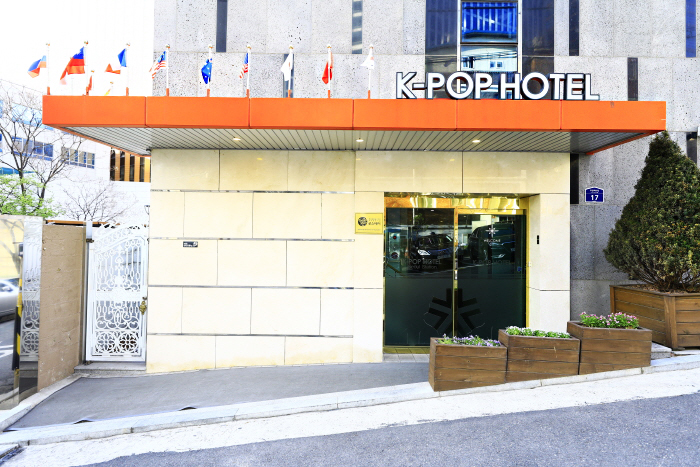
K-Pop Hotel Seoul Station Branch (케이팝호텔 서울역점)
2.8Km 2025-07-30
17, Huam-ro 60-gil, Jung-gu, Seoul
K-Pop Hotel is only a 2-minute walk from Exit 10 of Seoul Station on Subway Lines 1 & 4. It’s conveniently located near a number of tourist destinations, since it’s a mere 10-minute walk from Sungnyemun Gate and only a 15-minute walk from Namsan Park. Gyeongbokgung Palace is only a 10-minute ride away, with Insa-dong located a mere 12 minutes away from the hotel. The 24-hour front desk provides express check-in and check-out services as well as a safe deposit box. Featuring Standard Double Rooms, Twin Rooms, and Family Rooms, the hotel is a great place to stay for business travelers and tourists traveling with friend or family. All the rooms are furnished with air conditioner, cable/satellite TV channels, flat screen TV, free Wi-Fi connection, and hair dryer. There is a rooftop terrace and a cafe where breakfast is served. The cafe is also furnished with kitchen, desktop computer, and washing machine, which can be shared among the guests. If you want to park your car more conveniently and quickly, notify the front desk of your arrival in advance.
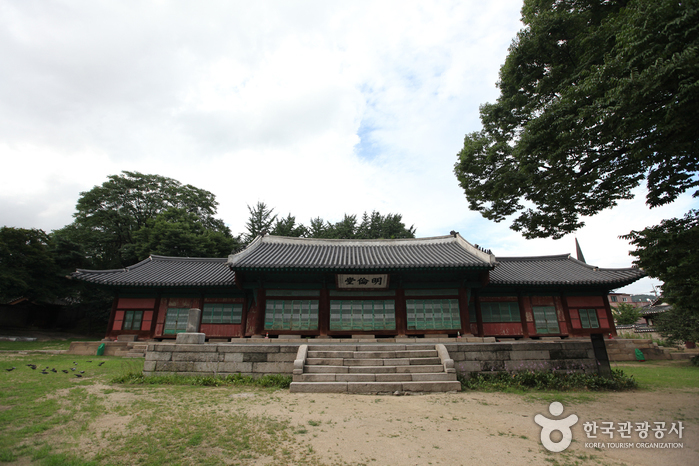
Santuario Munmyo y Complejo Sungkyunkwan en Seúl (서울 문묘와 성균관)
2.8Km 2021-06-24
Sungkyunkwan-ro 31, Jongno-gu, Seúl.
Munmyo es un santuario en honor a Confucio, cuyas enseñanzas son la base del confucionismo. Está dedicado a sus discípulos y a otros eruditos también. Munmyo no solo es un santuario sino que también fue la institución educativa más importante de la dinastía Joseon.
El complejo contiene dos áreas principales: el Daeseongjeon, que alberga santuarios; y el Myeongryungdan, que tiene salones para seminarios y otras instalaciones. También hay dos dormitorios, Dongjae y Seojae, que en conjunto se denominan Sungkyunkwan. Frente al Myeongnyundang se yergue un gingko que es Monumento Natural N°. 59. En primavera y otoño se celebra un rito conmemorativo en honor de Confucio y sus discípulos.
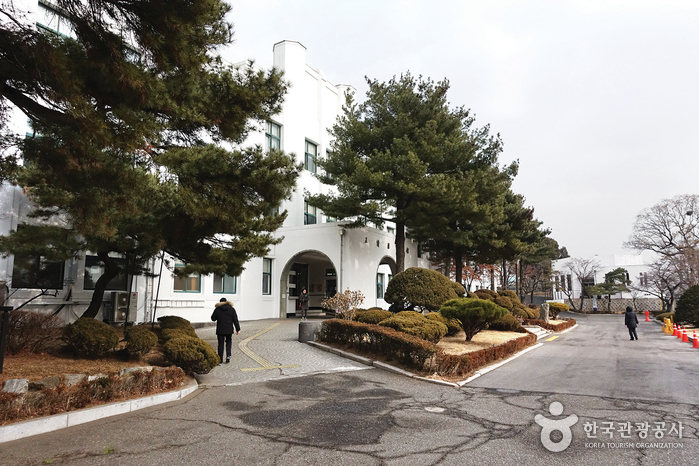
Biblioteca Jeongdok (서울특별시교육청 정독도서관)
2.9Km 2021-08-05
Bukchon-ro 5-gil 48, Jongno-gu, Seúl
La biblioteca fue fundada en el año 1977 en el antiguo Colegio Secundario Gyeonggi, ubicado en Bukchon de Jongno-gu, Seúl. Conserva aproximadamente 490.000 libros, 16.300 materiales no textuales, etc., y, en el edificio anexo podrá encontrarse con más de 12.000 materiales académicos. Su finalidad es contribuir en la educación y en el desarrollo cultural, ofreciendo información actualizada, fuentes de estudio y cultural a los ciudadanos de Seúl. Más allá de ofrecer el servicio de alquiler de textos y funcionar como un espacio de lectura, también realiza variedad de programas culturales; encuentro con autores, exposición fotográfica, club de lectura, teatro de marionetas, concierto musical, espectáculo de danzas, etc. La otra gran diversión de la biblioteca es la función de películas.
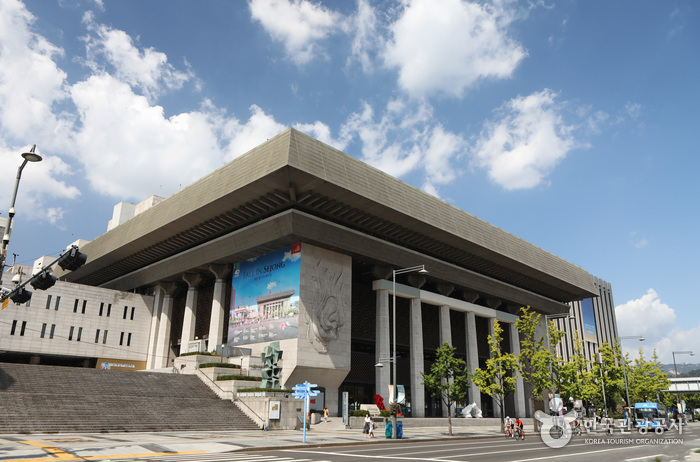
Centro Cultural Sejong (세종문화회관)
2.9Km 2023-10-30
Sejong-daero 175, Jongno-gu, Seúl
El Centro Cultural Sejong fue construido en 1978 en Gwanghwamun. Tiene un teatro grande, un teatro pequeño, una galería de arte y otros lugares para albergar varias clases de actuaciones y exhibiciones. El teatro grande del Centro Sejong, su escaparate principal, tiene el mayor órgano de tubos de Asia, y un escenario majestuoso. Puede alojar a 3.822 personas, y su escenario puede transformarse para ajustarse a muchas clases de actuaciones diferentes, como conciertos, obras, ballets y películas, para acentuar sus mejores cualidades. El sistema de iluminación y sonido del escenario, digno de los teatros más grandes, están controlados por ordenador para un control de precisión. El teatro pequeño puede alojar a 442 personas en sus dos pisos, y el escenario es muy grande, considerando el tamaño del teatro pequeño –unas 100 personas pueden estar en el escenario al mismo tiempo-. La galería de arte del Centro Sejong está compuesta en realidad por tres galerías, una en el edificio principal, otra en el edificio anexo y otra más en la sección del Centro añadida recientemente. Las tres son lugares de exhibición vanguardistas. También hay una tienda de arte, salas de conferencias para artistas y muchas salas espaciosas en donde puede relajarse. Incluso si no está aquí para ver ninguna exposición, es un lugar que vale la pena recorrer.
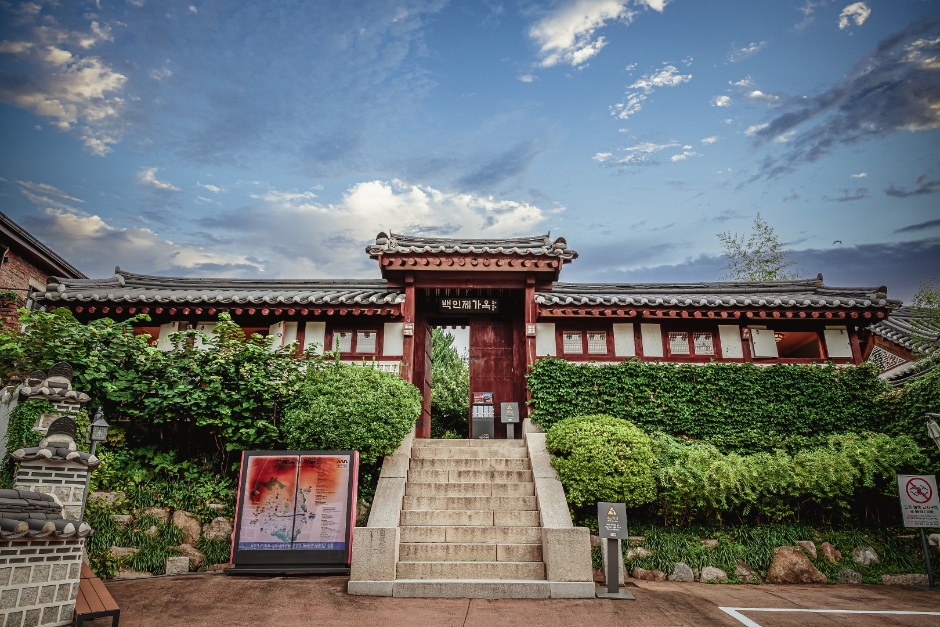
Residencia Baek In-je (백인제가옥)
2.9Km 2025-04-18
Bukchon-ro 7-gil 16, Jongno-gu, Seúl
La Residencia Baek In-je está situada en Gahoe-dong. Este edificio conserva el estilo moderno de hanok diseñado durante la colonización japonesa. En un terreno amplia de 2.460 ㎡, la vivienda cuenta con habitaciones y jardines alrededor del salón principal. También hay un pequeño espacio separado para el descanso. La casa mantiene la belleza tradicional del propio hanok con remodelaciones. Así, es una de las representaciones arquitectónicas más conocidas del barrio de Bukchon, junto con la Residencia Yoon Bo-seon.
Diversas características destacan la casa construida en pino negral, presentado por primera vez en Seúl durante la Exposición de Gyeongseong en 1907. Por ejemplo, la Residencia Baek In-je está compuesta por un pasillo que une el salón y las habitaciones, lo que es peculiar en comparación con el hanok clásico. Por otro lado, el pasillo al estilo japonés, la habitación con esteras, el empleo de ladrillos rojos y ventanas de cristal reflejan el paisaje de la época. Asimismo, el salón suele ser de un piso, pero está dividido en dos plantas en esta construcción. Siendo un patrimonio cultural, este lugar agrupa toda la hermosura de hanok, permitiendo contemplar del jardín al salón, del patio al interior de la casa y del trasero del inmueble separado.
Paseos en Calesa Artee (아띠인력거)
2.9Km 2022-09-15
Bukchon-ro 5-gil 43, Jongno-gu, Seúl.
Reconocidos como los barrios más tradicionales de Seúl, Samcheong-dong y la Aldea Tradicional de Bukchon se destacan por las diversas atracciones que ofrecen a los turistas. En cada callejón se esconde algo interesante para ver. Sacar fotos de recuerdo es una manera de llevarse parte del encanto de estos barrios. En este entorno se realiza un programa de paseos en calesa que ofrece la empresa Artee. Existen diferentes rutas para elegir, y lo más interesante es la conversación que puede darse con el conductor, que hace comentarios divertidos en inglés sobre los lugares recorridos.
 Español
 한국어
한국어 English
 日本語
日本語 中文(简体)
 Deutsch
 Français
 Русский


