
Gyeongju Gyochon Traditional Village (경주 교촌마을)
646.0M 2025-05-21
39-2 Gyochon-gil, Gyeongju-si, Gyeongsangbuk-do
At Gyeongju Gyochon Village, visitors can see the House of the Gyeongju Choi Clan (Important Folklore Material No. 27) and try some Gyeongju Gyodong Beopju Liquor (Important Intangible Cultural Asset No. 86-3). The village centers around the Gyeongju Choi Clan, a family known to have maintained their wealth for over 12 generations, producing many important people. Visitors can learn about the lifestyle and spending habits that enabled the family to do this. The village is also home to the site of Yoseokgung, the house of Silla Princess Yoseok. Nearby attractions include Gyerim Forest, Naemulwangneung Royal Tomb, and Gyeongjuhyanggyo Local Confucian School.
Gyeongjuhyanggyo Local Confucian School (경주향교)
683.9M 2025-06-12
27-20 Gyochonan-gil, Gyeongju-si, Gyeongsangbuk-do
Gyeongjuhyanggyo Local Confucian School is located near Gyochon Hanok Village in Gyeongju. The surrounding areas, Gyochon, Gyori, and Gyodong, derive their names because of this school. Although the exact date of its original construction is unknown, Gyeongju Hyanggyo was renovated during the reign of King Seongjong of the Joseon Dynasty, modeled after Seoul’s Seonggyungwan National Academy. The buildings follow the typical Confucian layout of “hall in the front, shrine in the back.” While seowon were private academies, hyanggyo were public institutions. Although it no longer serves the educational purpose, every spring and autumn it hosts traditional Confucian rituals. It also offers cultural programs such as tea ceremonies, rice-cake pounding, and archery. From April to October it hosts traditional Korean-style demonstration weddings, where visitors can participate in the ceremonies for free.
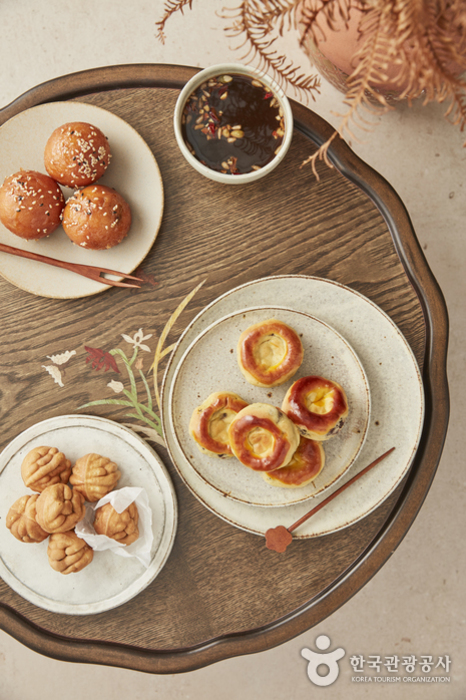
Hwangnambbang (황남빵)
700.7M 2025-03-24
783 Taejong-ro, Gyeongju-si, Gyeongsangbuk-do
Hwangnamppang, which literally means Hwangnam bread, was created in Hwangnam-dong, Gyeongju, in 1939, and the name was popularized among people who came to Gyeongju to buy this bread. Now branded as "Hwangnambbang," the late Choi Yeong-hwa, the founder of Hwangnam Bread, was a scion of the Gyeongju Choi family who came up with this masterpiece when he was 21 years old after much trial and error. Choi’s creation is based on the tradition of rice cakes and bread made with sweet red beans, passed down throughout the generations in his family. Even today, 80 years after the creation of the bread, it is only flavored with red beans. Another defining feature of Hwangnambbang is the delicate comb pattern inspired by the aesthetics of the Silla period.
Yosukgung 1779 (요석궁1779)
711.3M 2025-09-02
19-4 Gyochonan-gil, Gyeongju-si, Gyeongsangbuk-do
Named after Silla King Muyeol's daughter Princess Yoseok, Yosukgung 1779 is a fine dining restaurant that serves traditional Korean food. The resturant is run by the Choi family, who settled on the site of Princess Yoseok's house during the Joseon dynasty, and has passed on the restaurant and family recipes through 12 generations. All the foods served are made with organic ingredients, for a healthy taste that cannot be found anywhere else.
Folder - Gyeongju Branch [Tax Refund Shop] (폴더 경주점)
794.0M 2025-10-28
112-1, Wonhyo-ro, Gyeongju-si, Gyeongsangbuk-do
Innisfree - Gyeongju Branch [Tax Refund Shop] (이니스프리 경주점)
800.7M 2025-10-28
108, Wonhyo-ro, Gyeongju-si, Gyeongsangbuk-do
Holika Holika - Gyeongju Branch [Tax Refund Shop] (홀리카홀리카 경주점)
817.2M 2025-10-28
2 Wonhyo-ro 105beon-gil, Gyeongju-si, Gyeongsangbuk-do
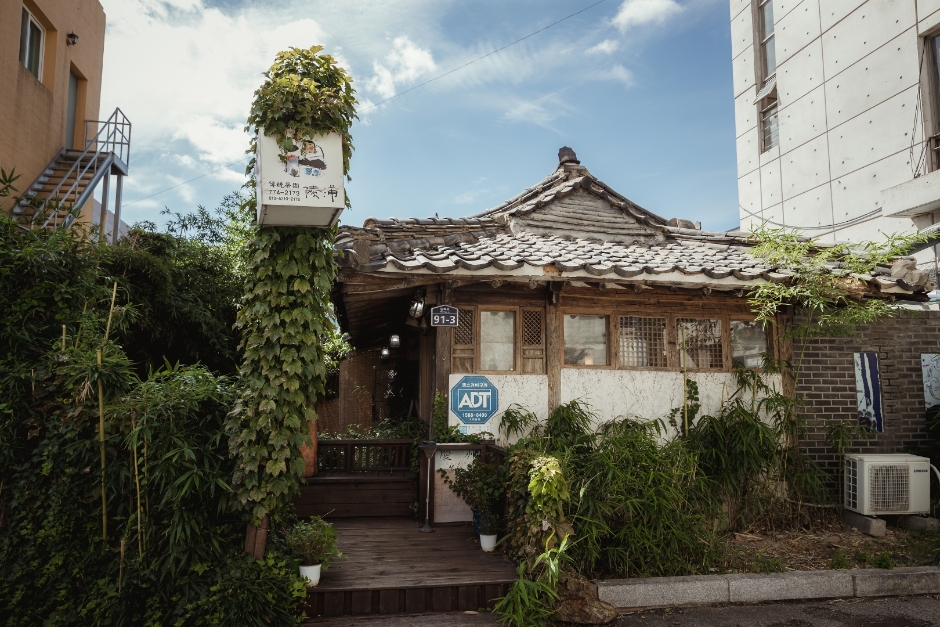
Neungpo Dawon (능포다원)
834.2M 2025-10-29
91-3 Wonhyo-ro, Gyeongju-si, Gyeongsangbuk-do
A traditional Hanok tea house subtly nestled among buildings. It served as the filming location for the traditional tea house “Arisol” managed by Gong Yoon-hee in the movie “Gyeongju.” The tea, brewed by the owner, boasts a rich flavor. The painting “Chunhwa” that served as the movie's motif is a work by the husband of the tea house owner. Various artworks, starting with “Chunhwa,” are displayed throughout the tea house.
![Artbox - Gyeongju Branch [Tax Refund Shop] (아트박스 경주)](http://tong.visitkorea.or.kr/cms/resource/43/2883743_image2_1.jpg)
Artbox - Gyeongju Branch [Tax Refund Shop] (아트박스 경주)
847.3M 2025-10-27
89, Gyerim-ro, Gyeongju-si, Gyeongsangbuk-do
-
 English
 한국어
한국어 日本語
日本語 中文(简体)
 Deutsch
 Français
 Español
 Русский


