Manjukjae House[Korea Quality] / 만죽재 고택[한국관광 품질인증] - Area information - Korea travel information

Manjukjae House[Korea Quality] / 만죽재 고택[한국관광 품질인증]

Manjukjae House[Korea Quality] / 만죽재 고택[한국관광 품질인증]

11.9Km    2024-10-30

11-10 , Museom-ro 234beon-gil, Yeongju-si, Gyeongsangbuk-do
+82-54-638-1127

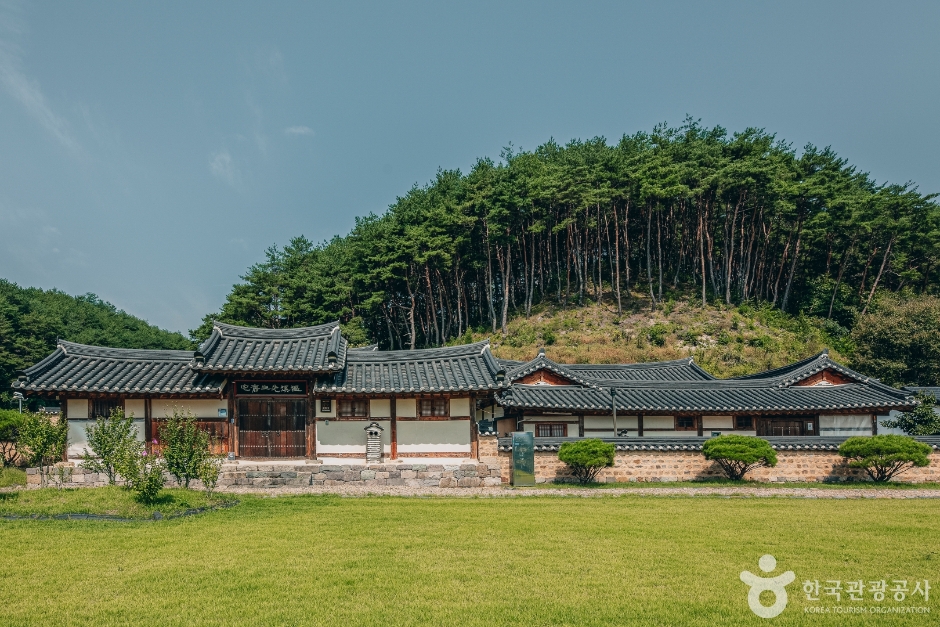
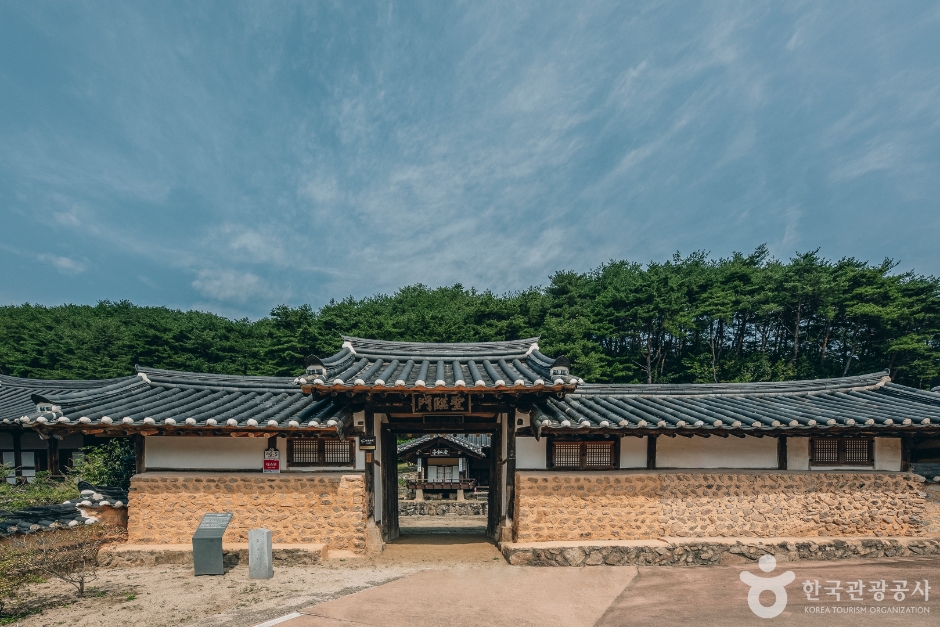
Manjukjae House is the oldest hanok in Museom Village, Yeongju, Gyeongsangbuk-do, with a history dating back 360 years. Originally built by Park Su to live the life of a reclusive gentleman after the Manchu Invasion of Korea, the house has been passed down from generation to generation through 13 generations. There are four guest rooms, Seomgye Chodang, Sarangchae (detached building), Anchae (main building), and Chaekbang (study), all of which can accommodate two people. Among them, Seomgye Chodang offers the best view, from where guests can enjoy the scenery of the log bridge in Museom Village, the Naeseongcheon Stream, and the white sandy beach. With the windows wide open, you can enjoy the cool breeze and the soothing sounds of nature.

Yangsodang[Korea Quality] / 양소당[한국관광 품질인증]

Yangsodang[Korea Quality] / 양소당[한국관광 품질인증]

13.2Km    2024-10-30

28 , Jangtaegol-gil, Andong-si, Gyeongsangbuk-do
+82-10-9005-0891, +82-10-5260-9565

Yangsodang is the head house of the Andong Kim Clan, which dates back 230 years and is located in Sosan Village in Andong, Gyeongsangbuk-do. Being a true hanok built by joining wood without nails, this house is a perfect place to take in the beauty of traditional Korean architecture. There are five guest rooms, including the Anchae Anbang (main room in the main building), a large ondol (underfloor heated) room across from the Anchae (main building), and a large Sarangchae (detached building) that has two rooms with a maru (wide wooden floor area); all of the rooms, except the small room, have either a daecheong maru (wooden-floored living room) or toenmaru (narrow wooden porch). In the yard east of Yangjo-dang, you can experience what it is like to live in a hanok, as well as participate in craft activities using Hanji (Korean paper).

Imyeonjae Head House (흥해배씨 임연재종택)

Imyeonjae Head House (흥해배씨 임연재종택)

13.8Km    2024-12-19

51 , Hyanggyo 1-gil, Andong-si, Gyeongsangbuk-do
+82-10-9077-7216, +82-10-7172-0839

Imyeonjae Head House on Hyanggyo-dil, Andong, Gyeongsangbuk-do, has been the home of the Heunghae Bae clan ever since Bae Sang-ji settled here around 1400. (The house is also known as Baekjuk Old House, memorialising the name of Bae’s consort.) The wooden walls, stairs and eves of Imyeonjae exude old-time hanok charm, and visitors will find a small reading room which has been a library ever since the house was built. Guestrooms are fitted with AC, while the shared bathrooms are modern and clean.

Yekki Village (예끼마을)

13.9Km    2024-05-30

14 Seonseong-gil, Dosan-myeon, Andong-si, Gyeongsangbuk-do

Yekki Village is an artistic village in Andong. The alleyways are decorated with colorful murals, the galleries feature work from local artists, and visitors can experience a hanok experience. The biggest charm of the village is the Sunseong Susang-gil Waterway, a floating path across the lake.

Sunseong Susang-gil Waterway (선성수상길)

Sunseong Susang-gil Waterway (선성수상길)

13.9Km    2024-05-30

14 Seonseong-gil, Dosan-myeon, Andong-si, Gyeongsangbuk-do

Sunseong Susang-gil Waterway is a 1-kilometer-long floating pathway that connects Sunseonghyeon Culture Complex with Andong Lakeside Park. Because the pathway floats on the water, it rocks with each step one takes, creating the feeling of truly walking on water. At the halfway point of the waterway is an exhibition of black-and-white photos and materials from Yean Elementary School, lost to the formation of the lake following the construction of Andong Dam in 1974.

Songgyehyeon (송계헌)

Songgyehyeon (송계헌)

14.9Km    2024-12-19

332 , Byeongsan-gil, Andong-si, Gyeongsangbuk-do
+82-10-3522-1104

Song Gye-heon is a pinewood-built hanok in Andong, Gyeongsangbuk-do - not far from the famous Byeongsan Seowon Confucian school - which combines traditional hanok style with modern convenience. The hanok is rented out as a single unit, and is ideal for families or group travelers. There are 3 bedrooms, one with a bed and the other two Korean-style rooms, with ample living space. There’s a kitchen for guests’ use, and the owner is happy to guide you round the Andong area.

Byeongsanseowon Confucian Academy [UNESCO World Heritage] (병산서원 [유네스코 세계유산])

Byeongsanseowon Confucian Academy [UNESCO World Heritage] (병산서원 [유네스코 세계유산])

15.3Km    2024-05-29

386 Byeongsan-gil, Andong-si, Gyeongsangbuk-do
82-54-858-5929

Before it became a Confucian academy, Byeongsanseowon Confucian Academy was originally located in Pungsang-hyeon under the name Pungakseodang School, which was used as a educational institution since the Goryeo dynasty by a political party known as the Sarim Party. It was moved to its current location in Byeongsan by a well-respected Confucian scholar named Yu Seong-nyong, penname Seoae, in 1572, and renamed to Byeongsanseowon in 1614.

In 1863, Byeongsanseowon was recognized by the king to receive support as a private Confucian academy. The lecture hall and shrine were reconstructed in 1921 and 1937 respectively as part of preservation efforts made during the Japanese occupation. This academy is designated as a Historic Site, housing a collection of 1,000 documents and 3,000 books, including works by Yu Seong-nyong.

Pungsongjae (풍송재)

Pungsongjae (풍송재)

16.1Km    2024-12-13

53-4 , Hanongmaeul 1-gil, Andong-si, Gyeongsangbuk-do
+82-10-2389-1054

Pungsongjae is a Hanok stay made from high-quality Korean red pines from Bonghwa located in Andong, Gyeongsangbuk-do. While retaining the traditional elegance of Hanok, each room is equipped with a bathroom for added convenience. As soon as you enter the gate, you are greeted by a wide-open grassy lawn, and the numaru (balcony-style raised veranda), Punsongjae's central space, offers a panoramic view of the pine grove beyond the antique Hanok building and wall. There are three rooms, Sarangbang, Songsil, and Pungsil, in which cooking is allowed. Nearby tourist attractions include Hahoe Village and Byeongsan Seowon.

Andong Hahoe Village [UNESCO World Heritage] (안동 하회마을 [유네스코 세계유산])

Andong Hahoe Village [UNESCO World Heritage] (안동 하회마을 [유네스코 세계유산])

16.3Km    2025-10-23

186 Jeonseo-ro, Pungcheon-myeon, Andong-si, Gyeongsangbuk-do
+82-54-852-3588

Hahoe Village is one of the most famous folk villages in Korea. Surrounded by the Nakdonggang River, the village is home to descendants of the Ryu clan of Pungsan, which still makes up 70 percent of the villagers. The village became even more famous after Queen Elizabeth of England visited on April 21, 1999, and President George H. Bush of the U.S.A. in 2005.

The village has many cultural treasures and important cultural materials, earning the village the designation of National Folklore Cultural Heritage in 1984. Hahoe Masks, a National Treasure, is also an important feature of the village.

Hahoe Mask Museum (하회세계탈박물관)

Hahoe Mask Museum (하회세계탈박물관)

16.4Km    2024-05-29

206 Jeonseo-ro, Pungcheon-myeon, Andong-si, Gyeongsangbuk-do
+82-54-853-2288

Hahoe Mask Museum is located in Andong Hahoe Village, a representative traditional Korean folk town that is the home of the Hahoe Mask (National Treasure) and the Byeolsin Gut Mask Dance (Important Intangible Cultural Property). The museum displays not only Hahoe masks, but also other traditional masks from all over the world.

The museum consists of five permanant exhibition halls and one special exhibition hall, housing a wide range of masks from all over the world along with Hahoe masks. The museum also offers activity programs such as wearing a mask, mask trick art, photo zone, and more.