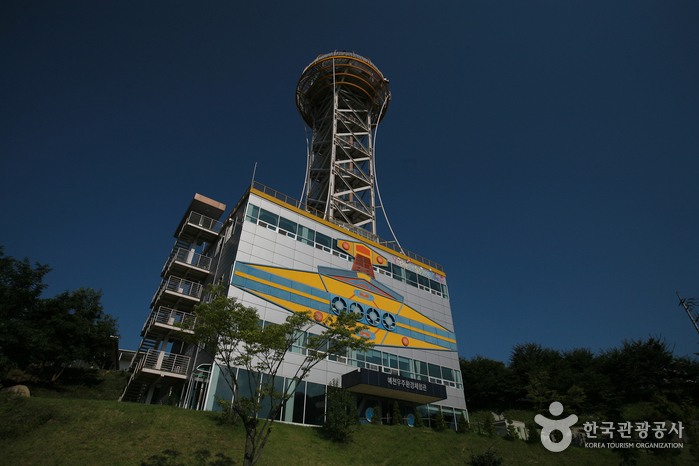
Yecheon Astro-Space Center (예천천문우주센터)
17.1Km 2021-12-23
1078, Chunghyo-ro, Yecheon-gun, Gyeongsangbuk-do
Yecheon Astro-Space Center is a theme park that opened in November 2004. The Yecheon Astronomical Science and Culture Center has built and operated the Yecheon Star Observatory. Visitors can stay in the accommodations in the park, observe the distant universe through a large telescope, and experience the space environment such as weightlessness.
In the observation room, visitors can observe the appearance of the universe with a 508 mm (20 inch) reflecting telescope that is automatically controlled by a computer. In the auxiliary observation room, visitors can observe sunspots and huge pillars of fire on the surface of the sun with a quadruple solar telescope. The astronomical projection room is a 'space theater' where a digital astronomical projector and video projector are installed, and images related to the astronomical universe, including seasonal constellations, are screened on a hemispherical dome screen on the ceiling.
At the Yecheon Star Observatory, visitors can observe the pillars of fire that soar through the sun during the day and sunspots that are larger than Earth. At night, visitors can observe the galaxy, the nebula, where stars born and die, as well as star clusters, and the moon, which is the closest celestial body to Earth, has large and small meteorite craterson the surface. There are many more fun experiences at the Yecheon Star Observatory.

Hahoe Byeolsingut Tallori (Mask Dance Drama of Hahoe) (하회별신굿탈놀이 상설공연)
17.2Km 2025-12-04
3-15, Hahoejongga-gil, Andong-si, Gyeongsangbuk-do
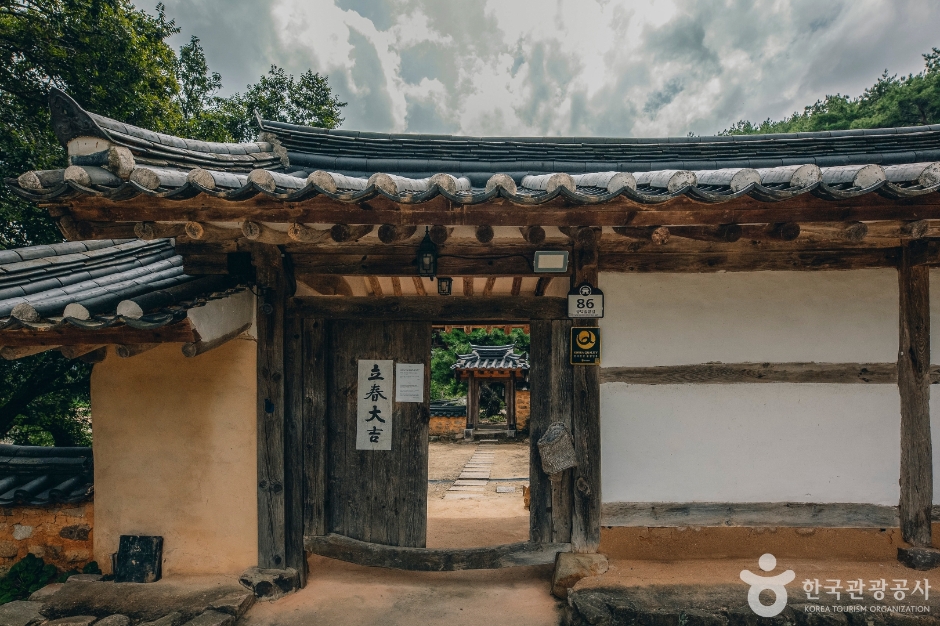
Okyeon pavilion (옥연정사)
17.5Km 2024-12-20
86 , Gwangdeoksolbat-gil, Andong-si, Gyeongsangbuk-do
Okyeonjeongsa Temple in Hahoe Village, Andong, Gyeongsangbuk-do, was built by Joseon scholar Seoae Ryu Seong-ryong for the purpose of living quietly with the help of his philosophy, after losing his house in Hahoe in a great flood of the Nakdong River. Wonrakjae is a detached house with a 460-year-old pine tree in the yard and a view of Hahoe Village in the background, while Sesimjae is the building Seoae used as a private school.
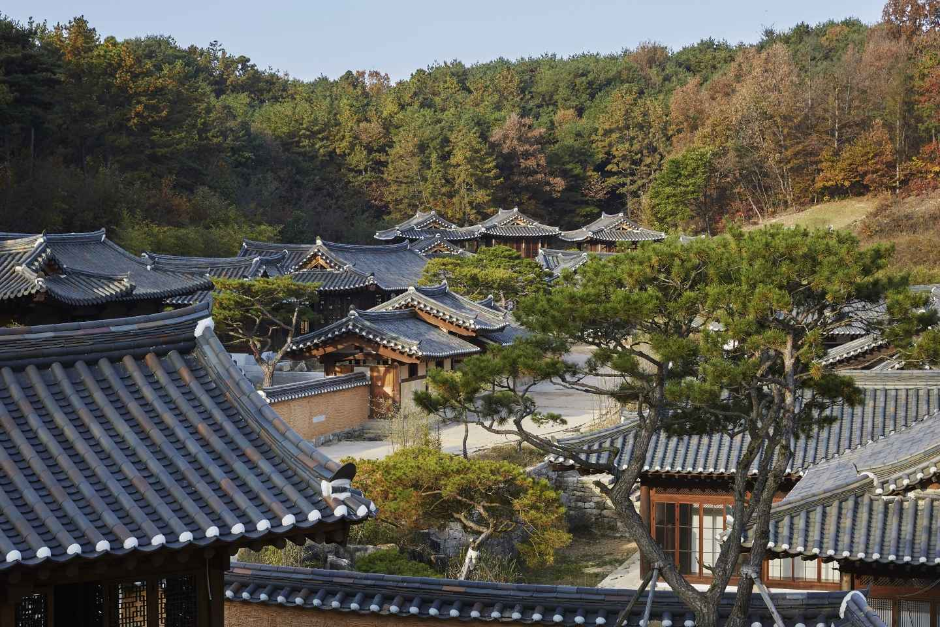
RakKoJae Andong(Hahoe) (락고재 안동(하회))
17.7Km 2024-10-17
51 , Hahoegangbyeon-gil, Andong-si, Gyeongsangbuk-do
Rakkojae is a guest house by the ferry over the Nakdong River in Hahoe Village, Andong, Geyongsangbuk-do. It consists of four buildings, each with one or two guest rooms. All rooms have a private bathroom, and one incorporates a sauna. Starlit and moonlit evenings in Hahoe refresh both mind and body, and by crossing the river by ferry boat and climbing Buyongdae Cliff, visitors can enjoy panoramas of the historic village and beautiful Nakdong valley. Another ‘must see’ is the nearby Mansongjeong Pine Forest - one of Korea’s Natural Monuments.
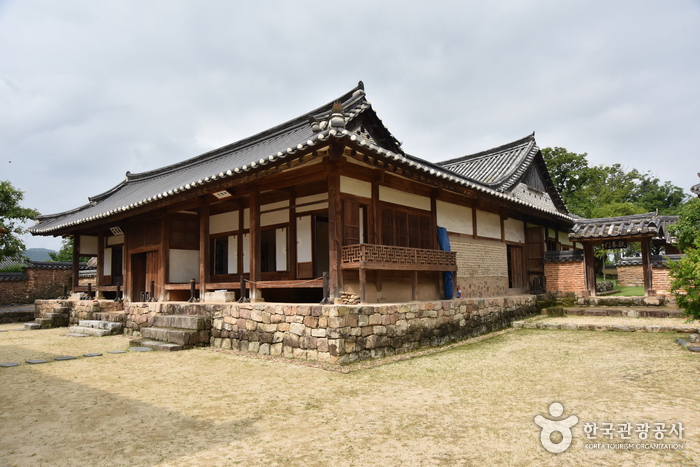
Bukchondeak (하회 북촌댁)
17.7Km 2024-08-05
7 , Hahoebukchon-gil, Andong-si, Gyeongsangbuk-do
Hahoe Bukchon House is the largest house in Hahoe, Andong, Gyeongsangbuk-do, and was first built by Joseon civil official Ryu Sa-chun in the reign of King Jeongjo. Guestrooms include the former sarangbang (studies) called Bukchonyugeo, Sarang and Susinwa, as well as attic rooms and kitchens. In the yard is an exquisite 300-year-old pine tree resembling the curve the Nakdong River makes round Hahoe village. The house contains valuable relics, including a 17th century map showing Dokdo and Gando as Korean territory, and a painting of flowers given to Ryu by the king.
![Dosanseowon Confucian Academy [UNESCO World Heritage] (도산서원 [유네스코 세계유산])](http://tong.visitkorea.or.kr/cms/resource/24/3437624_image2_1.png)
Dosanseowon Confucian Academy [UNESCO World Heritage] (도산서원 [유네스코 세계유산])
17.8Km 2025-10-23
154 Dosanseowon-gil, Andong-si, Gyeongsangbuk-do
In terms of architecture, Dosanseowon Confucian Academy complex can largely be divided into Dosanseodang compound and Dosanseowon compound. Dosanseodang area consists of living quarters and lecture halls where Toegye Yi Hwang, an eminent Confucian scholar, lived and taught his students. Dosanseowon was built after Toegye Yi Hwang passed away by his followers' to honor the legacy of his teachings as well as to pay respects to the deceased.
Built in 1561, Dosanseodang lecture hall is the oldest building in the whole complex. It was personally designed by Yi Hwang, penname Toegye, to further his studies while educating future scholars after moving to the countryside. Living quarters used as a student dormitory were also built along with the lecture hall.
Dosanseowon compound was completed in 1576, six years after Yi Hwang's death. Yi Hwang's ancestral tablet was enshrined inside Sangdeoksa Shrine in 1572. Two years later, Jeongyodang Lecture Hall was built to relocate the tablet and with the addition of buildings to the hall's east and west, the area became a seowon. In 1575, the establishment was bestowed a royal charter and a plaque with the name Dosanseowon written by Han Seok-bong, and became the Confucian academy headquarters in the Yeongnam region.
◎ Travel information to meet Hallyu’s charm - variety show"I Am Solo"
This is where participants were dressed in hanbok and matched with a partner based solely on the color of their clothes, regardless of their will. Each time they were matched, viewers felt excitement and tension as if they were being matched themselves. Follow the hiking trails around the academy to see notable monuments like a massive willow tree, and Sisadan Stele.
Yangjindang/ 하회 양진당
17.9Km 2025-03-05
68 , Hahoejongga-gil, Andong-si, Gyeongsangbuk-do
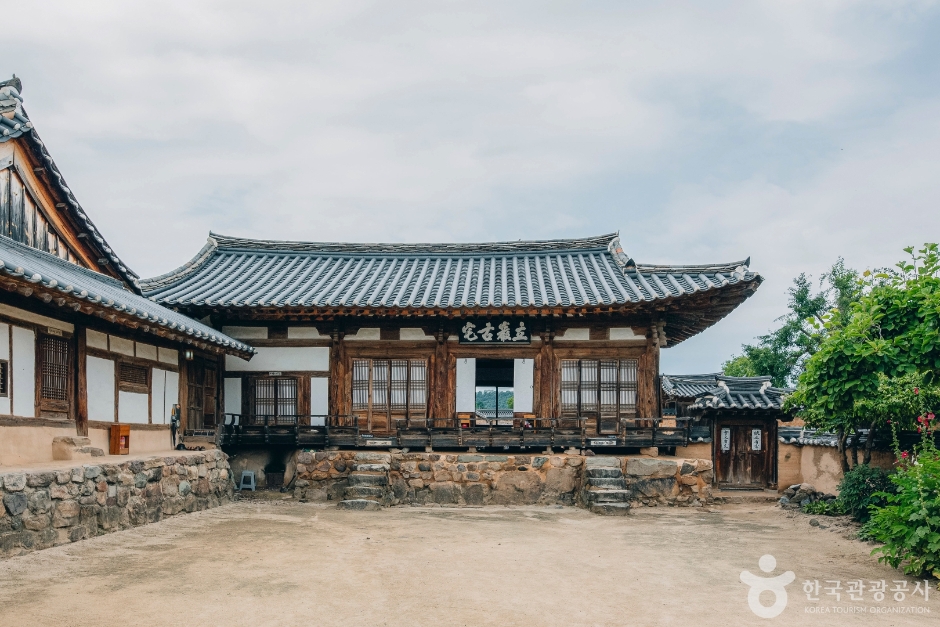
Hahoe Yangjindang, in Hahoe Village in Andong, Gyeongsangbuk-do, is the head house of the Ryu Clan of Pungsan. Also known as Ipam Old House, it’s a designated national cultural treasure. An unusual feature is the incorporation of two different architectural styles: the sarangchae is in the Goryeo style, while the anchae is in the Joseon style. The rooms are simple and elegant, with antique mother-of-pearl cupboards, tableware cabinets, and ceramics placed here and there add to the old-time charm. Guests can enjoy traditional folk games, or have a go at home-brewing or making rice cakes and sweets.
Ga Gyeong Jae (가경재)
17.9Km 2024-12-20
69-5 , Hahoenamchon-gil, Andong-si, Gyeongsangbuk-do
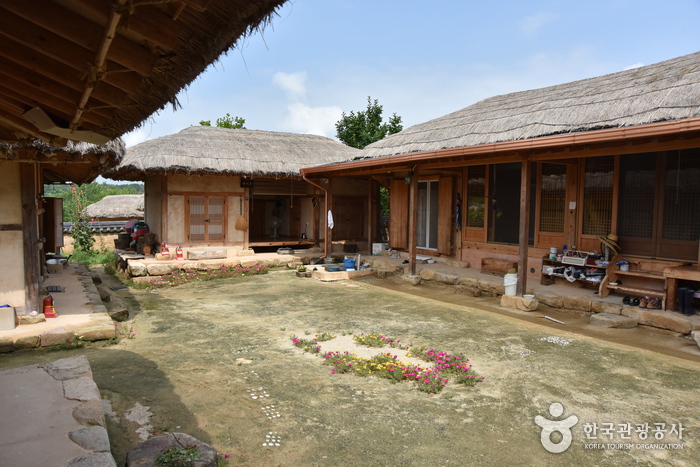
Gagyeongjae is a thatched hanok on the edge of Hahoe Folk Village in Andong, Gyeongsangbuk-do. There are five guestrooms altogether. The main house or Anchae has a wooden porch while the Sarangchae (men’s house) shares a central living space. Windows are lined in the traditional way with hanji paper, and opening them lets in a cooling breeze and reveals the beautiful surrounding landscape. The wood-fired Red Clay sauna room is very popular, but visitors need to make a reservation at least two days in advance to get the furnace started. Rooms have AC installed (additional fees in summer).
Garam Choyeonjae (가람초연재)
17.9Km 2024-08-01
76-6 , Hahoejongga-gil, Andong-si, Gyeongsangbuk-do
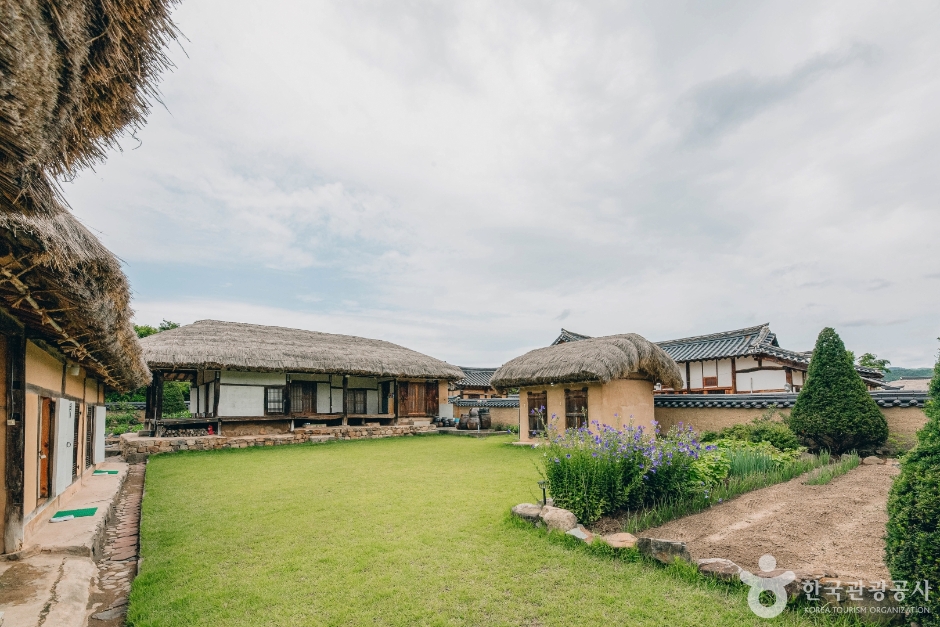
Garam Choyeonjae stands within Hahoe Traditional Village in a loop of the beautiful Nakdonggang River in Andong, Gyeongsangbuk-do. Among Hahoe’s tile-roofed old houses, this one’s thatched roof stands out. ‘Garam’ was the pen name of the owner’s grandfather - a descendant of the Joseon scholar Seoae Ryu Seong-ryong - while ‘Choyeonjae’ means a thatched house where swallows live. The swallows’ nest is still there under the eaves, and sunset views from the wooden terrace of the sarangchae (men’s house) are a dreamy experience. Visitors can also learn about traditional technologies such as treadmills and millstones.
Damyeonjae (담연재)
17.9Km 2023-07-10
76-3 , Hahoejongga-gil, Andong-si, Gyeongsangbuk-do
Damyeonjae is a hanok accommodation located in Hahoe Village, Andong. It was built in the 1980s but faithfully implemented the appearance of a traditional hanok. The chimney rising behind the yard and the tiles which line the roof are excellent enough to be considered a cultural asset, and the wood used for the beams and the cheongmaru is also very luxurious. Uniquely, it was built in a 'c' shape with the gate and haengnangchae moved to the edge of the yard, rather than a square shape like the traditional hanok in the Gyeongsang region. Thanks to the open view to the south, the entire Andong Hahoe Village and Hwasan Mountain can be viewed from the yard. Damyeonjae is the home of Korean actor Ryu Si-won, and his is known to have spent his childhood here. In 1999, Queen Elizabeth II of England experienced Korean culture and received a 73rd birthday award here, making it even more famous. Damyeonjae is currently operated as a hanok stay where only one group can stay each day. The kitchen and bathroom are modernly decorated to add convenience.
 English
 한국어
한국어 日本語
日本語 中文(简体)
 Deutsch
 Français
 Español
 Русский


