Bapsang Wiui Boyak Hancheop (밥상위의보약한첩 청풍) - Area information - Korea travel information

Bapsang Wiui Boyak Hancheop (밥상위의보약한첩 청풍)

Bapsang Wiui Boyak Hancheop (밥상위의보약한첩 청풍)

14.4Km    2024-03-25

40 Baesiron-ro, Cheongpung-myeon, Jecheon-si, Chungcheongbuk-do
+82-43-647-0065

Bapsang Wiui Boyak Hancheop is a notable restaurant located near the Multae-ri cable car station, renowned for its dedication to serving traditional Jecheon dishes. The restaurant is particularly famous for offering side dishes prepared with local specialties such as deodeok and various types of namul. Its flagship offering, the Boyak Hancheop, is a grilled marinated eel set menu. The restaurant has garnered significant acclaim, having won the Grand Prize in the Chungbuk Traditional Cuisine Contest. Nearby attractions such as the scenic Chungjuho Lake and the Cheongpung Cultural Heritage Complex enhance the dining experience with cultural enrichment and natural beauty.

Cheongpung Land (청풍랜드)

Cheongpung Land (청풍랜드)

14.7Km    2025-07-09

San 26, Gyo-ri, Cheongpung-myeon, Jecheon-si, Chungcheongbuk-do
+82-43-648-4151

Cheongpung Land est un parc de loisir créé en 2002 près du lac de Cheongpunghoban (lac de Chungjuho à Cheongpung-myeon, Jecheon-si dans la province du Chungcheongbuk-do. Le parc accueille trois attractions pleines de sentations fortes : une tour de saut à l’élastique haute de 62 mètres, le tout premier siège éjectable de Corée et « Big Swing », une expérience à gravité nulle. On peut également y admirer des geysers d’eau jaillissant à 162 mètres dans l’air, ainsi qu’une vue panoramique sur le paysage environnant.

Le parc est l’une des plus grandes attractions touristiques de la région, et se trouve non loin d’autres destinations populaires, comme le site de tournage du drama historique de KBS « Daejo Wangeon », le mont Geumsusan et le parc national de la montagne Woraksan.

Cheongpung Land (청풍랜드)

Cheongpung Land (청풍랜드)

14.8Km    2024-07-02

6, Cheongpungho-ro 50-gil, Jecheon-si, Chungcheongbuk-do

Cheongpung Land was created in 2002 near Chungjuho Lake in Cheongpung-myeon, Jecheon-si, Chungcheongbuk-do. It features beautiful scenery and the maximum use of practical space to build Korea’s first multi-tower. Based on planning, constructing, and test runs, it is operated by Over Class Inc. which is cosigned by Jecheon-si. The multi-tower’s three main facilities are a 62-meter Bungee Jump, Korea’s first-ever Ejection Seat, and Big Swing. The bungee jump highlights safety by adding a safety line to the gear to prevent falling accidents caused by breaking of the bungee cord rubber.

Neutinamu Hoetjip (느티나무횟집)

15.0Km    2024-03-25

4 Baesiron-ro, Cheongpung-myeon, Jecheon-si, Chungcheongbuk-do
+82-43-647-0089

Neutinamu Hoetjip is a distinguished Korean restaurant situated within Cheongpungho Bibimbap Town. Its standout dish is songeo bibimhoe (spicy raw trout salad with vegetables). The salad highlights the freshness of sliced raw trout, enriched with a mix of powdered soybean, perilla leaves, sesame oil, and cucumber for a unique blend of flavors and textures. Beyond this signature dish, Neutinamu Hoetjip offers an array of local specialties featuring freshwater fish. Their sutbul maneul tteokgalbi (charcoal-grilled garlic and galbi patties) and ssogari maeuntang (spicy mandarin fish stew) are also popular choices among patrons.

Cheongpung Cultural Heritage Complex (청풍문화재단지)

Cheongpung Cultural Heritage Complex (청풍문화재단지)

15.0Km    2022-12-26

2048, Cheongpungho-ro, Jecheon-si, Chungcheongbuk-do
+82-43-641-5532

Cheongpung Cultural Heritage Complex in Jecheon, Chungcheongbuk-do contains a variety of cultural heritages and artifacts that were collected from the region before it was flooded in 1985 during the construction of Chungju Dam. Here, visitors can see Hanbyeongnu Pavilion (Treasure), Stone Standing Buddha (Treasure), Paryeongnu Pavilion, Geumnamnu Pavilion, Geumbyeongheon Hall, Eungcheonggak Pavilion and the Cheongpunghyanggyo Local Confucian School as well as nearly 2,000 household artifacts. It has become an outdoor museum of the glorious culture of the upper reaches of the Namhangang River.

Cheongpung Cable Car (청풍호반케이블카)

Cheongpung Cable Car (청풍호반케이블카)

15.2Km    2024-07-31

166 Munhwajae-gil, Jecheon-si, Chungcheongbuk-do

Cheongpung Cable Car takes passengers back and forth between Multae-ri in Cheongpung-myeon and Bibongsan Mountain along a 2.3-kilometer ropeway. There are a total of 43 cabins that accommodate up to 10 passengers per car, with ten cabins featuring transparent flooring to offer a thrilling bird's-eye-view of Cheongpung-myeon. The cable car can reach a maximum speed of 5 meters per second and takes around 10 minutes from the departure point to Bibongsan Mountain peak. Bibongsan Mountain sits at the center of Cheongpungho Lake and has an elevation of 531 meters. The sight from top offers a feeling as if one is looking down at an archipelago. The cable car allows children and the elderly to enjoy the sight without the hassle of hiking up to the summit.

Sobaeksan Punggi Spa Resort (소백산풍기온천리조트)

15.3Km    2023-10-26

1400 Jungnyeong-ro, Yeongju-si, Gyeongsangbuk-do
+82-54-604-1700

Sobaeksan Punggi Spa Resort, which sits at the foot of Sobaeksan Mountain, has a wide variety of facilities and amenities, as well as a great view. The resort has an outdoor spa, a 25-square-meter outdoor swimming pool, Aqua Pool ride, a wading pool, a bade pool, and Yeonhwajeong, a great restaurant to enjoy delicious Korean food.
There is also a great spot to have an outdoor barbeque party with family and friends while enjoying the great taste of hanu (Korean beef). Sobaeksan Punggi Spa Resort aims to be the best spa resort for locals as well as tourists.

Yeongju Birosa Temple (비로사 (영주))

Yeongju Birosa Temple (비로사 (영주))

15.8Km    2021-06-11

661-29, Samga-ro, Yeongju-si, Gyeongsangbuk-do
+82-54-638-5033

Birosa Temple is located at the southern foot of Birobong, the highest peak of Sobaeksan Mountain. It was founded by revered Buddhist monk Uisang Daesa in the 20th year of King Munmu’s reign (AD 680) during the Silla Kingdom. The temple’s Buddha statues and the flagpole supports reveal the long history of this ancient temple.

To the left of the entrance to Birosa Temple stand a pair of flagpole supports. The 4.8-meter-high flagpole supports facing each other have a meticulous structure. Inside the temple precincts is Jingongdaesa Bobeoptapbi, a stele with a stone turtle base erected in honor of the great monk Jingong Daesa.

The temple enshrines the Amitabha and Vairocana Buddha statues, which were created during the Silla Kingdom in the late 9th century. Both of these Buddha statues realistically depict the human form, and show similar characteristics, which reveal that they were crafted by the same artisan. Preserving such valuable cultural heritages, Birosa Temple also has a serene view of Birobong Peak on Sobaeksan Mountain.

* Major cultural properties: Stone Seated Amitabha and Vairocana Buddha Statues (Treasure No. 996), Samgadong Stone Flagpole Supports (Provincial Tangible Cultural Property No. 7)

National Center for Forest Therapy (국립산림치유원)

National Center for Forest Therapy (국립산림치유원)

16.5Km    2025-10-23

209 Therapy-ro, Bonghyeon-myeon, Yeongju-si, Gyeongsangbuk-do

The National Center for Forest Therapy is a forest-themed well-being complex created to promote public health and quality of life by leveraging the abundant forest resources of the Baekdudaegan Mountain Range. Forests have transformed into a destination for healing one's mind and body, as well as a place for recreation. The National Center for Forest Therapy provides guidelines for proper exercise and daily habit improvements aimed at relieving stress and promoting mental and physical balance by utilizing the healing properties of the forest. Furthermore, visitors can experience the effects of forest therapy here. The center has healing forest trails, recreational facilities, accommodation facilities, and others.

Danyang Bobaljae Pass (단양 보발재)

Danyang Bobaljae Pass (단양 보발재)

16.9Km    2024-02-26

San 26-7, Baekja-ri, Yeongchun-myeon, Danyang-gun, Chungcheongbuk-do
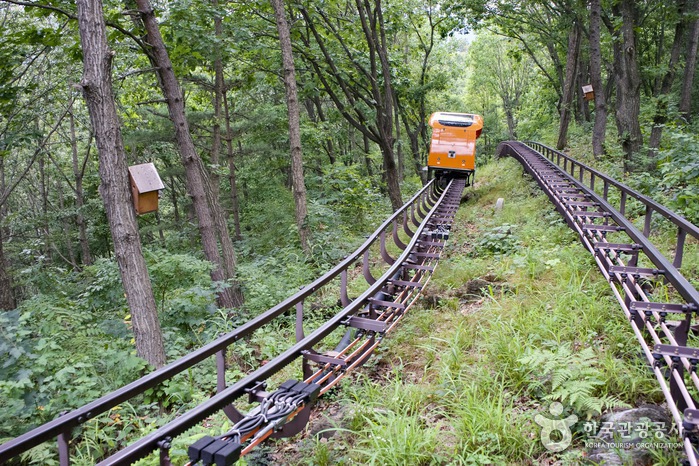
Bobaljae Pass is located 540 m above sea level on the northern side of Sobaeksan Mountain. It is also known as Godeuneomijae Pass. The S-shaped curve is known for wildflowers in spring and fall foliage in autumn, so one can either take a leisurely drive along the road or park one’s car at the observatory and get some pictures. Guinsa Temple and Ondal Tourist Area nearby are also good to visit.