![Olive Young - Janghanpyeong Station Branch [Tax Refund Shop] (올리브영 장한평역)](http://tong.visitkorea.or.kr/cms/resource/62/2888062_image2_1.jpg)
Olive Young - Janghanpyeong Station Branch [Tax Refund Shop] (올리브영 장한평역)
2.5Km 2024-04-17
3, Janghan-ro, Dongdaemun-gu, Seoul
-
![Onnuri Pharmacy - Jongno Branch [Tax Refund Shop] (온누리약국 종로)](http://tong.visitkorea.or.kr/cms/resource/89/2878189_image2_1.jpg)
Onnuri Pharmacy - Jongno Branch [Tax Refund Shop] (온누리약국 종로)
2.5Km 2024-04-19
1F, 293, Jong-ro, Jongno-gu, Seoul
-
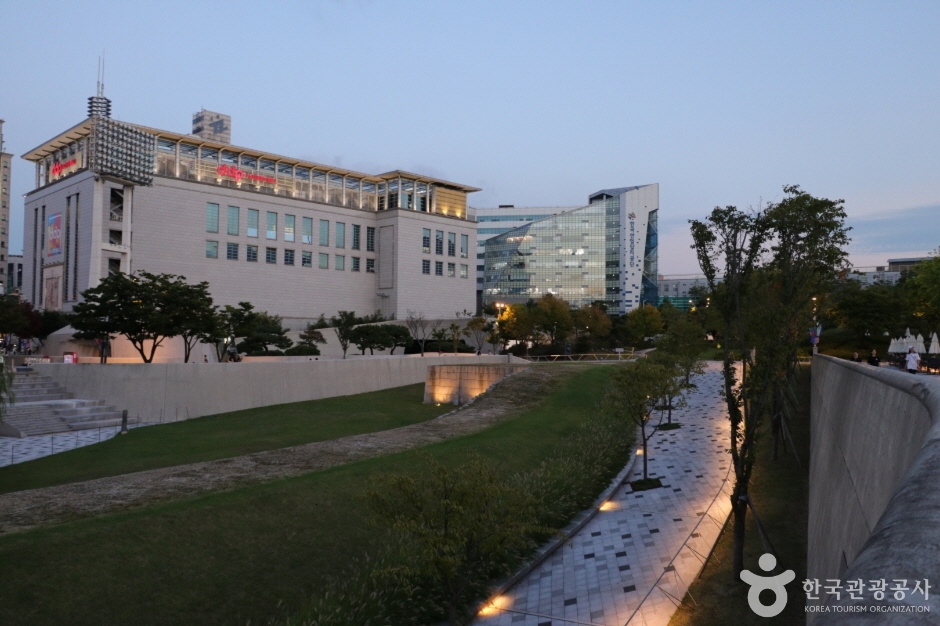
Dongdaemun History & Culture Park (동대문역사문화공원)
2.5Km 2024-11-27
281 Eulji-ro, Jung-gu, Seoul
Dongdaemun History & Culture Park is a park established on the former site of the Dongdaemun Stadium. It serves as a thematic park showcasing the history and culture of Seoul, while also providing a space to experience modern design and culture. During the park's development in 2008, numerous artifacts from the Joseon dynasty, including The Two Floodgates, the Chiseong Castle, Military Training Agency, and over 1,000 relics from the Joseon era, were excavated. Alongside the park, there is the Dongdaemun Design Plaza (DDP) and the Relic area.

Dongdaemun Design Plaza (동대문디자인플라자 (DDP))
2.5Km 2024-10-24
281 Eulji-ro, Jung-gu, Seoul
+82-2-2153-0000
Dongdaemun Design Plaza (DDP) has a meaning of Dream, Design, and Play. It holds various exhibitions, fashion shows, forums, conferences, and other domestic and international events. The building complex is divided into sections, which are named Allimteo, Beaumteo, Sallimteo, DDP Design Museum, Design Market & Eoullim Plaza, and Dongdaemun History & Culture Park. Designed by world-renowned architect Zaha Hadid, the building's exterior attracts the attention of many photographers with its delicate curves and bold shapes.
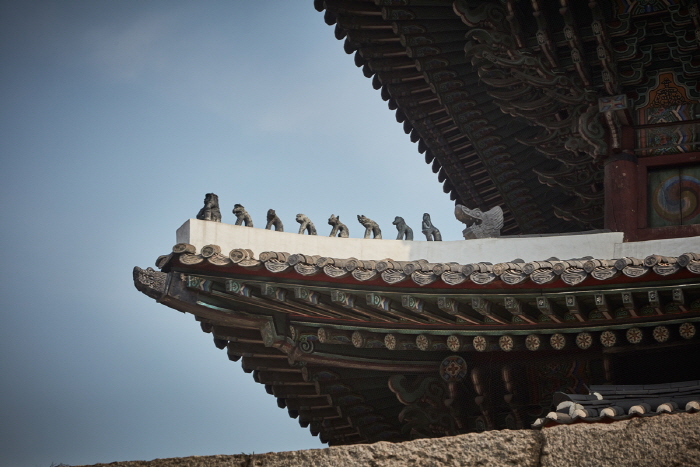
Heunginjimun Gate - Dongdaemun Gate (흥인지문)
2.6Km 2025-10-23
288, Jong-ro, Jongno-gu, Seoul
+82-2-2148-1842
Heunginjimun Gate was built to protect Hanseongbu, which historically housed essential government facilities. Heunginjimun Gate was the gate on the east side of the outer wall of Seoul Fortress among eight gates. It is referred to as Dongdaemun Gate as well. The gate was constructed during King Taejo’s 5th year in 1396, remodeled during the reign of King Danjong in 1453, and was newly built in 1869 during the sixth year of King Gojong’s reign in 1869.
The gate features a hipped roof with five front and two side compartments on a two-storied building. The thin and weak bracket system supports the eaves and is excessively decorated, reflecting the construction features of the late Joseon period. Also, outside of the fortress is the half-circle-shaped Ongseong, a small wall, to protect the gate.
One of the unique factors of Heunginjimun Gate is that it is the only gate among Seoul’s eight to have Ongseong, further exhibiting the style of construction used during the late Joseon period.
![Olive Young - Cheonggu Station Branch [Tax Refund Shop] (올리브영 청구역)](http://tong.visitkorea.or.kr/cms/resource/39/2878739_image2_1.jpg)
Olive Young - Cheonggu Station Branch [Tax Refund Shop] (올리브영 청구역)
2.6Km 2024-04-18
A section of 1F, 168, Dasan-ro, Jung-gu, Seoul
-

Waple Wood Artwork Place (와플목공방)
2.6Km 2025-10-30
5-6 Wangsimni-ro 10-gil, Seongdong-gu, Seoul
Interior items made from wood
This workshop is visited by celebrities such as Park Narae of the entertainment program 'I Live Alone' and KAI of EXO. It is also the place where the senior wooden box that appeared in the movie 'PARASITE' was made. You can make your own interior accessories such as chairs and tabletops using hardwood. One-day classes on making ballpoint pens and mechanical pencils are also popular.
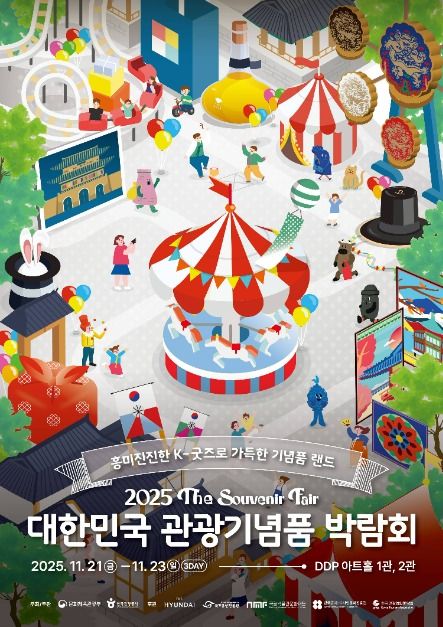
The Souvenir Fair (2025 대한민국 관광기념품 박람회)
2.6Km 2025-10-27
281 Eulji-ro, Jung-gu, Seoul
+82-10-8315-5434
The Souvenir Fair brings together various companies and local governments to showcase a variety of souvenirs, both traditional and trendy. Visitors can freely explore the exhibition space, enjoy souvenir shopping, and take part in various programs. Highlights of the fair include an exhibition of competition-winning works, a zone featuring outstanding local souvenirs, and a special exhibition of overseas souvenirs.
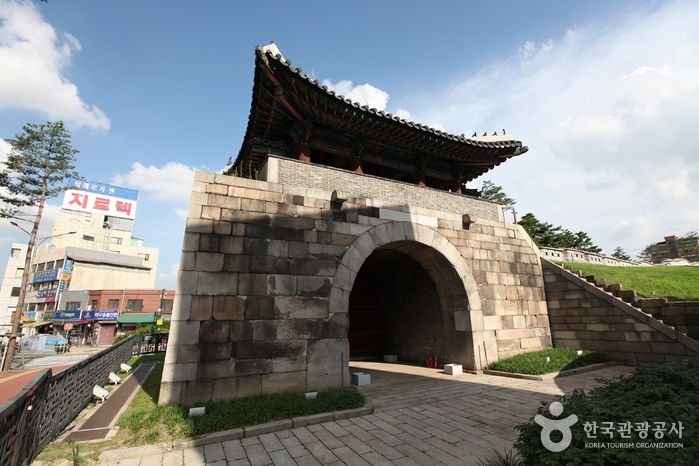
Gwanghuimun Gate (광희문)
2.6Km 2021-02-24
344, Toegye-ro, Jung-gu, Seoul
+82-2-3700-3900
Gwanghuimun Gate is said to have been originally constructed in 1396, the 5th year of King Taejo, at the southeast of the capital city. It was often referred to as Sugumun Gate (water channel gate) and was actually used as a Sigumun, literally meaning “corpse gate,” as funeral processions passed through this gate when exiting to the east.
During the Imjin War (1592-1598), the fortress gate was destroyed to such a degree that it made finding the original location close to impossible. Nevertheless, reconstruction efforts were started in 1711 (37th year of King Sukjong) and the gate was restored together with the gate's watchtower. Gwanghuimun Gate remained intact even when the fortress walls were demolished to build tram tracks during the Japanese occupation, but it was later damaged during the Korean War and left neglected. In 1975, restoration work was carried out to relocate Gwanghuimun Gate to a site 15 meters south of its original location since it stood in the middle of the road.
![Olive Young - Doota Branch [Tax Refund Shop] (올리브영 두타)](http://tong.visitkorea.or.kr/cms/resource/99/2878699_image2_1.jpg)
Olive Young - Doota Branch [Tax Refund Shop] (올리브영 두타)
2.6Km 2024-04-19
4F-51, Doosan Tower Bldg., 275, Jangchungdan-ro, Jung-gu, Seoul
-
 English
 한국어
한국어 日本語
日本語 中文(简体)
 Deutsch
 Français
 Español
 Русский


