
JW Spa (제이더블유스파)
8.8Km 2025-01-10
565, Nonhyeon-ro, Gangnam-gu, Seoul-si
+82-2-3445-1239
Located in Yeoksam-dong, Gangnam-gu, JW. Spa 1ST tries hard to carry out the best spa through professional spa planners who help to find suitable spa treatment for individuals.
Cha Gangnam Medical Center, Cha University (차의과학대학교 강남차병원)
8.8Km 2025-10-23
(Yeoksam-dong), 566 Nonhyeon-ro, Gangnam-gu, Seoul
CHA Gangnam Medical Center was founded in 1960 with the opening of CHA Obstetrics & Gynecology Clinic by Honorary Head Director Gyeong-seop Cha. In 1984, it expanded into a general hospital with 200 beds in Gangnam District.
As a specialized hospital for obstetrics and gynecology designated by the Ministry of Health and Welfare, CHA Gangnam Medical Center provides top-tier healthcare services through 14 specialized departments, including obstetrics and gynecology, and 39 specialized centers and clinics, such as Fertility Center, IVF Center, and the High-Risk Pregnancy Clinic. The hospital offers precise diagnoses and treatments, specializing in uterine fibroids and gynecological cancers, and utilizes cutting-edge minimally invasive surgical techniques to ensure minimal scarring and rapid recovery. It has also achieved the highest number of robotic surgeries in obstetrics and gynecology in the country, with over 5,000 procedures performed.
Since its establishment in 1984, CHA Gangnam Medical Center's Fertility Center has pioneered numerous groundbreaking achievements, including the birth of the first test-tube baby at a private hospital in Korea, the country's first successful intracytoplasmic sperm injection (ICSI), the world's first birth through in vitro maturation of an immature oocytes, and the first baby born from vitrified (frozen) eggs. These accomplishments have earned the hospital global recognition for its research and development.
Girin Plastic Surgery (기린성형외과의원)
8.8Km 2025-12-02
(7th-8th Floors), 54 Seocho-daero 77-gil, Seocho-gu, Seoul
At Girin Plastic Surgery, we believe that true customer satisfaction begins with safety.
Committed to our vision of becoming "a hospital that perfects beauty through safety", we prioritize patient well-being above all else.
To ensure this, we have an anesthesiology specialist available at all times and maintain a supply of dantrolene to manage malignant hyperthermia that might occur during general anesthesia.
Girin Plastic Surgery is also equipped with an uninterruptible power supply to handle any unexpected power outages during surgery.
We strive for complete transparency in the surgical process by offering a real-time CCTV viewing service and a transparent operating room name system for both patients and their families.
Girin Plastic Surgery is dedicated to continuous improvement and creating a reassuring environment for every patient, establishing itself as Korea's leading plastic surgery clinic.
Herneclinic (에르네의원)
8.8Km 2025-10-23
(#301-304), 59 Seocho-daero 77-gil, Seocho-gu, Seoul
Opened in 2009, Herne Clinic focuses on skin treatments, aesthetics, and anti-aging. With 15 years of experience, our plastic surgery and dermatology have teams of experts in each field. Equipped with the latest imported laser equipment, we offer unique treatments to satisfy our clients.
The exceptional service at HERNE Clinic starts with understanding its customers' needs, creating a sense of uniqueness from the moment they enter the clinic. It is dedicated to not only meeting their expectations but also addressing the anxieties and concerns that may accompany a visit to the clinic, ensuring that every interaction is approached with care and thoughtful consideration.
Mudiocean Inc. (주식회사 뮤디오션)
8.8Km 2025-10-23
4F, 7 Bongeunsa-ro 49-gil, Gangnam-gu, Seoul
Mudiocean Inc., is a professional medical tourism agency that has successfully launched the Holistic Beauty Tour, a tourism brand. It started as an IT-based AI solution provider and later transformed itself into a tourism startup by obtaining a venture business certification and a tourism venture business certification (for businesses in their early phase). Based on this, the company provides differentiated services by combining IT and medical tourism services.
Mudiocean Inc., is currently engaged in various activities to promote the superiority of Korean medical tourism around the globe, particularly focusing on attracting Chinese tourists. The company actively participates in medical tourism events in Thailand, Japan, Indonesia, etc., to expand its presence in the global market. Moving forward, Mudiocean Inc., will recommend business models that combine Korean medical services and tourism. The company will strive to provide the best experience for domestic and overseas customers.
Seorae Village (서래마을)
8.8Km 2022-12-16
Banpo-dong, Seocho-gu, Seoul
+82-2-2155-6220
Seorae Village is located in between Banpo 4-dong and Bangbaebon-dong in Seocho-gu, Seoul. Seorae Village took its form as a French neighborhood when French residents moved to the area after Ecole Francaise de Seoul, a school for French residents in Korea, was established here in 1985. According to 2008 census, about half of the total 1,000 French citizens residing in Korea were registered to be living in Seorae Village. The area naturally took shape as a global neighborhood as many international residents settled at Seorae Village much thanks to the strong presence of French residents. In addition to its convenient location near the central district area as well as Gangnam area and Hangang River Park, Seorae Village serves as a pleasant environment space for all.
Many shops and restaurants in Seorae Village are small in size and rather charming, resembling those in Europe. A bakery that makes traditional French baguettes using ingredients directly imported from France can be found here. In recent years, Seorae Village has undergone several changes, gaining much attention as one of the most modern and fanciest regions found in Seoul.
Aimeigroup (아이메이그룹)
8.8Km 2025-10-23
(B2, B1, 1st, 2nd Floors), 49 Gangnam-daero 110-gil, Gangnam-gu, Seoul
AiMei Group has been specializing in medical tourism and global medical marketing since 2018. We raise awareness of Korea's excellent healthcare services among our customers around the world and help them access healthcare services in a safe and convenient manner.
Key services:
1. Medical Tourism: Provides personalized medical care including plastic surgery, orthopedics, dermatology, and more.
2. Global Healthcare Marketing: Promotes Korean medical technologies and services to the world
3. Plane ticket and Hotel Booking: Provides the best flights and accommodations.
4. Airport Pickup: Provides safe transportation
5. Medical Interpretation: Provides professional interpretation services to overcome language barriers.
We at AiMei Group put your health and convenience first. We are committed to making your medical experience in Korea as positive and satisfactory as possible.
Stay Passport Express Spa Dangsan (스테이 패스포트 익스프레스 스파 당산점)
8.8Km 2025-04-09
92-1 Yangpyeong-ro, Yeongdeungpo-gu, Seoul
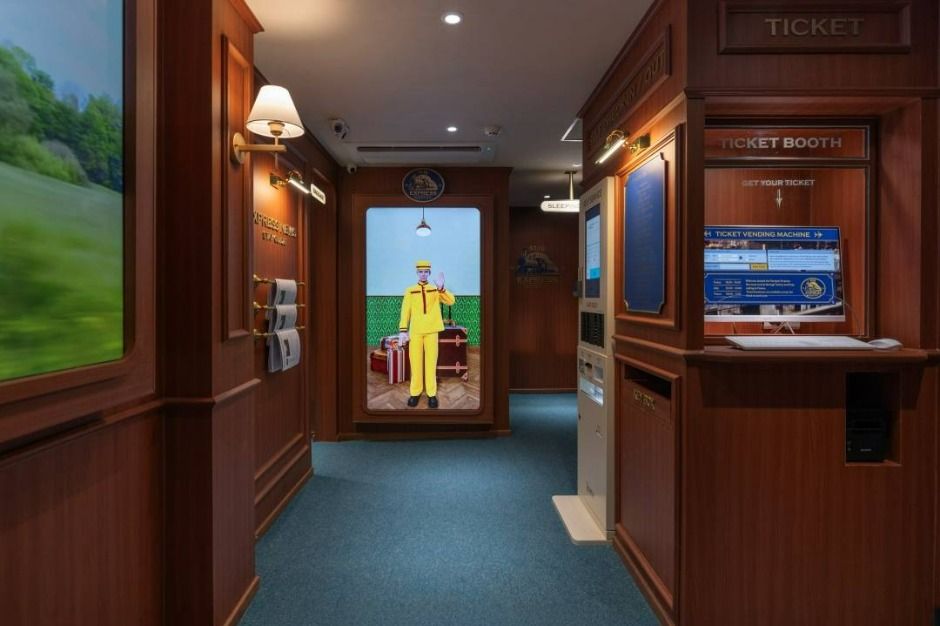
Stay Passport Express Spa Dangsan is inspired by European train trip and has a variety of rooms that sticks to the theme. Room types include COUCHETTE, which comes with a wine chiller and a turntable along with vinyl; SLEEPER 4-1 and 4-2, rooms with a turntable and a jacuzzi for four persons; and SLEEPER, a room with a turntable and a jacuzzi for two. The hotel has limited parking space so guests visiting with a vehicle are advised to inquire in advance for a nearby parking lot.
Ppeum Global Clinic (쁨글로벌의원)
8.8Km 2025-10-23
(2nd Floor, APRO Square), 55 Seocho-daero 77-gil, Seocho-gu, Seoul
PPEUM GLOBAL CLINIC is a premium brand specialized in providing customized services for foreign customers.
We provide multilingual leaflets for overseas customers, a luggage zone for easy storage of suitcases, and a tax refund machine.
Also, for easy one-on-one consultations, native-speaking consultants and coordinators are stationed in the clinic for each language group. Many medical staff members from Seoul National University provide the highest level of medical services through joint research activities and their rich expertise.
Our main procedures are Botox, filler, lifting, laser treatment for acne and pigmentation, laser hair removal, and we provide the same prices and benefits for both foreign and domestic customers. In addition, we operate separate VIP rooms to satisfy the private needs of specific foreign customers.
Nanji Hangang Park MTB Course Site (난지한강공원 MTB코스장)
8.9Km 2022-10-26
162, Hangangnanji-ro, Mapo-gu, Seoul
+82-2-3780-0611
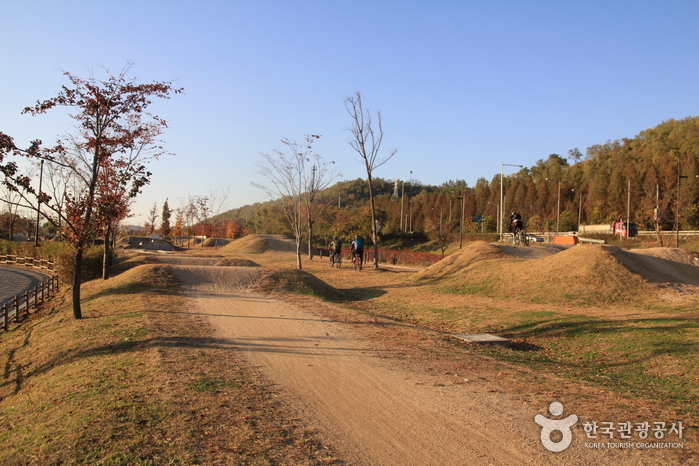
Situated in Nanji Hangang Park, the MTB Course Site is perfect for MTB lovers as well as beginners who wish to enter the world of extreme biking with safety. The MTB Course Site is the nation's first MTB course site, established on a flatland, reproducing perfectly realistic mountain ridges and slopes.
 English
 한국어
한국어 日本語
日本語 中文(简体)
 Deutsch
 Français
 Español
 Русский


