
Dal Café (달 카페)
2.3Km 2024-03-18
94-1 Samcheong-ro, Jongno-gu, Seoul
+82-2-735-7355
Dal Café is a café located in Bukchon Hanok Village, housed within a traditional Korean hanok. "Dal" means "moon" in Korean. The café is designed with lighting fixtures that give the impression of the moon hanging on the wall, making it a perfect spot for photography. The signature menu item here is the traditional Korean shaved ice with topping served in a traditional pot.
Danha(단하)
2.3Km 2025-11-05
39-7 Palpan-gil, Jongno-gu, Seoul
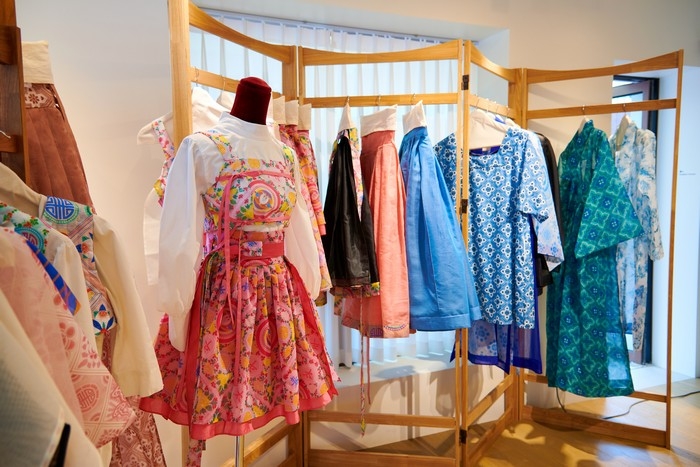
BLACKPINK's “HOW YOU LIKE THAT” music video created a sensation, reaching 100 million views within 32 hours of its release. The most noteworthy part of the music video was the hanbok they wore. Danha, which was in charge of making the costumes, improved the traditional hanbok and completely recreated it as a stage costume, garnering attention from all over the world. Danha is famous for designing hanboks using traditional patterns. The patterns engraved on the clothes in the BLACKPINK music video used the phoenix design pattern of the royal cloth. Danha's hanbok can be purchased through the online shop, and if you want to have it custom-made, you can visit Danha Maison after making a reservation.
Doota Mall (두타몰)
2.3Km 2025-10-23
275, Jangchungdan-ro, Jung-gu, Seoul
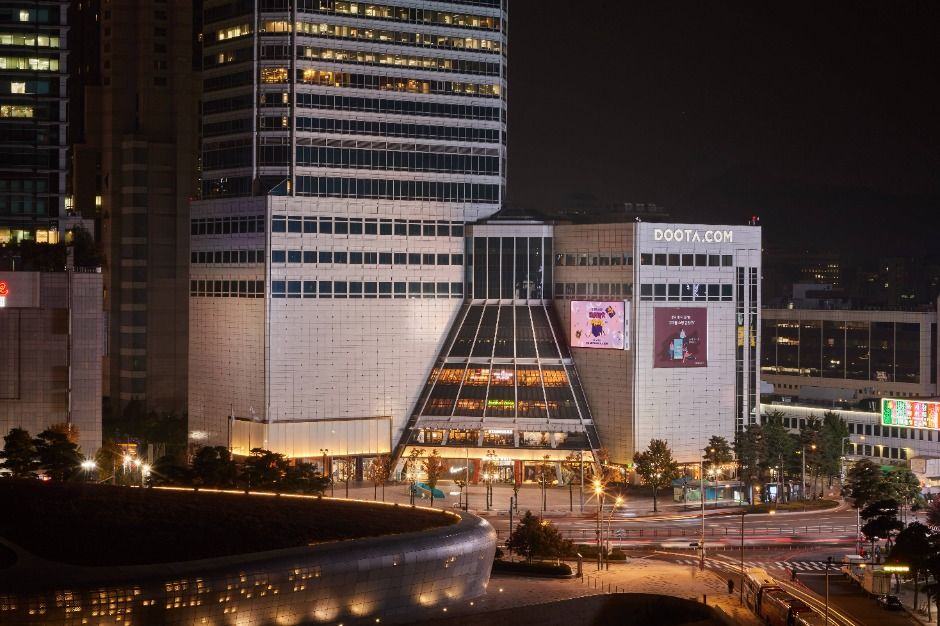
Doota Mall is a must-visit shopping destination that represents Dongdaemun-the center of K-fashion and culture in Seoul. Doota offers a true one-stop shopping experience across fashion, beauty, lifestyle, and dining-from K-designers, sportswear, women and men's apparel to a wide variety of cafes and restaurents. Open until midnight, Doota welcomes intenational travelers with special gifts and exclusive benefits.
Gwanghuimun Gate (광희문)
2.3Km 2021-02-24
344, Toegye-ro, Jung-gu, Seoul
+82-2-3700-3900
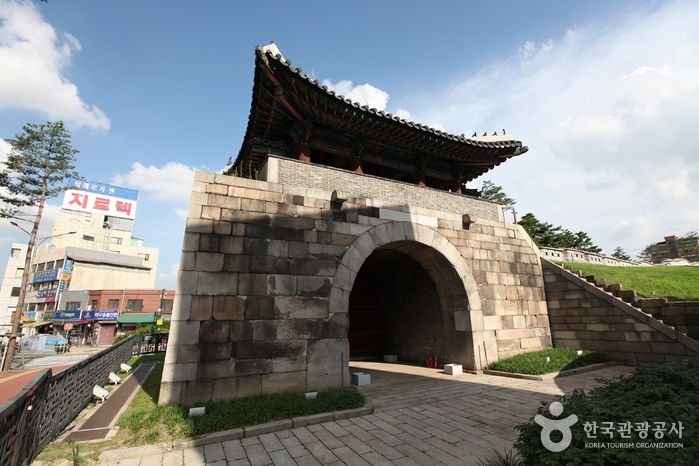
Gwanghuimun Gate is said to have been originally constructed in 1396, the 5th year of King Taejo, at the southeast of the capital city. It was often referred to as Sugumun Gate (water channel gate) and was actually used as a Sigumun, literally meaning “corpse gate,” as funeral processions passed through this gate when exiting to the east.
During the Imjin War (1592-1598), the fortress gate was destroyed to such a degree that it made finding the original location close to impossible. Nevertheless, reconstruction efforts were started in 1711 (37th year of King Sukjong) and the gate was restored together with the gate's watchtower. Gwanghuimun Gate remained intact even when the fortress walls were demolished to build tram tracks during the Japanese occupation, but it was later damaged during the Korean War and left neglected. In 1975, restoration work was carried out to relocate Gwanghuimun Gate to a site 15 meters south of its original location since it stood in the middle of the road.
![Olive Young - Doota Branch [Tax Refund Shop] (올리브영 두타)](http://tong.visitkorea.or.kr/cms/resource/99/2878699_image2_1.jpg)
Olive Young - Doota Branch [Tax Refund Shop] (올리브영 두타)
2.3Km 2024-04-19
4F-51, Doosan Tower Bldg., 275, Jangchungdan-ro, Jung-gu, Seoul
-
![Arirang 331 - Doota Branch [Tax Refund Shop] (아리랑331 두타)](http://tong.visitkorea.or.kr/cms/resource/00/2878700_image2_1.jpg)
Arirang 331 - Doota Branch [Tax Refund Shop] (아리랑331 두타)
2.3Km 2024-04-18
4F-028, 275, Jangchungdan-ro, Jung-gu, Seoul
-
![National Geographic - Doota Branch [Tax Refund Shop] (내셔널지오그래픽 두타)](http://tong.visitkorea.or.kr/cms/resource/04/2878704_image2_1.jpg)
National Geographic - Doota Branch [Tax Refund Shop] (내셔널지오그래픽 두타)
2.3Km 2024-04-18
B1F #05, 275, Jangchungdan-ro, Jung-gu, Seoul
-
![CK - Doota Branch [Tax Refund Shop] (CK 두타)](http://tong.visitkorea.or.kr/cms/resource/07/2878707_image2_1.jpg)
CK - Doota Branch [Tax Refund Shop] (CK 두타)
2.3Km 2024-04-22
147, Gijanghaean-ro, Gijang-eup, Gijang-gun, Busan
-
![Mensa - Doota Branch [Tax Refund Shop] (MENSA 두타)](http://tong.visitkorea.or.kr/cms/resource/08/2878708_image2_1.jpg)
Mensa - Doota Branch [Tax Refund Shop] (MENSA 두타)
2.3Km 2024-04-22
147, Gijanghaean-ro, Gijang-eup, Gijang-gun, Busan
-
![Orange Multi MLB - Doota Branch [Tax Refund Shop] (오렌지멀티 MLB 두타)](http://tong.visitkorea.or.kr/cms/resource/10/2878710_image2_1.jpg)
Orange Multi MLB - Doota Branch [Tax Refund Shop] (오렌지멀티 MLB 두타)
2.3Km 2024-04-18
B1-005, Doosan Tower Bldg., 275, Jangchungdan-ro, Jung-gu, Seoul
-
 English
 한국어
한국어 日本語
日本語 中文(简体)
 Deutsch
 Français
 Español
 Русский


