
Artbox - Daehangno Branch [Tax Refund Shop] (아트박스 대학로)
1.7Km 2024-04-22
22, Daemyeong-gil, Jongno-gu, Seoul
-
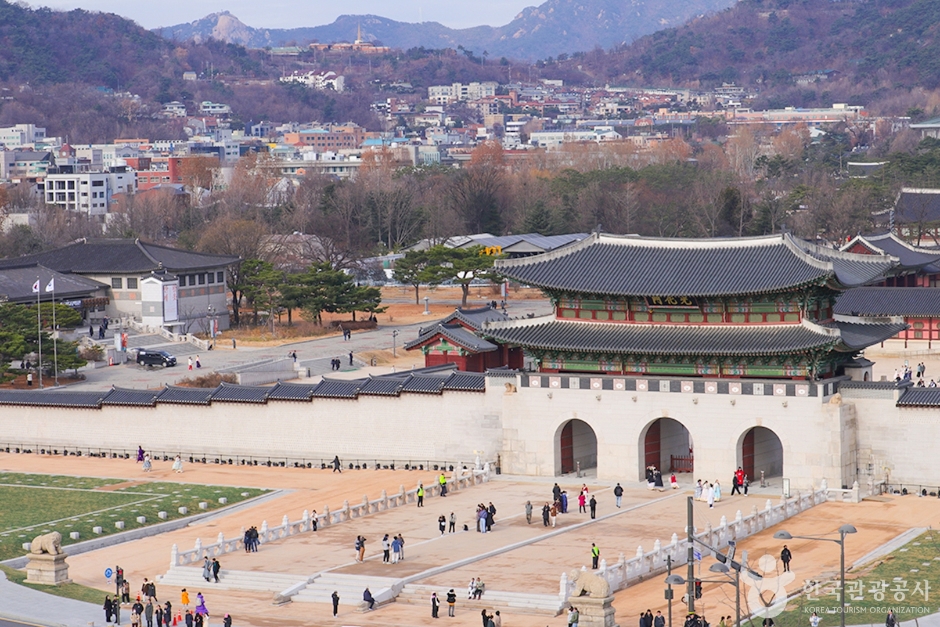
Gwanghwamun Gate (광화문)
1.7Km 2024-12-04
161 Sajik-ro, Jongno-gu, Seoul
+82-2-3700-3900
Built in 1395 under the reign of King Taejo, the first king of the Joseon dynasty, Gwanghwamun Gate is the southern gate of Gyeongbokgung Palace. It is also the main gate of the palace, therefore larger and fancier in comparison to the other gates. Gwanghwamun Gate consists of three arched gates; the center gate was used by the king, while the other two were used by the crown prince and royal officials. The tall granite walls of the gate serve as a platform for the wooden gate tower that watches over the city. The gate has a sign with its name written at the top center of the gate tower.
Gwanghwamun Gate went through several damages and restorations over the course of history. It was first severely damaged during the Imjin War (1592-1598) and was not restored until the reconstruction of Gyeongbokgung Palace in 1864. Under the Japanese administration, the gate was demolished and relocated to the north of the palace's eastern gate, followed by series of damages during the Korean War (1950-1953). In 1968, Gwanghwamun Gate was relocated back to the south of the palace and was rebuilt using concrete; however, the gate’s position was shifted a few meters away from its original location. In 2006, a major reconstruction project took place to restore Gwanghwamun Gate to its original state and location, disassembling the structure completely and replacing concrete with granite and wood. After three years and eight months of construction, Gwanghwamun Gate was fully restored to its original form and was open to the public on August 15, 2010.
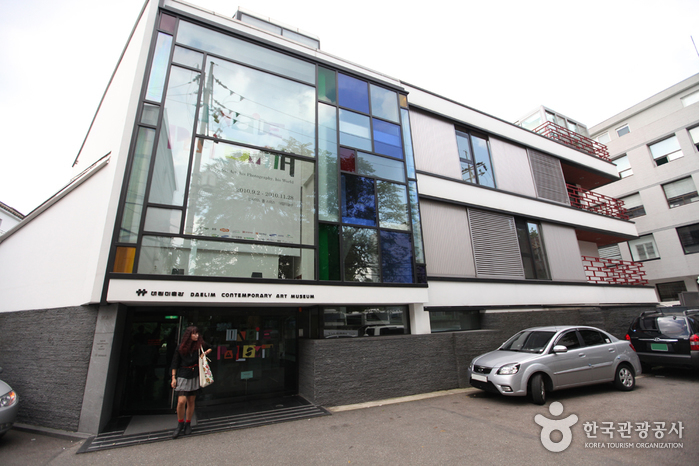
Daelim Museum (대림미술관)
1.7Km 2022-07-29
21, Jahamun-ro 4-gil, Jongno-gu, Seoul
+82-2-720-0667
The Daelim Museum, built by the Daelim Group, was first established in Daejeon in 1996 and later moved to Jongno, Seoul in 2002. The art gallery studies, analyzes, and presents modern art through the lens of photography and holds exhibitions centered around photo media.
The museum is located in the residential area of Tongui-dong, near the time-honored Gyeongbokgung Palace. The museum, which was designed by French architect, Vincent Cornu, and built by the Daelim Corporation, opened its door to the public in late May 2002.
On the first floor, there is a garden, parking lot, reception desk, storage area, and conference room. On the second and third floor are offices and exhibition hall approximately 595 m² in size, consisting of small and large rooms, a long gallery, and a special high-ceilinged exhibition space. On the fourth floor, there is a seminar room that can seat up to 120 guests and a balcony with a beautiful view. From the balcony of the seminar room, Visitors can also enjoy a wide open view of Inwangsan Mountain and Bukhansan Mountain. The stained glass panels (designed to reflect the beauty of traditional Korean wrapping cloth) and the scenic lounges on the 2nd and 3rd floors of the building add to the overall charm.
Above all else, the museum was designed with consideration of the photos, which are very sensitive to humidity, light, and temperature.
![Seochon Guest House [Korea Quality] / 서촌게스트하우스 [한국관광 품질인증]](http://tong.visitkorea.or.kr/cms/resource/86/2998986_image2_1.jpg)
Seochon Guest House [Korea Quality] / 서촌게스트하우스 [한국관광 품질인증]
1.7Km 2023-09-05
28-3 , Jahamun-ro 7-gil, Jongno-gu, Seoul
+82-2-473-9680
Seochon Guest House in Seochon, Jongno, Seoul, consists of a 90 year-old hanok and a two-story Western-style house. A 6-cheop table is provided for meals, and travelers can use the 1st floor rooms and hall at any time. In the yard, Pansori performances are held twice a year, and residents can sample traditional music, wearing hanbok, and making Korean food; the guesthouse’s other name is Pleasure Valley (Jaeminan Gol)! There are programs for visiting Inwangsan-Bukaksan fortress trail, Gyeongbokgung and other royal palaces, and nearby traditional markets.
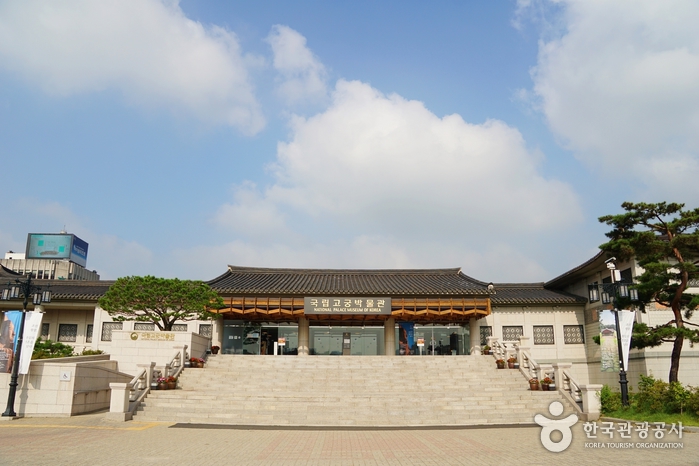
National Palace Museum of Korea (국립고궁박물관)
1.7Km 2023-03-24
12, Hyoja-ro, Jongno-gu, Seoul
+82-2-3701-7500
The National Palace Museum of Korea displays over 40,000 relics from the Joseon dynasty. With various treasures on exhibit, the museum continues to provide information on the dignity of royal culture and the creativity of royal cultural assets.
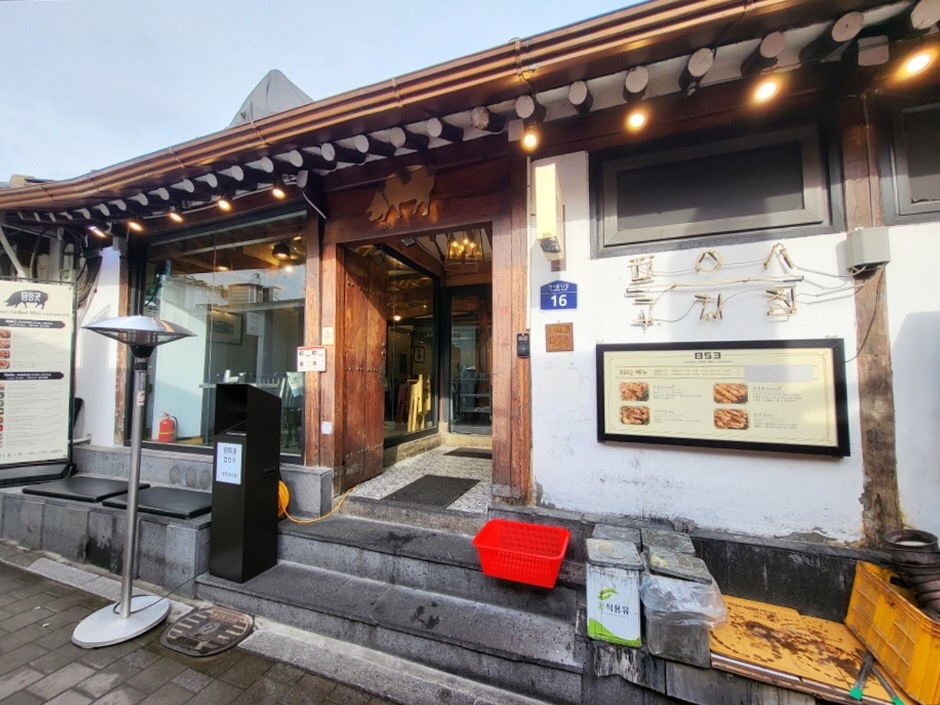
853 (팔오삼)
1.7Km 2024-03-15
16 Insadong 12-gil, Jongno-gu, Seoul
+82-70-8832-0853
853 is a pork barbecue restaurant located in a renovated hanokin Insa-dong, offering various cuts of pork such as shoulder, belly, blade-end fatback, and pork neck. They use thick cuts of domestically sourced pork and grill them to perfection, ensuring they are juicy and flavorful. Customers can enjoy dipping their meat in one of four sauces: Himalayan rock salt, mustard seeds and wasabi, salted cutlassfish intestines, and barley mixed paste. Their flying fish roe riceball mixed with pickled radish salad, burdock root, flying fish roe, perilla leaves, and mayonnaise pairs perfectly with the meat.
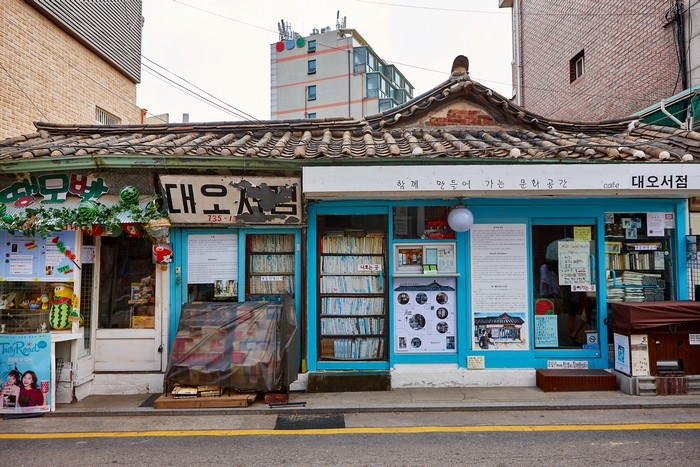
Daeo Bookstore (대오서점)
1.7Km 2025-11-05
55 Jahamun-ro 7-gil, Jongno-gu, Seoul
Daeo Bookstore is the oldest bookstore in Seoul that has been maintained in one place since it opened in 1951. Recently, it has been refurbished as a cultural space with a cafe, where one can enjoy coffee, exhibitions, and performances while looking at the yard. Visitors who just want to browse can purchase a souvenir postcard set for admission. Taking a closer look at books that feel the years and objects that have traces of use, they appear to come rather new.
Vegetarian Restaurant Osegyehyang (채식요리전문점 오세계향)
1.7Km 2024-03-18
14-5 Insadong 12-gil, Jongno-gu, Seoul
+82-2-735-7171
Osegyehyang is a vegetarian restaurant located in Insa-dong. It specializes in vegetarian cuisine, offering a variety of dishes including noodles, traditional Korean dishes, and specialty items. Some of its popular dishes include maesil tangsuchae (vegan deep-fried pork with sweet and sour sauce), pyogobeoseotmari (rolled shiitake mushrooms), vegan yangnyeom chicken (vegan seasoned fried chicken), tteokbokki, jjajangmyeon (black bean sauce noodles), jjamppong (spicy seafood noodle soup), vegan steak, and bulgui ttukbaegi (vegan bulgogi), all prepared without meat but still delicious.
![Thimbloom - Gyeongbokgung Branch (No. 2) [Tax Refund Shop] (팀블룸2호점 경복궁)](http://tong.visitkorea.or.kr/cms/resource/14/2889714_image2_1.jpg)
Thimbloom - Gyeongbokgung Branch (No. 2) [Tax Refund Shop] (팀블룸2호점 경복궁)
1.7Km 2024-04-18
1F, BF (Nuha-dong), 46, Pirundae-ro, Jongno-gu, Seoul
-
 English
 한국어
한국어 日本語
日本語 中文(简体)
 Deutsch
 Français
 Español
 Русский


