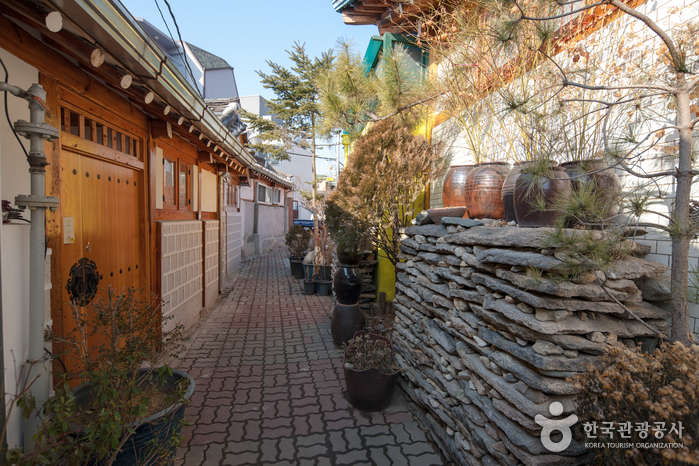
Seochon Village (서촌마을)
2.1Km 2024-12-02
45 Pirundae-ro, Jongno-gu, Seoul (Nuha-dong)
Seochon Village is the name given to the area to the west of Gyeongbokgung Palace. It is a historic village, home to old shops and hanok buildings that have stood the test of time. Korean traditions and contemporary sensibilities coexist within Seochon Village’s maze-like alleyways, creating the unique ambience that makes the district so beloved. One can find shops, guesthouses, cafés, and restaurants in the village.
![National Museum of Modern and Contemporary Art, Seoul [MMCA Seoul] (국립현대미술관 서울관)](http://tong.visitkorea.or.kr/cms/resource/00/2991500_image2_1.jpg)
National Museum of Modern and Contemporary Art, Seoul [MMCA Seoul] (국립현대미술관 서울관)
2.1Km 2023-06-23
30, Samcheong-ro, Jongno-gu, Seoul
+82-2-3701-9500
The National Museum of Modern and Contemporary Art, Seoul (MMCA Seoul) opened in 2013 as a city venue of the MMCA, which opened in 1986 in Gwacheon. The museum site was where many of Korea’s historical and political developments were achieved, both during the Joseon dynasty and after the Korean War. The Seoul venue of MMCA stands out from other museums through its use of Korea’s traditional architectural concept of "madang," a spacious courtyard where people can come and gather to socialize. The exterior of the building stands in harmony with the surrounding landscape. Inside, the museum is equipped with many facilities, including a reference center, project gallery theater, and multipurpose hall. MMCA Seoul strives to accommodate every mode of new artistic endeavor and to communicate with the public.
![Rawrow - Kwangjang Market Branch [Tax Refund Shop] (로우로우 광장시장)](http://tong.visitkorea.or.kr/cms/resource/29/2878229_image2_1.jpg)
Rawrow - Kwangjang Market Branch [Tax Refund Shop] (로우로우 광장시장)
2.1Km 2024-04-19
Store #239, Gwangjang Market, 88, Changgyeonggung-ro, Jongno-gu, Seoul
-
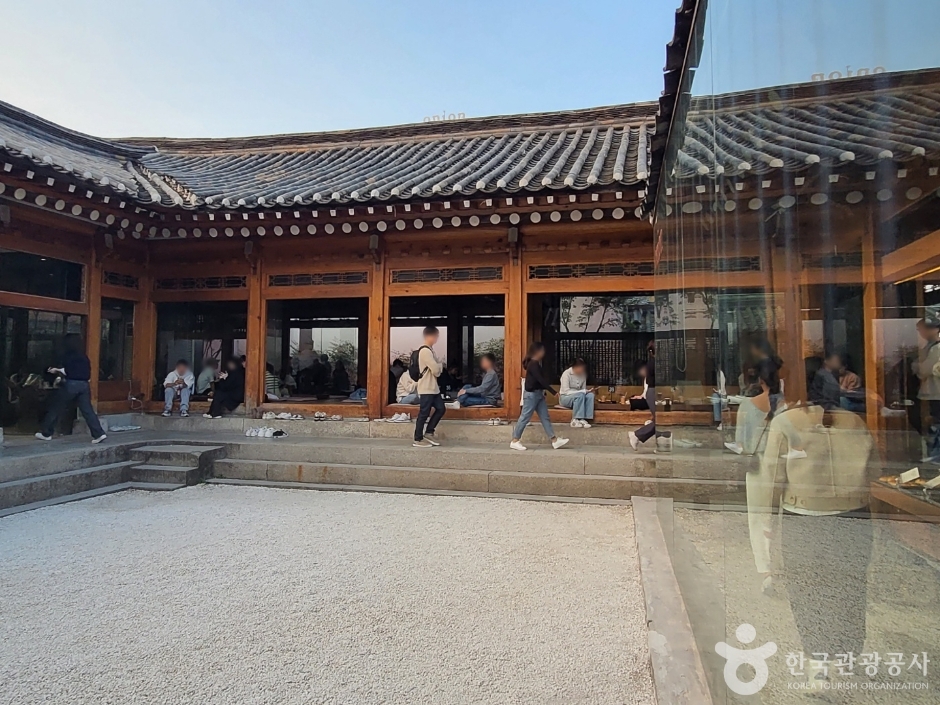
Onion Anguk Branch (어니언 안국)
2.1Km 2024-02-20
5 Gyedong-gil, Jongno-gu, Seoul
Onion is a café situated in a hanok dating back to the 1920s. Renovated with careful preservation of the daecheongmaru and madang, the café offers a glimpse into traditional Korean architecture. The signature menu item is the vanilla bean latte, and popular desserts include pandoro and salty butter bread. Its proximity to nearby attractions such as Gyeongbokgung Palace, Changgyeonggung Palace, and Changdeokgung Palace makes it a convenient stop for those exploring Seoul's major palaces.
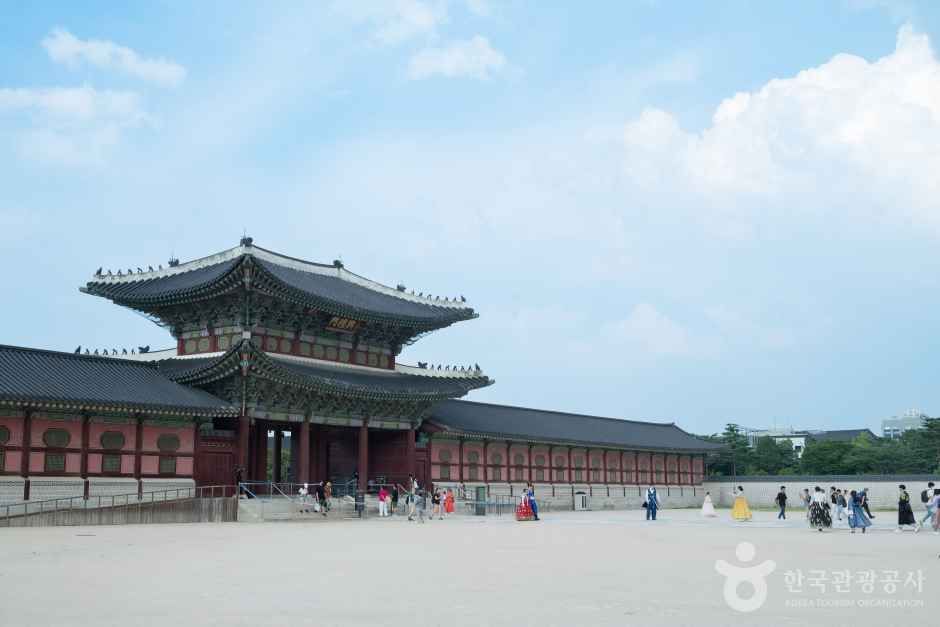
Gyeongbokgung Palace (경복궁)
2.1Km 2025-10-23
161 Sajik-ro, Jongno-gu, Seoul
+82-2-3700-3900
Gyeongbokgung Palace was built in 1395 as the official palace of the Joseon dynasty by Yi Seong-gye, the future King Taejo and founder of the new regime. Gyeongbokgung Palace is commonly referred to as the Northern Palace because of its location to the north, comparied to Changdeokgung Palace in the east and Gyeonghuigung Palace in the west. Gyeongbokgung Palace is arguably the most beautiful and is the largest of all five palaces. Many Joseon kings were crowned here. The premises were once destroyed by fire during the Imjin War (1592-1598). However, all of the palace buildings were later restored under the leadership of Heungseondaewongun during the reign of King Gojong. The assassination of Empress Myeongseong, however, resulted in Gyeongbokgung Palace losing its function as a royal palace, eventually witnessing the downfall of the Joseon dynasty. Gyeongbokgung Palace retains the original Gyeonghoeru Pavilion, a prime example of Joseon architecture, and the Hyangwonjeong Pavilion and pond. The sculptures in the Geunjeongjeon Hall exemplify Joseon-era sculpture techniques. The west side of the area outside Heungnyemun Gate is occupied by the National Palace Museum of Korea, while the eastern side of Hyangwonjeong Pavilion within the Gyeongbokgung Palace is occupied by the National Folk Museum of Korea.
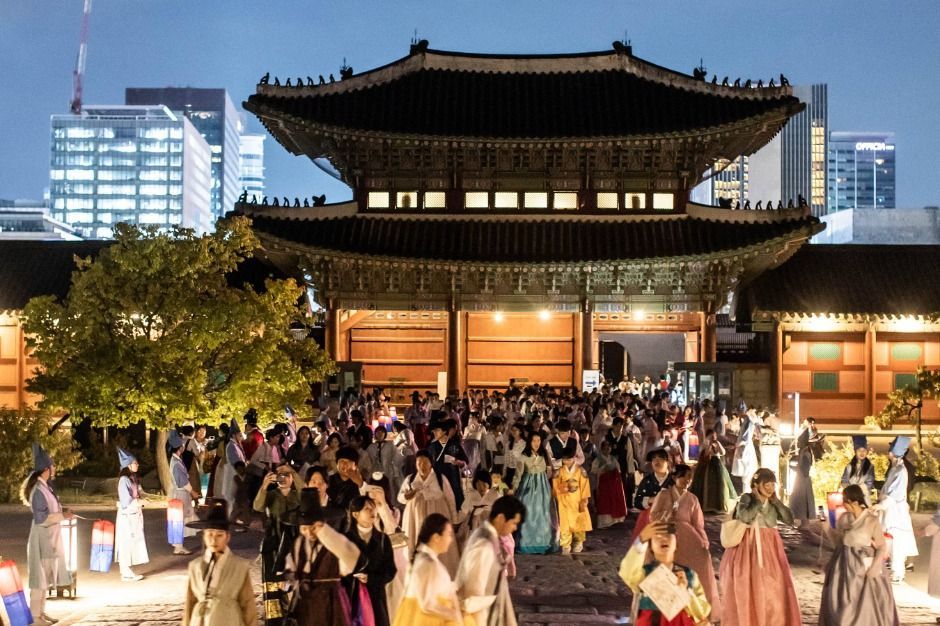
K-Royal Culture Festival (궁중문화축전)
2.1Km 2025-07-29
161 Sajik-ro, Jongno-gu, Seoul
+82-1522-2295
The K-Royal Culture Festival is held at the five Royal Palaces and Jongmyo Shrine. The festival first began in 2014 and provides visitors with first-hand knowledge of these important cultural heritages through unique performances, exhibitions, experiences and programs. The festival expanded in 2021 to be hosted twice a year, in spring and in fall.
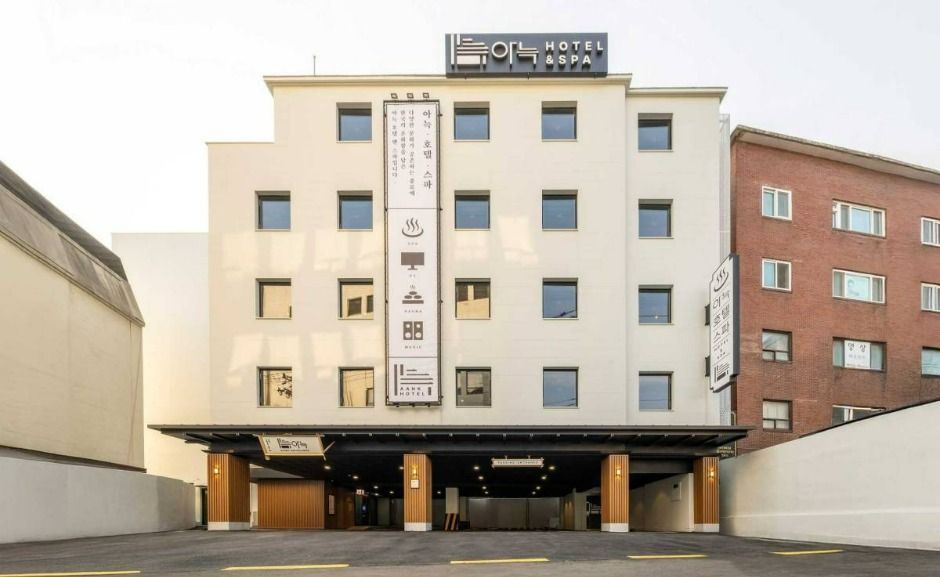
Aank Hotel & Spa Jongno Unni Branch (아늑호텔 앤 스파 종로운니점)
2.1Km 2025-04-24
89 Donhwamun-ro 11ga-gil, Jongno-gu, Seoul
Aank Hotel & Spa Jongno Unni Branch embodies the warmth and charms of Korea. Guests are welcome to unwind with diverse room options to choose from such as the msuic room, signature spa room, desktop 2-PC room, and standard room. It's location in the heart of Seoul makes it a great place for tourists as well as well.
![Slow Steady Club - Samcheong Branch [Tax Refund Shop] (슬로우스테디클럽 삼청)](http://tong.visitkorea.or.kr/cms/resource/13/3314413_image2_1.jpg)
Slow Steady Club - Samcheong Branch [Tax Refund Shop] (슬로우스테디클럽 삼청)
2.1Km 2024-06-27
2F, 84, Yulgok-ro, Jongno-gu, Seoul
-

Seoul Hyochang Park (서울 효창공원)
2.1Km 2024-07-09
177-18 Hyochangwon-ro, Yongsan-gu, Seoul
+82-2-2199-7608
Hyochang Park covers 122,245 square meters spanning across Hyochang-dong and Cheongpa 2-dong. It is a historic landmark that once contained several royal tombs, and was known at that time as Hyochangwon. The cemeteries that were originally located in Hyochangwon belonged to Crown Prince Munhyo, King Jeongjo’s first son who died at the age of five; Royal Noble Consort Uibin of the Seong Clan, King Jeongjo’s royal concubine and Crown Prince Munhyo’s mother; Royal Noble Consort Sugui of the Park Clan, King Sunjo’s royal concubine; and her daughter Princess Yeongon. The royal tombs were moved to Seooreung Tombs in the waning months of the Japanese colonial period. The Japanese empire began the development of Hyochangwon into a park in 1924, and the Japanese governor-general officially assigned the site as a park in 1940.
Presently, several of Korea’s greatest leaders are buried in Hyochang Park. The remains mostly belong to independence activists including Yoon Bong-gil, Lee Bong-chang, and Baek Jeong-gi, whose graves are collectively known as Samuisa Tomb. A statue of Lee Bong-chang has been built in the graveyard. Among the other patriotic martyrs who are interred in the park are Kim Gu and some of the key figures of the provisional government such as Lee Dong-nyeong, Cha I-seok, and Cho Seong-hwan. An ancestral shrine named Uiyeolsa has been built along the main gate and holds the portraits of the deceased independence activists.
![Bukchon Pharmacy [Tax Refund Shop] (북촌약국)](http://tong.visitkorea.or.kr/cms/resource/83/3314583_image2_1.jpg)
 English
 한국어
한국어 日本語
日本語 中文(简体)
 Deutsch
 Français
 Español
 Русский


